Chad Whelan - Böcker
Visar alla böcker från författaren Chad Whelan. Handla med fri frakt och snabb leverans.
7 produkter
7 produkter
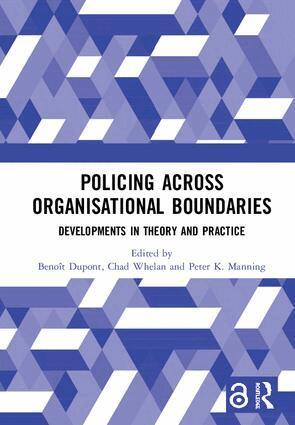
Policing Across Organisational Boundaries
Developments in Theory and Practice
Inbunden, Engelska, 2019
2 098 kr
Skickas inom 10-15 vardagar
This book promotes new theoretical frameworks and research questions that seek to advance knowledge of policing across internal and external organisational boundaries, specifically at the structural level of analysis. It addresses police theory, policy and practice, and also provides new directions for future research on intra- and inter-organisational policing.Analysing boundaries is of increasing global importance for policing policy and practice. Boundaries reflect the division-of-labour inherent to complex organisations and their specialist units. In order to operate effectively, however, these boundaries must be crossed, and strong and reliable linkages must be built. Intra-organisationally, it is vital to understand how specialist units form and function and interact with other units. Inter-organisationally, it is fundamental to recognise the place of boundaries in contexts such as international police cooperation.Chapters 3 and 4 of this book are freely available as downloadable Open Access PDFs at http://www.taylorfrancis.com under a Creative Commons Attribution-Non Commercial-No Derivatives (CC-BY-NC-ND) 4.0 license.
570 kr
Skickas inom 10-15 vardagar
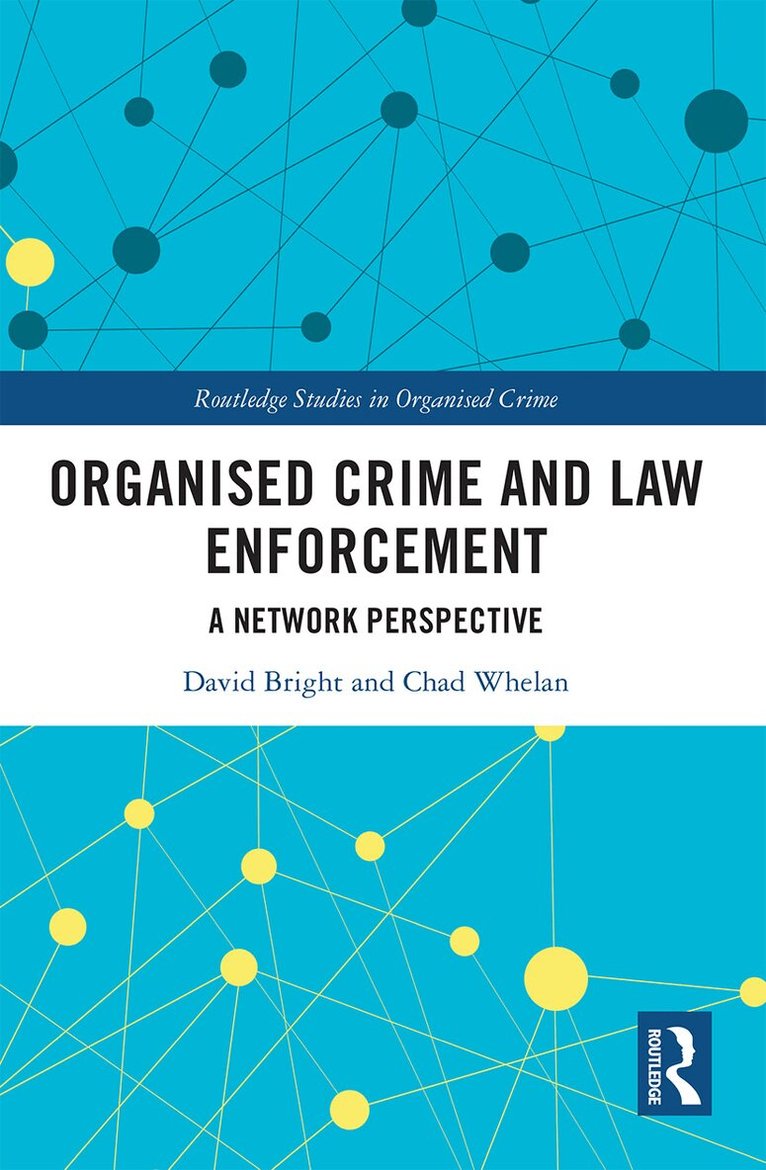
Organised Crime and Law Enforcement: A Network Perspective examines organised crime and law enforcement through the conceptual lens of networks. The book takes stock of the many ways in which network theories and concepts, including social network analysis, can apply to studying both organised crime and law enforcement responses to organised crime. It is the first attempt to bring these diverse network perspectives and distinct fields of research together.The book is organised into two parts. The first part uses network perspectives to advance our understanding of the interconnected social structure of organised criminal groups, to expose their strengths and vulnerabilities, and to illuminate factors that enable such groups to undertake complex criminal activities. The second part uses a network lens to examine the challenges that organised criminal groups present for a wide range of law enforcement agencies, and the utility of network theories and concepts in understanding and informing their responses to organised crime. Written in a clear and direct style, the book will appeal to scholars and practitioners of criminology, sociology, law enforcement, and all those interested in learning more about theories of organised crime and its relationship with law enforcement.
620 kr
Skickas inom 10-15 vardagar
This book promotes new theoretical frameworks and research questions that seek to advance knowledge of policing across internal and external organisational boundaries, specifically at the structural level of analysis. It addresses police theory, policy and practice, and also provides new directions for future research on intra- and inter-organisational policing.Analysing boundaries is of increasing global importance for policing policy and practice. Boundaries reflect the division-of-labour inherent to complex organisations and their specialist units. In order to operate effectively, however, these boundaries must be crossed, and strong and reliable linkages must be built. Intra-organisationally, it is vital to understand how specialist units form and function and interact with other units. Inter-organisationally, it is fundamental to recognise the place of boundaries in contexts such as international police cooperation.Chapters 3 and 4 of this book are freely available as downloadable Open Access PDFs at http://www.taylorfrancis.com under a Creative Commons Attribution-Non Commercial-No Derivatives (CC-BY-NC-ND) 4.0 license.
1 381 kr
Skickas inom 10-15 vardagar
Using the G20 Summit in Brisbane, Australia in November 2014 as a case study, in conjunction with comparisons with events such as the Toronto 2010 G20, the authors engage in a comprehensive assessment of the networks, strategies and tensions involved in mega-event security.
807 kr
Skickas inom 10-15 vardagar
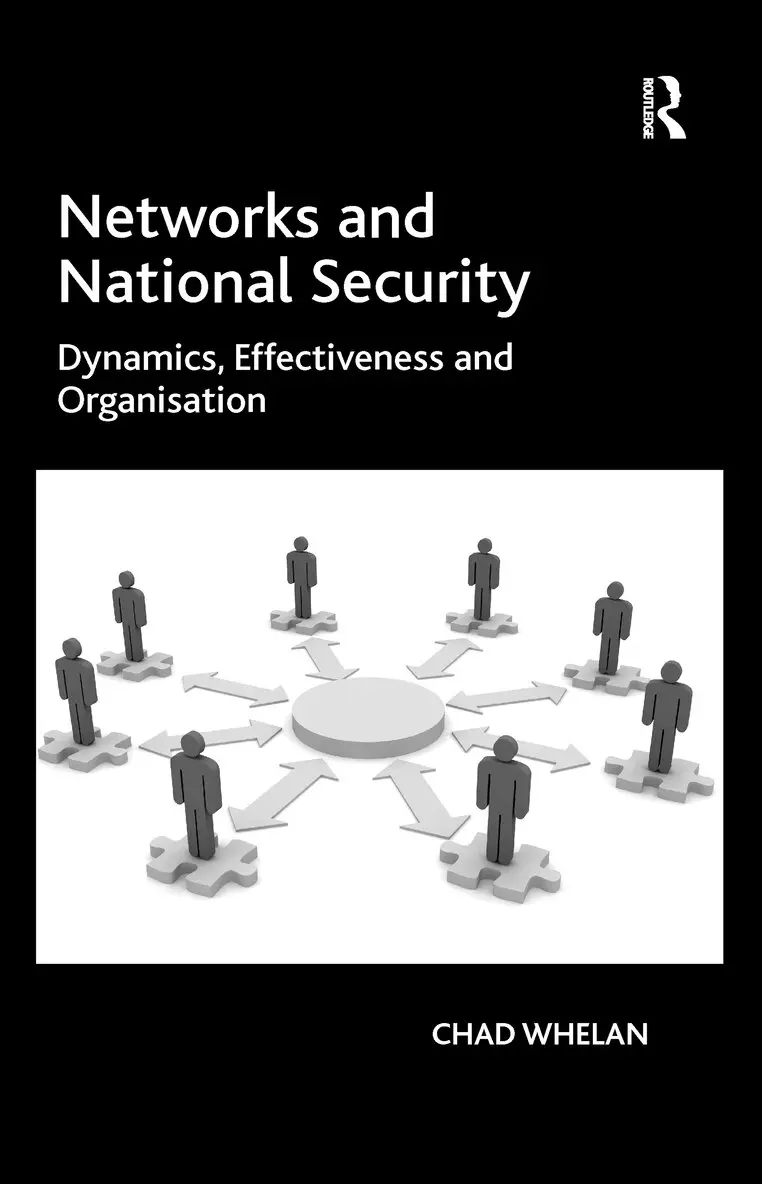
Networks as sets of autonomous organisations working together to achieve individual and shared goals are becoming increasingly important across many areas of public administration. The importance of networks is well known but most analysts would agree that we do not know enough about the dynamics and effectiveness of networks in relation to their internal operations. This is a significant problem as security, intelligence, law enforcement and many other agencies are increasingly required to organise in and through networks to provide national security. In this comprehensive analysis, Chad Whelan presents a highly innovative, qualitative study of networks in the field of national security. Developing our understanding of 'organisational networks' in organisational theory, management and public administration, and 'security networks' in criminology and international relations, he presents a multi-disciplinary analysis of network forms of organisation. Whelan puts forward a methodological framework involving five levels of analysis - structural, cultural, policy, technological and relational - with which we can better analyse and understand the dynamics and effectiveness of networks. This framework is applied to public sector networks operating in the field of counter-terrorism in Australia in a way that is highly relevant to researchers and practitioners in many contexts where government departments and agencies, and the private sector, need to work together. Networks and National Security: Dynamics, Effectiveness and Organisation not only advances our knowledge of networks and national security but also assists with the essential tasks of evaluating and managing networks. Written in a clear and accessible style and featuring a wealth of first-hand accounts concerning the inside operations of networks, this book deals with the crucial subject of inter-agency coordination in the important field of national security.
2 088 kr
Skickas inom 10-15 vardagar
Organised Crime and Law Enforcement: A Network Perspective examines organised crime and law enforcement through the conceptual lens of networks. The book takes stock of the many ways in which network theories and concepts, including social network analysis, can apply to studying both organised crime and law enforcement responses to organised crime. It is the first attempt to bring these diverse network perspectives and distinct fields of research together.The book is organised into two parts. The first part uses network perspectives to advance our understanding of the interconnected social structure of organised criminal groups, to expose their strengths and vulnerabilities, and to illuminate factors that enable such groups to undertake complex criminal activities. The second part uses a network lens to examine the challenges that organised criminal groups present for a wide range of law enforcement agencies, and the utility of network theories and concepts in understanding and informing their responses to organised crime. Written in a clear and direct style, the book will appeal to scholars and practitioners of criminology, sociology, law enforcement, and all those interested in learning more about theories of organised crime and its relationship with law enforcement.
2 155 kr
Skickas inom 10-15 vardagar
Networks as sets of autonomous organisations working together to achieve individual and shared goals are becoming increasingly important across many areas of public administration. The importance of networks is well known but most analysts would agree that we do not know enough about the dynamics and effectiveness of networks in relation to their internal operations. This is a significant problem as security, intelligence, law enforcement and many other agencies are increasingly required to organise in and through networks to provide national security. In this comprehensive analysis, Chad Whelan presents a highly innovative, qualitative study of networks in the field of national security. Developing our understanding of 'organisational networks' in organisational theory, management and public administration, and 'security networks' in criminology and international relations, he presents a multi-disciplinary analysis of network forms of organisation. Whelan puts forward a methodological framework involving five levels of analysis - structural, cultural, policy, technological and relational - with which we can better analyse and understand the dynamics and effectiveness of networks. This framework is applied to public sector networks operating in the field of counter-terrorism in Australia in a way that is highly relevant to researchers and practitioners in many contexts where government departments and agencies, and the private sector, need to work together. Networks and National Security: Dynamics, Effectiveness and Organisation not only advances our knowledge of networks and national security but also assists with the essential tasks of evaluating and managing networks. Written in a clear and accessible style and featuring a wealth of first-hand accounts concerning the inside operations of networks, this book deals with the crucial subject of inter-agency coordination in the important field of national security.