Chanan Singh - Böcker
Visar alla böcker från författaren Chanan Singh. Handla med fri frakt och snabb leverans.
4 produkter
4 produkter
1 556 kr
Skickas inom 7-10 vardagar
Power System Flexibility provides a consolidated foundation in the design, planning, and operation of intermittent highly renewable power systems-integrating core theory, mathematical analysis, and modern international applications in an unusually multidisciplinary approach. Opening with an expansive theoretical grounding in the definition, analysis, and modeling of power systems, the book demonstrates how to apply flexibility theory to critical problems involving intermittency and variability in power system planning and operation. The guide concludes with an international complement of case studies, demonstrating how flexibility theory has been applied to real-world projects of increasing complexity. Integrates underlying scientific foundations with modern methods in the planning and operation of flexible power systems Demonstrates how to design, plan, operationalize, and optimize flexible solutions across the full range of power generation, electrical grids, energy demand, and energy storage applications Includes an international complement of real-world case studies focusing on delivering flexibility in highly renewable electricity systems
1 380 kr
Skickas inom 7-10 vardagar
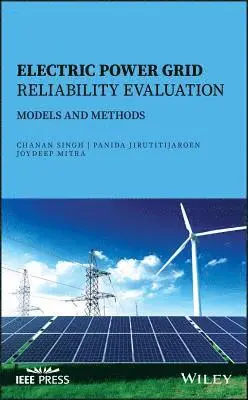
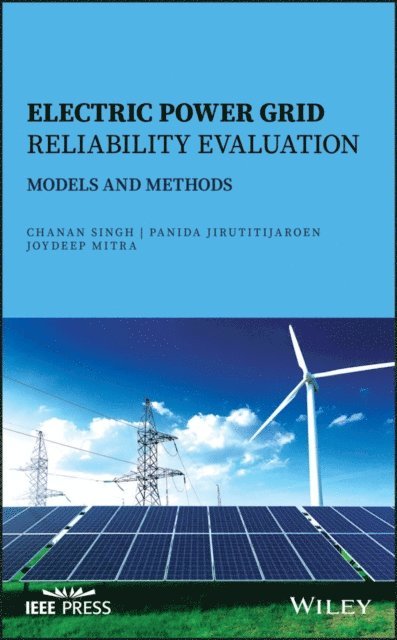
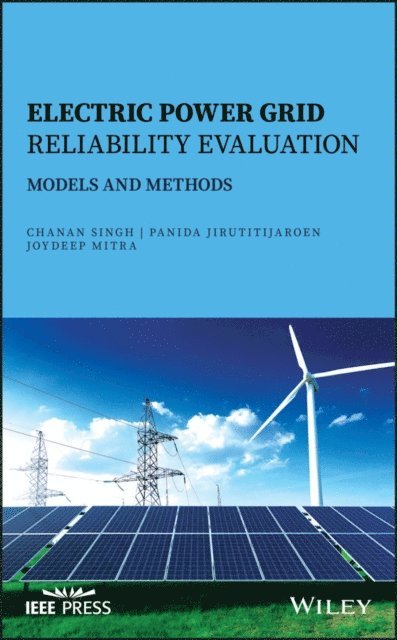
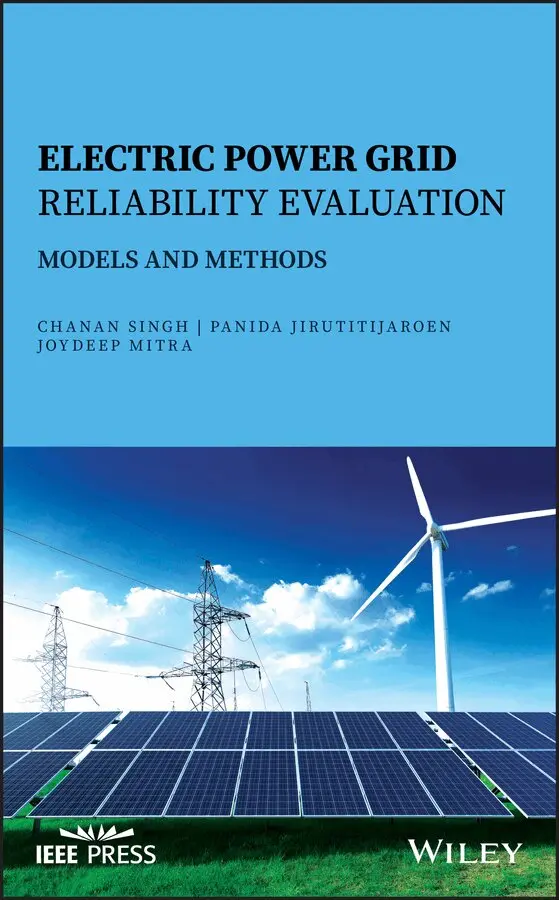
The groundbreaking book that details the fundamentals of reliability modeling and evaluation and introduces new and future technologiesElectric Power Grid Reliability Evaluation deals with the effective evaluation of the electric power grid and explores the role that this process plays in the planning and designing of the expansion of the power grid. The book is a guide to the theoretical approaches and processes that underpin the electric power grid and reviews the most current and emerging technologies designed to ensure reliability. The authors—noted experts in the field—also present the algorithms that have been developed for analyzing the soundness of the power grid. A comprehensive resource, the book covers probability theory, stochastic processes, and a frequency-based approach in order to provide a theoretical foundation for reliability analysis. Throughout the book, the concepts presented are explained with illustrative examples that connect with power systems. The authors cover generation adequacy methods, and multi-node analysis which includes both multi-area as well as composite power system reliable evaluation. This important book:• Provides a guide to the basic methods of reliability modeling and evaluation• Contains a helpful review of the background of power system reliability evaluation• Includes information on new technology sources that have the potential to create a more reliable power grid• Addresses renewable energy sources and shows how they affect power outages and blackouts that pose new challenges to the power grid system Written for engineering students and professionals, Electric Power Grid Reliability Evaluation is an essential book that explores the processes and algorithms for creating a sound and reliable power grid.
1 578 kr
Skickas inom 10-15 vardagar
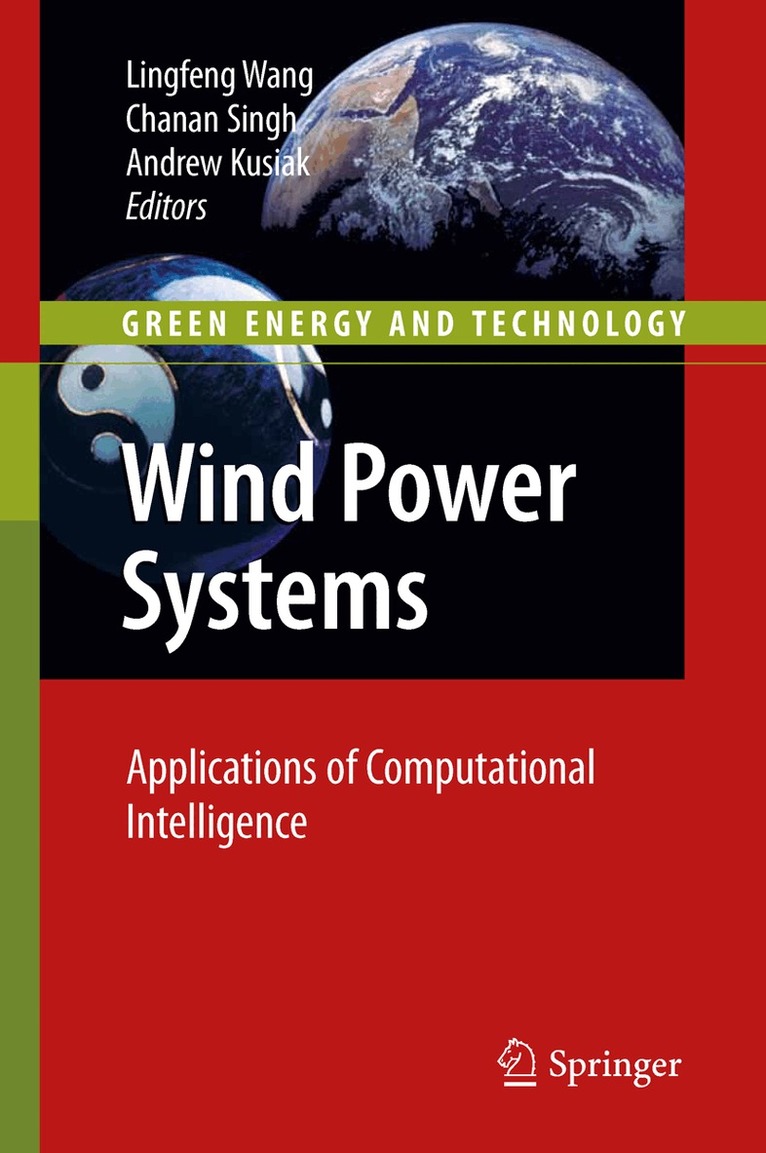
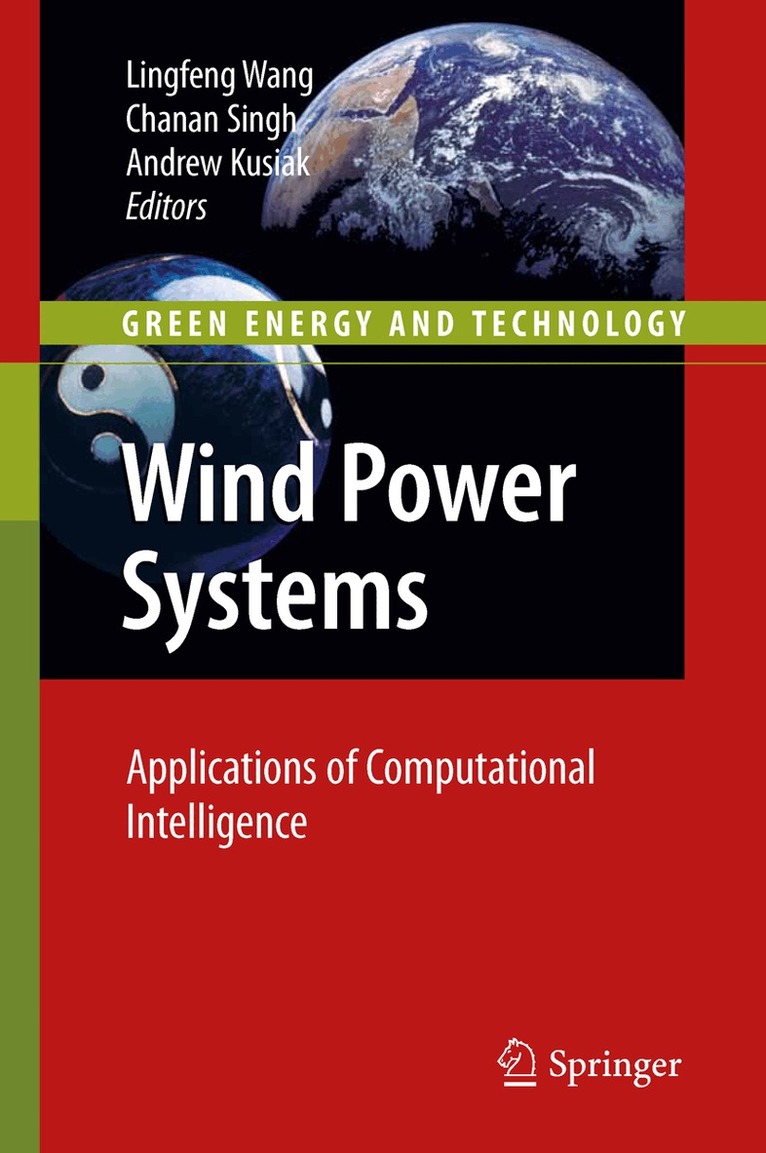
Renewable energy sources such as wind power have attracted much attention because they are environmentally friendly, do not produce carbon dioxide and other emitants, and can enhance a nation’s energy security. For example, recently more significant amounts of wind power are being integrated into conventional power grids. Therefore, it is necessary to address various important and challenging issues related to wind power systems, which are significantly different from the traditional generation systems. This book is a resource for engineers, practitioners, and decision-makers interested in studying or using the power of computational intelligence based algorithms in handling various important problems in wind power systems at the levels of power generation, transmission, and distribution.Researchers have been developing biologically-inspired algorithms in a wide variety of complex large-scale engineering domains. Distinguished from the traditional analytical methods,the new methods usually accomplish the task through their computationally efficient mechanisms. Computational intelligence methods such as evolutionary computation, neural networks, and fuzzy systems have attracted much attention in electric power systems. Meanwhile, modern electric power systems are becoming more and more complex in order to meet the growing electricity market. In particular, the grid complexity is continuously enhanced by the integration of intermittent wind power as well as the current restructuring efforts in electricity industry. Quite often, the traditional analytical methods become less efficient or even unable to handle this increased complexity. As a result, it is natural to apply computational intelligence as a powerful tool to deal with various important and pressing problems in the current wind power systems. This book presents the state-of-the-art development in the field of computational intelligence applied to wind power systems by reviewing the most up-to-date work and representative practical problems collecting contributions from leading experts in electrical engineering, system engineering, and other disciplines.
1 578 kr
Skickas inom 10-15 vardagar
Renewable energy sources such as wind power have attracted much attention because they are environmentally friendly, do not produce carbon dioxide and other emitants, and can enhance a nation’s energy security. For example, recently more significant amounts of wind power are being integrated into conventional power grids. Therefore, it is necessary to address various important and challenging issues related to wind power systems, which are significantly different from the traditional generation systems. This book is a resource for engineers, practitioners, and decision-makers interested in studying or using the power of computational intelligence based algorithms in handling various important problems in wind power systems at the levels of power generation, transmission, and distribution.Researchers have been developing biologically-inspired algorithms in a wide variety of complex large-scale engineering domains. Distinguished from the traditional analytical methods,the new methods usually accomplish the task through their computationally efficient mechanisms. Computational intelligence methods such as evolutionary computation, neural networks, and fuzzy systems have attracted much attention in electric power systems. Meanwhile, modern electric power systems are becoming more and more complex in order to meet the growing electricity market. In particular, the grid complexity is continuously enhanced by the integration of intermittent wind power as well as the current restructuring efforts in electricity industry. Quite often, the traditional analytical methods become less efficient or even unable to handle this increased complexity. As a result, it is natural to apply computational intelligence as a powerful tool to deal with various important and pressing problems in the current wind power systems. This book presents the state-of-the-art development in the field of computational intelligence applied to wind power systems by reviewing the most up-to-date work and representative practical problems collecting contributions from leading experts in electrical engineering, system engineering, and other disciplines.