Andrew Kusiak - Böcker
Visar alla böcker från författaren Andrew Kusiak. Handla med fri frakt och snabb leverans.
6 produkter
6 produkter
2 101 kr
Skickas inom 10-15 vardagar
This text puts together a collection of contributions from different experts on issues related to life cycle engineering. It focuses on a series of concepts, tools and techniques which can be used to improve current practices of life cycle engineering in manufacturing companies around the world. It also describes how to integrate three important life cycle issues in a manufacturing enterprise: enterprise life cycle, product life cycle and technology life cycle. This book should be of interest to engineers, designers, product support personnel and managers involved in enterprise integration projects.
1 964 kr
Skickas inom 7-10 vardagar
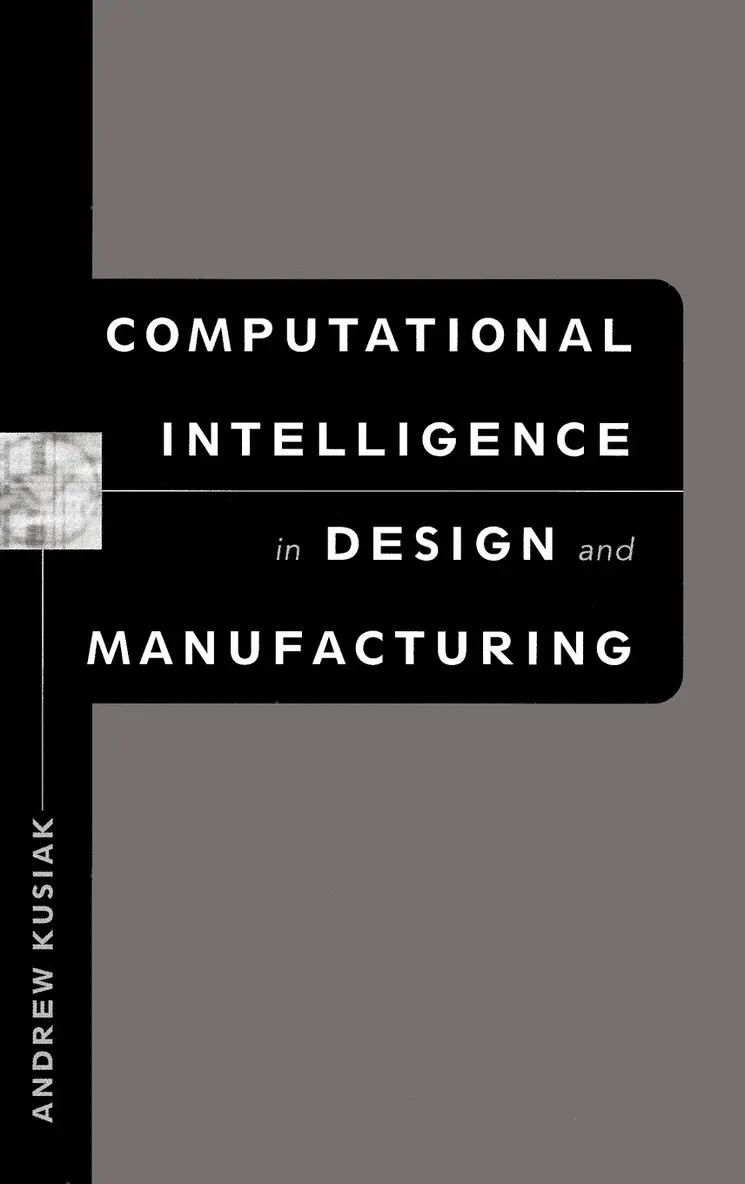
Take the next step in Integrated Product and Process DevelopmentThis pioneering book is the first to apply state-of-the-art computational intelligence techniques to all phases of manufacturing system design and operations. It equips engineers with a superior array of new tools for optimizing their work in Integrated Product and Process Development.Drawing on his extensive experience in the field of advanced manufacturing, Andrew Kusiak has masterfully embedded coverage of data mining, expert systems, neural networks, autonomous reasoning techniques, and other computational methods in chapters that cover all key facets of integrated manufacturing system design and operations, including:* Process planning* Setup reduction* Production planning and scheduling* Kanban systems* Manufacturing equipment selection* Group technology* Facilities and manufacturing cell layout* Warehouse layout* Manufacturing system product and component design* Supplier evaluationEach chapter includes questions and problems that address key issues on model integration and the use of computational intelligence approaches to solve difficulties across many areas of an enterprise. Examples and case studies from real-world industrial projects illustrate the powerfulapplication potential of the computational techniques.Comprehensive in scope and flexible in approach, Computational Intelligence in Design and Manufacturing is right in step with the enterprise of the future: extended, virtual, model-driven, knowledge-based, and integrated in time and space. It is essential reading for forward-thinking students and professional engineers and managers working in design systems, manufacturing, and related areas.
3 964 kr
Skickas inom 11-20 vardagar
Comprehensive, detailed, and organized for speedyreference--everything you need to know about modern manufacturingtechnology. From concurrent engineering to fixture design formachining systems, from robotics and artificial intelligence tofacility layout planning and automated CAD-based inspection, thishandbook provides all the information you need to design, plan, andimplement a modern, efficient manufacturing system tailored to yourcompany's special needs and requirements. Handbook of Design,Manufacturing and Automation does more than simply present thecharacteristics and specifications of each technology--much more.Each technology is discussed both in terms of its own capabilitiesand in terms of its compatibility with other technologies, and thetrade-offs involved in choosing one option over another areexplored at length. An entire section is devoted to the businessaspects of converting to the new technologies, includingacquisition of automation, managing advanced manufacturingtechnology, and issues of cost and financing. The focus is onincorporating these technologies into a cohesive whole--anefficient, cost-effective manufacturing system. Other importanttopics include:* Design for automated manufacturing* Nontraditional manufacturing processes* Machine tool programming techniques and trends* Precision engineering and micromanufacturing* Computer-integrated product planning and control* Image processing for manufacturing* And much more
2 390 kr
Skickas inom 7-10 vardagar
Presents a top-down approach to the design, development, testing and recyclability of products, components and systems across a wide range of industries. Starting with the desired result and working back through the details, it shows how to produce goods, taking into account the challenges of actual manufacture, what the reliability requirements should be, quality control, associated costs, customer needs and more. Additional features include case studies and team negotiating. Also well-illustrated with figures, photographs, charts and tables and includes an extensive bibliography.
1 578 kr
Skickas inom 10-15 vardagar
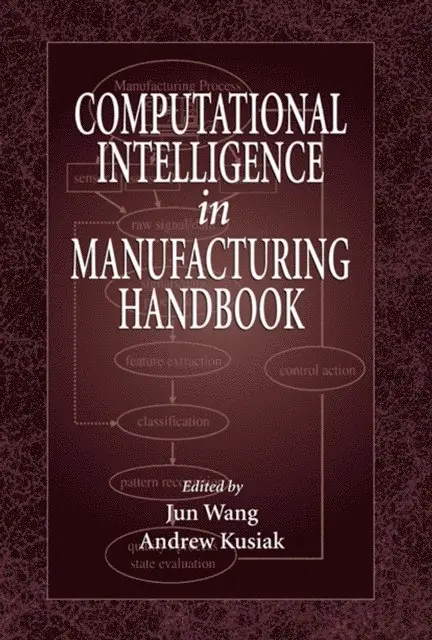
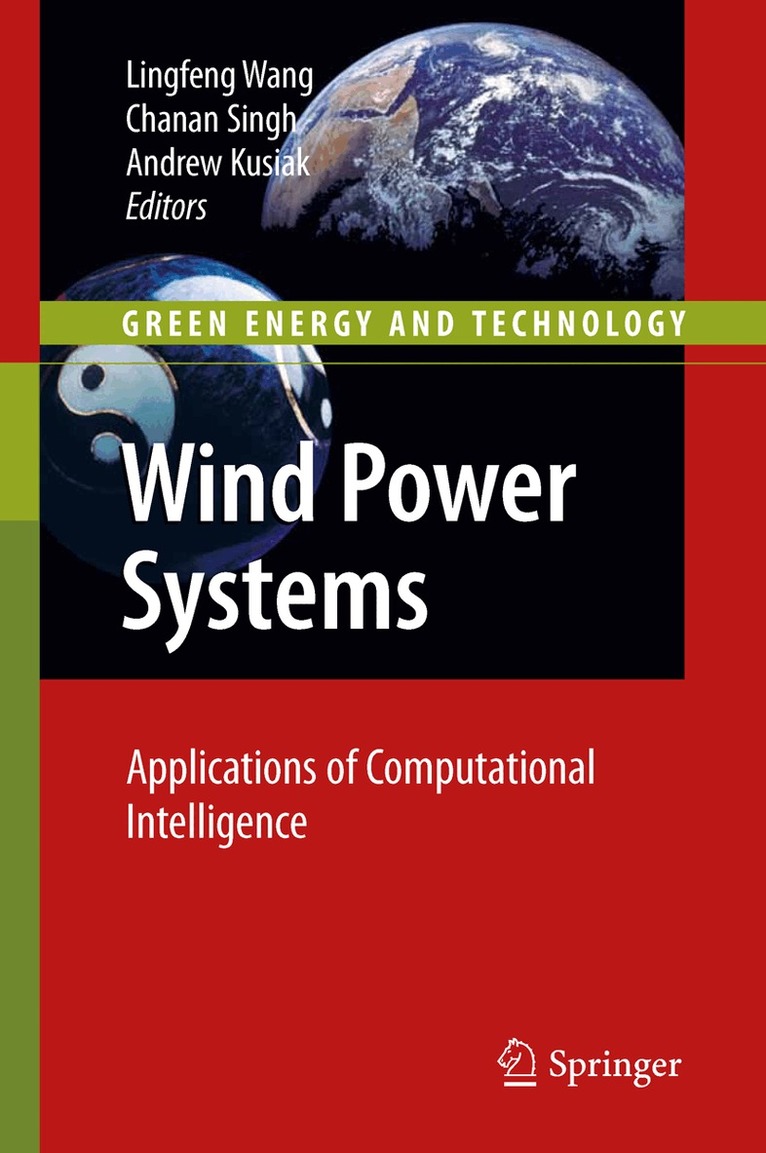
Renewable energy sources such as wind power have attracted much attention because they are environmentally friendly, do not produce carbon dioxide and other emitants, and can enhance a nation’s energy security. For example, recently more significant amounts of wind power are being integrated into conventional power grids. Therefore, it is necessary to address various important and challenging issues related to wind power systems, which are significantly different from the traditional generation systems. This book is a resource for engineers, practitioners, and decision-makers interested in studying or using the power of computational intelligence based algorithms in handling various important problems in wind power systems at the levels of power generation, transmission, and distribution.Researchers have been developing biologically-inspired algorithms in a wide variety of complex large-scale engineering domains. Distinguished from the traditional analytical methods,the new methods usually accomplish the task through their computationally efficient mechanisms. Computational intelligence methods such as evolutionary computation, neural networks, and fuzzy systems have attracted much attention in electric power systems. Meanwhile, modern electric power systems are becoming more and more complex in order to meet the growing electricity market. In particular, the grid complexity is continuously enhanced by the integration of intermittent wind power as well as the current restructuring efforts in electricity industry. Quite often, the traditional analytical methods become less efficient or even unable to handle this increased complexity. As a result, it is natural to apply computational intelligence as a powerful tool to deal with various important and pressing problems in the current wind power systems. This book presents the state-of-the-art development in the field of computational intelligence applied to wind power systems by reviewing the most up-to-date work and representative practical problems collecting contributions from leading experts in electrical engineering, system engineering, and other disciplines.
1 578 kr
Skickas inom 10-15 vardagar
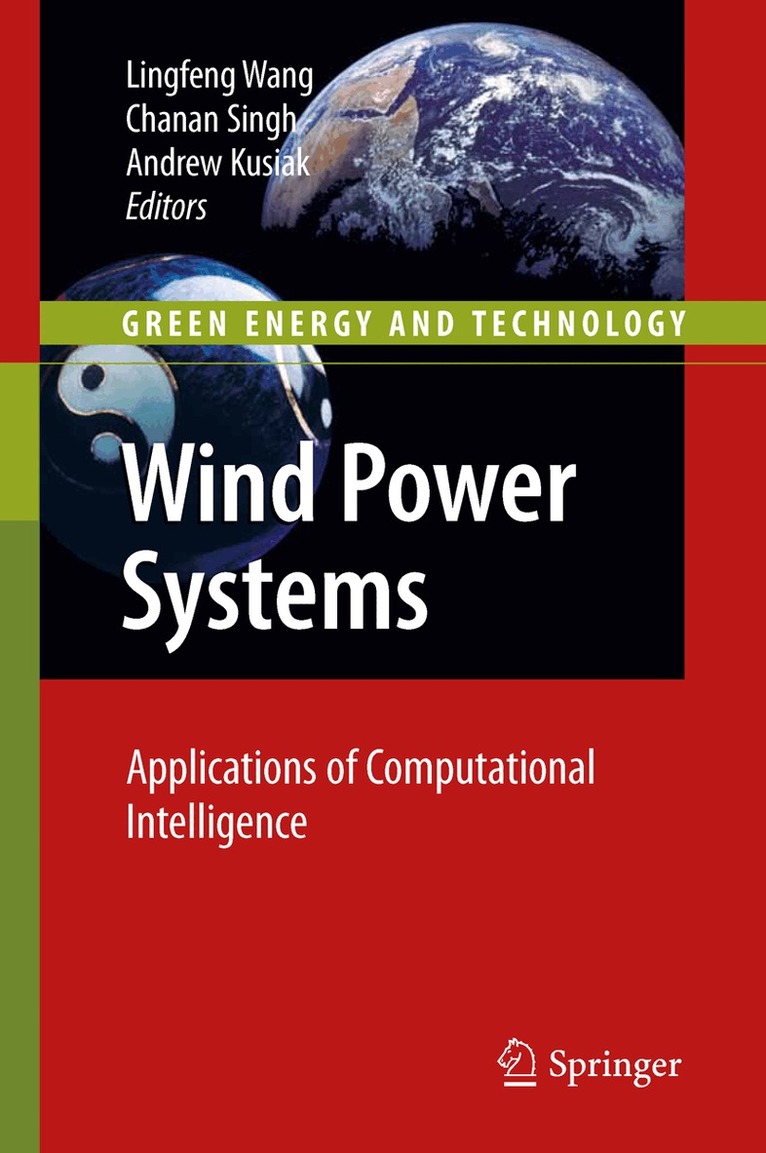
Renewable energy sources such as wind power have attracted much attention because they are environmentally friendly, do not produce carbon dioxide and other emitants, and can enhance a nation’s energy security. For example, recently more significant amounts of wind power are being integrated into conventional power grids. Therefore, it is necessary to address various important and challenging issues related to wind power systems, which are significantly different from the traditional generation systems. This book is a resource for engineers, practitioners, and decision-makers interested in studying or using the power of computational intelligence based algorithms in handling various important problems in wind power systems at the levels of power generation, transmission, and distribution.Researchers have been developing biologically-inspired algorithms in a wide variety of complex large-scale engineering domains. Distinguished from the traditional analytical methods,the new methods usually accomplish the task through their computationally efficient mechanisms. Computational intelligence methods such as evolutionary computation, neural networks, and fuzzy systems have attracted much attention in electric power systems. Meanwhile, modern electric power systems are becoming more and more complex in order to meet the growing electricity market. In particular, the grid complexity is continuously enhanced by the integration of intermittent wind power as well as the current restructuring efforts in electricity industry. Quite often, the traditional analytical methods become less efficient or even unable to handle this increased complexity. As a result, it is natural to apply computational intelligence as a powerful tool to deal with various important and pressing problems in the current wind power systems. This book presents the state-of-the-art development in the field of computational intelligence applied to wind power systems by reviewing the most up-to-date work and representative practical problems collecting contributions from leading experts in electrical engineering, system engineering, and other disciplines.