Charles Barzun – författare
Visar alla böcker från författaren Charles Barzun. Handla med fri frakt och snabb leverans.
15 produkter
15 produkter
Inbunden, Engelska, 2022
1 188 kr
Skickas inom 10-15 vardagar
This book considers the relationship between proportionality and facts in constitutional adjudication. Analysing where facts arise within each of the three stages of the structured proportionality test – suitability, necessity, and balancing – it considers the nature of these ‘facts’ vis-à-vis the facts that arise in the course of ordinary litigation. The book’s central focus is on how proportionality has been applied by courts in practice, and it draws on the comparative experience of four jurisdictions across a range of legal systems. The central case study of the book is Australia, where the embryonic and contested nature of proportionality means it provides an illuminating study of how facts can inform the framing of constitutional tests. The rich proportionality jurisprudence from Germany, Canada, and South Africa is used to contextualise the approach of the High Court of Australia and to identify future directions for proportionality in Australia, at a time when the doctrine is in its formative stages.The book has three broad aims:First, it considers the role of facts within proportionality reasoning.Second, it offers procedural insights into fact-finding in constitutional litigation.Third, the book’s analysis of the dynamic Australian case-law on proportionality means it also serves to clarify the nature and status of proportionality in Australia at a critical moment. Since the 2015 decision of McCloy v New South Wales, where four justices supported the introduction of a structured three-part test of proportionality, the Court has continued to disagree about the utility of such a test. These developments mean that this book, with its doctrinal and comparative approach, is particularly timely.
Inbunden, Engelska, 2022
1 174 kr
Skickas
This book presents a new constitutional argument for the legitimacy of evolutive interpretation of the ECHR. It constructs a model, in which evolutive and static constitutional principles are balanced with each other. The author argues that there are three possible interpretive approaches in time-sensitive interpretations of the ECHR, but that only one of them is justifiable by reference to the constitutional principles of the ECHR in every single case. The ECHR’s constitutional principles either require an evolutive or static interpretation or they do not establish a preference relation at all, which leads to a margin of appreciation of the member states in the interpretation of the Convention. The balancing model requires the determination of the weights of the competing evolutive and static constitutional principles. For this purpose, the author defines weighting factors for determining the importance of evolutive or static interpretation in a concrete case.
Häftad, Engelska, 2023
554 kr
Skickas inom 10-15 vardagar
This book presents a new constitutional argument for the legitimacy of evolutive interpretation of the ECHR. It constructs a model, in which evolutive and static constitutional principles are balanced with each other. The author argues that there are three possible interpretive approaches in time-sensitive interpretations of the ECHR, but that only one of them is justifiable by reference to the constitutional principles of the ECHR in every single case. The ECHR’s constitutional principles either require an evolutive or static interpretation or they do not establish a preference relation at all, which leads to a margin of appreciation of the member states in the interpretation of the Convention. The balancing model requires the determination of the weights of the competing evolutive and static constitutional principles. For this purpose, the author defines weighting factors for determining the importance of evolutive or static interpretation in a concrete case.
Häftad, Engelska, 2023
554 kr
Skickas inom 10-15 vardagar
This book considers the relationship between proportionality and facts in constitutional adjudication. Analysing where facts arise within each of the three stages of the structured proportionality test – suitability, necessity, and balancing – it considers the nature of these ‘facts’ vis-à-vis the facts that arise in the course of ordinary litigation. The book’s central focus is on how proportionality has been applied by courts in practice, and it draws on the comparative experience of four jurisdictions across a range of legal systems. The central case study of the book is Australia, where the embryonic and contested nature of proportionality means it provides an illuminating study of how facts can inform the framing of constitutional tests. The rich proportionality jurisprudence from Germany, Canada, and South Africa is used to contextualise the approach of the High Court of Australia and to identify future directions for proportionality in Australia, at a time when the doctrine is in its formative stages.The book has three broad aims:First, it considers the role of facts within proportionality reasoning.Second, it offers procedural insights into fact-finding in constitutional litigation.Third, the book’s analysis of the dynamic Australian case-law on proportionality means it also serves to clarify the nature and status of proportionality in Australia at a critical moment. Since the 2015 decision of McCloy v New South Wales, where four justices supported the introduction of a structured three-part test of proportionality, the Court has continued to disagree about the utility of such a test. These developments mean that this book, with its doctrinal and comparative approach, is particularly timely.
Inbunden, Engelska, 2023
1 126 kr
Skickas inom 10-15 vardagar
This book analyses cases of judicial avoidance: what happens when courts leave some or all of the merits of a case undecided? It explores examples of justiciability assessments and deferential approaches regarding the decision of another authority and examines legitimacy issues involving judicial avoidance. The reader is presented with answers to two fundamental questions that guide the development of the book:- Is it legitimate to practise judicial avoidance?- How could judicial avoidance be practised legitimately?The conflict of competences, which often emerges in instances of judicial avoidance, is an important book baseline. From this conflict, the book considers and defends the possibility of applying ‘formal balancing’ to provide a clearer structure of the exercise of justiciability and judicial deference. The ‘formal balancing’ methodology is based on Alexy’s principles theory, and its connection with judicial avoidance represents a significant contribution and novel point in constitutional adjudication.
Häftad, Engelska, 2025
541 kr
Skickas inom 10-15 vardagar
This book analyses cases of judicial avoidance: what happens when courts leave some or all of the merits of a case undecided? It explores examples of justiciability assessments and deferential approaches regarding the decision of another authority and examines legitimacy issues involving judicial avoidance. The reader is presented with answers to two fundamental questions that guide the development of the book:- Is it legitimate to practise judicial avoidance?- How could judicial avoidance be practised legitimately?The conflict of competences, which often emerges in instances of judicial avoidance, is an important book baseline. From this conflict, the book considers and defends the possibility of applying ‘formal balancing’ to provide a clearer structure of the exercise of justiciability and judicial deference. The ‘formal balancing’ methodology is based on Alexy’s principles theory, and its connection with judicial avoidance represents a significant contribution and novel point in constitutional adjudication.
Inbunden, Engelska, 2027
1 275 kr
Kommande
Inbunden, Engelska, 2023
1 126 kr
Skickas inom 10-15 vardagar
This book presents a defence of the value of equality within law which is neither purely formal nor an entirely speculative theory of justice. It does this by combining a theoretical with a doctrinal project.At the theoretical level, it argues that there is a distinct and meaningful conception of equality before the law which can be separated from concerns of distributive justice. It therefore rejects the claim that legal equality is merely formal. Rather, it is grounded in the equal moral status of all legal subjects. The demand that individuals be treated in accordance with the principle of equality before the law, then, requires that they not be treated in ways that would deny their equal moral standing. This principle of moral equality is the fundamental normative basis of the rule of law.This general claim is applied, in the second half of the book, to antidiscrimination law. It is argued here that the wrong of wrongful discrimination consists in implicit or explicit denial of the equal moral status of legal subjects. This is also a core wrong that the common law seeks to remedy via judicial review and is thus intimately tied to legality itself.In the final chapter, these two strands are brought together to defend the idea that law is a public asset which must be directed towards advancing the best interests of those it governs. This kind of equality principle, one which sets the outermost limits of the use of public power, must look beyond individual rights claims. It manifests a fundamental commitment to substantive equality – manifest in a commitment to collective flourishing – without tying it to group-based distributive concerns which arise from distinct social and historical contexts and require the exercise of political authority to choose among a range of plausible options for their resolution.
Häftad, Engelska, 2025
541 kr
Skickas inom 10-15 vardagar
This book presents a defence of the value of equality within law which is neither purely formal nor an entirely speculative theory of justice. It does this by combining a theoretical with a doctrinal project.At the theoretical level, it argues that there is a distinct and meaningful conception of equality before the law which can be separated from concerns of distributive justice. It therefore rejects the claim that legal equality is merely formal. Rather, it is grounded in the equal moral status of all legal subjects. The demand that individuals be treated in accordance with the principle of equality before the law, then, requires that they not be treated in ways that would deny their equal moral standing. This principle of moral equality is the fundamental normative basis of the rule of law.This general claim is applied, in the second half of the book, to antidiscrimination law. It is argued here that the wrong of wrongful discrimination consists in implicit or explicit denial of the equal moral status of legal subjects. This is also a core wrong that the common law seeks to remedy via judicial review and is thus intimately tied to legality itself.In the final chapter, these two strands are brought together to defend the idea that law is a public asset which must be directed towards advancing the best interests of those it governs. This kind of equality principle, one which sets the outermost limits of the use of public power, must look beyond individual rights claims. It manifests a fundamental commitment to substantive equality – manifest in a commitment to collective flourishing – without tying it to group-based distributive concerns which arise from distinct social and historical contexts and require the exercise of political authority to choose among a range of plausible options for their resolution.
Häftad, Engelska, 2025
940 kr
Skickas inom 10-15 vardagar
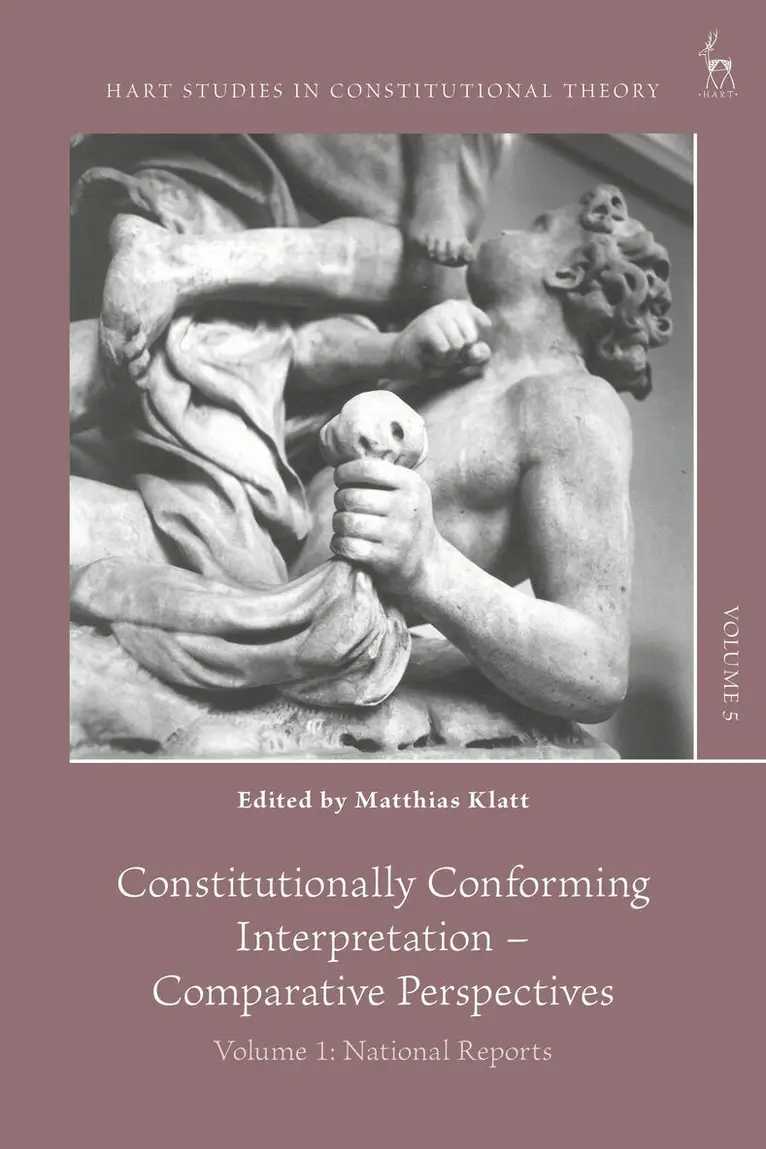
This is the first part of a 2-volume set that presents an in-depth investigation into the canon of constitutionally conforming interpretation. These volumes address the fundamental issues the canon raises in the national, supranational and international contexts. In volume 1, experts from 19 jurisdictions, including Brazil, Canada, India, the UK, and the USA, present reports which give concise overviews of the approaches and debates on constitutionally conforming interpretation. These reports cover the structural background, the conditions of application, as well as issues of competence. Further aspects discussed are its perceived normativity and popularity in everyday legal practice.Together with volume 2, which explores the canon’s use and theoretical impact beyond the national context in a comparative and critical manner, this book fills an important gap in legal scholarship and sets the stage for cross-national discourse.
Inbunden, Engelska, 2025
1 233 kr
Skickas inom 5-8 vardagar
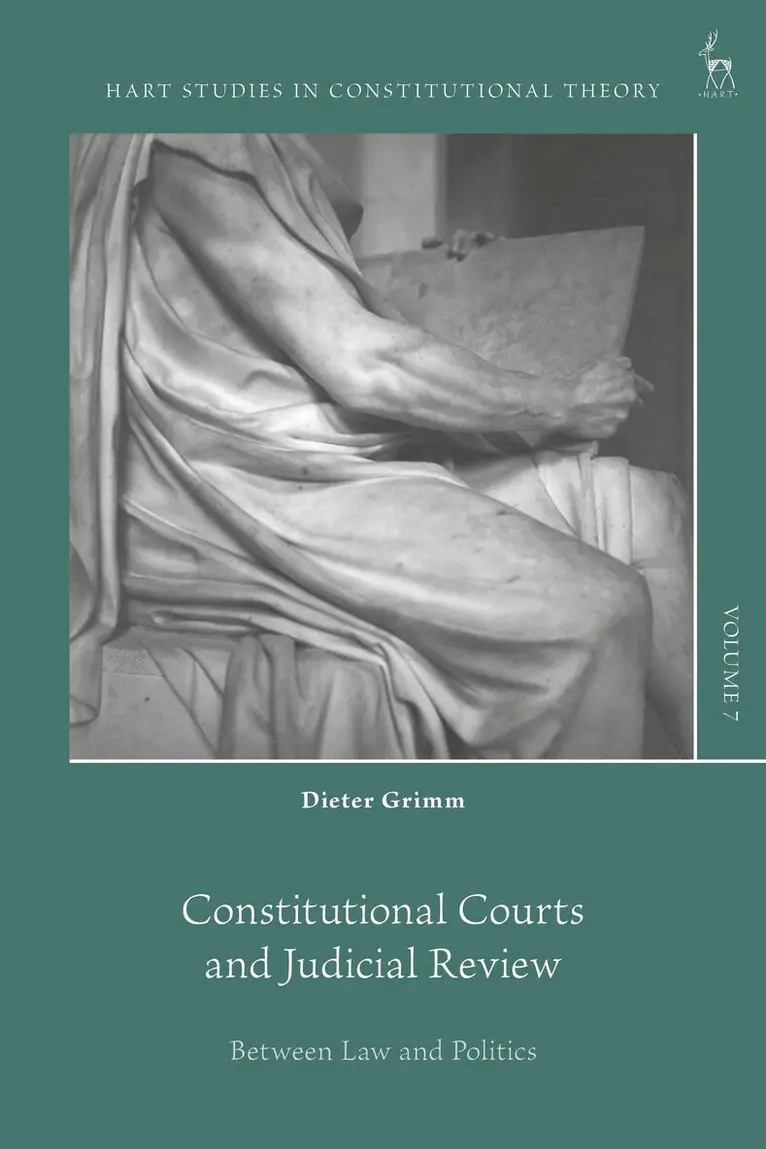
This collection of essays from Dieter Grimm, Germany’s most renowned constitutional scholar, shines a light on the jurisprudence of the German Constitutional Court and constitutional adjudication in general. Established in 1951, the court has become a blueprint for new courts ever since and its jurisprudence, particularly in the field of fundamental rights, has influenced the decisions of judges throughout the world. After the seismic constitutional changes of the years 1989–90 in Germany and beyond, many countries adopted new democratic constitutions and established constitutional courts in order to make their constitutions effective. Today, many of these courts are under attack both politically and intellectually. In this book, Grimm considers some of the fundamental questions under academic scrutiny today: are constitutional courts political or legal institutions? Is judicial review a political or a legal activity? Is it a threat to, or a condition, of democracy? Should these courts be abolished or strengthened? Is a rational interpretation of constitutional law possible? The essays provide answers to these questions and describe how constitutional courts work if they properly fulfill their function of enforcing the constitution. A special emphasis is put on the importance of constitutional interpretation: something, the author argues, that most critics of constitutional adjudication neglect.
Häftad, Engelska, 2026
629 kr
Skickas inom 10-15 vardagar
This collection of essays from Dieter Grimm, Germany’s most renowned constitutional scholar, shines a light on the jurisprudence of the German Constitutional Court and constitutional adjudication in general. Established in 1951, the court has become a blueprint for new courts ever since and its jurisprudence, particularly in the field of fundamental rights, has influenced the decisions of judges throughout the world. After the seismic constitutional changes of the years 1989–90 in Germany and beyond, many countries adopted new democratic constitutions and established constitutional courts in order to make their constitutions effective. Today, many of these courts are under attack both politically and intellectually. In this book, Grimm considers some of the fundamental questions under academic scrutiny today: are constitutional courts political or legal institutions? Is judicial review a political or a legal activity? Is it a threat to, or a condition, of democracy? Should these courts be abolished or strengthened? Is a rational interpretation of constitutional law possible? The essays provide answers to these questions and describe how constitutional courts work if they properly fulfill their function of enforcing the constitution. A special emphasis is put on the importance of constitutional interpretation: something, the author argues, that most critics of constitutional adjudication neglect.
Inbunden, Engelska, 2026
1 126 kr
Skickas inom 10-15 vardagar
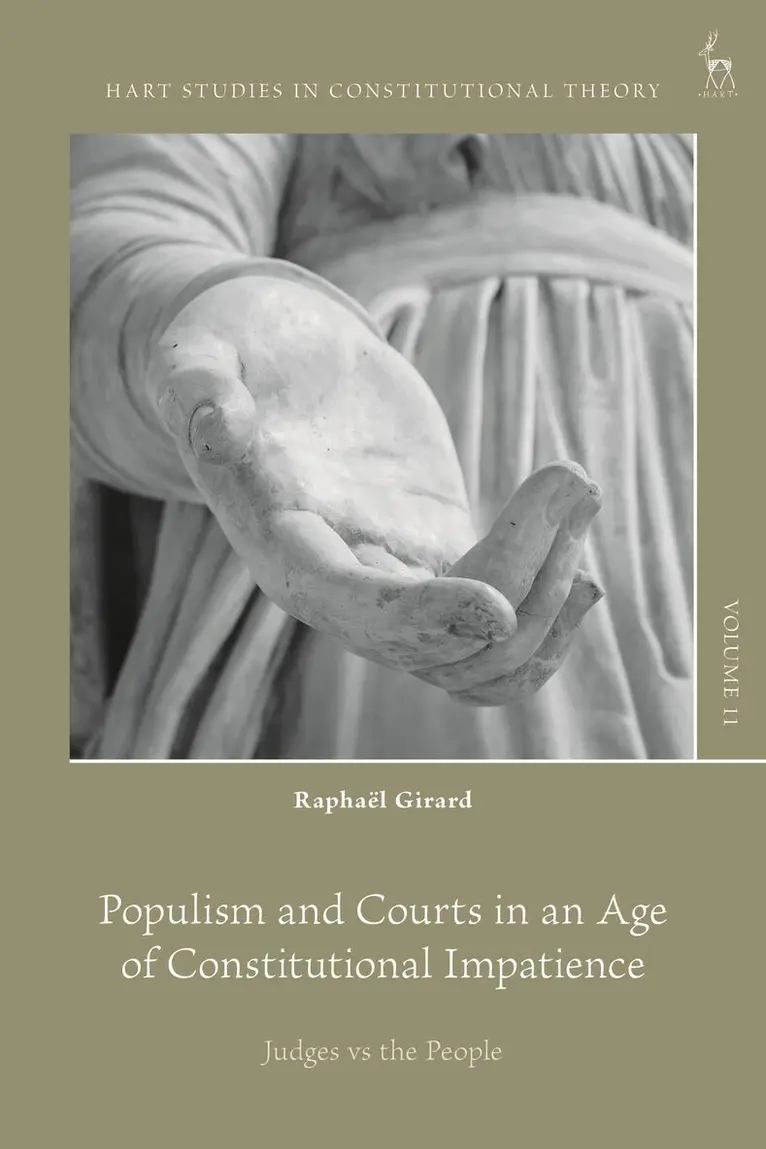
This book addresses one of the most pressing issues of our time: the rise of populism and its implications, particularly for courts and other legal institutions.It questions and ultimately challenges the prevailing view in comparative constitutional law that courts can act as bulwarks against authoritarian, self-aggrandising populists in power. In doing so, it offers both a novel theoretical framework and a fresh contextual inquiry.Theoretically, the book uses the lens of spatiotemporality – the conjunction of space and time – to analyse populism as a constitutional project. It argues that contemporary populism is marked by constitutional impatience: a drive for temporal efficiency and spatial proximity that reshapes and reconfigures law’s institutional and normative order.Contextually, the book focuses primarily on one key institution of liberal constitutional democracy: the judiciary. It offers a contextual analysis of three case studies: Armenia, Ecuador and the United Kingdom. In doing so, it not only highlights populism’s reach beyond established democracies but also brings fresh insights from understudied jurisdictions at the periphery or in the Global South.Overall, the book suggests that populism’s relationship with constitutionalism is complex and context-dependent. Instead of yielding uniform outcomes, it produces divergent tensions and impacts, thereby challenging assumptions about both the institutional role of courts and the nature of constitutionalism itself.
Häftad, Engelska, 2027
603 kr
Kommande
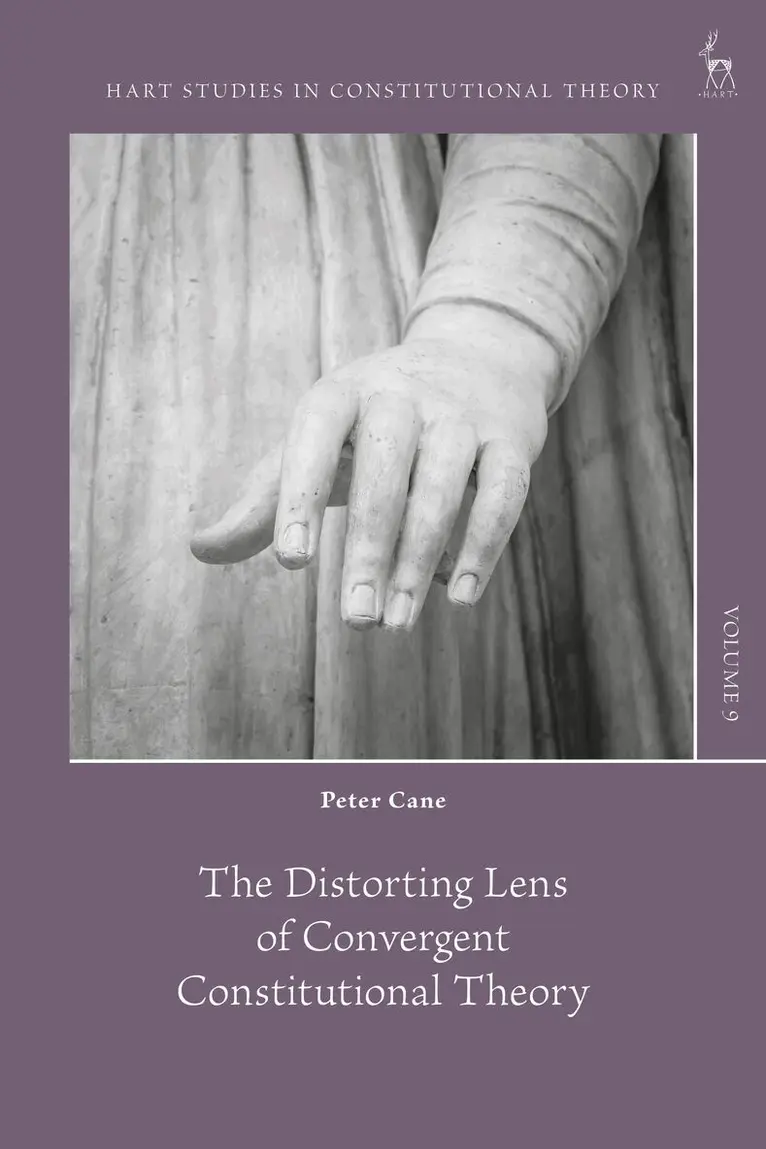
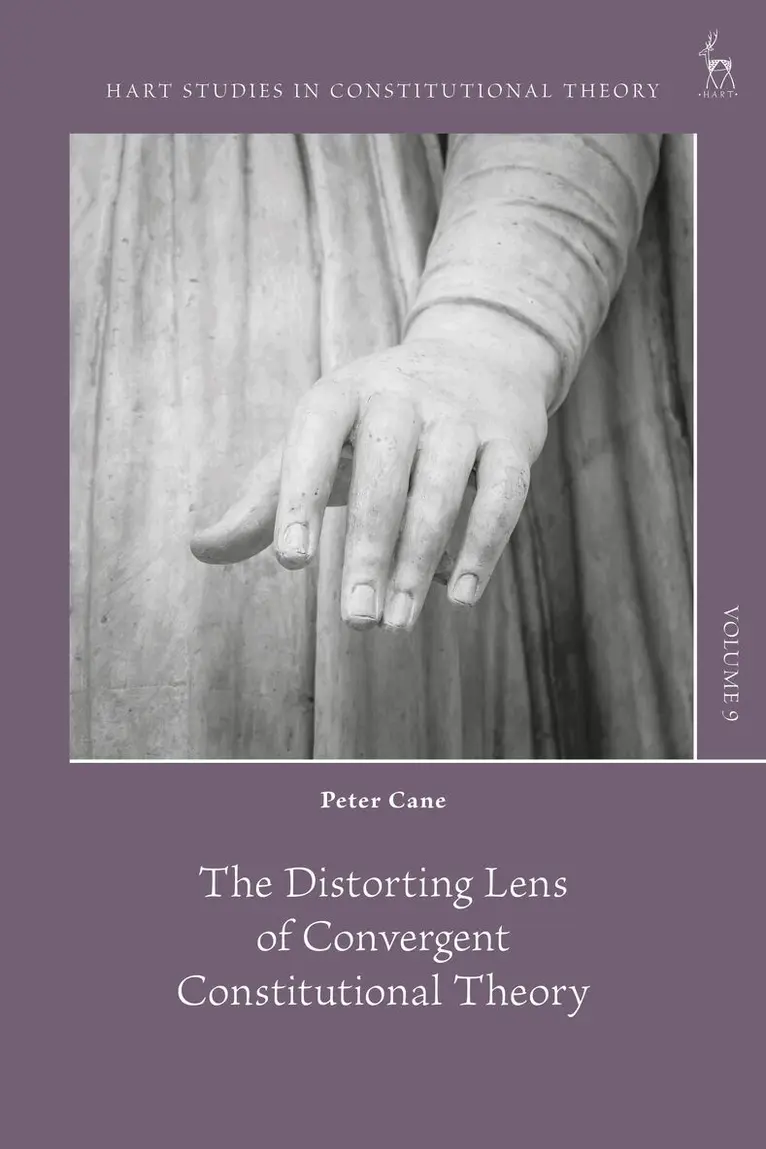
This book challenges the near-universal acceptance of a US-style, Western constitutional paradigm as the best basis for comparative constitutional studies.It does so on three main grounds: anachronism, ‘othering’ and cultural specificity. Main pillars of ‘convergent constitutional theory’ are rooted in the revolutionary, late-eighteenth century – a lost world; constitutional arrangements that deviate from the paradigm are often branded as ‘outliers’ or even as not constitutional at all; and the foundations of the paradigm in liberal democracy give no space for other forms of constitutionalism. Whatever the attractions of convergent theory as a normative ideal of good government, for the purposes of understanding, analysing and explaining constitutional systems it is far from ideal.This book discusses and questions: convergent theory’s weddedness to writing as the technology of constitution-making; its image of a constitution as fundamental law; its idea that a constitution expresses the ‘sovereignty of the people’; its use of tripartite separation of powers as the basic principle of institutional design; its relative neglect of administrative law; its association of ‘rights’ with judicially enforceable bills of rights; and its obsession with a vaguely specified concept of ‘democracy’.It makes suggestions for alternative, preferable methods of understanding, analysing and explaining constitutions, and governmental and constitutional systems.
Inbunden, Engelska, 2025
1 002 kr
Skickas inom 10-15 vardagar
This book challenges the near-universal acceptance of a US-style, Western constitutional paradigm as the best basis for comparative constitutional studies.It does so on three main grounds: anachronism, ‘othering’ and cultural specificity. Main pillars of ‘convergent constitutional theory’ are rooted in the revolutionary, late-eighteenth century – a lost world; constitutional arrangements that deviate from the paradigm are often branded as ‘outliers’ or even as not constitutional at all; and the foundations of the paradigm in liberal democracy give no space for other forms of constitutionalism. Whatever the attractions of convergent theory as a normative ideal of good government, for the purposes of understanding, analysing and explaining constitutional systems it is far from ideal.This book discusses and questions: convergent theory’s weddedness to writing as the technology of constitution-making; its image of a constitution as fundamental law; its idea that a constitution expresses the ‘sovereignty of the people’; its use of tripartite separation of powers as the basic principle of institutional design; its relative neglect of administrative law; its association of ‘rights’ with judicially enforceable bills of rights; and its obsession with a vaguely specified concept of ‘democracy’.It makes suggestions for alternative, preferable methods of understanding, analysing and explaining constitutions, and governmental and constitutional systems.