Charles C. Moskos – författare
Visar alla böcker från författaren Charles C. Moskos. Handla med fri frakt och snabb leverans.
8 produkter
Postmodern Military
Armed Forces after the Cold War
Av Charles C. Moskos, Moskos m. fl.
Inbunden, 1999
3698 kr
Lägg i varukorg
The end of the Cold War augurs momentous changes within armed forces in Western societies. Clarification of these changes is the purpose of The Postmodern Military. The armed forces of the United States and those of other Western developed democracies are moving toward a postmodern format. The …
New Conscientious Objection
From Sacred to Secular Resistance
Av John Whiteclay Chambers II, Charles C. Moskos
E-bok, 1993
1155 kr
Lägg i varukorg
Although conscientious objection is a long-standing phenomenon, it has only recently become a major factor affecting armed forces and society. The only comprehensive, comparative scholarly study of conscientious objection to military service, this book examines the history of the practice in the …
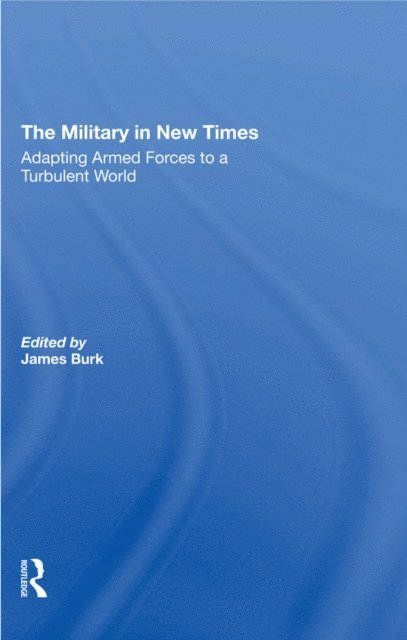
Military In New Times
Adapting Armed Forces To A Turbulent World
Av James Burk, Robert J Waldman m. fl.
Inbunden, 2019
2510 kr
Lägg i varukorg
What role will armed forces play in a world that is turbulent yet no longer organized by the bipolar conflict of East and West? In this volume, leading experts from several disciplines assess the rapidly changing global strategic and cultural landscape, examining how it will affect the …
Military In New Times
Adapting Armed Forces To A Turbulent World
Av James Burk, Robert J Waldman m. fl.
Häftad, 2024
604 kr
Lägg i varukorg
What role will armed forces play in a world that is turbulent yet no longer organized by the bipolar conflict of East and West? In this volume, leading experts from several disciplines assess the rapidly changing global strategic and cultural landscape, examining how it will affect the …
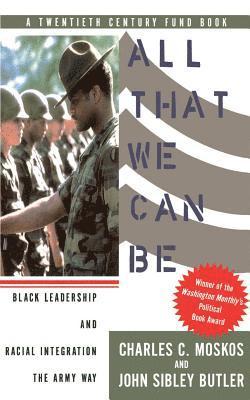
All That We Can Be
Black Leadership And Racial Integration The Army Way
Av Charles C. Moskos, John Butler
Häftad, 1997
265 kr
Lägg i varukorg
The foremost autorities on race relations in the armed forces recount the previously untold success story of how the U.S. Army became the most integrated institution in America. Charles C. Moskos and John Sibley Butler observe that the Army is the only place in America where blacks routinely boss …
Military In New Times
Adapting Armed Forces To A Turbulent World
Av Charles C Moskos, David R Segal m. fl.
E-bok, 2019
710 kr
Lägg i varukorg
What role will armed forces play in a world that is turbulent yet no longer organized by the bipolar conflict of East and West? In this volume, leading experts from several disciplines assess the rapidly changing global strategic and cultural landscape, examining how it will affect the …
Military In New Times
Adapting Armed Forces To A Turbulent World
Av Charles C Moskos, David R Segal m. fl.
E-bok, 2019
710 kr
Lägg i varukorg
What role will armed forces play in a world that is turbulent yet no longer organized by the bipolar conflict of East and West? In this volume, leading experts from several disciplines assess the rapidly changing global strategic and cultural landscape, examining how it will affect the …
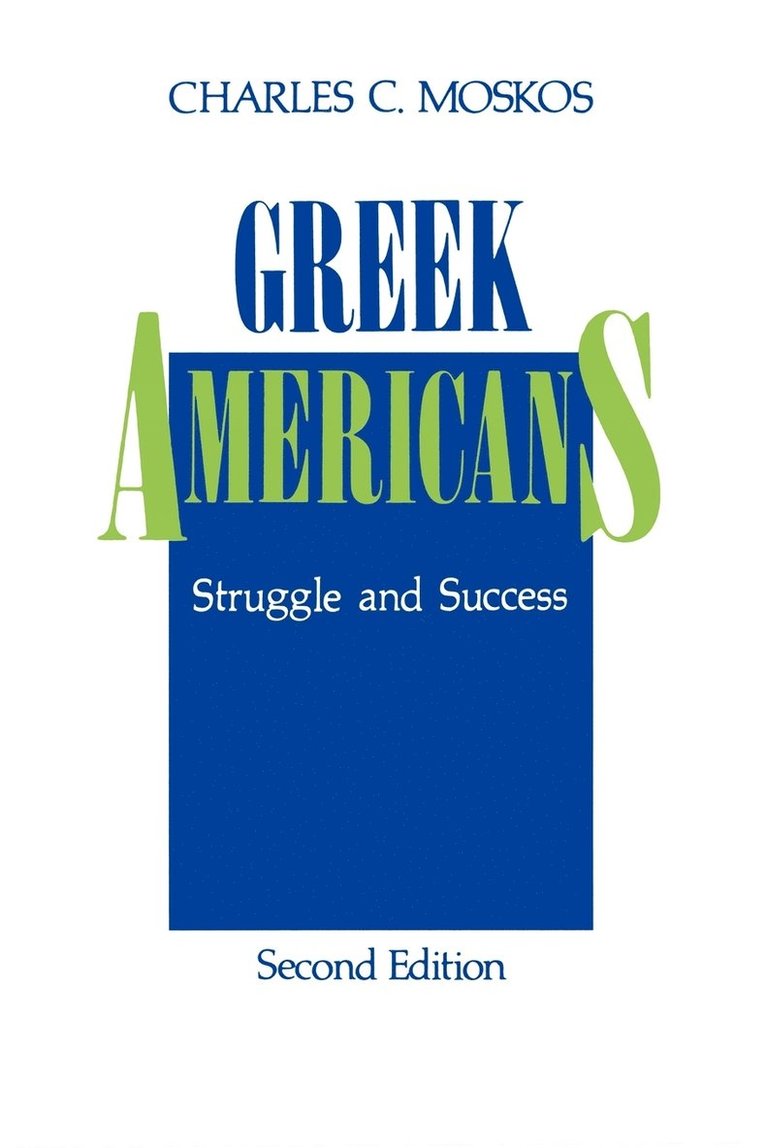
Greek Americans
Struggle and Success
Häftad, 1989
508 kr
Tillfälligt slut
This is an engrossing account of Greek Americans--their history, strengths, conflicts, aspirations, and contributions