Charles G. Gebelein - Böcker
Visar alla böcker från författaren Charles G. Gebelein. Handla med fri frakt och snabb leverans.
6 produkter
6 produkter
1 638 kr
Skickas inom 10-15 vardagar
The art of using chemical agents for medication dates back into antiquity, although most of the earliest examples used plants, herbs, and other natural materials. The old Egyptian medical papyri, which date from before 1400 B. C. , contain dozens of examples of such medicinal plants and animal extracts. In the Old Testament of the Bible, we can find references to using oil to soften the skin and sores (Isaiah 1:6), the use of tree leaves for medicine (Ezekiel 47:12) and various medical balms (Jeremiah 8:22). Not all these recipes were effective in curing the ailments for which they were used and sometimes the treatment was worse than the disease. Nevertheless, the art of using chemical derived agents for medicines continued to develop and received great impetus during the present century with the rise of synthetic organic chemistry. One of the most vexing problems has always been to achieve specifici ty with the medications. While some medical agents do indeed possess a relatively high degree of specificity, most agents are far more systemic than would be desired. Much of the research efforts to correct this deficiency has centered on modifying the chemical agents themselves. Unfortunately, there are severe limitations in this approach since minor modifications often drastically affect the therapeutic activity and can even render the drug completely ineffective, or worse.
1 590 kr
Skickas inom 10-15 vardagar
2 181 kr
Skickas inom 10-15 vardagar
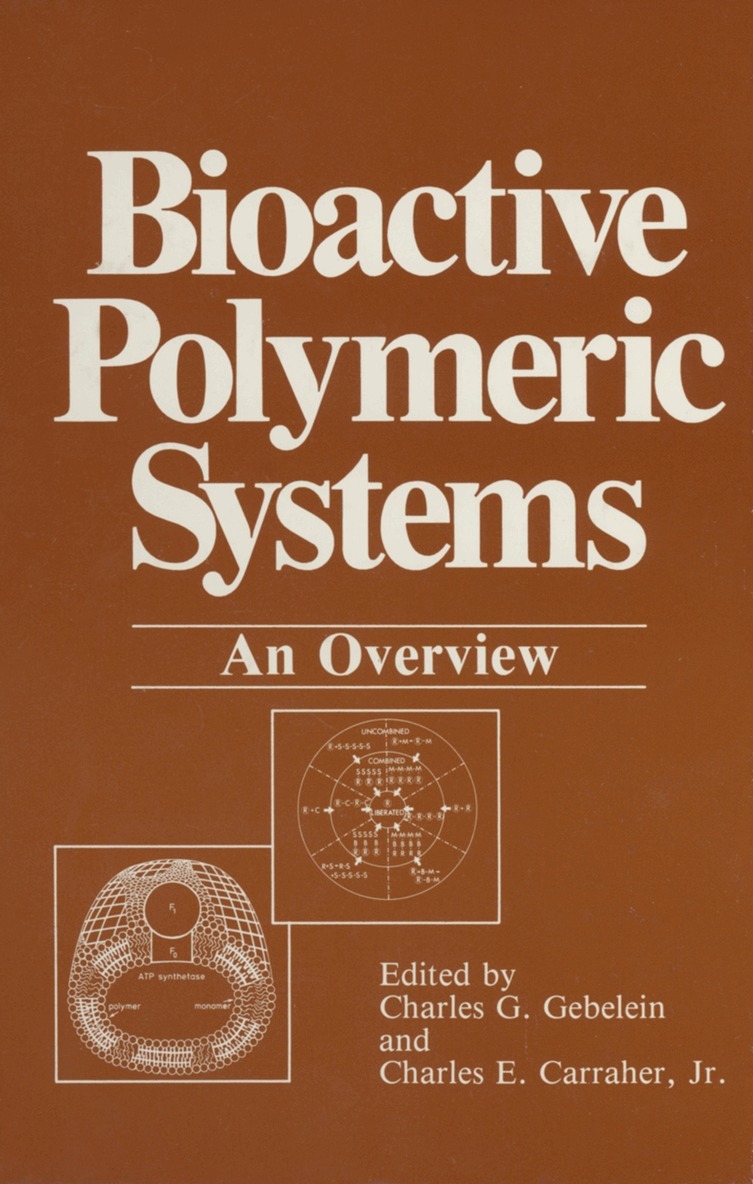
Some have predicted that the coming several decades will be the decades of "biotechnology," wherein cancer, birth defects, life span increases, cosmetics, biodegradation, oil spills and exploration, solid waste disposal, and almost every aspect of our material life will be affected by this new area of science. There will also be an extension of emphasis on giant molecules: DNA, enzymes, polysaccharides, lignins, proteins, hemoglobin, and many others. Biotechnology has been defined in various ways. In one sense, this field is older than human history and references to the human use of biotechnology-derived materials can be found in the oldest human writings, such as the Bible. In this book, biotechnology refers to the direct usage of naturally occurring materials or their uses as a feedstock, including the associated biological activities and applications of these materials. Bioactive polymers, on the other hand, are polymers which exert some type of activity on living organisms. These polymers are used in agriculture, controlled release systems, medicine and many other areas. The papers in this book describe polymers which essentially combine features of biotechnology and bioactivity.
540 kr
Skickas inom 10-15 vardagar
The vast array of libraries in the world bear mute witness to the truth of the 3000-year-old observation of King Solomon who stated " ... of making many books there is no end, and much study is a weariness of the flesh." Yet books are an essential written record of our lives and the progress of science and humanity. Here is another book to add to this huge collection, but, hopefully, not just another collection of pages, but rather a book with a specific purpose to aid in alleviating the "weariness of the flesh" that could arise from much studying of other journals and books in order to obtain the basic information contained herein. This book is about polymeric materials and biological activity, as the title notes. Polymeric materials, in the broad view taken here, would include not only synthetic polymers (e.g., polyethylene, polyvinyl chloride, polyesters, polyamides, etc.), but also the natural macromolecules (e.g., proteins, nucleic acids, polysaccharides) which compose natural tissues in humans, animals and plants. In the broad sense used here, biological activity is any type of such action whether it be in medication, pest control, plant-growth regu lation, and so on. In short, this book attempts to consider, briefly, the use of any type of polymeric material system with essentially any kind of biological activity.
1 638 kr
Skickas inom 10-15 vardagar
1 590 kr
Skickas inom 10-15 vardagar
The art of using chemical agents for medication dates back into antiquity, although most of the earliest examples used plants, herbs, and other natural materials. The old Egyptian medical papyri, which date from before 1400 B. C. , contain dozens of examples of such medicinal plants and animal extracts. In the Old Testament of the Bible, we can find references to using oil to soften the skin and sores (Isaiah 1:6), the use of tree leaves for medicine (Ezekiel 47:12) and various medical balms (Jeremiah 8:22). Not all these recipes were effective in curing the ailments for which they were used and sometimes the treatment was worse than the disease. Nevertheless, the art of using chemical derived agents for medicines continued to develop and received great impetus during the present century with the rise of synthetic organic chemistry. One of the most vexing problems has always been to achieve specifici ty with the medications. While some medical agents do indeed possess a relatively high degree of specificity, most agents are far more systemic than would be desired. Much of the research efforts to correct this deficiency has centered on modifying the chemical agents themselves. Unfortunately, there are severe limitations in this approach since minor modifications often drastically affect the therapeutic activity and can even render the drug completely ineffective, or worse.