Charles P. Nemeth – författare
1 030 kr
Skickas inom 10-15 vardagar
999 kr
Skickas inom 10-15 vardagar
1 184 kr
Läs direkt efter köp
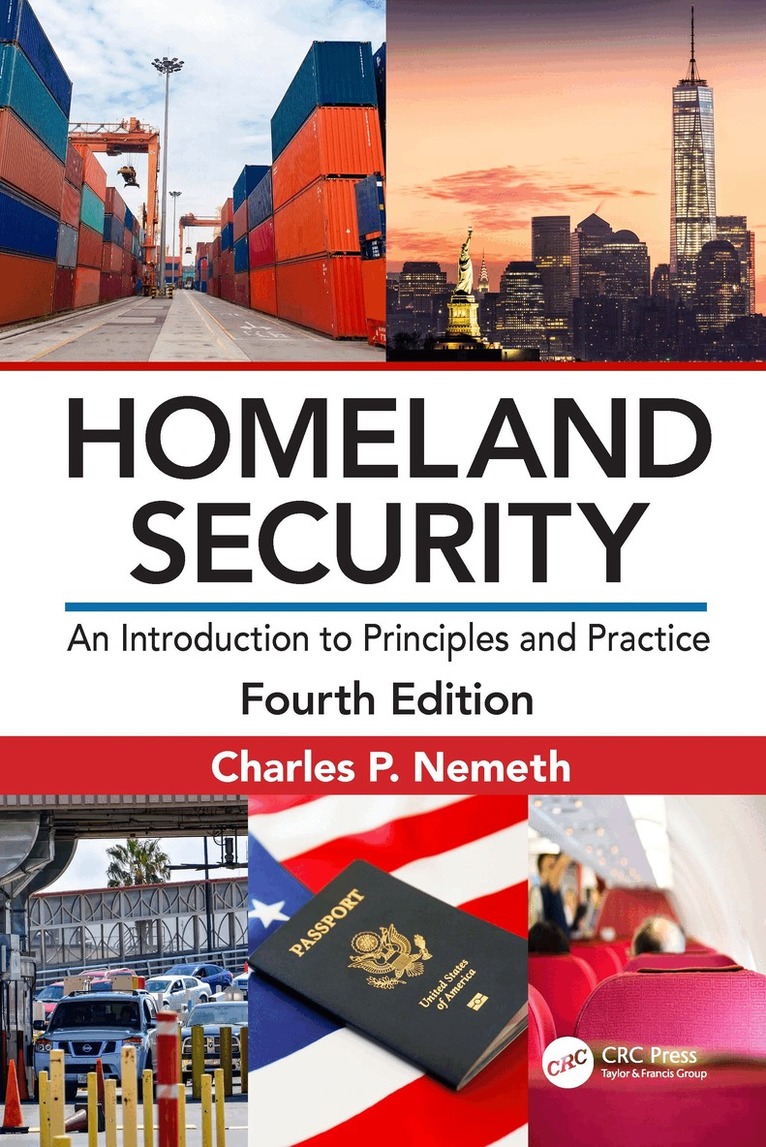
Homeland Security: An Introduction to Principles and Practice, Fourth Edition continues its record of providing a fully updated, no-nonsense textbook to reflect the latest policy, operational, and program changes to the Department of Homeland Security (DHS) over the last several years. The blend of theory with practical application instructs students on how to understand the need to reconcile policy and operational philosophy with the real-world use of technologies and implementation of practices.
The new edition is completely updated to reflect changes to both new challenges and continually changing considerations. This includes facial recognition, intelligence gathering techniques, information sharing databases, white supremacy, domestic terrorism and lone wolf actors, border security and immigration, the use of drones and surveillance technology, cybersecurity, the status of ISIS and Al Qaeda, the increased nuclear threat, COVID-19, ICE, DACA, and immigration policy challenges. Consideration of, and the coordinated response, to all these and more is housed among a myriad of federal agencies and departments.
Features
• Provides the latest organizational changes, restructures, and policy developments in DHS
• Outlines the role of multi-jurisdictional agencies—this includes stakeholders at all levels of government relative to the various intelligence community, law enforcement, emergency managers, and private sector agencies
• Presents a balanced approach to the challenges the federal and state government agencies are faced with in emergency planning and preparedness, countering terrorism, and critical infrastructure protection
• Includes full regulatory and oversight legislation passed since the last edition, as well as updates on the global terrorism landscape and prominent terrorist incidents, both domestic and international
• Highlights emerging, oftentimes controversial, topics such as the use of drones, border security and immigration, surveillance technologies, and pandemic planning and response
• Contains extensive pedagogy including learning objectives, sidebar boxes, chapter summaries, end of chapter questions, Web links, and references for ease in comprehension
Homeland Security, Fourth Edition continues to serve as the comprehensive and authoritative text on homeland secuirty. The book presents the various DHS state and federal agencies and entities within the government—their role, how they operate, their structure, and how they interact with other agencies—to protect U.S. domestic interests from various dynamic threats.
Ancillaries including an Instructor''s Manual with Test Bank and chapter PowerPointTM slides for classroom presentation are also available for this book and can be provided for qualified course instructors.
Charles P. Nemeth
is a recognized expert in homeland security and a leader in the private security industry, private sector justice, and homeland security education. He has more than 45 book publications and is currently Chair of the Department of Security, Fire, and Emergency Management at John Jay College in New York City.1 184 kr
Läs direkt efter köp
Homeland Security: An Introduction to Principles and Practice, Fourth Edition continues its record of providing a fully updated, no-nonsense textbook to reflect the latest policy, operational, and program changes to the Department of Homeland Security (DHS) over the last several years. The blend of theory with practical application instructs students on how to understand the need to reconcile policy and operational philosophy with the real-world use of technologies and implementation of practices.
The new edition is completely updated to reflect changes to both new challenges and continually changing considerations. This includes facial recognition, intelligence gathering techniques, information sharing databases, white supremacy, domestic terrorism and lone wolf actors, border security and immigration, the use of drones and surveillance technology, cybersecurity, the status of ISIS and Al Qaeda, the increased nuclear threat, COVID-19, ICE, DACA, and immigration policy challenges. Consideration of, and the coordinated response, to all these and more is housed among a myriad of federal agencies and departments.
Features
• Provides the latest organizational changes, restructures, and policy developments in DHS
• Outlines the role of multi-jurisdictional agencies—this includes stakeholders at all levels of government relative to the various intelligence community, law enforcement, emergency managers, and private sector agencies
• Presents a balanced approach to the challenges the federal and state government agencies are faced with in emergency planning and preparedness, countering terrorism, and critical infrastructure protection
• Includes full regulatory and oversight legislation passed since the last edition, as well as updates on the global terrorism landscape and prominent terrorist incidents, both domestic and international
• Highlights emerging, oftentimes controversial, topics such as the use of drones, border security and immigration, surveillance technologies, and pandemic planning and response
• Contains extensive pedagogy including learning objectives, sidebar boxes, chapter summaries, end of chapter questions, Web links, and references for ease in comprehension
Homeland Security, Fourth Edition continues to serve as the comprehensive and authoritative text on homeland secuirty. The book presents the various DHS state and federal agencies and entities within the government—their role, how they operate, their structure, and how they interact with other agencies—to protect U.S. domestic interests from various dynamic threats.
Ancillaries including an Instructor''s Manual with Test Bank and chapter PowerPointTM slides for classroom presentation are also available for this book and can be provided for qualified course instructors.
Charles P. Nemeth
is a recognized expert in homeland security and a leader in the private security industry, private sector justice, and homeland security education. He has more than 45 book publications and is currently Chair of the Department of Security, Fire, and Emergency Management at John Jay College in New York City.990 kr
Läs direkt efter köp
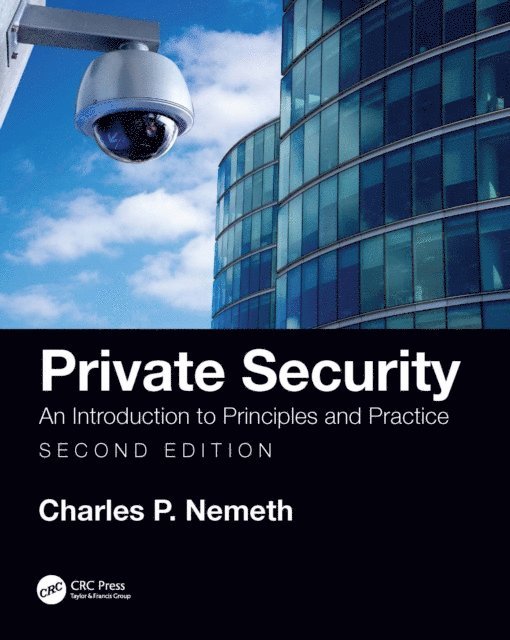
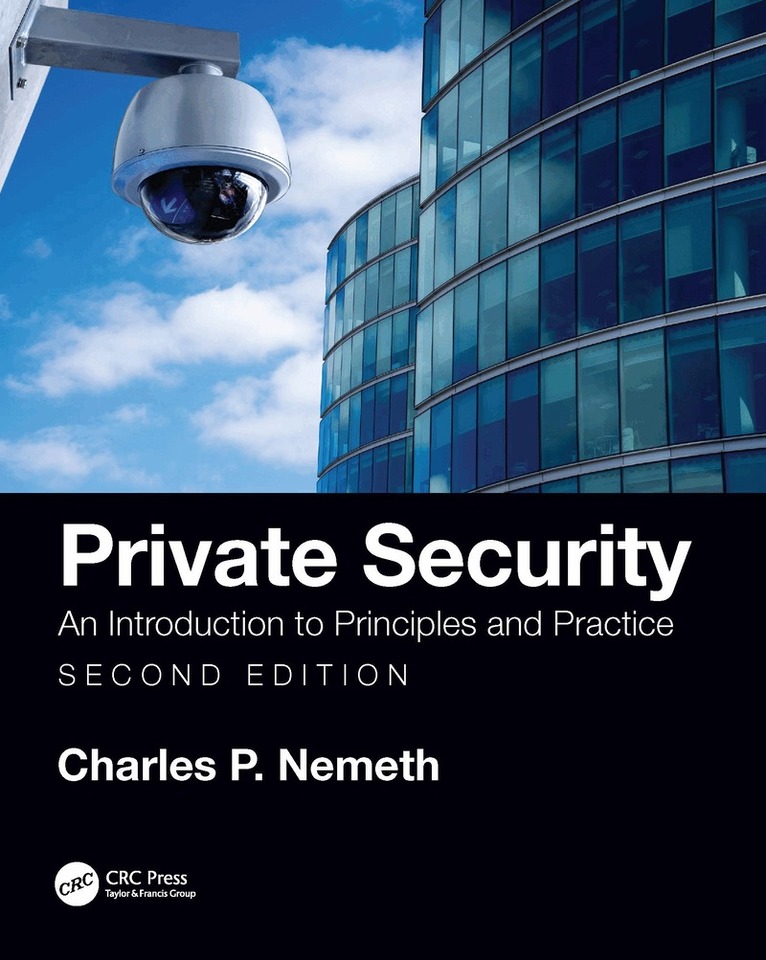
Private Security: An Introduction to Principles and Practice, Second Edition explains foundational security principles—defining terms and outlining the increasing scope of security in daily life—while reflecting current practices of private security as an industry and profession.
The book looks at the development and history of the industry, outlines fundamental security principles, and the growing dynamic and overlap that exists between the private sector security and public safety and law enforcement—especially since the events of 9/11. Chapters focus on current practice, reflecting the technology-driven, fast-paced, global security environment. Such topics covered include security law and legal issues, risk management, physical security, human resources and personnel considerations, investigations, institutional and industry-specific security, crisis and emergency planning, computer, and information security. A running theme of this edition is highlighting—where appropriate—how security awareness, features, and applications have permeated all aspects of our modern lives.
Key Features:
Provides current best practices detailing the skills that professionals, in the diverse and expanding range of career options, need to succeed in the field Outlines the unique role of private sector security companies as compared to federal and state law enforcement responsibilities Includes key terms, learning objectives, end of chapter questions, Web exercises, and numerous references—throughout the book—to enhance student learningCritical infrastructure protection and terrorism concepts, increasingly of interest and relevant to the private sector, are referenced throughout the book. Threat assessment and information sharing partnerships between private security entities public sector authorities—at the state and federal levels—are highlighted. Private Security, Second Edition takes a fresh, practical approach to the private security industry’s role and impact in a dynamic, ever-changing threat landscape.
990 kr
Läs direkt efter köp
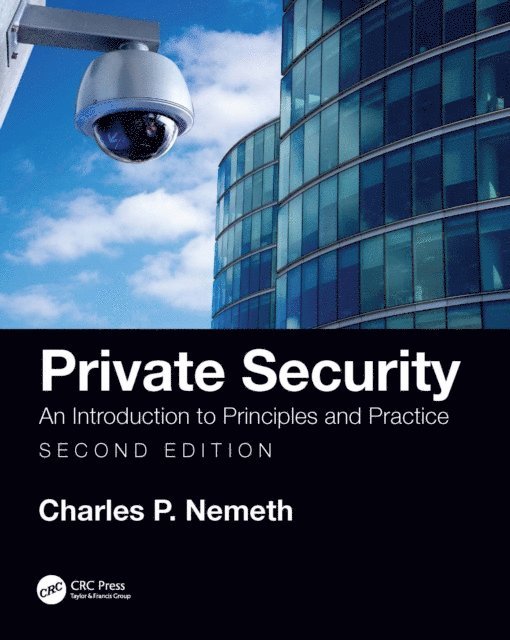
Private Security: An Introduction to Principles and Practice, Second Edition explains foundational security principles—defining terms and outlining the increasing scope of security in daily life—while reflecting current practices of private security as an industry and profession.
The book looks at the development and history of the industry, outlines fundamental security principles, and the growing dynamic and overlap that exists between the private sector security and public safety and law enforcement—especially since the events of 9/11. Chapters focus on current practice, reflecting the technology-driven, fast-paced, global security environment. Such topics covered include security law and legal issues, risk management, physical security, human resources and personnel considerations, investigations, institutional and industry-specific security, crisis and emergency planning, computer, and information security. A running theme of this edition is highlighting—where appropriate—how security awareness, features, and applications have permeated all aspects of our modern lives.
Key Features:
Provides current best practices detailing the skills that professionals, in the diverse and expanding range of career options, need to succeed in the field Outlines the unique role of private sector security companies as compared to federal and state law enforcement responsibilities Includes key terms, learning objectives, end of chapter questions, Web exercises, and numerous references—throughout the book—to enhance student learningCritical infrastructure protection and terrorism concepts, increasingly of interest and relevant to the private sector, are referenced throughout the book. Threat assessment and information sharing partnerships between private security entities public sector authorities—at the state and federal levels—are highlighted. Private Security, Second Edition takes a fresh, practical approach to the private security industry’s role and impact in a dynamic, ever-changing threat landscape.
1 087 kr
Läs direkt efter köp
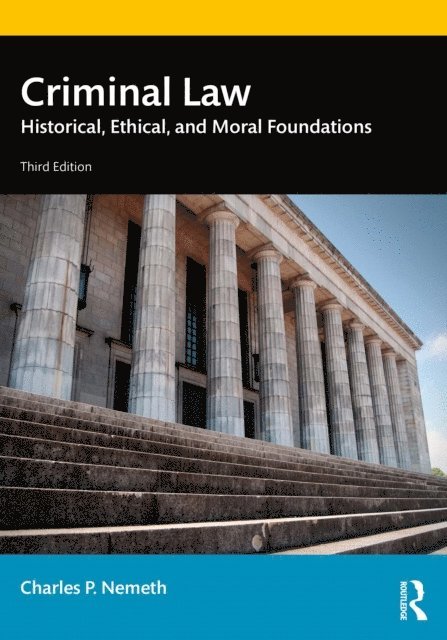
Criminal Law: Historical, Ethical, and Moral Foundations, 3rd edition, blends legal and moral reasoning in the examination of crimes and explores the history relating to jurisprudence and roots of criminal law. In order to fully grasp criminal law concepts, students must go beyond mere rote memorization of the penal code and endeavor to understand where the laws originate from and how they have developed. This book fosters discussions of controversial issues and delivers abridged case law decisions that target the essence of appellate rulings.
Grounded in the Model Penal Code, making the text national in scope, this volume examines:
Why the criminal codes originated, and the moral, religious, spiritual, and human influences that led to our present system
How crimes are described in the modern criminal justice model
The two essential elements necessary for criminal culpability: actus reus (the act committed or omitted) and mens rea (the mind and intent of the actor)
Offenses against the body resulting in death, including murder, manslaughter, felony murder, and negligent homicide
Non-terminal criminal conduct against the body, including robbery, kidnapping, false imprisonment, assault, and hate crimes
Sexual assault, rape, necrophilia, incest, and child molestation
Property offenses, such as larceny/theft, bribery, forgery, and embezzlement
Crimes against the home, including burglary, trespassing, arson, and vandalism
The book also examines controversial public morality issues such as prostitution, drug legalization, obscenity, and pornography. The final two chapters discuss inchoate offenses, where the criminal act has not been completed, and various criminal defenses, such as legal insanity, entrapment, coercion, self-defense, and mistake of fact or law. Important keywords introduce each chapter, and discussion questions and suggested readings appear at the end of each chapter, prompting lively debate and further inquiry into a fascinating subject area that continues to evolve. Updated to include the latest developments in the law, this book is appropriate for undergraduate students in criminal law and related courses.
1 087 kr
Läs direkt efter köp
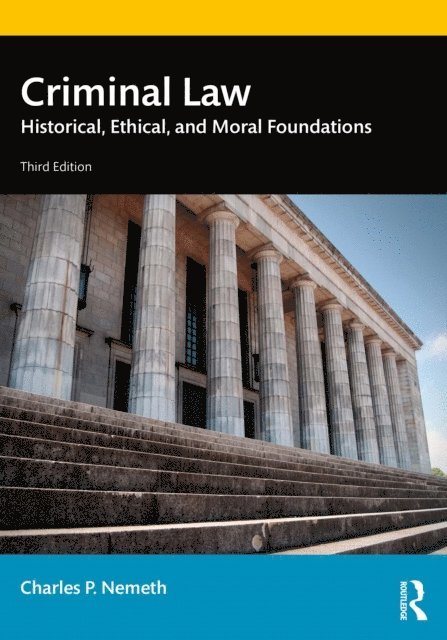
Criminal Law: Historical, Ethical, and Moral Foundations, 3rd edition, blends legal and moral reasoning in the examination of crimes and explores the history relating to jurisprudence and roots of criminal law. In order to fully grasp criminal law concepts, students must go beyond mere rote memorization of the penal code and endeavor to understand where the laws originate from and how they have developed. This book fosters discussions of controversial issues and delivers abridged case law decisions that target the essence of appellate rulings.
Grounded in the Model Penal Code, making the text national in scope, this volume examines:
Why the criminal codes originated, and the moral, religious, spiritual, and human influences that led to our present system
How crimes are described in the modern criminal justice model
The two essential elements necessary for criminal culpability: actus reus (the act committed or omitted) and mens rea (the mind and intent of the actor)
Offenses against the body resulting in death, including murder, manslaughter, felony murder, and negligent homicide
Non-terminal criminal conduct against the body, including robbery, kidnapping, false imprisonment, assault, and hate crimes
Sexual assault, rape, necrophilia, incest, and child molestation
Property offenses, such as larceny/theft, bribery, forgery, and embezzlement
Crimes against the home, including burglary, trespassing, arson, and vandalism
The book also examines controversial public morality issues such as prostitution, drug legalization, obscenity, and pornography. The final two chapters discuss inchoate offenses, where the criminal act has not been completed, and various criminal defenses, such as legal insanity, entrapment, coercion, self-defense, and mistake of fact or law. Important keywords introduce each chapter, and discussion questions and suggested readings appear at the end of each chapter, prompting lively debate and further inquiry into a fascinating subject area that continues to evolve. Updated to include the latest developments in the law, this book is appropriate for undergraduate students in criminal law and related courses.
791 kr
Läs direkt efter köp
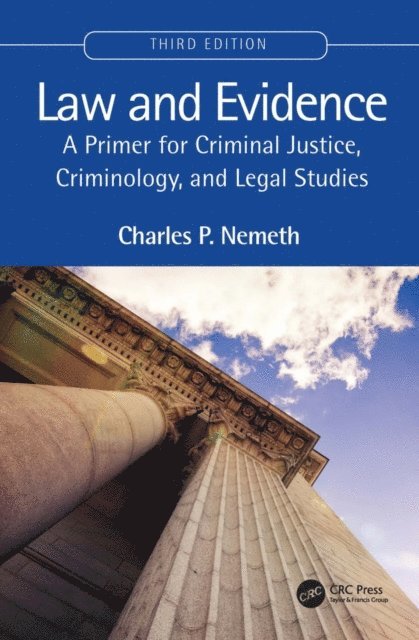
Law and Evidence: A Primer for Criminal Justice, Criminology, and Legal Studies, Third Edition, introduces the complex topic of evidence law in a straightforward and accessible manner. The use and function of evidence in both criminal and civil cases is examined to offer a complete understanding of how evidence principles play out in the real world of litigation and advocacy. This revised Third Edition includes new discussions of rules and case law analysis, forensic cases and evidentiary software programs.
Key features:
Every chapter contains new legal authority that apples to traditional legal principles relevant to evidence law Offers full coverage of evidentiary codes and statutes Provides practical forms, checklists and additional tools throughout for use by current and future practitionersCourse ancillaries including, PowerPointTM lecture slides and an Instructor’s Manual with Test Bank, are available with qualified course adoption.
791 kr
Läs direkt efter köp
Law and Evidence: A Primer for Criminal Justice, Criminology, and Legal Studies, Third Edition, introduces the complex topic of evidence law in a straightforward and accessible manner. The use and function of evidence in both criminal and civil cases is examined to offer a complete understanding of how evidence principles play out in the real world of litigation and advocacy. This revised Third Edition includes new discussions of rules and case law analysis, forensic cases and evidentiary software programs.
Key features:
Every chapter contains new legal authority that apples to traditional legal principles relevant to evidence law Offers full coverage of evidentiary codes and statutes Provides practical forms, checklists and additional tools throughout for use by current and future practitionersCourse ancillaries including, PowerPointTM lecture slides and an Instructor’s Manual with Test Bank, are available with qualified course adoption.
1 224 kr
Läs direkt efter köp
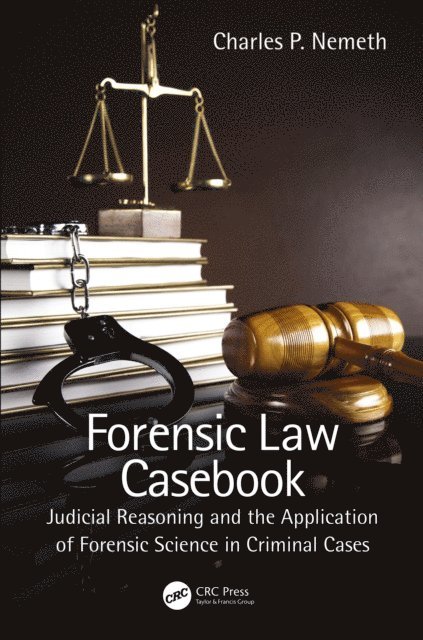
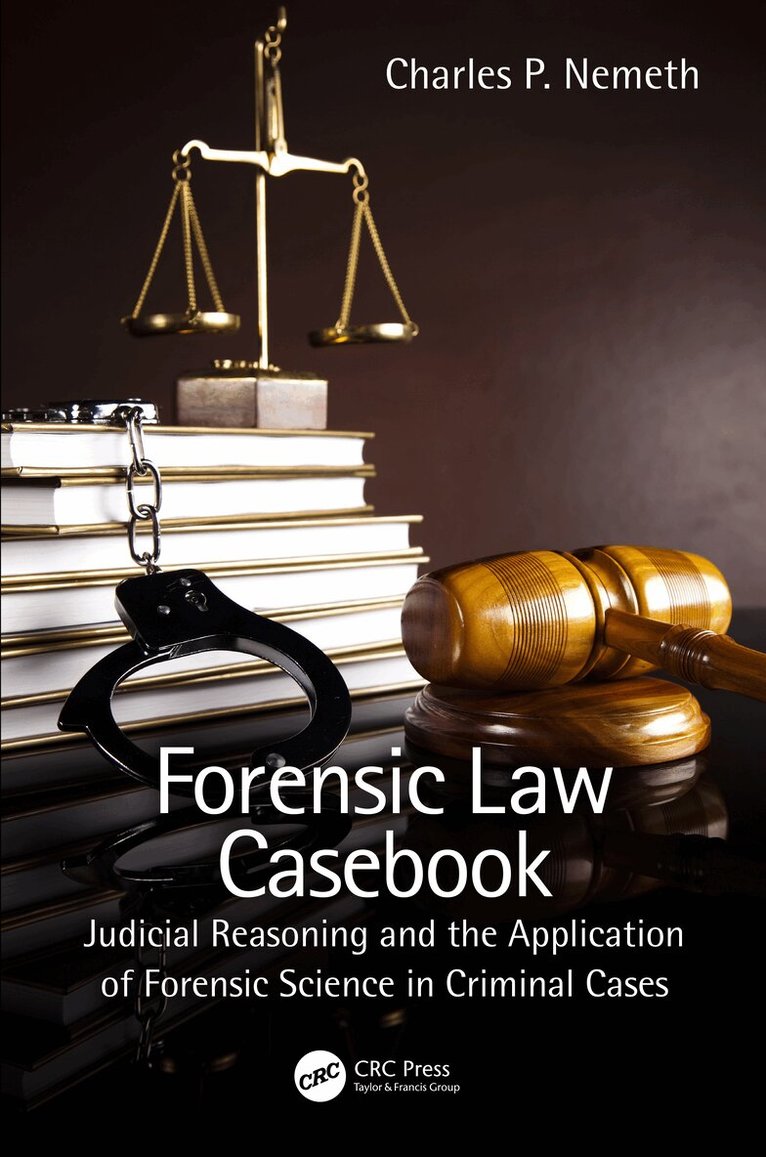
While there are several texts that focus on forensic science techniques and applications, there are few to no quality books that adequately address the judicial interpretation of forensic legal and scientific principles. The field of forensic science and law has long been in need of a historic casebook.
Forensic Law Casebook: Judicial Reasoning and the Application of Forensic Science in Criminal Cases fills the current void by reviewing actual case law and translating the practical application of science to the courtroom. Each chapter represents a unique forensic discipline, providing a short introduction to the subject matter, the relevant case law and court cases that pertain to that subject area and posing a variety of questions and issues to the student. All cases provided contain a sufficient portion of the legal decision - and its implications to the evidence and analytical practices of that discipline - in order to then pose critical and analytical questions to the student, once they have fully read the case material and the decision and considered its implications.
Each chapter ends its theoretical examination with real-world experience encountered by those laboring in the investigative and collection processes - as well as problems or challenges encountered by those employed in the office of the prosecutor, public defender, medical examiner or other aligned office. This last section of each chapter gives true meaning and impact as to how forensic law decision-making impacts forensic practitioners, and a true understanding of the responsibility placed on law enforcement, investigators and scientists tasked with collecting, preserving and analyzing the evidence.
Forensic Law Casebook provides the reader with an array of legal cases and decisions that lay out the parameters of forensic law and its evidentiary value. In the end, what emerges from this are the bedrock principles that guide current forensic evidence and the admissibility of various practices common to the field applications of forensic science. Practitioners, law students, undergraduate and graduate students in compatible majors - as well as law and university libraries - will benefit from this essential reference and adjunct to anyone studying forensic science, criminalistics and the law.
1 224 kr
Läs direkt efter köp
While there are several texts that focus on forensic science techniques and applications, there are few to no quality books that adequately address the judicial interpretation of forensic legal and scientific principles. The field of forensic science and law has long been in need of a historic casebook.
Forensic Law Casebook: Judicial Reasoning and the Application of Forensic Science in Criminal Cases fills the current void by reviewing actual case law and translating the practical application of science to the courtroom. Each chapter represents a unique forensic discipline, providing a short introduction to the subject matter, the relevant case law and court cases that pertain to that subject area and posing a variety of questions and issues to the student. All cases provided contain a sufficient portion of the legal decision - and its implications to the evidence and analytical practices of that discipline - in order to then pose critical and analytical questions to the student, once they have fully read the case material and the decision and considered its implications.
Each chapter ends its theoretical examination with real-world experience encountered by those laboring in the investigative and collection processes - as well as problems or challenges encountered by those employed in the office of the prosecutor, public defender, medical examiner or other aligned office. This last section of each chapter gives true meaning and impact as to how forensic law decision-making impacts forensic practitioners, and a true understanding of the responsibility placed on law enforcement, investigators and scientists tasked with collecting, preserving and analyzing the evidence.
Forensic Law Casebook provides the reader with an array of legal cases and decisions that lay out the parameters of forensic law and its evidentiary value. In the end, what emerges from this are the bedrock principles that guide current forensic evidence and the admissibility of various practices common to the field applications of forensic science. Practitioners, law students, undergraduate and graduate students in compatible majors - as well as law and university libraries - will benefit from this essential reference and adjunct to anyone studying forensic science, criminalistics and the law.
999 kr
Skickas inom 10-15 vardagar
857 kr
Skickas inom 5-8 vardagar
1 968 kr
Skickas inom 10-15 vardagar
1 063 kr
Skickas inom 10-15 vardagar
690 kr
Skickas inom 10-15 vardagar
1 811 kr
Skickas inom 10-15 vardagar
946 kr
Skickas inom 10-15 vardagar
3 089 kr
Skickas inom 10-15 vardagar
2 004 kr
Skickas inom 10-15 vardagar
1 618 kr
Skickas inom 10-15 vardagar
1 386 kr
Skickas inom 10-15 vardagar
526 kr
Läs direkt efter köp
526 kr
Läs direkt efter köp
503 kr
Skickas inom 10-15 vardagar
1 149 kr
Läs direkt efter köp
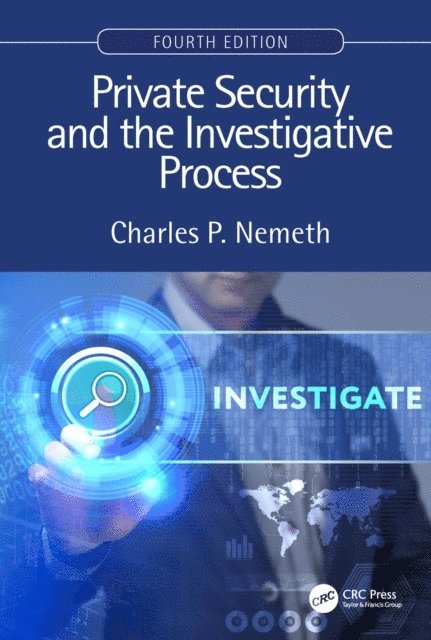
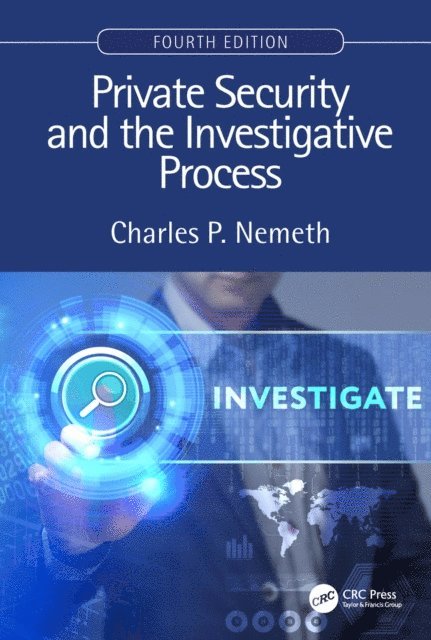
Private Security and the Investigative Process, Fourth Edition is fully updated and continues to provide complete coverage of the investigative process for private investigations by both individuals and in corporate security environments. This edition covers emerging technology, revised legal and practical considerations for conducting interviews, and new information on case evaluation.
Written by a recognized expert in security, criminal justice, ethics, and the law—with over three decades of experience—the updated edition of this popular text covers concepts and techniques that can be applied to a variety of investigations including fraud, insurance, private, and criminal. It details the collection and preservation of evidence, the handling of witnesses, surveillance techniques, background investigations, and report writing. The book reflects best practices and includes tips for ensuring accurate and reliable private sector security investigations. This new edition includes:
A new section on career opportunities in paths in the investigative field
A rundown of the leading security Industry associations and professional standards being published
Added discussion of observational interviews include current protocols analyzing data
Details of the current legal implications for security surveillance and practices
Advances in technology to thwart crime and fraud in retail and other business settings
An entirely new section on e-records from criminal and civil judgments
Authoritative, yet accessible, this book is one of the only textbooks dedicated to the subject. It also serves as an important reference for private investigators and security professionals. Complete with numerous forms, checklists, and web exercises, it provides the tools and understanding required to conduct investigations that are professional, ethical, and effective.
1 149 kr
Läs direkt efter köp
Private Security and the Investigative Process, Fourth Edition is fully updated and continues to provide complete coverage of the investigative process for private investigations by both individuals and in corporate security environments. This edition covers emerging technology, revised legal and practical considerations for conducting interviews, and new information on case evaluation.
Written by a recognized expert in security, criminal justice, ethics, and the law—with over three decades of experience—the updated edition of this popular text covers concepts and techniques that can be applied to a variety of investigations including fraud, insurance, private, and criminal. It details the collection and preservation of evidence, the handling of witnesses, surveillance techniques, background investigations, and report writing. The book reflects best practices and includes tips for ensuring accurate and reliable private sector security investigations. This new edition includes:
A new section on career opportunities in paths in the investigative field
A rundown of the leading security Industry associations and professional standards being published
Added discussion of observational interviews include current protocols analyzing data
Details of the current legal implications for security surveillance and practices
Advances in technology to thwart crime and fraud in retail and other business settings
An entirely new section on e-records from criminal and civil judgments
Authoritative, yet accessible, this book is one of the only textbooks dedicated to the subject. It also serves as an important reference for private investigators and security professionals. Complete with numerous forms, checklists, and web exercises, it provides the tools and understanding required to conduct investigations that are professional, ethical, and effective.
1 149 kr
Läs direkt efter köp
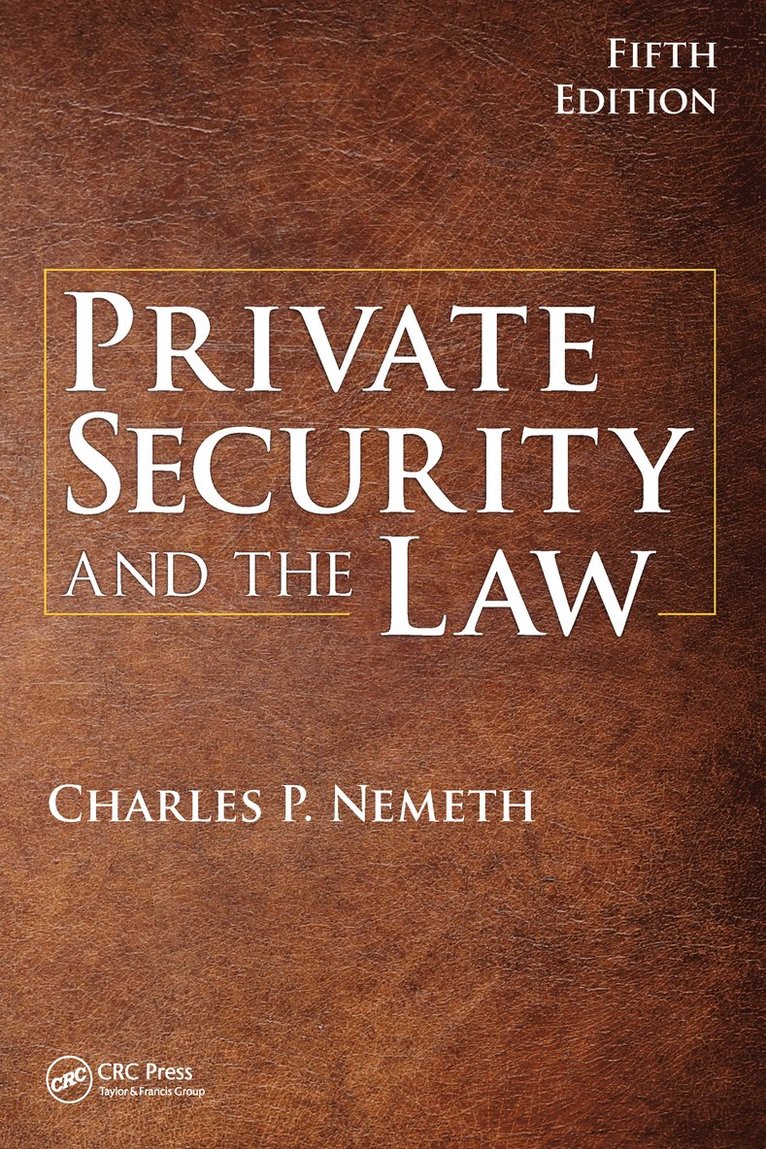
Private Security and the Law, Fifth Edition, is a singular resource that provides the most comprehensive analysis of practices in the security industry with respect to law, regulation, licensure, and constitutional questions of case and statutory authority.
The book begins with a historical background of the security industry, laws and regulations that walks step-by-step through the analysis of the development of case law over the years as it applies to situations commonly faced by security practitioners. It describes the legal requirements faced by security firms and emphasizes the liability problems common to security operations, including negligence and tortious liability, civil actions frequently litigated, and strategies to avoid legal actions that affect business efficiency.
In addition, chapters examine the constitutional and due-process dimensions of private security both domestically and internationally, including recent cases and trends that are likely to intensify in the future. Updated coverage new to this edition includes developments in statutory authority, changes to state and federal processes of oversight and licensure, and special analysis of public-private cooperative relationships in law enforcement.
Key features include:
Up to date case law analysis provides cutting edge legal treatment of evolving standards
Complicated material is presented in a straight-forward, readable style perfect for the student or security professional
Includes over 200 tables and figures that illustrate concepts and present critical comparative data on statutes and regulations
National scope provides crucial parameters to security practitioners throughout the U.S.
Numerous case studies, case readings, and case examples provide real-world examples of security law and litigation in practice
Private Security and the Law, Fifth Edition is an authoritative, scholarly treatise that serves as a valuable reference for professionals and an introduction for students in security management and criminal justice programs regarding the legal and ethical standards that shape the industry.
1 149 kr
Läs direkt efter köp
Private Security and the Law, Fifth Edition, is a singular resource that provides the most comprehensive analysis of practices in the security industry with respect to law, regulation, licensure, and constitutional questions of case and statutory authority.
The book begins with a historical background of the security industry, laws and regulations that walks step-by-step through the analysis of the development of case law over the years as it applies to situations commonly faced by security practitioners. It describes the legal requirements faced by security firms and emphasizes the liability problems common to security operations, including negligence and tortious liability, civil actions frequently litigated, and strategies to avoid legal actions that affect business efficiency.
In addition, chapters examine the constitutional and due-process dimensions of private security both domestically and internationally, including recent cases and trends that are likely to intensify in the future. Updated coverage new to this edition includes developments in statutory authority, changes to state and federal processes of oversight and licensure, and special analysis of public-private cooperative relationships in law enforcement.
Key features include:
Up to date case law analysis provides cutting edge legal treatment of evolving standards
Complicated material is presented in a straight-forward, readable style perfect for the student or security professional
Includes over 200 tables and figures that illustrate concepts and present critical comparative data on statutes and regulations
National scope provides crucial parameters to security practitioners throughout the U.S.
Numerous case studies, case readings, and case examples provide real-world examples of security law and litigation in practice
Private Security and the Law, Fifth Edition is an authoritative, scholarly treatise that serves as a valuable reference for professionals and an introduction for students in security management and criminal justice programs regarding the legal and ethical standards that shape the industry.