Charlotte Faucher - Böcker
Visar alla böcker från författaren Charlotte Faucher. Handla med fri frakt och snabb leverans.
3 produkter
3 produkter
Propaganda, Gender, and Cultural Power
Projections and Perceptions of France in Britain c1880-1944
Inbunden, Engelska, 2022
1 088 kr
Skickas inom 7-10 vardagar
Propaganda, Gender, and Cultural Power: Projections and Perceptions of France in Britain c1880-1944 analyses the powerful motivations that fuelled members of civil society, and in particular women, to dedicate their resources in the pursuit of improving the image of France in Britain through cultural strategies. By tracing the origins and development of this new diplomatic method, Faucher reveals how French citizens, British Francophiles, and eventually the French state, promoted French culture in Britain. At the same time, it discusses interwar gender-based discrimination in the field of cultural diplomacy; wartime catalysts for change - in particular the arrival of child refugees and the introduction of new propaganda methods in the French and British diplomatic spheres; and the political contests over ownership of cultural production. By studying the projections and perceptions of France in Britain, Faucher also paints a new picture of cultural cosmopolitanism in Britain.
1 929 kr
Skickas inom 5-8 vardagar
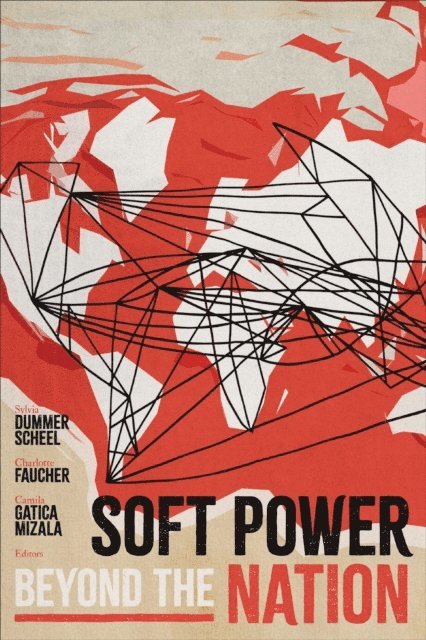
An innovative, interdisciplinary perspective on soft power in history, moving beyond the framework of the nation-stateStarting in the nineteenth century, as world events became more interconnected than ever, and as public opinion began to weigh on democratic governments, nations employed new communication strategies and propaganda to gain global influence and prestige. Soft power strategies were used by different nation-states, and by supranational and nonstate actors, that wanted to gain influence on the international stage.Soft Power Beyond the Nation takes a distinct approach to the study of soft power in history, moving beyond the framework of the nation-state. The volume editors use "soft power" to refer to the processes through which persuasion, the search for influence and power, and public opinion converge in the international arena. The book is organized on the basis of three central themes: the transnational circulation of knowledge and strategies of public diplomacy across borders, collaboration of intermediary actors of soft power whose interests did not always coincide with those of the state, and the role played by nonnational identities, such as gender and race, in soft power. Soft Power Beyond the Nation enriches the historiographical study of soft power, broadening its temporal and spatial scope and refreshing it with new perspectives on transnationalism, gender, and race. This book will be of interest to scholars and students of history and international relations.
566 kr
Skickas
An innovative, interdisciplinary perspective on soft power in history, moving beyond the framework of the nation-stateStarting in the nineteenth century, as world events became more interconnected than ever, and as public opinion began to weigh on democratic governments, nations employed new communication strategies and propaganda to gain global influence and prestige. Soft power strategies were used by different nation-states, and by supranational and nonstate actors, that wanted to gain influence on the international stage.Soft Power Beyond the Nation takes a distinct approach to the study of soft power in history, moving beyond the framework of the nation-state. The volume editors use "soft power" to refer to the processes through which persuasion, the search for influence and power, and public opinion converge in the international arena. The book is organized on the basis of three central themes: the transnational circulation of knowledge and strategies of public diplomacy across borders, collaboration of intermediary actors of soft power whose interests did not always coincide with those of the state, and the role played by nonnational identities, such as gender and race, in soft power. Soft Power Beyond the Nation enriches the historiographical study of soft power, broadening its temporal and spatial scope and refreshing it with new perspectives on transnationalism, gender, and race. This book will be of interest to scholars and students of history and international relations.