Chellammal Surianarayanan - Böcker
Visar alla böcker från författaren Chellammal Surianarayanan. Handla med fri frakt och snabb leverans.
9 produkter
9 produkter
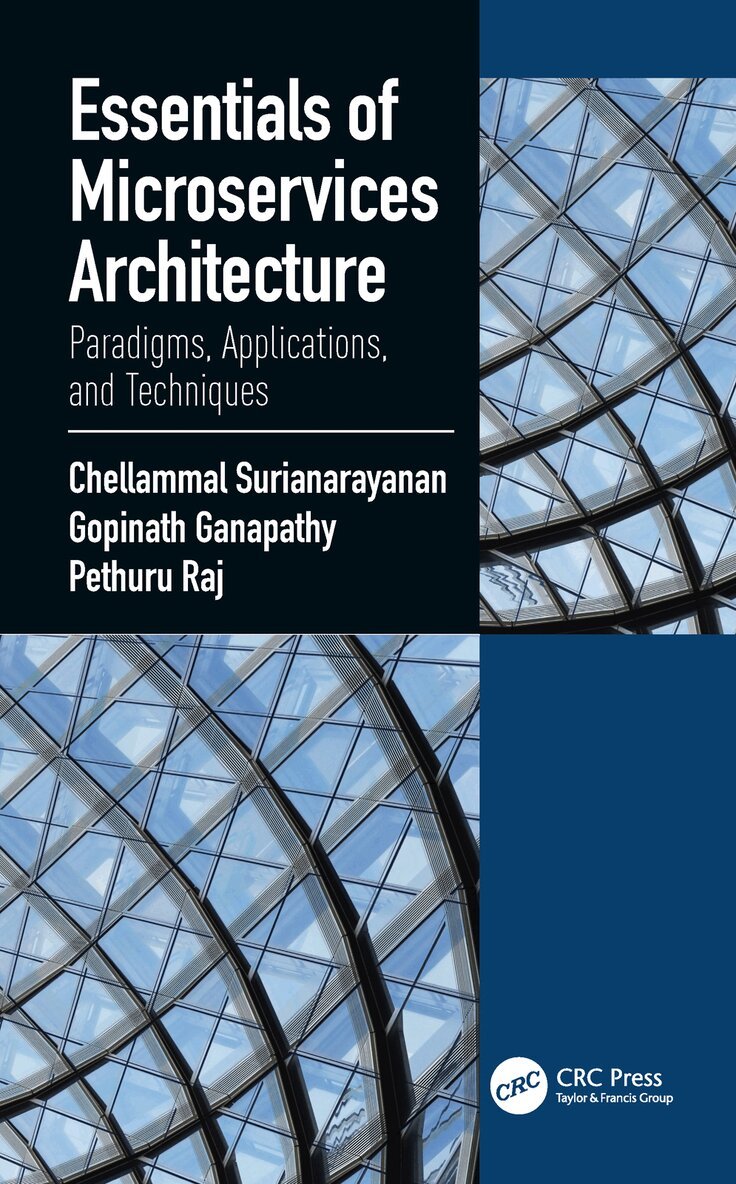
Essentials of Microservices Architecture
Paradigms, Applications, and Techniques
Inbunden, Engelska, 2019
984 kr
Skickas inom 10-15 vardagar
Microservices architecture (MSA) is increasingly popular with software architects and engineers as it accelerates software solution design, development, and deployment in a risk-free manner. Placing a software system into a production environment is elegantly simplified and sped up with the use of MSA development platforms, runtime environments, acceleration engines, design patterns, integrated frameworks, and related tools. The MSA ecosystem is expanding with third-party products that automate as many tasks as possible. MSA is being positioned as the enterprise-grade and agile-application design method. This book covers in-depth the features and facilities that make up the MSA ecosystem. Beginning with an overview of Service-Oriented Architecture (SOA) that covers the Common Object Request Broker Architecture (CORBA), Distributed Component Object Model (DCOM), and Remote Method Invocation (RMI), the book explains the basic essentials of MSA and the continuous delivery of applications to customers. The book gives software developers insight into: Current and emerging communication modelsKey architectural elements of MSA-based applicationsDesigning efficient APIs for microservicesMSA middleware platforms such as REST, SOAP, Apache Thrift, and gRPCMicroservice discovery and the API gateway Service orchestration and choreography for composing individual services to achieve a useful business process Database transactions in MSA-centric applicationsDesign, composition, security, and deployment patternsMSA securityModernizing legacy applicationsThe book concludes with a chapter on composing and building powerful microservices. With the exponential growth of IoT devices, microservices are being developed and deployed on resource-constrained but resource-intensive devices in order to provide people-centric applications. The book discusses the challenges of these applications. Finally, the book looks at the role of microservices in smart environments and upcoming trends including ubiquitous yet disappearing microservices.
1 110 kr
Skickas inom 10-15 vardagar
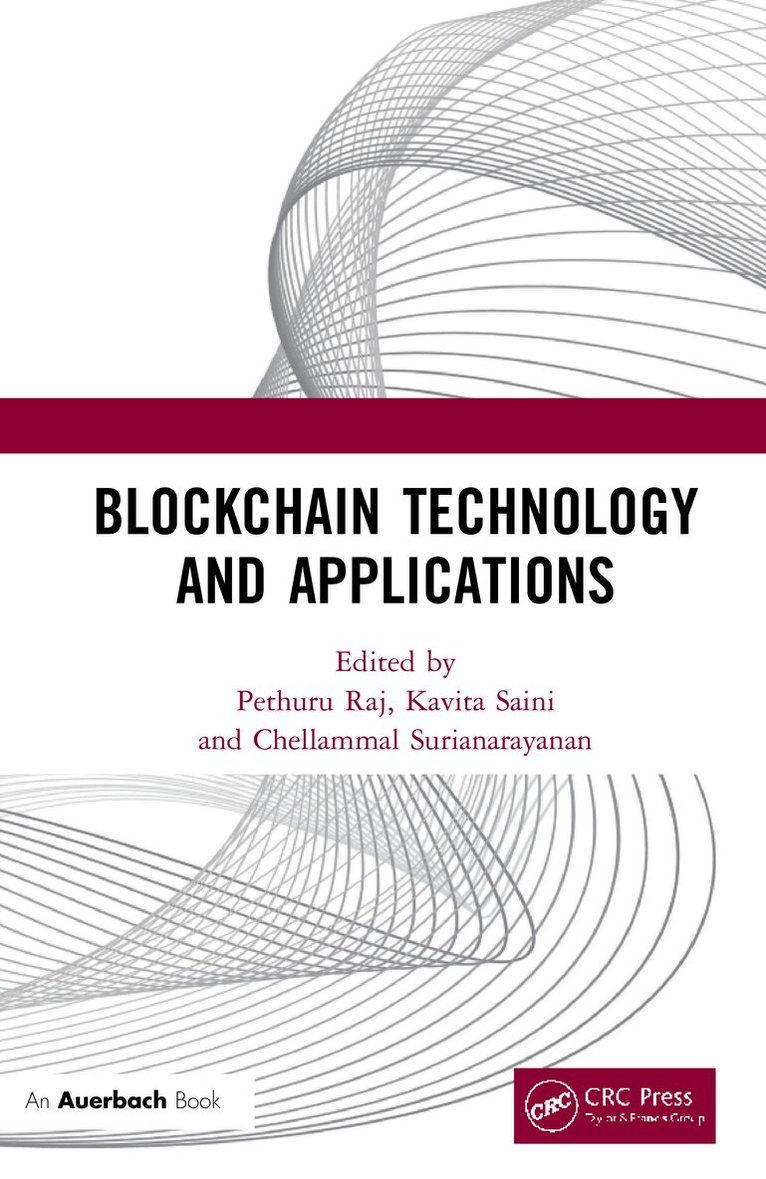
Blockchain is emerging as a powerful technology, which has attracted the wider attention of all businesses across the globe. In addition to financial businesses, IT companies and business organizations are keenly analyzing and adapting this technology for improving business processes. Security is the primary enterprise application. There are other crucial applications that include creating decentralized applications and smart contracts, which are being touted as the key differentiator of this pioneering technology. The power of any technology lies in its ecosystem. Product and tool vendors are building and releasing a variety of versatile and robust toolsets and platforms in order to speed up and simplify blockchain application development, deployment and management. There are other infrastructure-related advancements in order to streamline blockchain adoption. Cloud computing, big data analytics, machine and deep learning algorithm, and connected and embedded devices all are driving blockchain application development and deployment.Blockchain Technology and Applications illustrates how blockchain is being sustained through a host of platforms, programming languages, and enabling tools. It examines:Data confidential, integrity, and authentication Distributed consensus protocols and algorithmsBlockchain systems design criteria and systems interoperability and scalabilityIntegration with other technologies including cloud and big dataIt also details how blockchain is being blended with cloud computing, big data analytics and IoT across all industry verticals. The book gives readers insight into how this path-breaking technology can be a value addition in several business domains ranging from healthcare, financial services, government, supply chain and retail.
677 kr
Skickas inom 10-15 vardagar
Blockchain is emerging as a powerful technology, which has attracted the wider attention of all businesses across the globe. In addition to financial businesses, IT companies and business organizations are keenly analyzing and adapting this technology for improving business processes. Security is the primary enterprise application. There are other crucial applications that include creating decentralized applications and smart contracts, which are being touted as the key differentiator of this pioneering technology. The power of any technology lies in its ecosystem. Product and tool vendors are building and releasing a variety of versatile and robust toolsets and platforms in order to speed up and simplify blockchain application development, deployment and management. There are other infrastructure-related advancements in order to streamline blockchain adoption. Cloud computing, big data analytics, machine and deep learning algorithm, and connected and embedded devices all are driving blockchain application development and deployment.Blockchain Technology and Applications illustrates how blockchain is being sustained through a host of platforms, programming languages, and enabling tools. It examines:Data confidential, integrity, and authentication Distributed consensus protocols and algorithmsBlockchain systems design criteria and systems interoperability and scalabilityIntegration with other technologies including cloud and big dataIt also details how blockchain is being blended with cloud computing, big data analytics and IoT across all industry verticals. The book gives readers insight into how this path-breaking technology can be a value addition in several business domains ranging from healthcare, financial services, government, supply chain and retail.
Essentials of Microservices Architecture
Paradigms, Applications, and Techniques
Häftad, Engelska, 2021
705 kr
Skickas inom 10-15 vardagar
Microservices architecture (MSA) is increasingly popular with software architects and engineers as it accelerates software solution design, development, and deployment in a risk-free manner. Placing a software system into a production environment is elegantly simplified and sped up with the use of MSA development platforms, runtime environments, acceleration engines, design patterns, integrated frameworks, and related tools. The MSA ecosystem is expanding with third-party products that automate as many tasks as possible. MSA is being positioned as the enterprise-grade and agile-application design method. This book covers in-depth the features and facilities that make up the MSA ecosystem. Beginning with an overview of Service-Oriented Architecture (SOA) that covers the Common Object Request Broker Architecture (CORBA), Distributed Component Object Model (DCOM), and Remote Method Invocation (RMI), the book explains the basic essentials of MSA and the continuous delivery of applications to customers. The book gives software developers insight into: Current and emerging communication modelsKey architectural elements of MSA-based applicationsDesigning efficient APIs for microservicesMSA middleware platforms such as REST, SOAP, Apache Thrift, and gRPCMicroservice discovery and the API gateway Service orchestration and choreography for composing individual services to achieve a useful business process Database transactions in MSA-centric applicationsDesign, composition, security, and deployment patternsMSA securityModernizing legacy applicationsThe book concludes with a chapter on composing and building powerful microservices. With the exponential growth of IoT devices, microservices are being developed and deployed on resource-constrained but resource-intensive devices in order to provide people-centric applications. The book discusses the challenges of these applications. Finally, the book looks at the role of microservices in smart environments and upcoming trends including ubiquitous yet disappearing microservices.
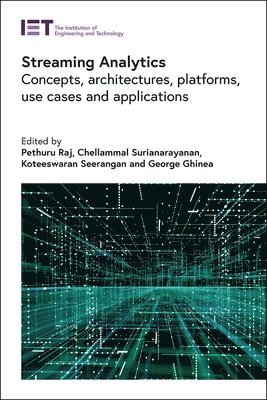
Streaming Analytics
Concepts, architectures, platforms, use cases and applications
Inbunden, Engelska, 2022
1 822 kr
Skickas inom 3-6 vardagar
When digitized entities, connected devices and microservices interact purposefully, we end up with a massive amount of multi-structured streaming (real-time) data that is continuously generated by different sources at high speed. Streaming analytics allows the management, monitoring, and real-time analytics of live streaming data. The topic has grown in importance due to the emergence of online analytics and edge and IoT platforms. A real digital transformation is being achieved across industry verticals through meticulous data collection, cleansing and crunching in real time. Capturing and subjecting those value-adding events is considered to be the prime task for achieving trustworthy and timely insights.The authors articulate and accentuate the challenges widely associated with streaming data and analytics, describe data analytics algorithms and approaches, present edge and fog computing concepts and technologies and show how streaming analytics can be accomplished in edge device clouds. They also delineate several industry use cases across cloud system operations in transportation and cyber security and other business domains.The book will be of interest to ICTs industry and academic researchers, scientists and engineers as well as lecturers and advanced students in the fields of data science, cloud/fog/edge architecture, internet of things and artificial intelligence and related fields of applications. It will also be useful to cloud/edge/fog and IoT architects, analytics professionals, IT operations teams and site reliability engineers (SREs).
742 kr
Skickas inom 11-20 vardagar
describes the details of cloud migration, the crucial role of monitoring in optimizing the cloud, and the basics of disaster recovery using cloud infrastructure. This technically rigorous yet simple-to-follow textbook is an ideal resource for graduate courses on cloud computing.
933 kr
Skickas inom 7-10 vardagar
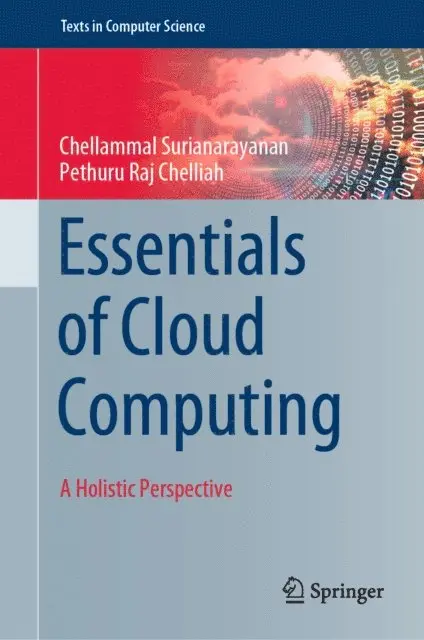
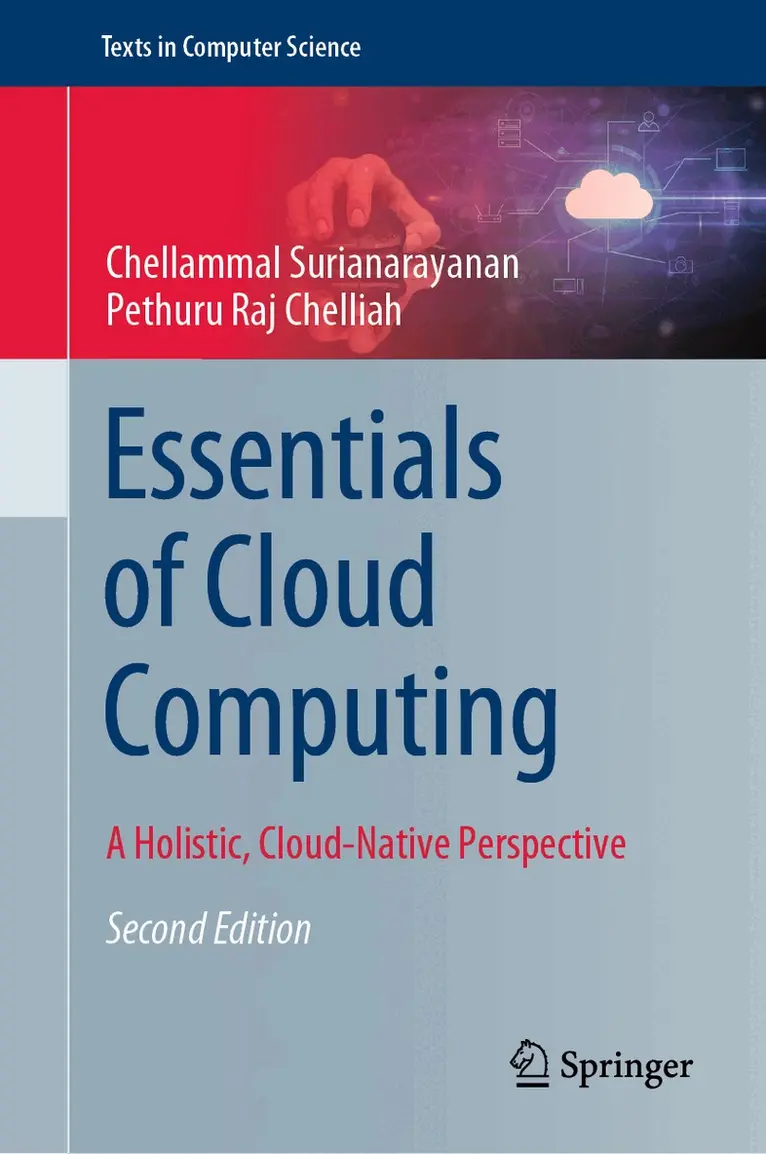
Numerous advancements are being brought in and incorporated into the cloud domain with the aim of realizing a trove of deeper and decisive automations.Rather than discussing the cloud paradigm in isolation, this fully updated text examines how cloud computing can work collaboratively with other computing models to meet the needs of evolving trends.This multi-dimensional approach encompasses the challenges of fulfilling the storage requirements of big data, the use of the cloud as a remote server for Internet of Things and sensor networks, and an investigation of how cloud computing is interlinked with other established computing phenomenon such as edge computing. New chapters illustrate the distinct ideals of the cloud-native computing, proclaimed as the next-generation cloud computing paradigm.Topics and features:Includes learning objectives, motivating questions, and self-test exercisesIntroduces the underlying concepts, fundamental features, and key technological foundations of cloud computingExamines how enterprise networking and cloud networking can work together to achieve business goalsReviews the different types of cloud storage available to address the evolution of data and the need for digitizationDiscusses the challenges and approaches to implementing cloud governance, security, and the hot topic of cloud managementDescribes the details of cloud migration, the crucial role of monitoring in optimizing the cloud, and the basics of disaster recovery using cloud infrastructureThis technically rigorous, yet simple-to-follow textbook is an ideal resource for graduate courses on cloud computing. Professional software developers and cloud architects will also find the work to be an invaluable reference.
653 kr
Skickas inom 5-8 vardagar
660 kr
Skickas inom 7-10 vardagar
Numerous advancements are being brought in and incorporated into the cloud domain with the aim of realizing a trove of deeper and decisive automations.Rather than discussing the cloud paradigm in isolation, this fully updated text examines how cloud computing can work collaboratively with other computing models to meet the needs of evolving trends.This multi-dimensional approach encompasses the challenges of fulfilling the storage requirements of big data, the use of the cloud as a remote server for Internet of Things and sensor networks, and an investigation of how cloud computing is interlinked with other established computing phenomenon such as edge computing. New chapters illustrate the distinct ideals of the cloud-native computing, proclaimed as the next-generation cloud computing paradigm.Topics and features:Includes learning objectives, motivating questions, and self-test exercisesIntroduces the underlying concepts, fundamental features, and key technological foundations of cloud computingExamines how enterprise networking and cloud networking can work together to achieve business goalsReviews the different types of cloud storage available to address the evolution of data and the need for digitizationDiscusses the challenges and approaches to implementing cloud governance, security, and the hot topic of cloud managementDescribes the details of cloud migration, the crucial role of monitoring in optimizing the cloud, and the basics of disaster recovery using cloud infrastructureThis technically rigorous, yet simple-to-follow textbook is an ideal resource for graduate courses on cloud computing. Professional software developers and cloud architects will also find the work to be an invaluable reference.