Pethuru Raj – författare
The Digital Twin Paradigm for Smarter Systems and Environments: The Industry Use Cases
2 068 kr
Skickas inom 10-15 vardagar
The Digital Twin Paradigm for Smarter Systems and Environments: The Industry Use Cases, Volume 117, the latest volume in the Advances in Computers series, presents detailed coverage of new advancements in computer hardware, software, theory, design and applications. Chapters vividly illustrate how the emerging discipline of digital twin is strategically contributing to various digital transformation initiatives. Specific chapters cover Demystifying the Digital Twin Paradigm, Digital Twin Technology for "Smarter Manufacturing", The Fog Computing/ Edge Computing to leverage Digital Twin, The industry use cases for the Digital Twin idea, Enabling Digital Twin at the Edge, The Industrial Internet of Things (IIOT), and much more.
Provides in-depth descriptions of digital transformation technologies and tools Covers various research accomplishments in this flourishing field of relevance Includes many detailed industry use cases with all the right informationEdge/Fog Computing Paradigm: The Concept, Platforms and Applications.
1 931 kr
Skickas inom 10-15 vardagar
Advances in Computers, Volume 127 presents innovations in computer hardware, software, theory, design and applications, with this updated volume including new chapters on Edge AI, Edge Computing, Edge Analytics, Edge Data Analytics, Edge Native Applications, Edge Platforms, Edge Computing, IoT, Internet of Things, etc.
Contains novel subject matter that is relevant to computer science Includes the expertise of contributing authors Presents an easy to comprehend writing style1 213 kr
Skickas inom 10-15 vardagar
1 678 kr
Skickas inom 10-15 vardagar
2 695 kr
Skickas inom 10-15 vardagar
853 kr
Skickas inom 10-15 vardagar
1 155 kr
Skickas inom 10-15 vardagar
704 kr
Skickas inom 10-15 vardagar
2 114 kr
Skickas inom 10-15 vardagar
1 629 kr
Skickas inom 10-15 vardagar
1 678 kr
Skickas inom 10-15 vardagar
1 881 kr
Skickas inom 10-15 vardagar
2 296 kr
Läs direkt efter köp
1 765 kr
Skickas inom 10-15 vardagar
2 233 kr
Läs direkt efter köp
1 976 kr
Skickas inom 10-15 vardagar
2 484 kr
Läs direkt efter köp
802 kr
Läs direkt efter köp
As the number of Internet of Things (IoT) elements grows exponentially, their interactions can generate a massive amount of raw and multi-structured data. The challenge with this data explosion is to transform any raw data into information and knowledge, which can be used by people and systems to make intelligent decisions. Industrial IoT Application Architectures and Use Cases explores how artificial intelligence (AI), data analytics, and IoT technology combine to promote intelligent decision-making and automation in a range of industries.
With faster, more stable AI algorithms and approaches, knowledge discovery and dissemination from IoT-device data can be simplified and streamlined. An era of powerful cognitive technology is beginning due to cloud-based cognitive systems that are forming the foundation of game-changing intelligent applications. This book presents next-generation use cases of IoT and IoT data analytics for a variety of industrial verticals as given below:
An Intelligent IoT framework for smart water management
An IoT-enabled smart traffic control system for congestion control and smart traffic management
An intelligent airport system for airport management and security surveillance
An IoT framework for healthcare to integrate and report patient information
Fuzzy scheduling with IoT for tracking and monitoring hotel assets
An IoT system for designing drainage systems and monitoring drainage pipes
Predictive maintenance of plant equipment to decide the actual mean time to malfunction
Integrated neural networks and IoT systems for predictive equipment maintenance
IoT integration in blockchain for smart waste management
This book also includes a chapter on the IoT paradigm and an overview of uses cases for personal, social, and industrial applications.
802 kr
Läs direkt efter köp
As the number of Internet of Things (IoT) elements grows exponentially, their interactions can generate a massive amount of raw and multi-structured data. The challenge with this data explosion is to transform any raw data into information and knowledge, which can be used by people and systems to make intelligent decisions. Industrial IoT Application Architectures and Use Cases explores how artificial intelligence (AI), data analytics, and IoT technology combine to promote intelligent decision-making and automation in a range of industries.
With faster, more stable AI algorithms and approaches, knowledge discovery and dissemination from IoT-device data can be simplified and streamlined. An era of powerful cognitive technology is beginning due to cloud-based cognitive systems that are forming the foundation of game-changing intelligent applications. This book presents next-generation use cases of IoT and IoT data analytics for a variety of industrial verticals as given below:
An Intelligent IoT framework for smart water management
An IoT-enabled smart traffic control system for congestion control and smart traffic management
An intelligent airport system for airport management and security surveillance
An IoT framework for healthcare to integrate and report patient information
Fuzzy scheduling with IoT for tracking and monitoring hotel assets
An IoT system for designing drainage systems and monitoring drainage pipes
Predictive maintenance of plant equipment to decide the actual mean time to malfunction
Integrated neural networks and IoT systems for predictive equipment maintenance
IoT integration in blockchain for smart waste management
This book also includes a chapter on the IoT paradigm and an overview of uses cases for personal, social, and industrial applications.
831 kr
Läs direkt efter köp
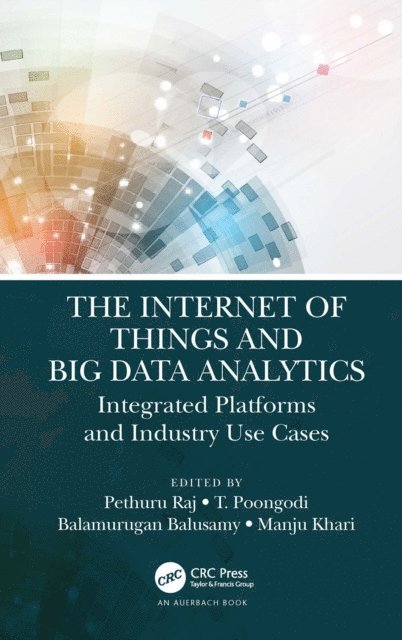
This book comprehensively conveys the theoretical and practical aspects of IoT and big data analytics with the solid contributions from practitioners as well as academicians. This book examines and expounds the unique capabilities of the big data analytics platforms in capturing, cleansing and crunching IoT device/sensor data in order to extricate actionable insights. A number of experimental case studies and real-world scenarios are incorporated in this book in order to instigate our book readers. This book
Analyzes current research and development in the domains of IoT and big data analytics
Gives an overview of latest trends and transitions happening in the IoT data analytics space
Illustrates the various platforms, processes, patterns, and practices for simplifying and streamlining IoT data analytics
The Internet of Things and Big Data Analytics: Integrated Platforms and Industry Use Cases examines and accentuates how the multiple challenges at the cusp of IoT and big data can be fully met. The device ecosystem is growing steadily. It is forecast that there will be billions of connected devices in the years to come. When these IoT devices, resource-constrained as well as resource-intensive, interact with one another locally and remotely, the amount of multi-structured data generated, collected, and stored is bound to grow exponentially. Another prominent trend is the integration of IoT devices with cloud-based applications, services, infrastructures, middleware solutions, and databases. This book examines the pioneering technologies and tools emerging and evolving in order to collect, pre-process, store, process and analyze data heaps in order to disentangle actionable insights.
802 kr
Läs direkt efter köp
This book comprehensively conveys the theoretical and practical aspects of IoT and big data analytics with the solid contributions from practitioners as well as academicians. This book examines and expounds the unique capabilities of the big data analytics platforms in capturing, cleansing and crunching IoT device/sensor data in order to extricate actionable insights. A number of experimental case studies and real-world scenarios are incorporated in this book in order to instigate our book readers. This book
Analyzes current research and development in the domains of IoT and big data analytics
Gives an overview of latest trends and transitions happening in the IoT data analytics space
Illustrates the various platforms, processes, patterns, and practices for simplifying and streamlining IoT data analytics
The Internet of Things and Big Data Analytics: Integrated Platforms and Industry Use Cases examines and accentuates how the multiple challenges at the cusp of IoT and big data can be fully met. The device ecosystem is growing steadily. It is forecast that there will be billions of connected devices in the years to come. When these IoT devices, resource-constrained as well as resource-intensive, interact with one another locally and remotely, the amount of multi-structured data generated, collected, and stored is bound to grow exponentially. Another prominent trend is the integration of IoT devices with cloud-based applications, services, infrastructures, middleware solutions, and databases. This book examines the pioneering technologies and tools emerging and evolving in order to collect, pre-process, store, process and analyze data heaps in order to disentangle actionable insights.
779 kr
Läs direkt efter köp
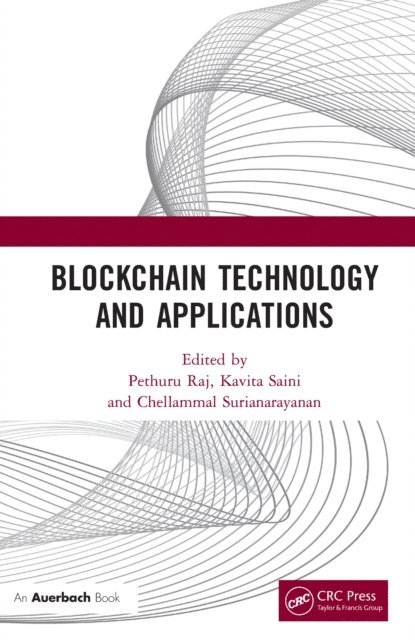
Blockchain is emerging as a powerful technology, which has attracted the wider attention of all businesses across the globe. In addition to financial businesses, IT companies and business organizations are keenly analyzing and adapting this technology for improving business processes. Security is the primary enterprise application. There are other crucial applications that include creating decentralized applications and smart contracts, which are being touted as the key differentiator of this pioneering technology. The power of any technology lies in its ecosystem. Product and tool vendors are building and releasing a variety of versatile and robust toolsets and platforms in order to speed up and simplify blockchain application development, deployment and management. There are other infrastructure-related advancements in order to streamline blockchain adoption. Cloud computing, big data analytics, machine and deep learning algorithm, and connected and embedded devices all are driving blockchain application development and deployment.
Blockchain Technology and Applications illustrates how blockchain is being sustained through a host of platforms, programming languages, and enabling tools. It examines:
Data confidential, integrity, and authentication Distributed consensus protocols and algorithms Blockchain systems design criteria and systems interoperability and scalability Integration with other technologies including cloud and big dataIt also details how blockchain is being blended with cloud computing, big data analytics and IoT across all industry verticals. The book gives readers insight into how this path-breaking technology can be a value addition in several business domains ranging from healthcare, financial services, government, supply chain and retail.
807 kr
Läs direkt efter köp
Blockchain is emerging as a powerful technology, which has attracted the wider attention of all businesses across the globe. In addition to financial businesses, IT companies and business organizations are keenly analyzing and adapting this technology for improving business processes. Security is the primary enterprise application. There are other crucial applications that include creating decentralized applications and smart contracts, which are being touted as the key differentiator of this pioneering technology. The power of any technology lies in its ecosystem. Product and tool vendors are building and releasing a variety of versatile and robust toolsets and platforms in order to speed up and simplify blockchain application development, deployment and management. There are other infrastructure-related advancements in order to streamline blockchain adoption. Cloud computing, big data analytics, machine and deep learning algorithm, and connected and embedded devices all are driving blockchain application development and deployment.
Blockchain Technology and Applications illustrates how blockchain is being sustained through a host of platforms, programming languages, and enabling tools. It examines:
Data confidential, integrity, and authentication Distributed consensus protocols and algorithms Blockchain systems design criteria and systems interoperability and scalability Integration with other technologies including cloud and big dataIt also details how blockchain is being blended with cloud computing, big data analytics and IoT across all industry verticals. The book gives readers insight into how this path-breaking technology can be a value addition in several business domains ranging from healthcare, financial services, government, supply chain and retail.
1 039 kr
Läs direkt efter köp
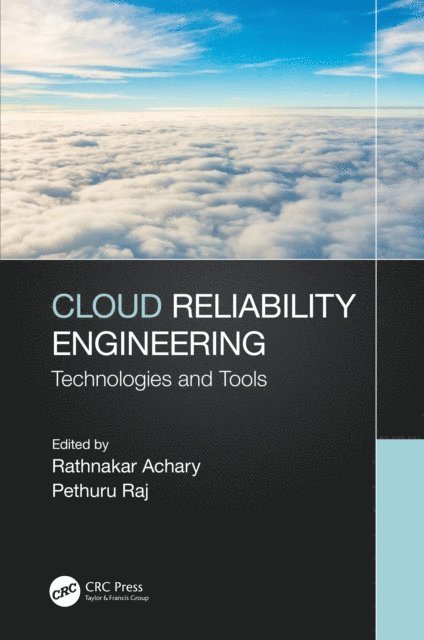
Coud reliability engineering is a leading issue of cloud services. Cloud service providers guarantee computation, storage and applications through service-level agreements (SLAs) for promised levels of performance and uptime. Cloud Reliability Engineering: Technologies and Tools presents case studies examining cloud services, their challenges, and the reliability mechanisms used by cloud service providers. These case studies provide readers with techniques to harness cloud reliability and availability requirements in their own endeavors. Both conceptual and applied, the book explains reliability theory and the best practices used by cloud service companies to provide high availability. It also examines load balancing, and cloud security.
Written by researchers and practitioners, the book’s chapters are a comprehensive study of cloud reliability and availability issues and solutions. Various reliability class distributions and their effects on cloud reliability are discussed. An important aspect of reliability block diagrams is used to categorize poor reliability of cloud infrastructures, where enhancement can be made to lower the failure rate of the system. This technique can be used in design and functional stages to determine poor reliability of a system and provide target improvements. Load balancing for reliability is examined as a migrating process or performed by using virtual machines. The approach employed to identify the lightly loaded destination node to which the processes/virtual machines migrate can be optimized by employing a genetic algorithm. To analyze security risk and reliability, a novel technique for minimizing the number of keys and the security system is presented. The book also provides an overview of testing methods for the cloud, and a case study discusses testing reliability, installability, and security. A comprehensive volume, Cloud Reliability Engineering: Technologies and Tools combines research, theory, and best practices used to engineer reliable cloud availability and performance.
1 003 kr
Läs direkt efter köp
Coud reliability engineering is a leading issue of cloud services. Cloud service providers guarantee computation, storage and applications through service-level agreements (SLAs) for promised levels of performance and uptime. Cloud Reliability Engineering: Technologies and Tools presents case studies examining cloud services, their challenges, and the reliability mechanisms used by cloud service providers. These case studies provide readers with techniques to harness cloud reliability and availability requirements in their own endeavors. Both conceptual and applied, the book explains reliability theory and the best practices used by cloud service companies to provide high availability. It also examines load balancing, and cloud security.
Written by researchers and practitioners, the book’s chapters are a comprehensive study of cloud reliability and availability issues and solutions. Various reliability class distributions and their effects on cloud reliability are discussed. An important aspect of reliability block diagrams is used to categorize poor reliability of cloud infrastructures, where enhancement can be made to lower the failure rate of the system. This technique can be used in design and functional stages to determine poor reliability of a system and provide target improvements. Load balancing for reliability is examined as a migrating process or performed by using virtual machines. The approach employed to identify the lightly loaded destination node to which the processes/virtual machines migrate can be optimized by employing a genetic algorithm. To analyze security risk and reliability, a novel technique for minimizing the number of keys and the security system is presented. The book also provides an overview of testing methods for the cloud, and a case study discusses testing reliability, installability, and security. A comprehensive volume, Cloud Reliability Engineering: Technologies and Tools combines research, theory, and best practices used to engineer reliable cloud availability and performance.
836 kr
Läs direkt efter köp
Digital transformation (DT) has become a buzzword. Every industry segment across the globe is consciously jumping toward digital innovation and disruption to get ahead of their competitors. In other words, every aspect of running a business is being digitally empowered to reap all the benefits of the digital paradigm. All kinds of digitally enabled businesses across the globe are intrinsically capable of achieving bigger and better things for their constituents. Their consumers, clients, and customers will realize immense benefits with real digital transformation initiatives and implementations. The much-awaited business transformation can be easily and elegantly accomplished with a workable and winnable digital transformation strategy, plan, and execution.
There are several enablers and accelerators for realizing the much-discussed digital transformation. There are a lot of digitization and digitalization technologies available to streamline and speed up the process of the required transformation. Industrial Internet of Things (IIoT) technologies in close association with decisive advancements in the artificial intelligence (AI) space can bring forth the desired transitions. The other prominent and dominant technologies toward forming digital organizations include cloud IT, edge/fog computing, real-time data analytics platforms, blockchain technology, digital twin paradigm, virtual and augmented reality (VR/AR) techniques, enterprise mobility, and 5G communication. These technological innovations are intrinsically competent and versatile enough to fulfill the varying requirements for establishing and sustaining digital enterprises.
Enterprise Digital Transformation: Technology, Tools, and Use Cases features chapters on the evolving aspects of digital transformation and intelligence. It covers the unique competencies of digitally transformed enterprises, IIoT use cases, and applications. It explains promising technological solutions widely associated with digital innovation and disruption. The book focuses on setting up and sustaining smart factories that are fulfilling the Industry 4.0 vision that is realized through the IIoT and allied technologies.
836 kr
Läs direkt efter köp
Digital transformation (DT) has become a buzzword. Every industry segment across the globe is consciously jumping toward digital innovation and disruption to get ahead of their competitors. In other words, every aspect of running a business is being digitally empowered to reap all the benefits of the digital paradigm. All kinds of digitally enabled businesses across the globe are intrinsically capable of achieving bigger and better things for their constituents. Their consumers, clients, and customers will realize immense benefits with real digital transformation initiatives and implementations. The much-awaited business transformation can be easily and elegantly accomplished with a workable and winnable digital transformation strategy, plan, and execution.
There are several enablers and accelerators for realizing the much-discussed digital transformation. There are a lot of digitization and digitalization technologies available to streamline and speed up the process of the required transformation. Industrial Internet of Things (IIoT) technologies in close association with decisive advancements in the artificial intelligence (AI) space can bring forth the desired transitions. The other prominent and dominant technologies toward forming digital organizations include cloud IT, edge/fog computing, real-time data analytics platforms, blockchain technology, digital twin paradigm, virtual and augmented reality (VR/AR) techniques, enterprise mobility, and 5G communication. These technological innovations are intrinsically competent and versatile enough to fulfill the varying requirements for establishing and sustaining digital enterprises.
Enterprise Digital Transformation: Technology, Tools, and Use Cases features chapters on the evolving aspects of digital transformation and intelligence. It covers the unique competencies of digitally transformed enterprises, IIoT use cases, and applications. It explains promising technological solutions widely associated with digital innovation and disruption. The book focuses on setting up and sustaining smart factories that are fulfilling the Industry 4.0 vision that is realized through the IIoT and allied technologies.
1 347 kr
Läs direkt efter köp
The Internet of Things (IoT) concept is defined as a flexible and futuristic network where all the different types of devices and smart objects can become seamlessly connected to each other and can actively participate in all types of processes which are happening around us. The grand objective of making physical, mechanical, electrical, and electronic devices to use the deeper and extreme connectivity and service-enablement techniques is to make them intelligent in their deeds, decisions, and deals. Cognitive IoT is the application of cognitive computing technologies to the data which is generated by the connected devices of the IoT ecosystem. Cognition means thinking; however, computers are not yet fully capable of mimicking human like thought. However, the present-day computer systems can perform some functions which are like the capability of human beings to think.
Cognitive Internet of Things: Enabling Technologies, Platforms, and Use Cases explains the concepts surrounding Cognitive IoT. It also looks at the use cases and such supporting technologies as artificial intelligence and machine learning that act as key enablers of Cognitive IoT ecosystem. Different Cognitive IoT enabled platforms like IBM Watson and other product specific use cases like Amazon Alexa are covered in depth. Other highlights of the book include:
Demystifying the cognitive computing paradigm Delineating the key capabilities of cognitive cloud environments Deep learning algorithms for cognitive IoT solutions Natural language processing (NLP) methods for cognitive IoT systems Designing a secure infrastructure for cognitive IoT platforms and applications1 347 kr
Läs direkt efter köp
The Internet of Things (IoT) concept is defined as a flexible and futuristic network where all the different types of devices and smart objects can become seamlessly connected to each other and can actively participate in all types of processes which are happening around us. The grand objective of making physical, mechanical, electrical, and electronic devices to use the deeper and extreme connectivity and service-enablement techniques is to make them intelligent in their deeds, decisions, and deals. Cognitive IoT is the application of cognitive computing technologies to the data which is generated by the connected devices of the IoT ecosystem. Cognition means thinking; however, computers are not yet fully capable of mimicking human like thought. However, the present-day computer systems can perform some functions which are like the capability of human beings to think.
Cognitive Internet of Things: Enabling Technologies, Platforms, and Use Cases explains the concepts surrounding Cognitive IoT. It also looks at the use cases and such supporting technologies as artificial intelligence and machine learning that act as key enablers of Cognitive IoT ecosystem. Different Cognitive IoT enabled platforms like IBM Watson and other product specific use cases like Amazon Alexa are covered in depth. Other highlights of the book include:
Demystifying the cognitive computing paradigm Delineating the key capabilities of cognitive cloud environments Deep learning algorithms for cognitive IoT solutions Natural language processing (NLP) methods for cognitive IoT systems Designing a secure infrastructure for cognitive IoT platforms and applications763 kr
Läs direkt efter köp
The strategically sound combination of edge computing and artificial intelligence (AI) results in a series of distinct innovations and disruptions enabling worldwide enterprises to visualize and realize next-generation software products, solutions and services. Businesses, individuals, and innovators are all set to embrace and experience the sophisticated capabilities of Edge AI. With the faster maturity and stability of Edge AI technologies and tools, the world is destined to have a dazzling array of edge-native, people-centric, event-driven, real-time, service-oriented, process-aware, and insights-filled services. Further on, business workloads and IT services will become competent and cognitive with state-of-the-art Edge AI infrastructure modules, AI algorithms and models, enabling frameworks, integrated platforms, accelerators, high-performance processors, etc. The Edge AI paradigm will help enterprises evolve into real-time and intelligent digital organizations.
Applied Edge AI: Concepts, Platforms, and Industry Use Cases focuses on the technologies, processes, systems, and applications that are driving this evolution. It examines the implementation technologies; the products, processes, platforms, patterns, and practices; and use cases. AI-enabled chips are exclusively used in edge devices to accelerate intelligent processing at the edge. This book examines AI toolkits and platforms for facilitating edge intelligence. It also covers chips, algorithms, and tools to implement Edge AI, as well as use cases.
FEATURES
The opportunities and benefits of intelligent edge computing
Edge architecture and infrastructure
AI-enhanced analytics in an edge environment
Encryption for securing information
An Edge AI system programmed with Tiny Machine learning algorithms for decision making
An improved edge paradigm for addressing the big data movement in IoT implementations by integrating AI and caching to the edge
Ambient intelligence in healthcare services and in development of consumer electronic systems
Smart manufacturing of unmanned aerial vehicles (UAVs)
AI, edge computing, and blockchain in systems for environmental protection
Case studies presenting the potential of leveraging AI in 5G wireless communication