Chen Gang – författare
Visar alla böcker från författaren Chen Gang. Handla med fri frakt och snabb leverans.
5 produkter
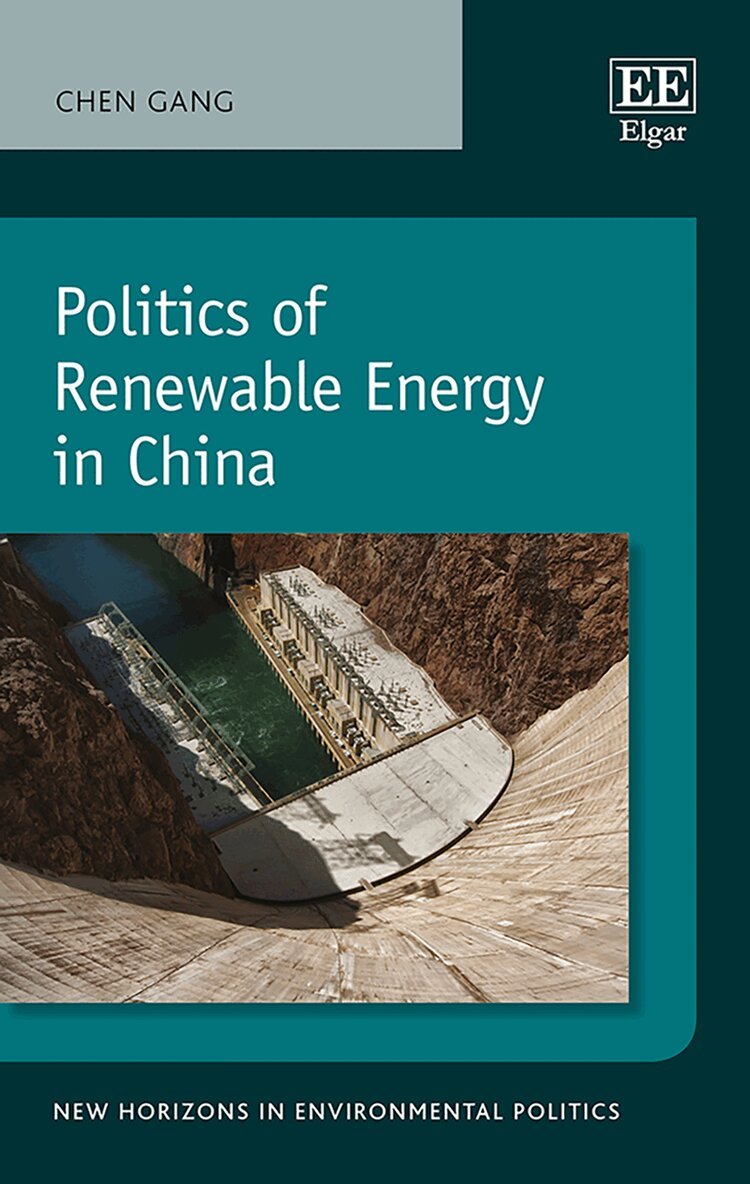
Politics of Renewable Energy in China
Av Chen Gang
Inbunden, 2019
1523 kr
Lägg i varukorg
In this book, Chen Gang examines the real-world effectiveness of China's approach to the promotion of green technologies and practices, and discusses the political landscape in which it is situated.Politics of Renewable Energy in China questions the wisdom of hailing China as a model for …
Politics of Renewable Energy in China
Av Chen Gang
E-bok, 2019
449 kr
Lägg i varukorg
In this book, Chen Gang examines the real-world effectiveness of China''s approach to the promotion of green technologies and practices, and discusses the political landscape in which it is situated. Politics of Renewable Energy in China questions the wisdom of hailing China as a model for …
Nangma-Oboe Concerto
Av Chen Gang
E-bok, 2017
433 kr
Lägg i varukorg
The Oboe Concerto Nangma was composed in 1985. It is the first oboe concerto composed by DY in China using modern techniques (such as playing harmony, overtone and microtone on the oboe). It was untitled at the beginning, and later due to the rich Tibetan style of the music. Therefore, the title of …
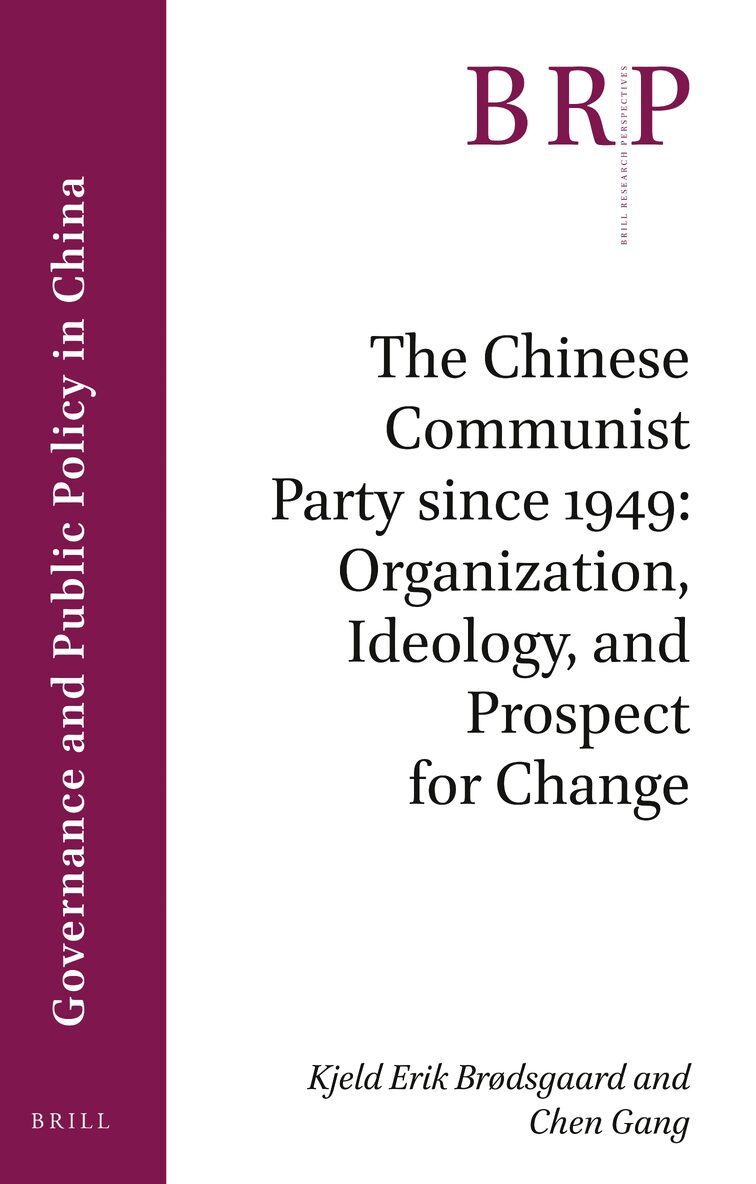
Chinese Communist Party since 1949: Organization, Ideology, and Prospect for Change
Av Kjeld Erik Brodsgaard, Chen Gang
Häftad, 2019
1240 kr
Lägg i varukorg
With a membership of nearly 90 million, the Chinese Communist Party (CCP) is the world’s largest political party. It is also one of the longest ruling parties in the world and has been able to weather huge challenges caused by the deep transformation of Chinese society as well as the collapse of …
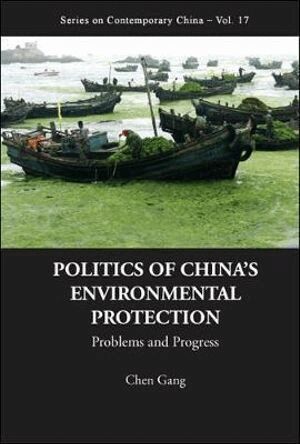
POLITICS OF CHINA'S ENVIRONMENTAL PROTECTION: PROBLEMS AND PROGRESS
Av Chen Gang
Inbunden, 2009
1214 kr
Lägg i varukorg
As the dazzling economic and social changes in China have imposed substantial impact upon the quality of environmental governance, it is time to review the problems and progress in the politics of China's environmental protection. This book analyzes the factors in China's governance and political …