Chenguang Zhu – författare
Visar alla böcker från författaren Chenguang Zhu. Handla med fri frakt och snabb leverans.
4 produkter
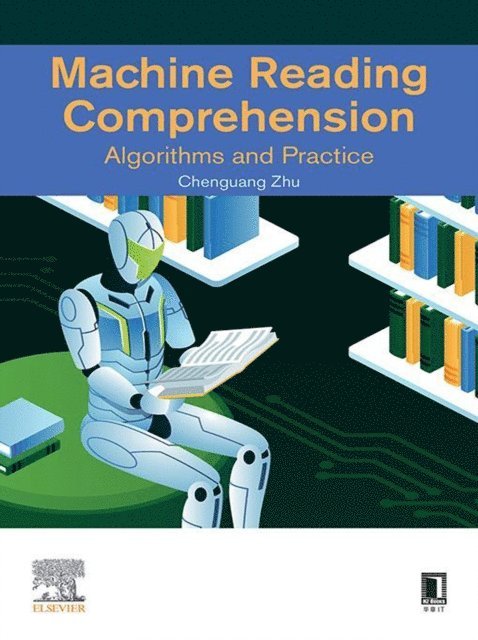
Machine Reading Comprehension
Algorithms and Practice
Häftad, 2021
1818 kr
Lägg i varukorg
Machine reading comprehension (MRC) is a cutting-edge technology in natural language processing (NLP). MRC has recently advanced significantly, surpassing human parity in several public datasets. It has also been widely deployed by industry in search engine and quality assurance systems. Machine …
Machine Reading Comprehension
Algorithms and Practice
E-bok, 2021
2476 kr
Lägg i varukorg
Machine reading comprehension (MRC) is a cutting-edge technology in natural language processing (NLP). MRC has recently advanced significantly, surpassing human parity in several public datasets. It has also been widely deployed by industry in search engine and quality assurance systems. Machine …
Knowledge-augmented Methods for Natural Language Processing
Av Chenguang Zhu, Wenhao Yu m. fl.
E-bok, 2024
650 kr
Lägg i varukorg
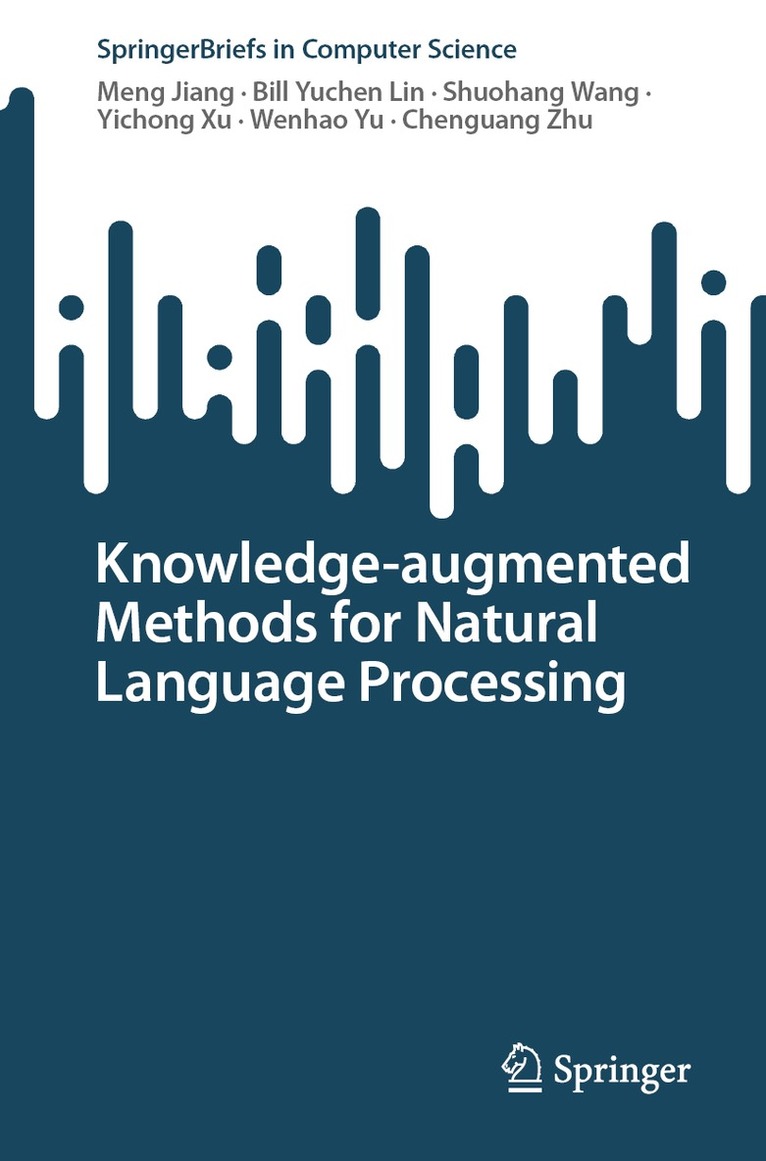
Over the last few years, natural language processing has seen remarkable progress due to the emergence of larger-scale models, better training techniques, and greater availability of data. Examples of these advancements include GPT-4, ChatGPT, and other pre-trained language models. These models are …
Knowledge-augmented Methods for Natural Language Processing
Av Meng Jiang, Bill Yuchen Lin m. fl.
Häftad, 2024
511 kr
Lägg i varukorg
Over the last few years, natural language processing has seen remarkable progress due to the emergence of larger-scale models, better training techniques, and greater availability of data. Examples of these advancements include GPT-4, ChatGPT, and other pre-trained language models. These models are …