Cheryll Tickle - Böcker
Visar alla böcker från författaren Cheryll Tickle. Handla med fri frakt och snabb leverans.
2 produkter
2 produkter
830 kr
Skickas inom 5-8 vardagar
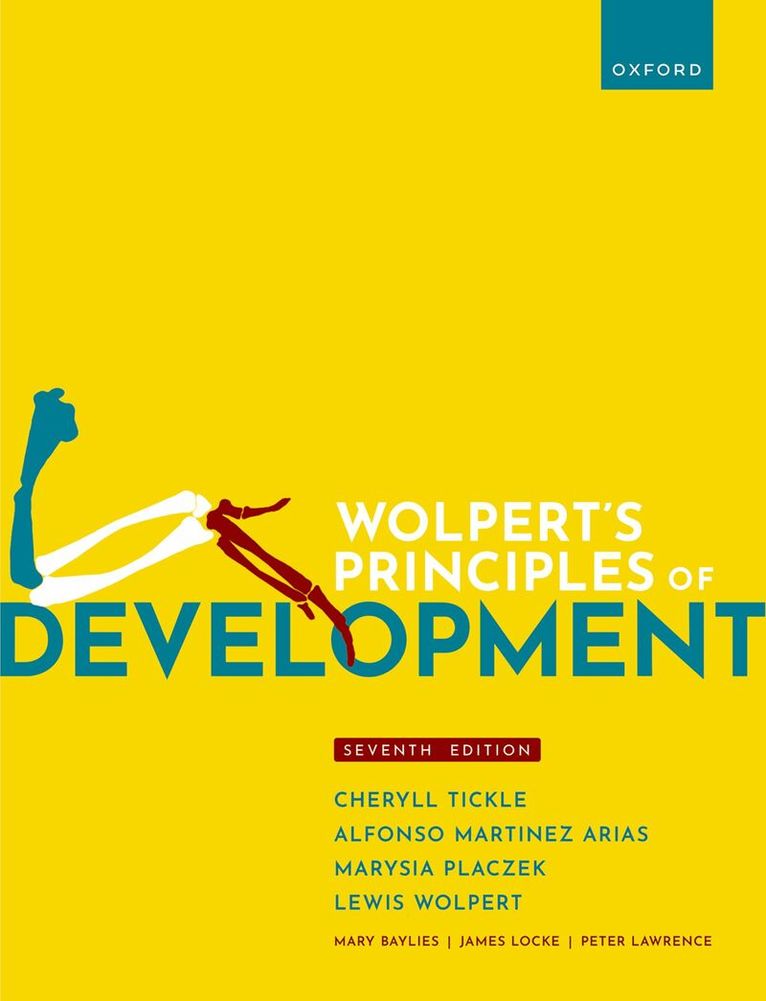
Wolpert's Principles of Development, the latest edition of the prize-winning textbook, opens up the fascinating field of developmental biology to undergraduates studying biology, medicine, and veterinary science. By focusing on the underlying processes shared by diverse organisms, the textbook lays the foundation for a deep understanding. Key features - An emphasis throughout on the underlying principles - which underpin the commonalities between different organisms and their development - enables students to get a clear sense of the 'big picture' of the subject. - Custom-drawn artwork and integrated animations and videos help to make the visualisation of processes and mechanisms in this challenging subject as straightforward as possible. - Medical Boxes explore key developmental diseases and explain how developmental biology furthers our understanding human health and disease. Further experimental detail, including Experimental Boxes, from both classic and current research, demonstrates 'how we know what we know'. - Also available as an e-book enhanced with learning objectives, self-assessment interactive quizzes and multi-media content to offer a fully immersive experience and extra learning support. New to this edition - Chapter 7, a new chapter on Embryonic stem cells, embryo models, and regenerative medicine, to ensure the book's coverage stays up to date with this very active area of developmental biology research. - Chapters 3 and 4 on vertebrate development have been restructured and updated, especially in relation to mouse development, to ensure major concepts and principles are explained with recent supporting experimental evidence. - Chapter 10 on the nervous system has been completely revised and updated, with more emphasis on neural tube patterning. - Chapter 14, which covers nematodes and sea urchins, now appears online as part of the ebook. - There are more examples of the use of CRISPR to address problems like sickle cell disease (Ch6), and evolution of limbs from fins (Ch13). - Examples of single-cell RNA sequencing can be found throughout the book (Ch3, Ch6, Ch7, Ch10, Ch11, Ch12). - Smaller revisions, updates, and new figures have been included throughout. Digital formats and resources The seventh edition is available for students and institutions to purchase in a variety of formats: the e-book and Science Trove offer a mobile experience and convenient access along with interactive self-test questions, videos, flashcards, supplementary materials, functionality tools, navigation features and links that offer extra learning support. For more information about e-books, please visit www.oxfordtextbooks.co.uk/ebooks
2 153 kr
Skickas inom 7-10 vardagar
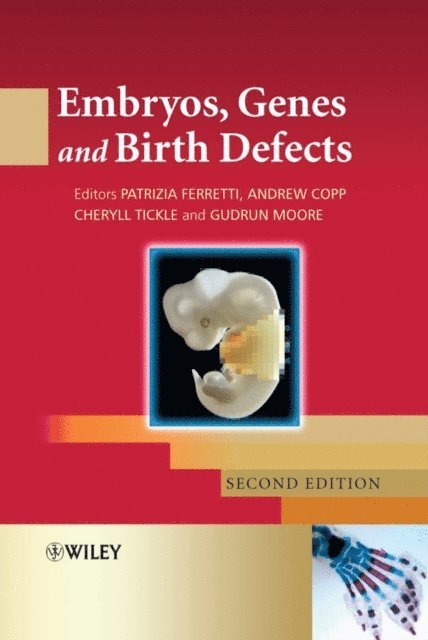
The first edition of Embryos, Genes and Birth Defects, edited by the late Peter Thorogood, was a radical new book aimed at bridging the gap between the medical disciplines of embryology and dysmorphology, and recent advances in cellular, molecular and developmental biology. This new edition remains unique in its breadth and brings up to date our understanding of birth defects and of the strategies utilized to gain such knowledge. It features new chapters on human cytogenetics, mutagenesis and the eyes and ears. The book presents key topics in developmental biology and explains how they provide the foundations for understanding clinical birth defects. The first six chapters introduce concepts and strategies adopted to elucidate developmental anomalies leading to birth defects. The book then focuses on specific organs and reviews the cellular and molecular mechanisms affecting their development and how disruption of these mechanisms by genetic or environmental factors may underlie certain birth defects. The chapters are concise and provide up-to-date coverage of topics in a format that is easily accessible and yet at the forefront of research.Written primarily for paediatricians, obstetricians, clinical geneticists and allied workers, this book guides the reader through the contribution of modern molecular biology to our understanding of human development. Developmental and cellular biologists will learn how errors in the cellular and genetic mechanism can lead to classical disorders, diseases and syndromes.