Ching-Fu Lin - Böcker
Visar alla böcker från författaren Ching-Fu Lin. Handla med fri frakt och snabb leverans.
9 produkter
9 produkter
394 kr
Skickas inom 7-10 vardagar
What happens when Western law is no longer the default referent for legal modernity? This is a deceptively simple question, but its implications are significant for such fields as comparative law, international law, and law and development. Whereas much of comparative law is predicated on the idea that modern law flows West to East and North to South, this volume proposes the paradigm of 'Inter-Asian Law' (IAL), pointing to an emerging field of comparative law that explores the legal interactions between and among Asian jurisdictions. This volume is an experimental and preliminary effort to think through other beginnings and endings for law's movement from one jurisdiction to another, laying the grounds for new interactions between legal systems. In addition to providing an analytical framework to study IAL, the volume consists of fifteen chapters written by scholars from Asia and who study Asia that provide doctrinal and empirical accounts of IAL. This title is also available as Open Access on Cambridge Core.
1 218 kr
Skickas inom 7-10 vardagar
What happens when Western law is no longer the default referent for legal modernity? This is a deceptively simple question, but its implications are significant for such fields as comparative law, international law, and law and development. Whereas much of comparative law is predicated on the idea that modern law flows West to East and North to South, this volume proposes the paradigm of 'Inter-Asian Law' (IAL), pointing to an emerging field of comparative law that explores the legal interactions between and among Asian jurisdictions. This volume is an experimental and preliminary effort to think through other beginnings and endings for law's movement from one jurisdiction to another, laying the grounds for new interactions between legal systems. In addition to providing an analytical framework to study IAL, the volume consists of fifteen chapters written by scholars from Asia and who study Asia that provide doctrinal and empirical accounts of IAL. This title is also available as Open Access on Cambridge Core.
1 921 kr
Skickas inom 10-15 vardagar
Recent advances in agri-food technology have brought increasing complexity and emerging challenges to food safety regulation and governance, with many countries greatly divided in their regulatory approaches. As more advanced CRISPR-based gene-editing technologies and novel foods such as cloned animal products, non-traditional plants, nanofood, and plant-based meat are rapidly being developed, debates arise as to whether the existing models of governance require revision to ensure consumer safety. Of equal importance is the extensive use of pesticides, additives, and animal drugs, which raise concerns over the methods and approaches of government approval and phasing out of potentially risk-causing chemicals. Heightened public criticism of food safety and technology poses a signifi cant challenge to governments around the world, which struggle to strike a proper balance between technocracy- and democracy-oriented risk governance models.Drawing on expertise from the United States, European Union, Japan, China, Korea, Association of South East Asian Nations, Malaysia, and Taiwan, this book explores existing and emerging issues of food law and policy in the context of technology governance to offer an overarching framework for the interaction between food regulation and technology.It will be essential reading for academics, students, and practitioners with an interest in food law and policy, agricultural law and policy, and food safety and nutrition studies.
530 kr
Skickas inom 10-15 vardagar
Recent advances in agri-food technology have brought increasing complexity and emerging challenges to food safety regulation and governance, with many countries greatly divided in their regulatory approaches. As more advanced CRISPR-based gene-editing technologies and novel foods such as cloned animal products, non-traditional plants, nanofood, and plant-based meat are rapidly being developed, debates arise as to whether the existing models of governance require revision to ensure consumer safety. Of equal importance is the extensive use of pesticides, additives, and animal drugs, which raise concerns over the methods and approaches of government approval and phasing out of potentially risk-causing chemicals. Heightened public criticism of food safety and technology poses a signifi cant challenge to governments around the world, which struggle to strike a proper balance between technocracy- and democracy-oriented risk governance models.Drawing on expertise from the United States, European Union, Japan, China, Korea, Association of South East Asian Nations, Malaysia, and Taiwan, this book explores existing and emerging issues of food law and policy in the context of technology governance to offer an overarching framework for the interaction between food regulation and technology.It will be essential reading for academics, students, and practitioners with an interest in food law and policy, agricultural law and policy, and food safety and nutrition studies.
Artificial Intelligence and International Economic Law
Disruption, Regulation, and Reconfiguration
Inbunden, Engelska, 2021
1 266 kr
Skickas inom 7-10 vardagar
Artificial intelligence (AI) technologies are transforming economies, societies, and geopolitics. Enabled by the exponential increase of data that is collected, transmitted, and processed transnationally, these changes have important implications for international economic law (IEL). This volume examines the dynamic interplay between AI and IEL by addressing an array of critical new questions, including: How to conceptualize, categorize, and analyze AI for purposes of IEL? How is AI affecting established concepts and rubrics of IEL? Is there a need to reconfigure IEL, and if so, how? Contributors also respond to other cross-cutting issues, including digital inequality, data protection, algorithms and ethics, the regulation of AI-use cases (autonomous vehicles), and systemic shifts in e-commerce (digital trade) and industrial production (fourth industrial revolution). This title is also available as Open Access on Cambridge Core.
Artificial Intelligence and International Economic Law
Disruption, Regulation, and Reconfiguration
Häftad, Engelska, 2024
334 kr
Skickas inom 7-10 vardagar
Artificial intelligence (AI) technologies are transforming economies, societies, and geopolitics. Enabled by the exponential increase of data that is collected, transmitted, and processed transnationally, these changes have important implications for international economic law (IEL). This volume examines the dynamic interplay between AI and IEL by addressing an array of critical new questions, including: How to conceptualize, categorize, and analyze AI for purposes of IEL? How is AI affecting established concepts and rubrics of IEL? Is there a need to reconfigure IEL, and if so, how? Contributors also respond to other cross-cutting issues, including digital inequality, data protection, algorithms and ethics, the regulation of AI-use cases (autonomous vehicles), and systemic shifts in e-commerce (digital trade) and industrial production (fourth industrial revolution). This title is also available as Open Access on Cambridge Core.
1 174 kr
Skickas inom 10-15 vardagar
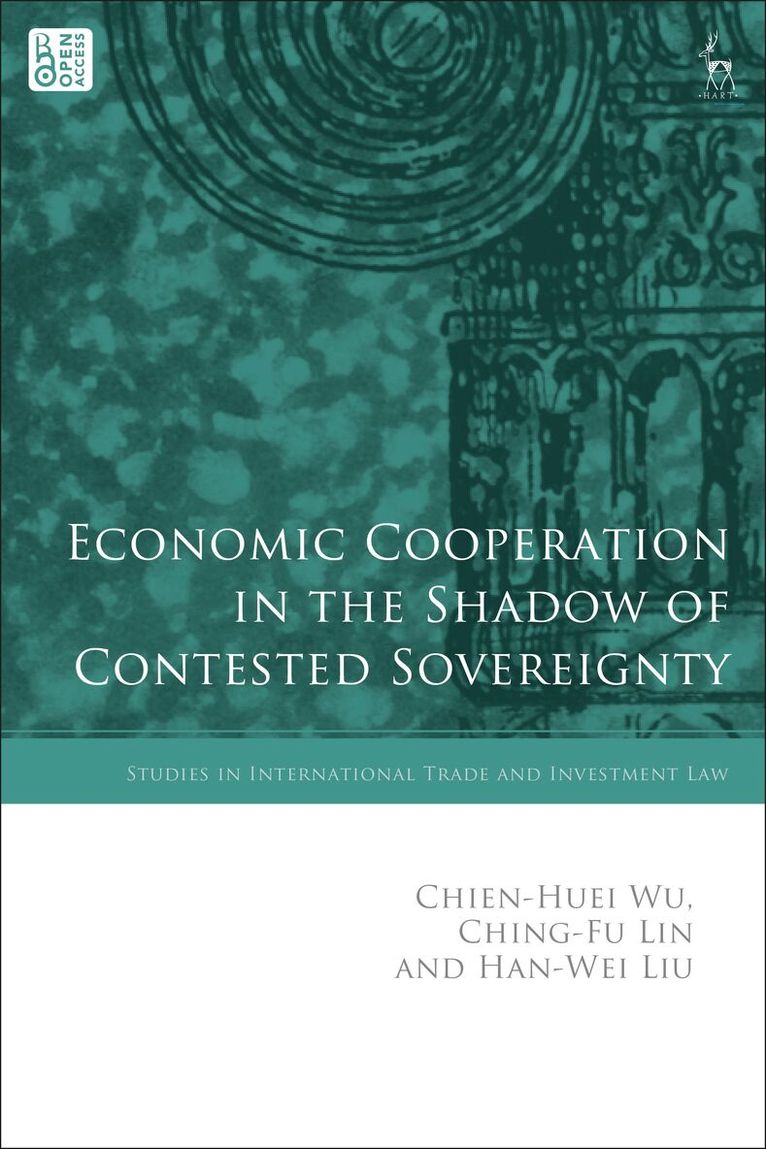
This open access book is the first of its kind to address a question of both theoretical and practical significance: how do countries or entities approach economic cooperation in the face of vexing political concerns and overlapping sovereignty claims? Built upon three contemporary case studies on North-South Korea, China-Taiwan, and North-South Cyprus – representative pairs of ‘divided nations’, broadly defined – the book explores from both an empirical and a conceptual perspective the underlying factors, approaches and patterns that influence the economic relationship between the two sides.The book examines complex dynamics and identifies critical factors across the case studies, making a timely contribution to debates surrounding sovereignty, democracy and legitimacy in the context of international economic laws given the shifting geopolitical landscape. It further informs countries that do not share the same features of divided nations but nonetheless experience diplomatic crises or military conflicts, which render their economic cooperation sensitive and strenuous.This book is a must-read for researchers, trade lawyers, and students in international law and international relations. It also serves as a valuable asset for negotiators, diplomats and policymakers, providing crucial insights for making decisions that can either escalate or de-escalate geopolitical conflicts.The ebook editions of this book are available open access under a CC BY-NC-ND 4.0 licence on bloomsburycollections.com. Open access was funded by the Academia Sinica Thematic Program.
688 kr
Kommande
This open access book is the first of its kind to address a question of both theoretical and practical significance: how do countries or entities approach economic cooperation in the face of vexing political concerns and overlapping sovereignty claims? Built upon three contemporary case studies on North-South Korea, China-Taiwan, and North-South Cyprus – representative pairs of ‘divided nations’, broadly defined – the book explores from both an empirical and a conceptual perspective the underlying factors, approaches and patterns that influence the economic relationship between the two sides.The book examines complex dynamics and identifies critical factors across the case studies, making a timely contribution to debates surrounding sovereignty, democracy and legitimacy in the context of international economic laws given the shifting geopolitical landscape. It further informs countries that do not share the same features of divided nations but nonetheless experience diplomatic crises or military conflicts, which render their economic cooperation sensitive and strenuous.This book is a must-read for researchers, trade lawyers, and students in international law and international relations. It also serves as a valuable asset for negotiators, diplomats and policymakers, providing crucial insights for making decisions that can either escalate or de-escalate geopolitical conflicts.The ebook editions of this book are available open access under a CC BY-NC-ND 4.0 licence on bloomsburycollections.com. Open access was funded by the Academia Sinica Thematic Program.
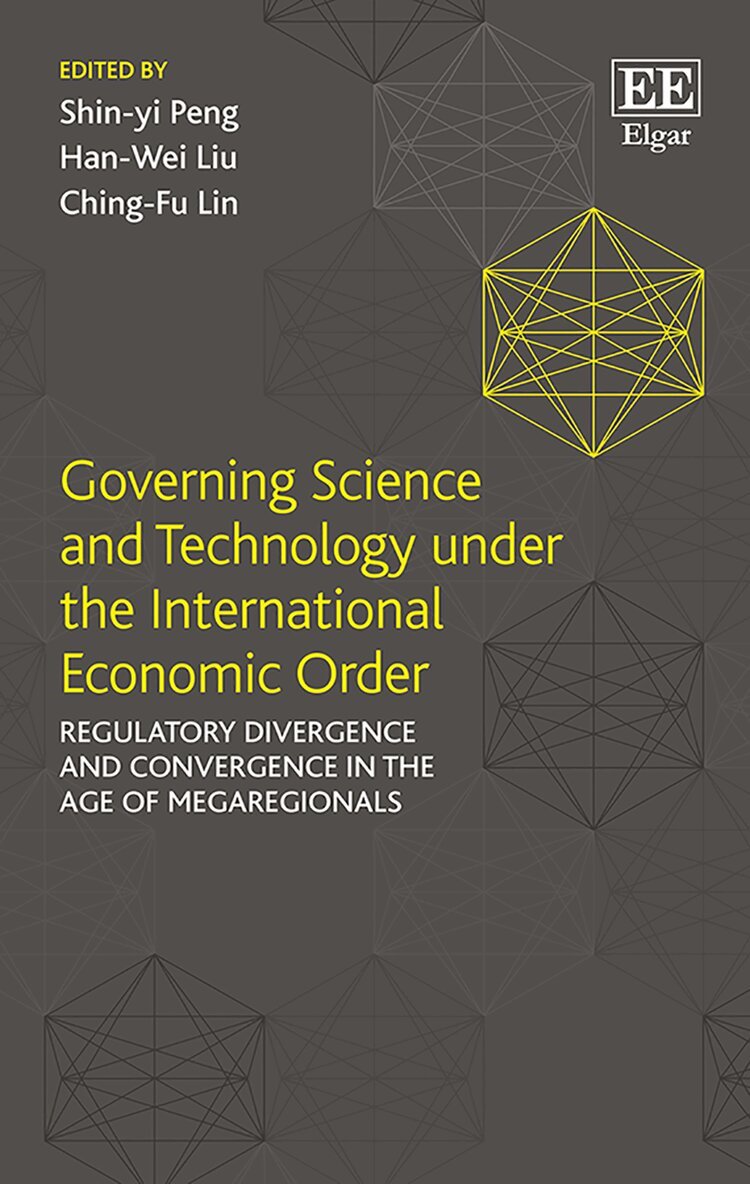
Governing Science and Technology under the International Economic Order
Regulatory Divergence and Convergence in the Age of Megaregionals
Inbunden, Engelska, 2018
2 116 kr
Skickas inom 7-10 vardagar
Against the backdrop of the recent trend towards mega-regional trade initiatives, this book addresses the most topical issues that lie at the intersection of law and technology. By assessing international law and the political economy, the contributing authors offer an enhanced understanding of the challenges of diverging regulatory approaches to innovation.With contributions from leading scholars in the field, this book presents a collaborative effort to map out the new dynamics shaped by scientific and technological advances and corresponding regulatory approaches. Starting with the trend of regulatory cooperation, the book focuses on prominent fields in international trade, information technology, energy, and public health. The final section reflects upon the position of intellectual property rights, a key concern in cross-border trade. This work is the first of its kind to give a timely review and assessment of the most critical challenges facing policymakers and academics in the newest wave of transformation in global trade governance.The book will appeal to academics who are researching in international economic law, technology law and policy, and political science. Practitioners and policy makers who are active in the field of international trade will also find great value in this work.Contributors include: W.-M. Choi, S.-J. Feng, M.-Z. Gao, B. Hazucha, C.-F. Lin, H.-W. Liu, C.-F. Lo, P. Mavroidis, B. Mercurio, Y. Naiki, S.-Y. Peng, S. Shadikhodjaev, R.H. Weber, M. Wu, P. Yu