Thomas Streinz – författare
Visar alla böcker från författaren Thomas Streinz. Handla med fri frakt och snabb leverans.
7 produkter
7 produkter
E-bok
PDF, Engelska, 20191 628 kr
Läs direkt efter köp
The Japan-led Trans-Pacific Partnership (CPTPPA) of 2018 is the most far-reaching ''megaregional'' economic agreement in force, with several major countries beyond its eleven negotiating countries also interested. Still bearing the stamp of the original US involvement before the Trump-era reversal, TPP is the first instance of ''megaregulation'': a demanding combination of inter-state economic ordering and national regulatory governance on a highly ambitious substantiveand trans-regional scale. Its text and ambition have influenced other negotiations ranging from the Japan-EU Agreement (JEEPA) and the US-Mexico-Canada Agreement (USMCA) to the projected Pan-Asian Regional Comprehensive Economic Partnership (RCEP).This book provides an extensive analysis of TPP as a megaregulatory project for channelling and managing new pressures of globalization, and of core critical arguments made against economic megaregulation from standpoints of development, inequality, labour rights, environmental interests, corporate capture, and elite governance. Specialized chapters cover supply chains, digital economy, trade facilitation, intellectual property, currency levels, competition and state-owned enterprises,government procurement, investment, prescriptions for national regulation, and the TPP institutions. Country studies include detailed analyses of TPP-related politics and approaches in Japan, Mexico, Brazil, China, India, Indonesia, and Thailand. Contributors include leading practitioners and scholars inlaw, economics, and political science. At a time when the WTO and other global-scale institutions are struggling with economic nationalism and geopolitics, and bilateral and regional agreements are pressed by public disagreement and incompatibility with digital and capital and value chain flows, the megaregional ambition of TPP is increasingly important as a precedent requiring the close scrutiny this book presents.
E-bok
Engelska, 20191 628 kr
Läs direkt efter köp
The Japan-led Trans-Pacific Partnership (CPTPPA) of 2018 is the most far-reaching ''megaregional'' economic agreement in force, with several major countries beyond its eleven negotiating countries also interested. Still bearing the stamp of the original US involvement before the Trump-era reversal, TPP is the first instance of ''megaregulation'': a demanding combination of inter-state economic ordering and national regulatory governance on a highly ambitious substantiveand trans-regional scale. Its text and ambition have influenced other negotiations ranging from the Japan-EU Agreement (JEEPA) and the US-Mexico-Canada Agreement (USMCA) to the projected Pan-Asian Regional Comprehensive Economic Partnership (RCEP).This book provides an extensive analysis of TPP as a megaregulatory project for channelling and managing new pressures of globalization, and of core critical arguments made against economic megaregulation from standpoints of development, inequality, labour rights, environmental interests, corporate capture, and elite governance. Specialized chapters cover supply chains, digital economy, trade facilitation, intellectual property, currency levels, competition and state-owned enterprises,government procurement, investment, prescriptions for national regulation, and the TPP institutions. Country studies include detailed analyses of TPP-related politics and approaches in Japan, Mexico, Brazil, China, India, Indonesia, and Thailand. Contributors include leading practitioners and scholars inlaw, economics, and political science. At a time when the WTO and other global-scale institutions are struggling with economic nationalism and geopolitics, and bilateral and regional agreements are pressed by public disagreement and incompatibility with digital and capital and value chain flows, the megaregional ambition of TPP is increasingly important as a precedent requiring the close scrutiny this book presents.
Inbunden, Engelska, 2019
1 911 kr
Skickas inom 5-8 vardagar
The Japan-led Trans-Pacific Partnership (CPTPPA) of 2018 is the most far-reaching 'megaregional' economic agreement in force, with several major countries beyond its eleven negotiating countries also interested. Still bearing the stamp of the original US involvement before the Trump-era reversal, TPP is the first instance of 'megaregulation': a demanding combination of inter-state economic ordering and national regulatory governance on a highly ambitious substantive and trans-regional scale. Its text and ambition have influenced other negotiations ranging from the Japan-EU Agreement (JEEPA) and the US-Mexico-Canada Agreement (USMCA) to the projected Pan-Asian Regional Comprehensive Economic Partnership (RCEP). This book provides an extensive analysis of TPP as a megaregulatory project for channelling and managing new pressures of globalization, and of core critical arguments made against economic megaregulation from standpoints of development, inequality, labour rights, environmental interests, corporate capture, and elite governance. Specialized chapters cover supply chains, digital economy, trade facilitation, intellectual property, currency levels, competition and state-owned enterprises, government procurement, investment, prescriptions for national regulation, and the TPP institutions. Country studies include detailed analyses of TPP-related politics and approaches in Japan, Mexico, Brazil, China, India, Indonesia, and Thailand. Contributors include leading practitioners and scholars in law, economics, and political science. At a time when the WTO and other global-scale institutions are struggling with economic nationalism and geopolitics, and bilateral and regional agreements are pressed by public disagreement and incompatibility with digital and capital and value chain flows, the megaregional ambition of TPP is increasingly important as a precedent requiring the close scrutiny this book presents.
Inbunden, Engelska, 2021
1 464 kr
Skickas inom 7-10 vardagar
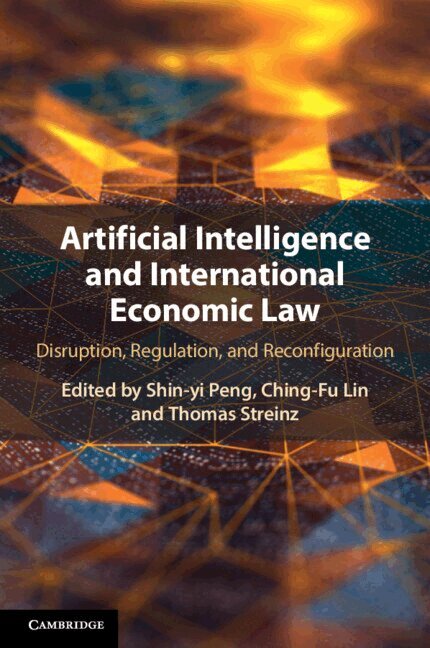
Artificial intelligence (AI) technologies are transforming economies, societies, and geopolitics. Enabled by the exponential increase of data that is collected, transmitted, and processed transnationally, these changes have important implications for international economic law (IEL). This volume examines the dynamic interplay between AI and IEL by addressing an array of critical new questions, including: How to conceptualize, categorize, and analyze AI for purposes of IEL? How is AI affecting established concepts and rubrics of IEL? Is there a need to reconfigure IEL, and if so, how? Contributors also respond to other cross-cutting issues, including digital inequality, data protection, algorithms and ethics, the regulation of AI-use cases (autonomous vehicles), and systemic shifts in e-commerce (digital trade) and industrial production (fourth industrial revolution). This title is also available as Open Access on Cambridge Core.
Häftad, Engelska, 2024
385 kr
Skickas inom 7-10 vardagar
Artificial intelligence (AI) technologies are transforming economies, societies, and geopolitics. Enabled by the exponential increase of data that is collected, transmitted, and processed transnationally, these changes have important implications for international economic law (IEL). This volume examines the dynamic interplay between AI and IEL by addressing an array of critical new questions, including: How to conceptualize, categorize, and analyze AI for purposes of IEL? How is AI affecting established concepts and rubrics of IEL? Is there a need to reconfigure IEL, and if so, how? Contributors also respond to other cross-cutting issues, including digital inequality, data protection, algorithms and ethics, the regulation of AI-use cases (autonomous vehicles), and systemic shifts in e-commerce (digital trade) and industrial production (fourth industrial revolution). This title is also available as Open Access on Cambridge Core.
E-bok
Engelska, 2021441 kr
Läs direkt efter köp
Artificial intelligence (AI) technologies are transforming economies, societies, and geopolitics. Enabled by the exponential increase of data that is collected, transmitted, and processed transnationally, these changes have important implications for international economic law (IEL). This volume examines the dynamic interplay between AI and IEL by addressing an array of critical new questions, including: How to conceptualize, categorize, and analyze AI for purposes of IEL? How is AI affecting established concepts and rubrics of IEL? Is there a need to reconfigure IEL, and if so, how? Contributors also respond to other cross-cutting issues, including digital inequality, data protection, algorithms and ethics, the regulation of AI-use cases (autonomous vehicles), and systemic shifts in e-commerce (digital trade) and industrial production (fourth industrial revolution). This title is also available as Open Access on Cambridge Core.
E-bok
PDF, Engelska, 2021441 kr
Läs direkt efter köp
Artificial intelligence (AI) technologies are transforming economies, societies, and geopolitics. Enabled by the exponential increase of data that is collected, transmitted, and processed transnationally, these changes have important implications for international economic law (IEL). This volume examines the dynamic interplay between AI and IEL by addressing an array of critical new questions, including: How to conceptualize, categorize, and analyze AI for purposes of IEL? How is AI affecting established concepts and rubrics of IEL? Is there a need to reconfigure IEL, and if so, how? Contributors also respond to other cross-cutting issues, including digital inequality, data protection, algorithms and ethics, the regulation of AI-use cases (autonomous vehicles), and systemic shifts in e-commerce (digital trade) and industrial production (fourth industrial revolution). This title is also available as Open Access on Cambridge Core.