Chris Button – författare
Visar alla böcker från författaren Chris Button. Handla med fri frakt och snabb leverans.
11 produkter
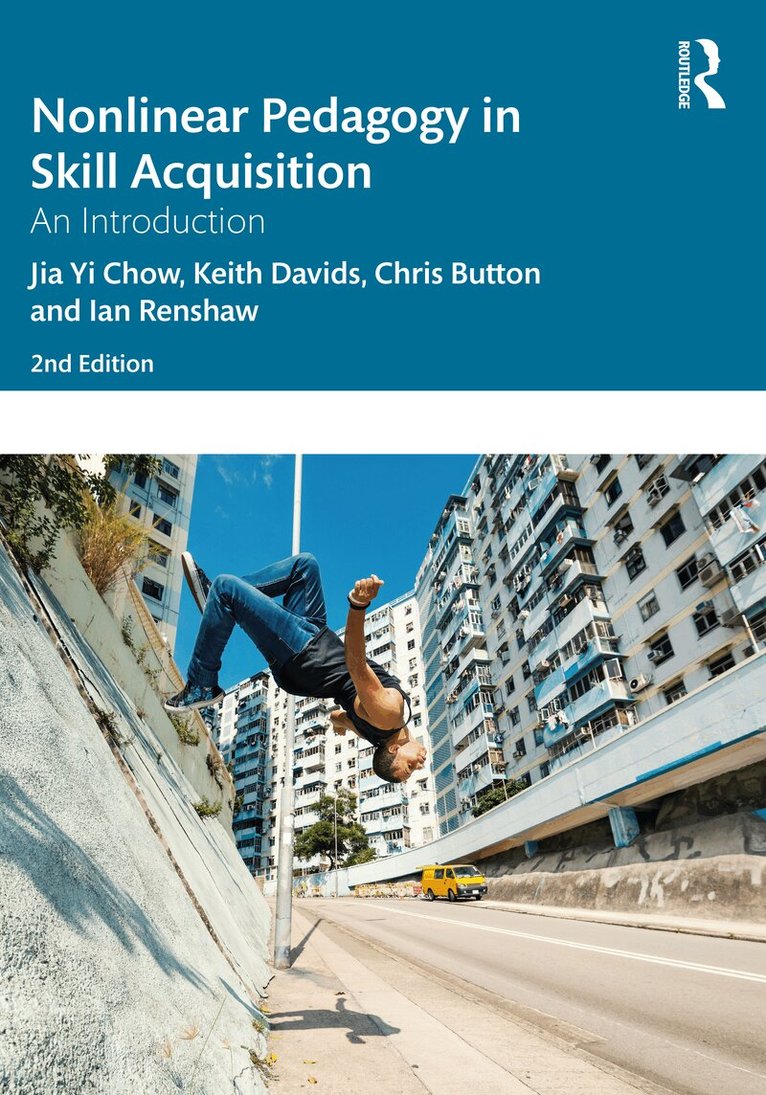
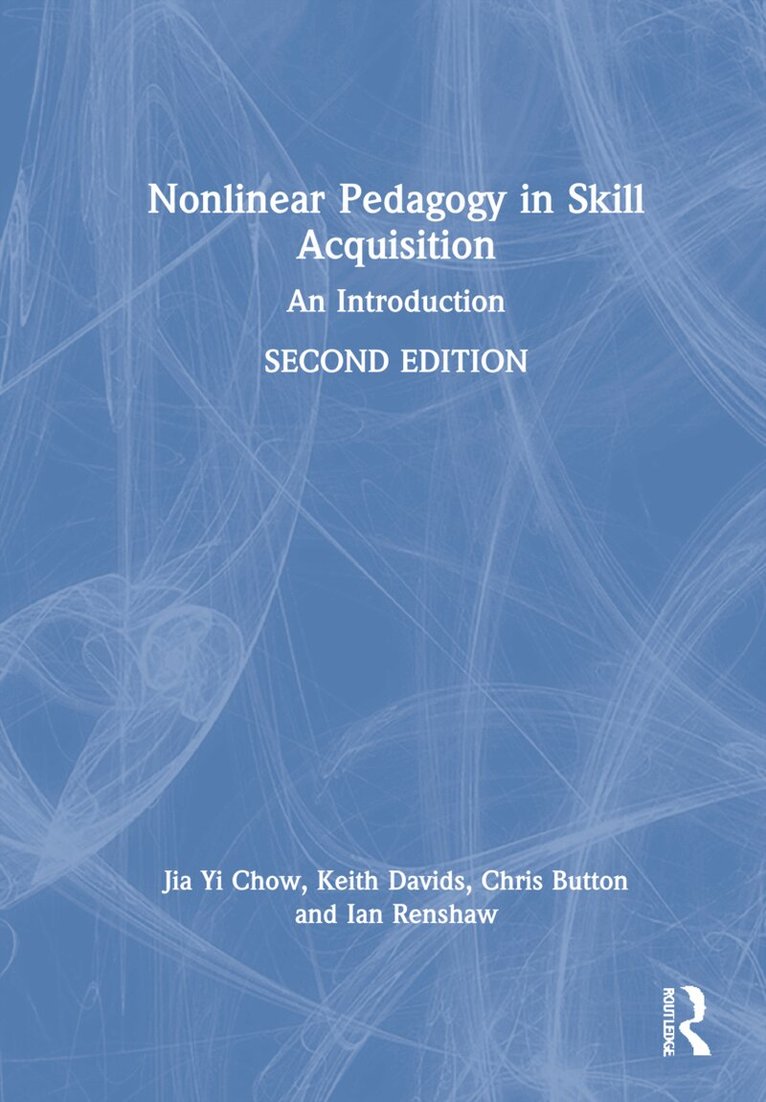
Nonlinear Pedagogy in Skill Acquisition
An Introduction
Av Jia Yi Chow, Keith Davids m. fl.
Häftad, 2021
749 kr
Lägg i varukorg
Nonlinear Pedagogy is a powerful paradigm for understanding human movement and for designing effective teaching, coaching and training programmes in sport, exercise and physical education (PE). It addresses the inherent complexity in learning movement skills, viewing the learner, the learning …
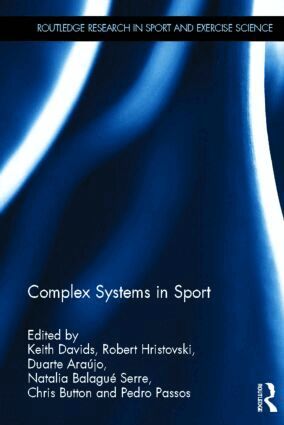
Complex Systems in Sport
Av Keith Davids, Robert Hristovski m. fl.
Inbunden, 2013
2913 kr
Lägg i varukorg
Complex systems in nature are those with many interacting parts, all capable of influencing global system outcomes. There is a growing body of research that has modeled sport performance from a complexity sciences perspective, studying the behavior of individual athletes and sports teams as …
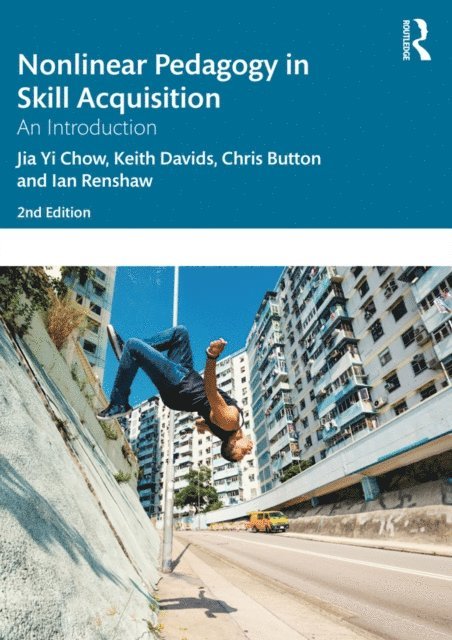
Nonlinear Pedagogy in Skill Acquisition
An Introduction
Av Ian Renshaw, Chris Button m. fl.
E-bok, 2021
790 kr
Lägg i varukorg
Nonlinear Pedagogy is a powerful paradigm for understanding human movement and for designing effective teaching, coaching and training programmes in sport, exercise and physical education (PE). It addresses the inherent complexity in learning movement skills, viewing the learner, the learning …
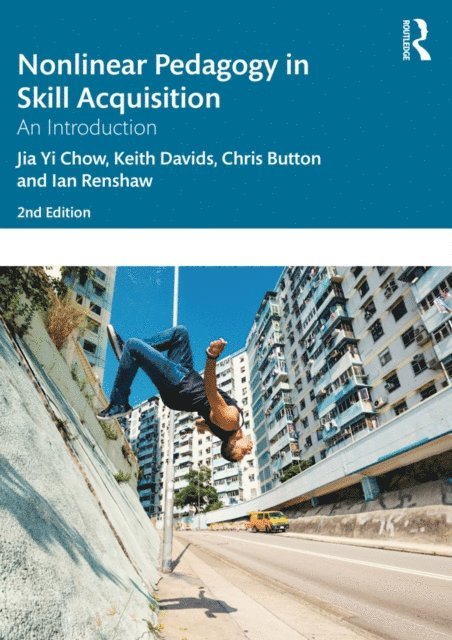
Nonlinear Pedagogy in Skill Acquisition
An Introduction
Av Ian Renshaw, Chris Button m. fl.
E-bok, 2021
808 kr
Lägg i varukorg
Nonlinear Pedagogy is a powerful paradigm for understanding human movement and for designing effective teaching, coaching and training programmes in sport, exercise and physical education (PE). It addresses the inherent complexity in learning movement skills, viewing the learner, the learning …
Nonlinear Pedagogy in Skill Acquisition
An Introduction
Av Jia Yi Chow, Keith Davids m. fl.
Inbunden, 2021
2666 kr
Lägg i varukorg
Nonlinear Pedagogy is a powerful paradigm for understanding human movement and for designing effective teaching, coaching and training programmes in sport, exercise and physical education (PE). It addresses the inherent complexity in learning movement skills, viewing the learner, the learning …
Complex Systems in Sport
Av Pedro Passos, Chris Button m. fl.
E-bok, 2013
938 kr
Lägg i varukorg
Complex systems in nature are those with many interacting parts, all capable of influencing global system outcomes. There is a growing body of research that has modeled sport performance from a complexity sciences perspective, studying the behavior of individual athletes and sports teams as …
Complex Systems in Sport
Av Pedro Passos, Chris Button m. fl.
E-bok, 2013
938 kr
Lägg i varukorg
Complex systems in nature are those with many interacting parts, all capable of influencing global system outcomes. There is a growing body of research that has modeled sport performance from a complexity sciences perspective, studying the behavior of individual athletes and sports teams as …
Complex Systems in Sport
Av Keith Davids, Robert Hristovski m. fl.
Häftad, 2015
796 kr
Lägg i varukorg
Complex systems in nature are those with many interacting parts, all capable of influencing global system outcomes. There is a growing body of research that has modeled sport performance from a complexity sciences perspective, studying the behavior of individual athletes and sports teams as …
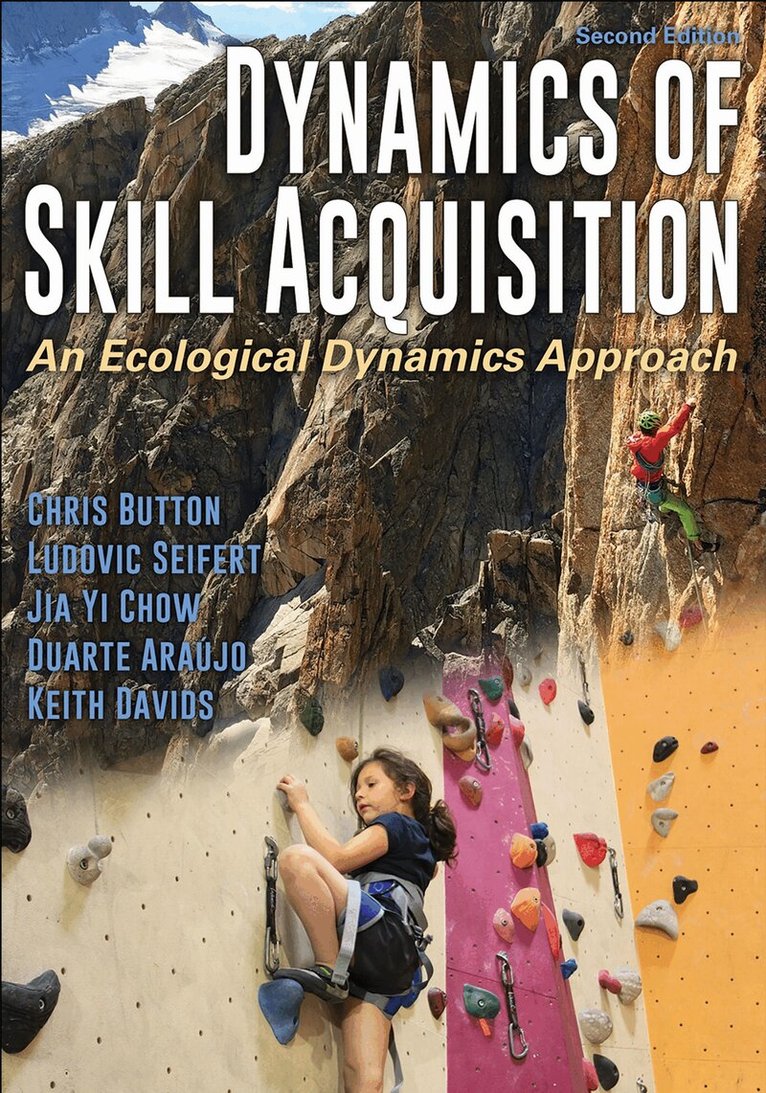
Dynamics of Skill Acquisition
An Ecological Dynamics Approach
Av Chris Button, Ludovic Seifert m. fl.
Häftad, 2020
1024 kr
Lägg i varukorg
Dynamics of Skill Acquisition, Second Edition, provides an analysis of the processes underlying human skill acquisition. As the first text to outline the multidisciplinary ecological dynamics framework for understanding movement behavior, this heavily updated edition stays on the cutting edge, with …
Google Classroom for Teachers (2020 and Beyond)
A User Guide for Beginners to Master the Use of Google Classroom to Provide Students With an Engaging and Fun Virtual Distance Learning
Av Chris Button
Häftad, 2020
222 kr
Lägg i varukorg
Google Classroom for Teachers (2020 and Beyond)
A User Guide for Beginners to Master the Use of Google Classroom to Provide Students With an Engaging and Fun Virtual Distance Learning
Av Chris Button
Inbunden, 2020
278 kr
Lägg i varukorg