Jia Yi Chow - Böcker
Visar alla böcker från författaren Jia Yi Chow. Handla med fri frakt och snabb leverans.
9 produkter
9 produkter
641 kr
Skickas inom 10-15 vardagar
Ecological Dynamics Approach to Football is the first book to apply insights from research in ecological dynamics to the sport of football.Ecological dynamics is a theoretical framework that draws on ecological psychology, complexity sciences, and dynamical systems concepts in examining interactions among constraints and the emergence of movement and performance behaviours.This book shows how an ecological dynamics approach can be used to design better practices for the development of football players and for the performance preparation of both players and teams. This book also discusses how practitioner professional development pathways can be framed by an ecological dynamics approach. Ecological Dynamics Approach to Football integrates experiential and empirical knowledge in football, with important implications for both scientific understanding and applications for competing and training.This book is key reading for students on coaching, sport pedagogy, and football courses as well as sport practitioners working as coaches, trainers, performance analysts, coach educators, and sport science support staff.
669 kr
Skickas inom 10-15 vardagar
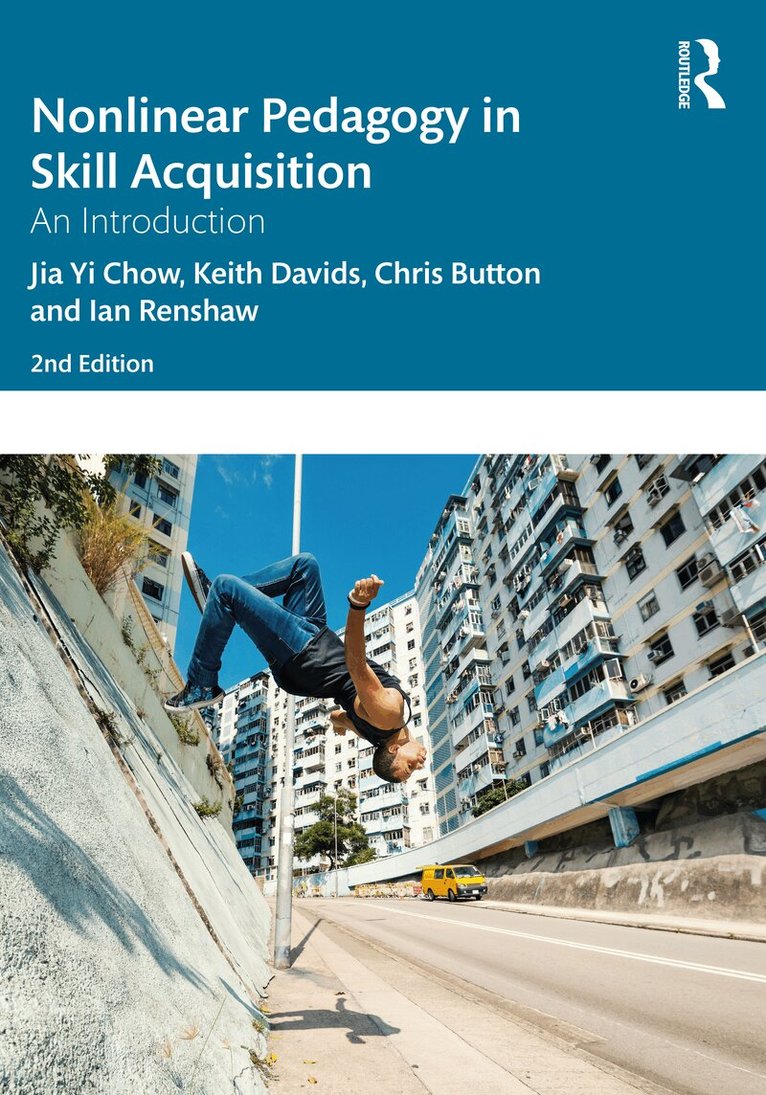
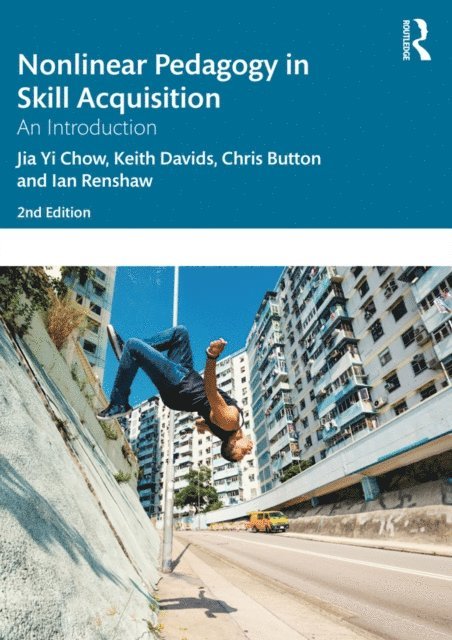
Nonlinear Pedagogy is a powerful paradigm for understanding human movement and for designing effective teaching, coaching and training programmes in sport, exercise and physical education (PE). It addresses the inherent complexity in learning movement skills, viewing the learner, the learning environment and the teacher or coach as a complex interacting system. The constraints of individual practice tasks provide the platform for functional movement behaviours to emerge during practice and performance. The second edition includes new materials, of practical, theoretical and empirical relevance, to enhance understanding of how to implement a Nonlinear Pedagogy to support learning in sport, PE and physical activity. There is updated, in-depth discussion on the various pedagogical principles that support Nonlinear Pedagogy and how these principles are applicable in learning designs in sports and physical education. There is further emphasis on examining how transfer of learning is implicated in practice, highlighting its relevance on skill adaptation and talent development. The first part of the book updates the general theoretical framework to explain processes of skill acquisition and motor learning. This edition draws clearer links between skill acquisition, expertise and talent development, focusing on how specificity and generality of transfer have a role to play in the development of learners. The book defines Nonlinear Pedagogy and outlines its key principles of practice. It offers a thorough and critical appraisal of the functional use of instructional constraints and practice design. It discusses methods for creating challenging and supportive individualised learning environments at developmental, sub-elite and elite levels of performance. The second part focuses on the application of Nonlinear Pedagogy in sports and PE. There is a greater emphasis on helping applied scientists and practitioners understand the impact of Nonlinear Pedagogy on transfer of learning. Every chapter is updated to provide relevant contemporary cases and examples from sport and exercise contexts, providing guidance on practice activities and lessons. Nonlinear Pedagogy in Skill Acquisition is an essential companion for any degree-level course in skill acquisition, motor learning, sport science, sport pedagogy, sports coaching practice, or pedagogy or curriculum design in physical education.
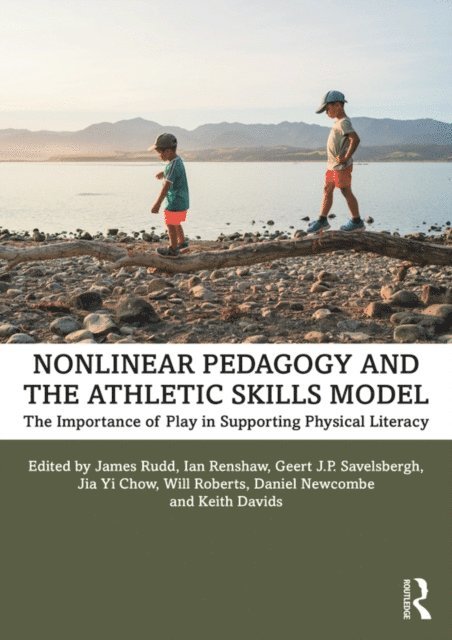
Nonlinear Pedagogy and the Athletic Skills Model
The Importance of Play in Supporting Physical Literacy
Inbunden, Engelska, 2021
2 150 kr
Skickas inom 10-15 vardagar
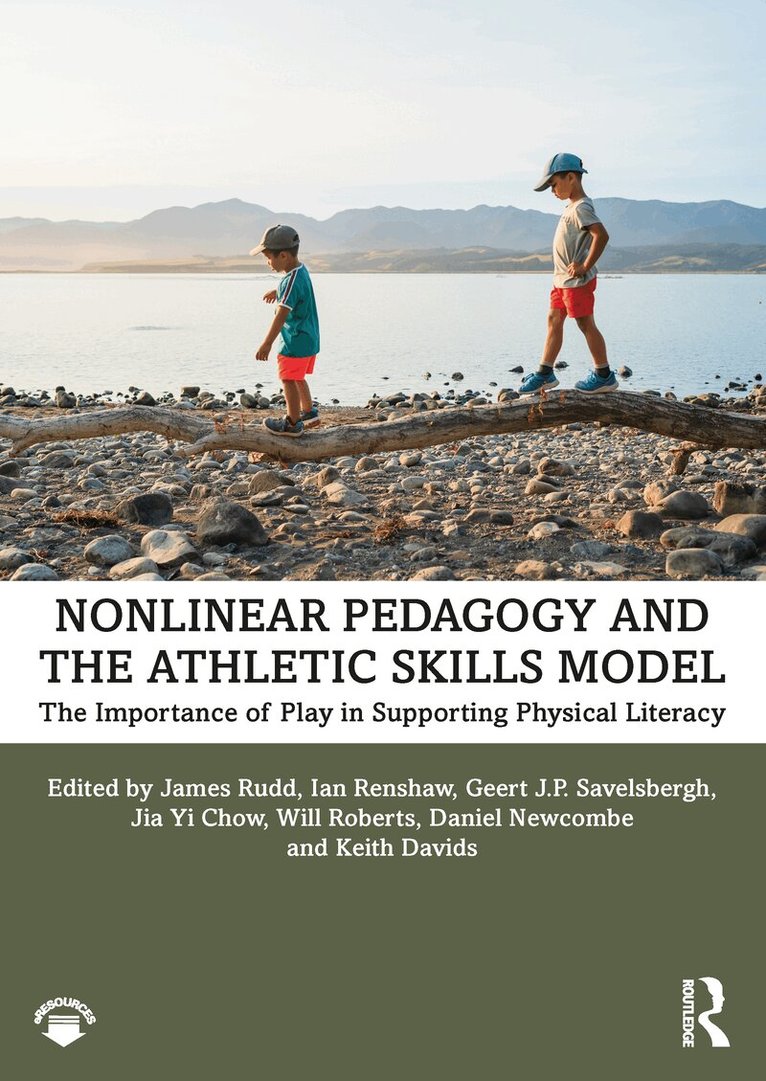
This book offers an ecological conceptualisation of physical literacy. Re-embracing our ancestry as hunter gatherers we gain a new appreciation and understanding of the importance of play, not only in terms of how children learn, but also in showing us as educators how we can lay the foundations for lifelong physical activity. The concept of physical literacy has been recognised and understood throughout history by different communities across the globe. Today, as governments grapple with the multiple challenges of urban life in the 21st century, we can learn from our forebears how to put play at the centre of children’s learning in order to build a more enduring physically active society. This book examines contemporary pedagogical approaches, such as constraints-led teaching, nonlinear pedagogy and the athletic skills model, which are underpinned by the theoretical framework of Ecological Dynamics. It is suggested that through careful design, these models, aimed at children, as well as young athletes, can (i) encourage play and facilitate physical activity and motor learning in children of different ages, providing them with the foundational skills needed for leading active lives; and (ii), develop young athletes in elite sports programmes in an ethical, enriching and supportive manner. Through this text, scientists, academics and practitioners in the sub-disciplines of motor learning and motor development, physical education, sports pedagogy and physical activity and exercise domains will better understand how to design programmes that encourage play and thereby develop the movement skills, self-regulating capacities, motivation and proficiency of people, so that they can move skilfully, effectively and efficiently while negotiating changes throughout the human lifespan.
Nonlinear Pedagogy and the Athletic Skills Model
The Importance of Play in Supporting Physical Literacy
Häftad, Engelska, 2021
649 kr
Skickas inom 10-15 vardagar
This book offers an ecological conceptualisation of physical literacy. Re-embracing our ancestry as hunter gatherers we gain a new appreciation and understanding of the importance of play, not only in terms of how children learn, but also in showing us as educators how we can lay the foundations for lifelong physical activity. The concept of physical literacy has been recognised and understood throughout history by different communities across the globe. Today, as governments grapple with the multiple challenges of urban life in the 21st century, we can learn from our forebears how to put play at the centre of children’s learning in order to build a more enduring physically active society. This book examines contemporary pedagogical approaches, such as constraints-led teaching, nonlinear pedagogy and the athletic skills model, which are underpinned by the theoretical framework of Ecological Dynamics. It is suggested that through careful design, these models, aimed at children, as well as young athletes, can (i) encourage play and facilitate physical activity and motor learning in children of different ages, providing them with the foundational skills needed for leading active lives; and (ii), develop young athletes in elite sports programmes in an ethical, enriching and supportive manner. Through this text, scientists, academics and practitioners in the sub-disciplines of motor learning and motor development, physical education, sports pedagogy and physical activity and exercise domains will better understand how to design programmes that encourage play and thereby develop the movement skills, self-regulating capacities, motivation and proficiency of people, so that they can move skilfully, effectively and efficiently while negotiating changes throughout the human lifespan.
725 kr
Skickas inom 10-15 vardagar
Interpersonal coordination is an important feature of all social systems. From everyday activities to playing sport and participating in the performing arts, human behaviour is constrained by the need to continually interact with others. This book examines how interpersonal coordination tendencies in social systems emerge, across a range of contexts and at different scales, with the aim of helping practitioners to understand collective behaviours and create learning environments to improve performance. Showcasing the latest research from scientists and academics, this collection of studies examines how and why interpersonal coordination is crucial for success in sport and the performing arts. It explains the complex science of interpersonal coordination in relation to a variety of activities including competitive team sports, outdoor sports, racket sports, and martial arts, as well as dance. Divided into four sections, this book offers insight into: the nature, history and key concepts of interpersonal coordination factors that influence interpersonal coordination within social systems interpersonal coordination in competitive and cooperative performance contexts methods, tools and devices for improving performance through interpersonal coordination.This book will provide fascinating insights for students, researchers and educators interested in movement science, performance analysis, sport science and psychology, as well as for those working in the performing arts.
2 216 kr
Skickas inom 10-15 vardagar
Nonlinear Pedagogy is a powerful paradigm for understanding human movement and for designing effective teaching, coaching and training programmes in sport, exercise and physical education (PE). It addresses the inherent complexity in learning movement skills, viewing the learner, the learning environment and the teacher or coach as a complex interacting system. The constraints of individual practice tasks provide the platform for functional movement behaviours to emerge during practice and performance. The second edition includes new materials, of practical, theoretical and empirical relevance, to enhance understanding of how to implement a Nonlinear Pedagogy to support learning in sport, PE and physical activity. There is updated, in-depth discussion on the various pedagogical principles that support Nonlinear Pedagogy and how these principles are applicable in learning designs in sports and physical education. There is further emphasis on examining how transfer of learning is implicated in practice, highlighting its relevance on skill adaptation and talent development. The first part of the book updates the general theoretical framework to explain processes of skill acquisition and motor learning. This edition draws clearer links between skill acquisition, expertise and talent development, focusing on how specificity and generality of transfer have a role to play in the development of learners. The book defines Nonlinear Pedagogy and outlines its key principles of practice. It offers a thorough and critical appraisal of the functional use of instructional constraints and practice design. It discusses methods for creating challenging and supportive individualised learning environments at developmental, sub-elite and elite levels of performance. The second part focuses on the application of Nonlinear Pedagogy in sports and PE. There is a greater emphasis on helping applied scientists and practitioners understand the impact of Nonlinear Pedagogy on transfer of learning. Every chapter is updated to provide relevant contemporary cases and examples from sport and exercise contexts, providing guidance on practice activities and lessons. Nonlinear Pedagogy in Skill Acquisition is an essential companion for any degree-level course in skill acquisition, motor learning, sport science, sport pedagogy, sports coaching practice, or pedagogy or curriculum design in physical education.
2 216 kr
Skickas inom 10-15 vardagar
Ecological Dynamics Approach to Football is the first book to apply insights from research in ecological dynamics to the sport of football.Ecological dynamics is a theoretical framework that draws on ecological psychology, complexity sciences, and dynamical systems concepts in examining interactions among constraints and the emergence of movement and performance behaviours.This book shows how an ecological dynamics approach can be used to design better practices for the development of football players and for the performance preparation of both players and teams. This book also discusses how practitioner professional development pathways can be framed by an ecological dynamics approach. Ecological Dynamics Approach to Football integrates experiential and empirical knowledge in football, with important implications for both scientific understanding and applications for competing and training.This book is key reading for students on coaching, sport pedagogy, and football courses as well as sport practitioners working as coaches, trainers, performance analysts, coach educators, and sport science support staff.
2 094 kr
Skickas inom 10-15 vardagar
Interpersonal coordination is an important feature of all social systems. From everyday activities to playing sport and participating in the performing arts, human behaviour is constrained by the need to continually interact with others. This book examines how interpersonal coordination tendencies in social systems emerge, across a range of contexts and at different scales, with the aim of helping practitioners to understand collective behaviours and create learning environments to improve performance. Showcasing the latest research from scientists and academics, this collection of studies examines how and why interpersonal coordination is crucial for success in sport and the performing arts. It explains the complex science of interpersonal coordination in relation to a variety of activities including competitive team sports, outdoor sports, racket sports, and martial arts, as well as dance. Divided into four sections, this book offers insight into: the nature, history and key concepts of interpersonal coordination factors that influence interpersonal coordination within social systems interpersonal coordination in competitive and cooperative performance contexts methods, tools and devices for improving performance through interpersonal coordination.This book will provide fascinating insights for students, researchers and educators interested in movement science, performance analysis, sport science and psychology, as well as for those working in the performing arts.
1 004 kr
Skickas inom 7-10 vardagar
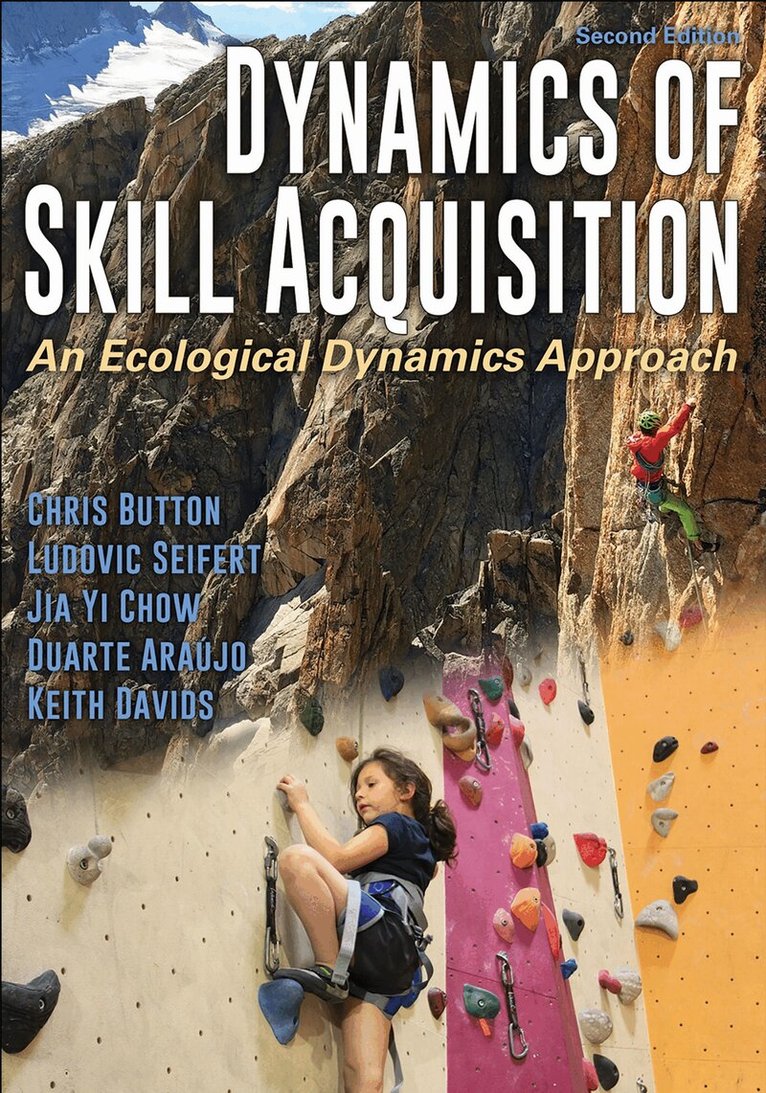
Dynamics of Skill Acquisition, Second Edition, provides an analysis of the processes underlying human skill acquisition. As the first text to outline the multidisciplinary ecological dynamics framework for understanding movement behavior, this heavily updated edition stays on the cutting edge, with principles of nonlinear pedagogy and methodologies from the constraints-led approach.Students and practitioners across a variety of professions-including coaches, physical educators, trainers, and rehabilitation specialists-will appreciate the applied focus of this second edition. Movement models throughout the text provide examples for visualizing task constraints and enhancing the study and understanding of movement behavior. Athletes and sports teams are presented as specific complex adaptive systems, with information on designing learning environments and adapting programs to foster skill development.Readers will learn the historical evolution of dynamical systems theory and the ecological dynamics framework. These foundational concepts illustrate the integration between intentional action, cognition, and decision making and their effects on performance and behavior. Complex theoretical concepts are explained in simple terms and related to practice, focusing on the implications of the work of pioneering researchers such as Nikolai Bernstein, Egon Brunswik, James Gibson, Scott Kelso, and Karl Newell. Case studies written by practitioners contain specific examples of the ecological dynamics framework in action, bringing theory to life. By learning how to identify and manipulate key constraints that influence learning skilled behavior, readers will gain insight into practice designs for creating positive learning experiences that enable individuals to develop and learn functional movements.Throughout the book, learning features guide readers through material with clear direction and focus to improve understanding. Spotlight on Research sidebars provide detailed descriptions of important studies to connect theory, research, and application. Lab activities teach application skills beyond the content, ensuring reader understanding. In addition, chapter objectives, self-test questions, and Key Concept sidebars highlight important concepts in each chapter.With the study of human movement now bridging many disciplines, including motor development, psychology, biology, and physical therapy, Dynamics of Skill Acquisition, Second Edition, provides a timely analysis of the ecological dynamics framework and presents a comprehensive model for understanding how coordination patterns are assembled, controlled, and acquired. The theoretical roots and development of the ecological dynamics framework provide application strategies for all people with an interest in movement coordination and control.