Chris E. Taylor – författare
1 526 kr
Läs direkt efter köp
Covers new trace evidence techniques and expanding areas of analysis, along with key theory and applications
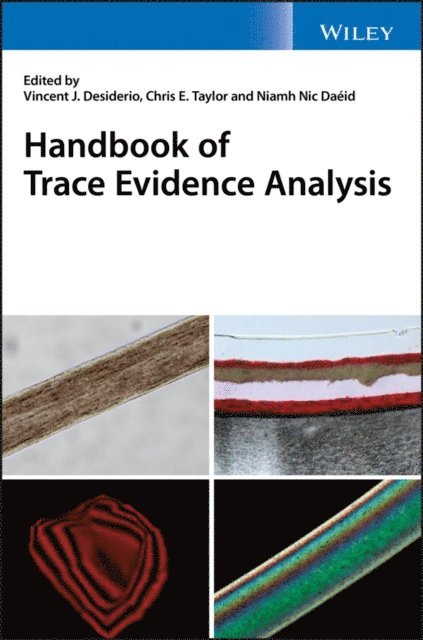
Developed around the need for updated information in the disciplines of trace evidence the Handbook of Trace Evidence Analysis focuses on the increasing awareness and need for validation, modern methods for addressing and controlling contamination, the shift towards incorporating statistical analyses into the interpretation phase and cutting edge research into new forensic science methods and their application.
Beginning with an overview of the topic and discussing the important role that information derived from trace materials can provide during investigations, the book then presents chapters on key techniques. The first being the critical nature of microscopy, and the methods employed for the recognition, collection, and preservation of trace evidence. Subsequent chapters review the core disciplines of trace evidence examination: paints and polymers, hairs, fibers and textiles and glass. Each chapter contains in-depth discussions on the origin of the materials involved, including any natural or synthetic processes involved in their production, the nuances involved in their detection, and the methods of analysis that are used to extract valuable information from samples. In addition, suggested workflows in method and testing selections, as well as addressing specific scientific challenges as well as the limitations of knowledge on the transfer, persistence and background abundance of trace materials are discussed. The book ends by examining the interpretation of trace evidence findings from a historical perspective and examining the methods that are currently being developed.
Provides an in-depth introduction to the general area of trace evidence and discusses current and new techniques Consolidates trace evidence and materials categories of testing into one reference series Offers a detailed focus on technical approaches and guidelines to trace evidence Includes analytical schemes/workflows and valuable guides for the interpretation of data and resultsThe Handbook of Trace Evidence will appeal to forensic science academics, students, and practitioners in the trace evidence and materials science disciplines, as well as DNA analysts, toxicologists, forensic anthropologists, crime laboratory managers, criminal justice students and practitioners, and legal professionals. It would also be a valuable resource for every crime laboratory reference library.
1 526 kr
Läs direkt efter köp
Covers new trace evidence techniques and expanding areas of analysis, along with key theory and applications
Developed around the need for updated information in the disciplines of trace evidence the Handbook of Trace Evidence Analysis focuses on the increasing awareness and need for validation, modern methods for addressing and controlling contamination, the shift towards incorporating statistical analyses into the interpretation phase and cutting edge research into new forensic science methods and their application.
Beginning with an overview of the topic and discussing the important role that information derived from trace materials can provide during investigations, the book then presents chapters on key techniques. The first being the critical nature of microscopy, and the methods employed for the recognition, collection, and preservation of trace evidence. Subsequent chapters review the core disciplines of trace evidence examination: paints and polymers, hairs, fibers and textiles and glass. Each chapter contains in-depth discussions on the origin of the materials involved, including any natural or synthetic processes involved in their production, the nuances involved in their detection, and the methods of analysis that are used to extract valuable information from samples. In addition, suggested workflows in method and testing selections, as well as addressing specific scientific challenges as well as the limitations of knowledge on the transfer, persistence and background abundance of trace materials are discussed. The book ends by examining the interpretation of trace evidence findings from a historical perspective and examining the methods that are currently being developed.
Provides an in-depth introduction to the general area of trace evidence and discusses current and new techniques Consolidates trace evidence and materials categories of testing into one reference series Offers a detailed focus on technical approaches and guidelines to trace evidence Includes analytical schemes/workflows and valuable guides for the interpretation of data and resultsThe Handbook of Trace Evidence will appeal to forensic science academics, students, and practitioners in the trace evidence and materials science disciplines, as well as DNA analysts, toxicologists, forensic anthropologists, crime laboratory managers, criminal justice students and practitioners, and legal professionals. It would also be a valuable resource for every crime laboratory reference library.
1 342 kr
Skickas
518 kr
Läs direkt efter köp
Listed in the 1997 edition of Doody’s Rating Service: A Buyer’s Guide to the 250 Best Health Sciences Books!Until recently, it had been presumed that chemotherapy was sufficient to control tuberculosis (TB). However, it has been estimated that this disease will claim more than 30 million lives in the coming decade. The emergence of multidrug resistant strains, the lack of patient adherence to therapy, and the resultant growing number of TB cases has made it clear that alternative approaches to fight this disease must be taken. Nutritional Abnormalities in Infectious Diseases: Effects on Tuberculosis and AIDS focuses on nutritional factors in relation to tuberculosis and AIDS to help you better understand and treat these diseases. Health care providers and researchers can refer to this valuable resource to identify the most crucial nutritional determinants involved in the control of TB, outline the nutrient-sensitive host defense mechanisms involved, define the effects of malabsorption and drug-drug interactions, and demonstrate the effects of co-infection with HIV on the incidence of TB.Representing the findings of a symposium held during the 94th General Meeting of the American Society for Microbiology, in Las Vegas, Nevada, Nutritional Abnormalities in Infectious Diseases is the work of several outstanding scientists who were invited to make presentations on selected aspects of nutrition and infectious diseases. They give you valuable information about:
the effects of malnutrition on host immune parameters intracellular host defense mechanisms phagocytosis the role of cytokines the immune function vitamin A, zinc, and protein deficiency malnutrition and the developing worldWhile the role of adequate nutrition in maintaining a healthy individual is certainly well-known, the findings in Nutritional Abnormalities in Infectious Diseases uncover the role of nutrition in the progression of tuberculosis and AIDS--a matter of great economic and public health significance. Intended for researchers, practitioners, and health care providers in colleges, universities, and government institutions, this important session was sponsored in part by the Respiratory Disease Branch, Division of Microbiology & Infectious Diseases, NIAID.518 kr
Läs direkt efter köp
Listed in the 1997 edition of Doody’s Rating Service: A Buyer’s Guide to the 250 Best Health Sciences Books!Until recently, it had been presumed that chemotherapy was sufficient to control tuberculosis (TB). However, it has been estimated that this disease will claim more than 30 million lives in the coming decade. The emergence of multidrug resistant strains, the lack of patient adherence to therapy, and the resultant growing number of TB cases has made it clear that alternative approaches to fight this disease must be taken. Nutritional Abnormalities in Infectious Diseases: Effects on Tuberculosis and AIDS focuses on nutritional factors in relation to tuberculosis and AIDS to help you better understand and treat these diseases. Health care providers and researchers can refer to this valuable resource to identify the most crucial nutritional determinants involved in the control of TB, outline the nutrient-sensitive host defense mechanisms involved, define the effects of malabsorption and drug-drug interactions, and demonstrate the effects of co-infection with HIV on the incidence of TB.Representing the findings of a symposium held during the 94th General Meeting of the American Society for Microbiology, in Las Vegas, Nevada, Nutritional Abnormalities in Infectious Diseases is the work of several outstanding scientists who were invited to make presentations on selected aspects of nutrition and infectious diseases. They give you valuable information about:
the effects of malnutrition on host immune parameters intracellular host defense mechanisms phagocytosis the role of cytokines the immune function vitamin A, zinc, and protein deficiency malnutrition and the developing worldWhile the role of adequate nutrition in maintaining a healthy individual is certainly well-known, the findings in Nutritional Abnormalities in Infectious Diseases uncover the role of nutrition in the progression of tuberculosis and AIDS--a matter of great economic and public health significance. Intended for researchers, practitioners, and health care providers in colleges, universities, and government institutions, this important session was sponsored in part by the Respiratory Disease Branch, Division of Microbiology & Infectious Diseases, NIAID.