Christian Fleck – författare
Visar alla böcker från författaren Christian Fleck. Handla med fri frakt och snabb leverans.
20 produkter
20 produkter
Inbunden, Engelska, 2008
2 269 kr
Skickas inom 10-15 vardagar
How do intellectuals engage with and affect their publics? What is the role of the public intellectual in the new age of political uncertainties? What challenges face female intellectuals and those speaking from an ethnic, national or class position? This exciting collection responds to these questions by offering a broad-ranging account of the changing role of intellectuals in public life. The volume opens with provocative essays on the idea and role of the public intellectual from Alexander, Evans and Zulaika. Chapters from Rabinbach on intellectuals' responses to totalitarianism, Outhwaite on what it means to be a European intellectual, and Auer’s discussion of the dissident intellectual in the collapse of communism lead onto vigorous debate of earlier points discussed through specific intellectual case studies from Tocqueville to Hayek. Intellectuals and their Publics will attract a broad readership interested in the role of the intellectual, with particular appeal for sociologists, political theorists and historians of ideas.
Häftad, Engelska, 2024
586 kr
Skickas inom 10-15 vardagar
This ground-breaking volume is a follow-up to Intellectuals and Their Publics. In contrast to the earlier book, which was mainly concerned with the activity of intellectuals and how it relates to the public, this volume analyses what happens when sociology and sociologists engage with or serve various publics. More specifically, this problem will be studied from the following three angles: How does one become a public sociologist and prominent intellectual in the first place? (Part I) How complex and complicated are the stories of institutions and professional associations when they take on a public role or tackle a major social or political problem? (Part II) How can one investigate the relationship between individual sociologists and intellectuals and their various publics? (Part III) This book will be of interest to academics and students working in the fields of the sociology of knowledge and ideas, the history of social sciences, intellectual history, cultural sociology, and cultural studies.
Häftad, Engelska, 2016
784 kr
Skickas inom 10-15 vardagar
How do intellectuals engage with and affect their publics? What is the role of the public intellectual in the new age of political uncertainties? What challenges face female intellectuals and those speaking from an ethnic, national or class position? This exciting collection responds to these questions by offering a broad-ranging account of the changing role of intellectuals in public life. The volume opens with provocative essays on the idea and role of the public intellectual from Alexander, Evans and Zulaika. Chapters from Rabinbach on intellectuals' responses to totalitarianism, Outhwaite on what it means to be a European intellectual, and Auer’s discussion of the dissident intellectual in the collapse of communism lead onto vigorous debate of earlier points discussed through specific intellectual case studies from Tocqueville to Hayek. Intellectuals and their Publics will attract a broad readership interested in the role of the intellectual, with particular appeal for sociologists, political theorists and historians of ideas.
E-bok
Engelska, 2016690 kr
Läs direkt efter köp
This ground-breaking volume is a follow-up to Intellectuals and Their Publics. In contrast to the earlier book, which was mainly concerned with the activity of intellectuals and how it relates to the public, this volume analyses what happens when sociology and sociologists engage with or serve various publics. More specifically, this problem will be studied from the following three angles: How does one become a public sociologist and prominent intellectual in the first place? (Part I) How complex and complicated are the stories of institutions and professional associations when they take on a public role or tackle a major social or political problem? (Part II) How can one investigate the relationship between individual sociologists and intellectuals and their various publics? (Part III) This book will be of interest to academics and students working in the fields of the sociology of knowledge and ideas, the history of social sciences, intellectual history, cultural sociology, and cultural studies.
E-bok
PDF, Engelska, 2016690 kr
Läs direkt efter köp
This ground-breaking volume is a follow-up to Intellectuals and Their Publics. In contrast to the earlier book, which was mainly concerned with the activity of intellectuals and how it relates to the public, this volume analyses what happens when sociology and sociologists engage with or serve various publics. More specifically, this problem will be studied from the following three angles: How does one become a public sociologist and prominent intellectual in the first place? (Part I) How complex and complicated are the stories of institutions and professional associations when they take on a public role or tackle a major social or political problem? (Part II) How can one investigate the relationship between individual sociologists and intellectuals and their various publics? (Part III) This book will be of interest to academics and students working in the fields of the sociology of knowledge and ideas, the history of social sciences, intellectual history, cultural sociology, and cultural studies.
E-bok
Engelska, 2016925 kr
Läs direkt efter köp
How do intellectuals engage with and affect their publics? What is the role of the public intellectual in the new age of political uncertainties? What challenges face female intellectuals and those speaking from an ethnic, national or class position? This exciting collection responds to these questions by offering a broad-ranging account of the changing role of intellectuals in public life. The volume opens with provocative essays on the idea and role of the public intellectual from Alexander, Evans and Zulaika. Chapters from Rabinbach on intellectuals'' responses to totalitarianism, Outhwaite on what it means to be a European intellectual, and Auer’s discussion of the dissident intellectual in the collapse of communism lead onto vigorous debate of earlier points discussed through specific intellectual case studies from Tocqueville to Hayek. Intellectuals and their Publics will attract a broad readership interested in the role of the intellectual, with particular appeal for sociologists, political theorists and historians of ideas.
E-bok
PDF, Engelska, 2016925 kr
Läs direkt efter köp
How do intellectuals engage with and affect their publics? What is the role of the public intellectual in the new age of political uncertainties? What challenges face female intellectuals and those speaking from an ethnic, national or class position? This exciting collection responds to these questions by offering a broad-ranging account of the changing role of intellectuals in public life. The volume opens with provocative essays on the idea and role of the public intellectual from Alexander, Evans and Zulaika. Chapters from Rabinbach on intellectuals'' responses to totalitarianism, Outhwaite on what it means to be a European intellectual, and Auer’s discussion of the dissident intellectual in the collapse of communism lead onto vigorous debate of earlier points discussed through specific intellectual case studies from Tocqueville to Hayek. Intellectuals and their Publics will attract a broad readership interested in the role of the intellectual, with particular appeal for sociologists, political theorists and historians of ideas.
E-bok
Engelska, 2015883 kr
Läs direkt efter köp
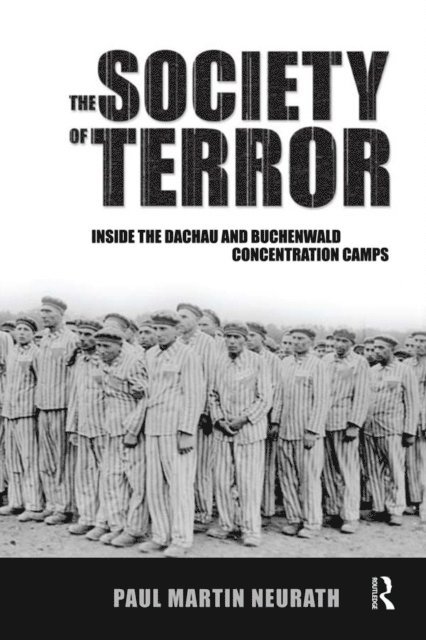
During 1938 and 1939, Paul Neurath was a Jewish political prisoner in the concentration camps at Dachau and Buchenwald. He owed his survival to a temporary Nazi policy allowing release of prisoners who were willing to go into exile and the help of friends on the outside who helped him obtain a visa. He fled to Sweden before coming to the United States in 1941. In 1943, he completed The Society of Terror, based on his experiences in Dachau and Buchenwald. He embarked on a long career teaching sociology and statistics at universities in the United States and later in Vienna until his death in September 2001. After liberation, the horrific images of the extermination camps abounded from Dachau, Buchenwald, and other places. Neurath''s chillingly factual discussion of his experience as an inmate and his astute observations of the conditions and the social structures in Dachau and Buchenwald captivate the reader, not only because of their authenticity, but also because of the work''s proximity to the events and the absence of influence of later interpretations. His account is unique also because of the exceptional links Neurath establishes between personal experience and theoretical reflection, the persistent oscillation between the distanced and sober view of the scientist and that of the prisoner.
E-bok
PDF, Engelska, 2015883 kr
Läs direkt efter köp
During 1938 and 1939, Paul Neurath was a Jewish political prisoner in the concentration camps at Dachau and Buchenwald. He owed his survival to a temporary Nazi policy allowing release of prisoners who were willing to go into exile and the help of friends on the outside who helped him obtain a visa. He fled to Sweden before coming to the United States in 1941. In 1943, he completed The Society of Terror, based on his experiences in Dachau and Buchenwald. He embarked on a long career teaching sociology and statistics at universities in the United States and later in Vienna until his death in September 2001. After liberation, the horrific images of the extermination camps abounded from Dachau, Buchenwald, and other places. Neurath''s chillingly factual discussion of his experience as an inmate and his astute observations of the conditions and the social structures in Dachau and Buchenwald captivate the reader, not only because of their authenticity, but also because of the work''s proximity to the events and the absence of influence of later interpretations. His account is unique also because of the exceptional links Neurath establishes between personal experience and theoretical reflection, the persistent oscillation between the distanced and sober view of the scientist and that of the prisoner.
Inbunden, Engelska, 2013
2 269 kr
Skickas inom 10-15 vardagar
This ground-breaking volume is a follow-up to Intellectuals and Their Publics. In contrast to the earlier book, which was mainly concerned with the activity of intellectuals and how it relates to the public, this volume analyses what happens when sociology and sociologists engage with or serve various publics. More specifically, this problem will be studied from the following three angles: How does one become a public sociologist and prominent intellectual in the first place? (Part I) How complex and complicated are the stories of institutions and professional associations when they take on a public role or tackle a major social or political problem? (Part II) How can one investigate the relationship between individual sociologists and intellectuals and their various publics? (Part III) This book will be of interest to academics and students working in the fields of the sociology of knowledge and ideas, the history of social sciences, intellectual history, cultural sociology, and cultural studies.
Inbunden, Engelska, 2005
3 064 kr
Skickas inom 10-15 vardagar
During 1938 and 1939, Paul Neurath was a Jewish political prisoner in the concentration camps at Dachau and Buchenwald. He owed his survival to a temporary Nazi policy allowing release of prisoners who were willing to go into exile and the help of friends on the outside who helped him obtain a visa. He fled to Sweden before coming to the United States in 1941. In 1943, he completed The Society of Terror, based on his experiences in Dachau and Buchenwald. He embarked on a long career teaching sociology and statistics at universities in the United States and later in Vienna until his death in September 2001. After liberation, the horrific images of the extermination camps abounded from Dachau, Buchenwald, and other places. Neurath's chillingly factual discussion of his experience as an inmate and his astute observations of the conditions and the social structures in Dachau and Buchenwald captivate the reader, not only because of their authenticity, but also because of the work's proximity to the events and the absence of influence of later interpretations. His account is unique also because of the exceptional links Neurath establishes between personal experience and theoretical reflection, the persistent oscillation between the distanced and sober view of the scientist and that of the prisoner.
Häftad, Engelska, 2005
793 kr
Skickas inom 10-15 vardagar
During 1938 and 1939, Paul Neurath was a Jewish political prisoner in the concentration camps at Dachau and Buchenwald. He owed his survival to a temporary Nazi policy allowing release of prisoners who were willing to go into exile and the help of friends on the outside who helped him obtain a visa. He fled to Sweden before coming to the United States in 1941. In 1943, he completed The Society of Terror, based on his experiences in Dachau and Buchenwald. He embarked on a long career teaching sociology and statistics at universities in the United States and later in Vienna until his death in September 2001. After liberation, the horrific images of the extermination camps abounded from Dachau, Buchenwald, and other places. Neurath's chillingly factual discussion of his experience as an inmate and his astute observations of the conditions and the social structures in Dachau and Buchenwald captivate the reader, not only because of their authenticity, but also because of the work's proximity to the events and the absence of influence of later interpretations. His account is unique also because of the exceptional links Neurath establishes between personal experience and theoretical reflection, the persistent oscillation between the distanced and sober view of the scientist and that of the prisoner.
E-bok
Engelska, 20111 128 kr
Läs direkt efter köp
This book is available as open access through the Bloomsbury Open Access programme and is available on www.bloomsburycollections.com.From the beginning of the twentieth century, scientific and social scientific research has been characterised by intellectual exchange between Europe and the US. The establishment of the Third Reich ensured that, from the German speaking world, at least, this became a one-way traffic. In this book Christian Fleck explores the invention of empirical social research, which by 1950 had become the binding norm of international scholarship, and he analyses the contribution of German refugee social scientists to its establishment. The major names are here, from Adorno and Horkheimer to Hirshman and Lazarsfeld, but at the heart of the book is a unique collective biography based on original data from more than 800 German-speaking social scientists. Published in German in 2008 to great acclaim, Fleck''s important study of the transatlantic enrichment of the social sciences is now available in a revised English-language edition.
Inbunden, Engelska, 2011
1 368 kr
Skickas inom 10-15 vardagar
This book is available as open access through the Bloomsbury Open Access programme and is available on www.bloomsburycollections.com.From the beginning of the twentieth century, scientific and social scientific research has been characterised by intellectual exchange between Europe and the US. The establishment of the Third Reich ensured that, from the German speaking world, at least, this became a one-way traffic. In this book Christian Fleck explores the invention of empirical social research, which by 1950 had become the binding norm of international scholarship, and he analyses the contribution of German refugee social scientists to its establishment. The major names are here, from Adorno and Horkheimer to Hirshman and Lazarsfeld, but at the heart of the book is a unique collective biography based on original data from more than 800 German-speaking social scientists. Published in German in 2008 to great acclaim, Fleck's important study of the transatlantic enrichment of the social sciences is now available in a revised English-language edition.
Häftad, Engelska, 2019
1 201 kr
Skickas inom 5-8 vardagar
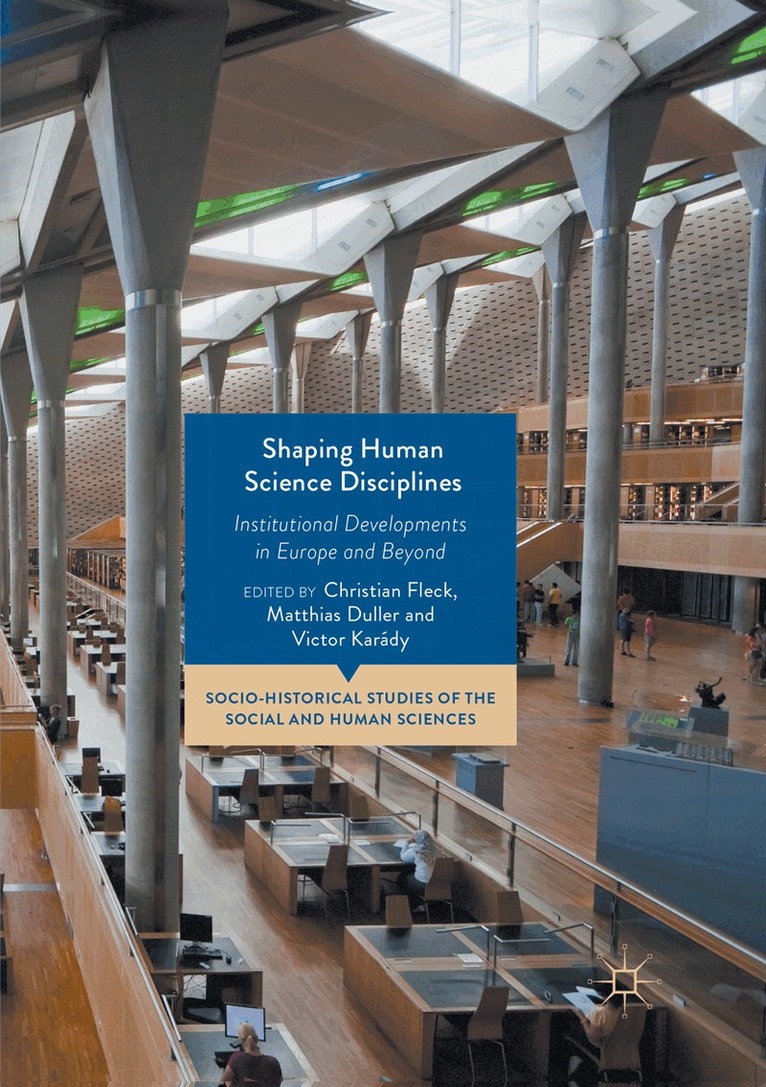
This book presents an analysis of the institutional development of selected social science and humanities (SSH) disciplines in Argentina, France, Germany, Hungary, Italy, the Netherlands, Sweden and the United Kingdom. Where most narratives of a scholarly past are presented as a succession of ‘ideas,’ research results and theories, this collection highlights the structural shifts in the systems of higher education, as well as institutions of research and innovation (beyond the universities) within which these disciplines have developed. This institutional perspective will facilitate systematic comparisons between developments in various disciplines and countries. Across eight country studies the book reveals remarkably different dynamics of disciplinary growth between countries, as well as important interdisciplinary differences within countries. In addition, instances of institutional contractions and downturns and veritable breaks of continuity under authoritarian political regimes can be observed, which are almost totally absent from narratives of individual disciplinary histories. This important work will provide a valuable resource to scholars of disciplinary history, the history of ideas, the sociology of education and of scientific knowledge.
Inbunden, Engelska, 2025
1 515 kr
Skickas inom 10-15 vardagar
This book provides a critical introduction to the key writings of Paul Lazarsfeld (1901-1976), edited by two prominent sociologists. It includes Lazarsfeld's early work on youth and occupation, which shows the intellectual influences of Austro-Marxism, academic psychology, and the philosophy of the Vienna Circle, and how they were applied to specific social issues. They also show how Lazarsfeld's concerns about the intellectual and methodological aspects of sociology, which foreshadowed some of the major issues in current sociological methods, played an important role in shaping the direction of the discipline in the United States. The essays demonstrate how Lazarsfeld laid many of the foundations for reliable social survey techniques and qualitative methods for understanding key aspects of contemporary society. Some examples of these aspects are voting studies, opinion polling, occupational research, and mass media research. Lazarsfeld's early work in "administrative research" laid the groundwork for a lot of market and business research. The essays in this book are accompanied by a detailed and illuminating biographical introduction by the editors. This collection is an important addition to the history of 20th-century sociology. It is also the only English-language source of Paul Lazarsfeld's early writings.
Inbunden, Engelska, 2018
1 407 kr
Skickas inom 10-15 vardagar
This book presents an analysis of the institutional development of selected social science and humanities (SSH) disciplines in Argentina, France, Germany, Hungary, Italy, the Netherlands, Sweden and the United Kingdom. Where most narratives of a scholarly past are presented as a succession of ‘ideas,’ research results and theories, this collection highlights the structural shifts in the systems of higher education, as well as institutions of research and innovation (beyond the universities) within which these disciplines have developed. This institutional perspective will facilitate systematic comparisons between developments in various disciplines and countries. Across eight country studies the book reveals remarkably different dynamics of disciplinary growth between countries, as well as important interdisciplinary differences within countries. In addition, instances of institutional contractions and downturns and veritable breaks of continuity under authoritarian political regimes can be observed, which are almost totally absent from narratives of individual disciplinary histories. This important work will provide a valuable resource to scholars of disciplinary history, the history of ideas, the sociology of education and of scientific knowledge.
1 684 kr
Läs direkt efter köp
This book presents an analysis of the institutional development of selected social science and humanities (SSH) disciplines in Argentina, France, Germany, Hungary, Italy, the Netherlands, Sweden and the United Kingdom. Where most narratives of a scholarly past are presented as a succession of ‘ideas,’ research results and theories, this collection highlights the structural shifts in the systems of higher education, as well as institutions of research and innovation (beyond the universities) within which these disciplines have developed. This institutional perspective will facilitate systematic comparisons between developments in various disciplines and countries. Across eight country studies the book reveals remarkably different dynamics of disciplinary growth between countries, as well as important interdisciplinary differences within countries. In addition, instances of institutional contractions and downturns and veritable breaks of continuity under authoritarian political regimes can be observed, which are almost totally absent from narratives of individual disciplinary histories. This important work will provide a valuable resource to scholars of disciplinary history, the history of ideas, the sociology of education and of scientific knowledge.
Häftad, Tyska, 2000
389 kr
Skickas inom 10-15 vardagar
Weder die deutsch- noch die englischsprachige Wissenschaftssoziologie und -forschung haben bislang die Sozialwissenschaften nicht zum Gegenstand ihrer Forschungen gemacht. Der vorliegenden Band versucht an ausgewählten Fragestellungen historische und aktuelle Entwicklungen in verschiedenen sozialwissenschaftlichen Diziplinen zu untersuchen und neue Analyseinstrumente vorzustellen bzw. zu diskutieren.
Inbunden, Tyska, 2025
286 kr
Skickas inom 3-6 vardagar