Christian Horn – författare
Visar alla böcker från författaren Christian Horn. Handla med fri frakt och snabb leverans.
10 produkter
10 produkter
233 kr
Skickas inom 7-10 vardagar
Provides a multi-scalar synthesis of Nordic Bronze Age economies (1800/1700-500 BCE) that is organized around six sections: an introduction to the Nordic Bronze Age, macro-economic perspectives, defining local communities, economic interaction, conflict and alliances, political formations, and encountering Europe. Despite a unifying material culture, the Bronze Age of Scandinavia was complex and multi- layered with constantly shifting and changing networks of competitors and partners. The social structure in this highly mobile and dynamic macroregional setting was affected by subsistence economies based on agropastoralism, maritime sectors, the production of elaborate metal wealth, trade in a wide range of goods, as well as raiding and warfare. For this reason, the focus of this book is on the integration and interaction of subsistence and political economies in a comparative analyses between different local constellations within the macro-economic setting of prehistoric Europe. This title is also available as Open Access on Cambridge Core
771 kr
Skickas inom 7-10 vardagar
Provides a multi-scalar synthesis of Nordic Bronze Age economies (1800/1700-500 BCE) that is organized around six sections: an introduction to the Nordic Bronze Age, macro-economic perspectives, defining local communities, economic interaction, conflict and alliances, political formations, and encountering Europe. Despite a unifying material culture, the Bronze Age of Scandinavia was complex and multi- layered with constantly shifting and changing networks of competitors and partners. The social structure in this highly mobile and dynamic macroregional setting was affected by subsistence economies based on agropastoralism, maritime sectors, the production of elaborate metal wealth, trade in a wide range of goods, as well as raiding and warfare. For this reason, the focus of this book is on the integration and interaction of subsistence and political economies in a comparative analyses between different local constellations within the macro-economic setting of prehistoric Europe. This title is also available as Open Access on Cambridge Core
1 342 kr
Skickas inom 7-10 vardagar
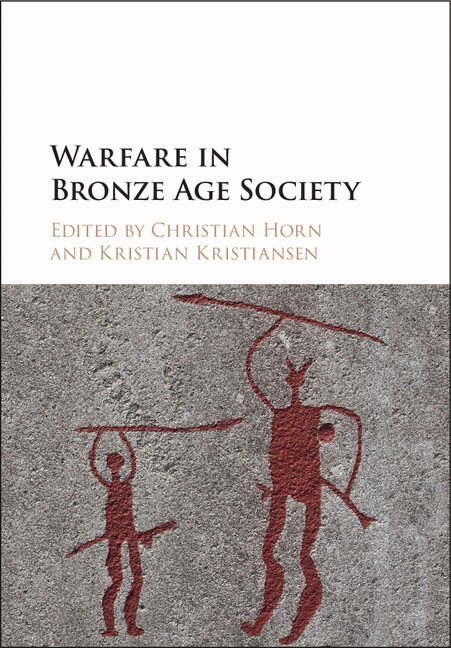
Warfare in Bronze Age Society takes a fresh look at warfare and its role in reshaping Bronze Age society. The Bronze Age represents the global emergence of a militarized society with a martial culture, materialized in a package of new efficient weapons that remained in use for millennia to come. Warfare became institutionalized and professionalized during the Bronze Age, and a new class of warriors made their appearance. Evidence for this development is reflected in the ostentatious display of weapons in burials and hoards, and in iconography, from rock art to palace frescoes. These new manifestations of martial culture constructed the warrior as a 'Hero' and warfare as 'Heroic'. The case studies, written by an international team of scholars, discuss these and other new aspects of Bronze Age warfare. Moreover, the essays show that warriors also facilitated mobility and innovation as new weapons would have quickly spread from the Mediterranean to northern Europe.
Places of Memory: Spatialised Practices of Remembrance from Prehistory to Today
Häftad, Engelska, 2020
453 kr
Skickas
Places of Memory takes a new look at spatialised practices of remembrance and its role in reshaping societies from prehistory to today, gathering researchers representing diverse but complementary fields of expertise. This diachronic outlook provides important insights into the great variety of human and social reactions examining memory, encompassing aspects of remembering, the loss of memory, reclaiming memories, and remembering things that may not have happened. The contributions to this volume expand upon Pierre Nora’s concept of lieux des memoire (places of memory) and the notion that memory is not just stored in these places but activated through human engagement. The volume presents a reflection on the creation of memories through the organisation and use of landscapes and spaces that explicitly considers the multiplicity of meanings of the past. Thus, social identities were created, reaffirmed, strengthened, and transformed through the founding, change, and reorganization of places and spaces of memory in the cultural landscape.
2 189 kr
Skickas inom 10-15 vardagar
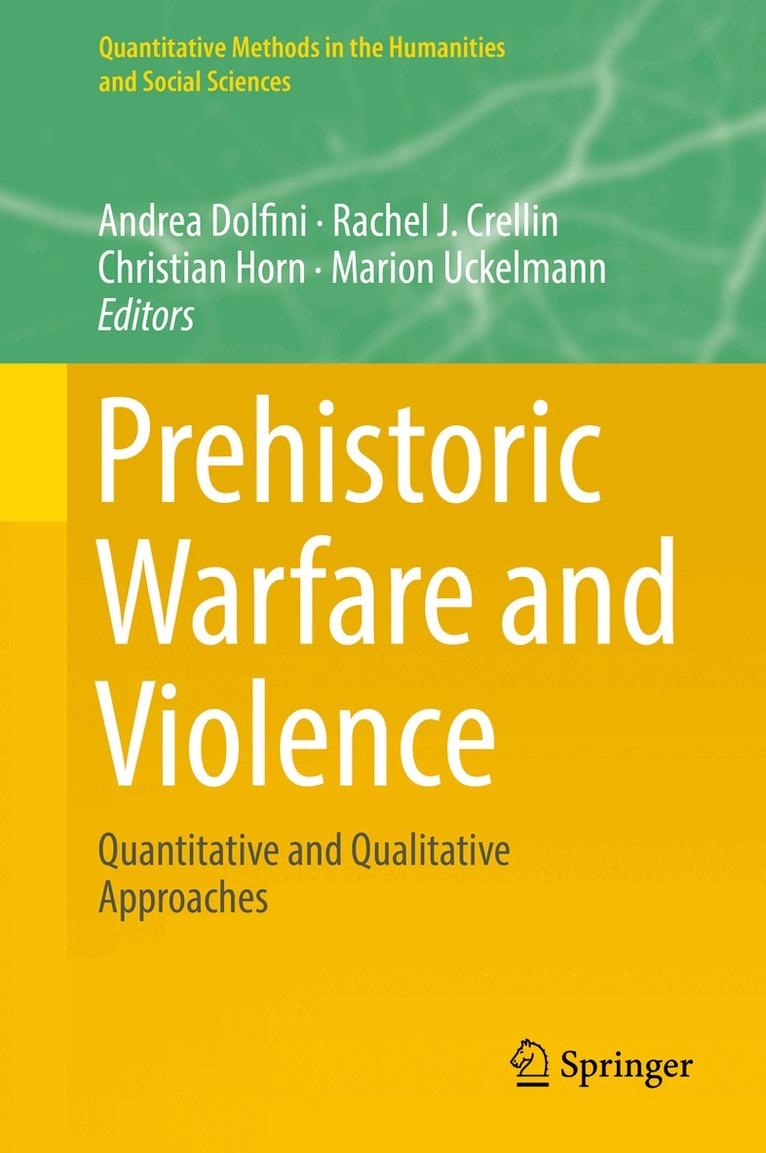
This is the first book to explore prehistoric warfare and violence by integrating qualitative research methods with quantitative, scientific techniques of analysis such as paleopathology, morphometry, wear analysis, and experimental archaeology.
2 189 kr
Skickas inom 10-15 vardagar
This is the first book to explore prehistoric warfare and violence by integrating qualitative research methods with quantitative, scientific techniques of analysis such as paleopathology, morphometry, wear analysis, and experimental archaeology. It investigates early warfare and violence from the standpoint of four broad interdisciplinary themes: skeletal markers of violence and weapon training; conflict in prehistoric rock-art; the material culture of conflict; and intergroup violence in archaeological discourse. The book has a wide-ranging chronological and geographic scope, from early Neolithic to late Iron Age and from Western Europe to East Asia. It includes world-renowned sites and artefact collections such as the Tollense Valley Bronze Age battlefield (Germany), the UNESCO World Heritage Site at Tanum (Sweden), and the British Museum collection of bronze weaponry from the late Shang period (China). Original case studies are presented in each section by a diverse international authorship.The study of warfare and violence in prehistoric and pre-literate societies has been at the forefront of archaeological debate since the publication of Keeley’s provocative monograph ‘War Before Civilization’ (Oxford 1996). The problem has been approached from a number of standpoints including anthropological and behavioural studies of interpersonal violence, osteological examinations of sharp lesions and blunt-force traumas, wear analysis of ancient weaponry, and field experiments with replica weapons and armour. This research, however, is often confined within the boundaries of the various disciplines and specialist fields. In particular, a gap can often be detected between the research approaches grounded in the humanities and social sciences and those based on the archaeological sciences. The consequence is that, to this day, the subject is dominated by a number of undemonstrated assumptions regarding the nature of warfare, combat, and violence in non-literatesocieties. Moreover, important methodological questions remain unanswered: can we securely distinguish between violence-related and accidental trauma on skeletal remains? To what extent can wear analysis shed light on long-forgotten fighting styles? Can we design meaningful combat tests based on historic martial arts? And can the study of rock-art unlock the social realities of prehistoric warfare? By breaking the mould of entrenched subject boundaries, this edited volume promotes interdisciplinary debate in the study of prehistoric warfare and violence by presenting a number of innovative approaches that integrate qualitative and quantitative methods of research and analysis.
225 kr
Skickas inom 3-6 vardagar
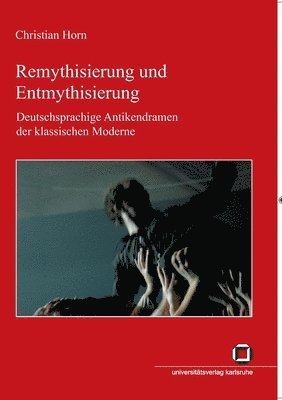
Remythisierung und Entmythisierung
Deutschsprachige Antikendramen der klassischen Moderne
Häftad, Tyska, 2014
341 kr
Skickas inom 3-6 vardagar
508 kr
Skickas inom 3-6 vardagar
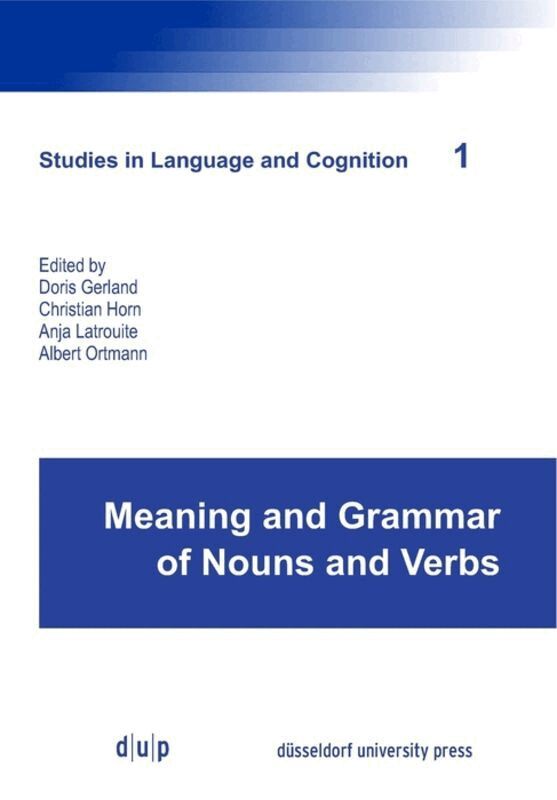
The papers collected in this book cover contemporary and original research on semantic and grammatical issues of nouns and noun phrases, verbs and sentences, and aspects of the combination of nouns and verbs, in a great variety of languages. A special focus is put on noun types, tense and aspect semantics, granularity of verb meaning, and subcompositionality. The investigated languages and language groups include Austronesian, East Asian, Slavic, German, English, Hungarian and Lakhota. The collection provided in this book will be of interest to researchers and advanced students specialising in the fields of semantics, morphology, syntax, typology, and cognitive sciences.
Bronze Age Rock Art in Iberia and Scandinavia
Words, Warriors, and Long-distance Metal Trade
Häftad, Engelska, 2024
563 kr
Skickas
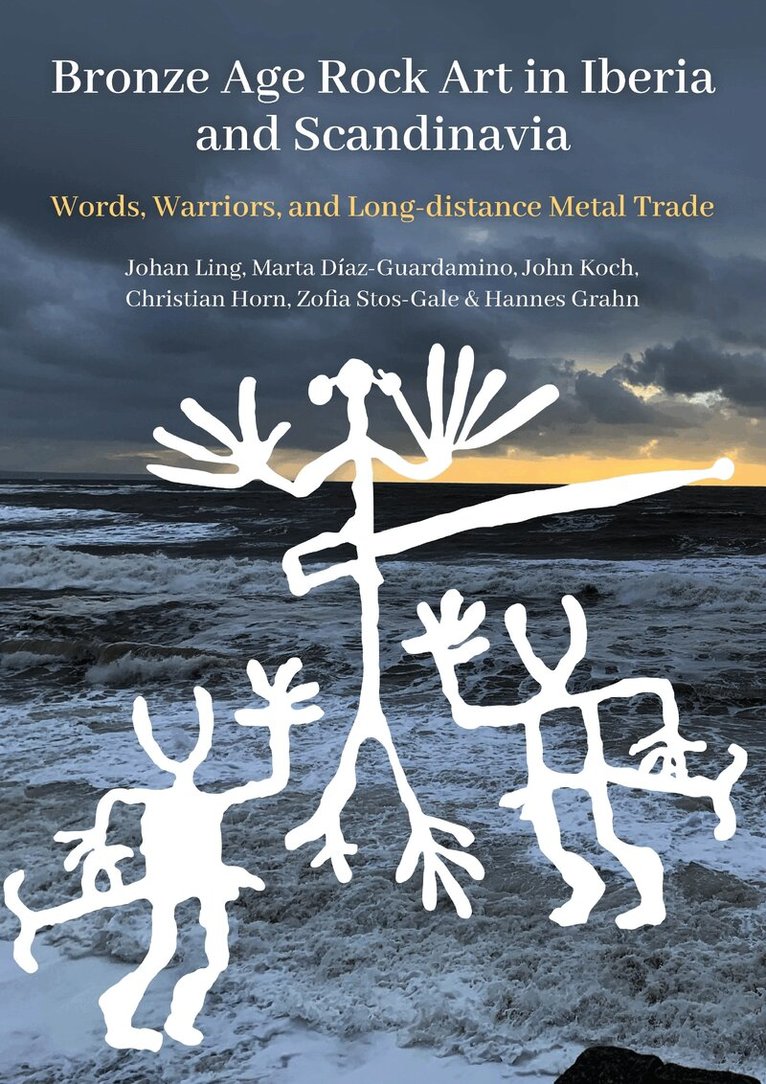
Recent research has uncovered new evidence of long-distance interactions between Scandinavia and Iberia during the Late Bronze Age. Advances in various lines of inquiry, such as 3D recording of rock art, iconography, metals and amber sourcing, linguistics, and, to some extent, more indirect indications from human remains, as reflected by strontium and aDNA results, have made this possible. The main goal of this book is to cross reference Iberian Late Bronze Age warrior iconography with Scandinavian warrior iconography. However, we will also account for links based on archeometallurgical evidence, linguistics, and other lines of inquiry, such as Baltic Amber, and metal artifacts. The results have been produced within the framework of the RAW project, an international undertaking funded by the Swedish Research Council. The RAW project is motivated by the discovery of isotopic and chemical evidence for Nordic Bronze Age artifacts made of copper that originated in the Iberian Peninsula. These findings led to re-opening two long known, but poorly explained, phenomena: 1) numerous shared motifs and close formal parallels in the rock art of Scandinavia and Iberian ‘warrior’ stelae, and 2) a large body of inherited words shared by the Celtic and Germanic languages, but not the other Indo-European branches. An integrated explanation for the three phenomena (Iberian metal in Scandinavia, parallels in Bronze Age rock carvings, and Celto-Germanic vocabulary) could now be formulated as a testable hypothesis: an episode in the Bronze Age when materials and ideas were exchanged over long distances between Scandinavia and the Atlantic West, including the Iberian Peninsula.