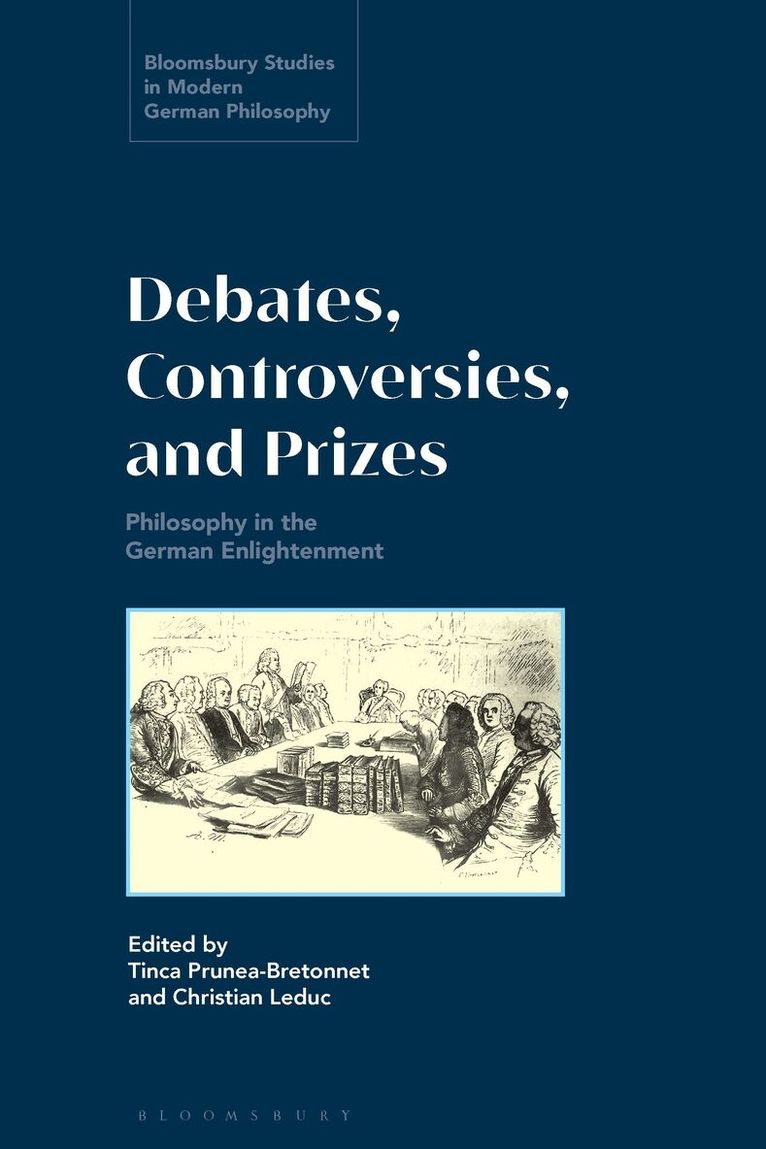
This volume brings together a series of cutting-edge studies on significant controversies and prize essay contests of the German Enlightenment. It sheds new light on the nature and impact of the philosophical debates of the period, while analyzing a range of pressing philosophical questions. In doing so, it focuses on controversies and prize competitions as conditions for the advancement of knowledge and the staking out of new philosophical terrain.Chapters address not only the rich content of the questions but also their wider context, including the theoretical framework of the debates and their institutional support and aims. Together they demonstrate how these debates created a rallying point and generated momentum for sustained philosophical argument and engagement in the Enlightenment era. The collection offers novel perspectives on the major role played by the Berlin Academy both within the German Enlightenment and across Europe more broadly. Through the introduction of several understudied but key figures such as Johann Heinrich Abicht, Leonhard Cochius, Pierre Le Guay de Prémontval, and Guillaume Raynal, it deepens our understanding of the richness and complexity of the period.Arranged in three parts – natural law and history, metaphysics, and anthropology – the essays provide fascinating new material on areas such as the problem of language, the emergence of psychology, colonialism, and the origins of aesthetics for the wider study of the intellectual milieu in eighteenth-century Germany and beyond.
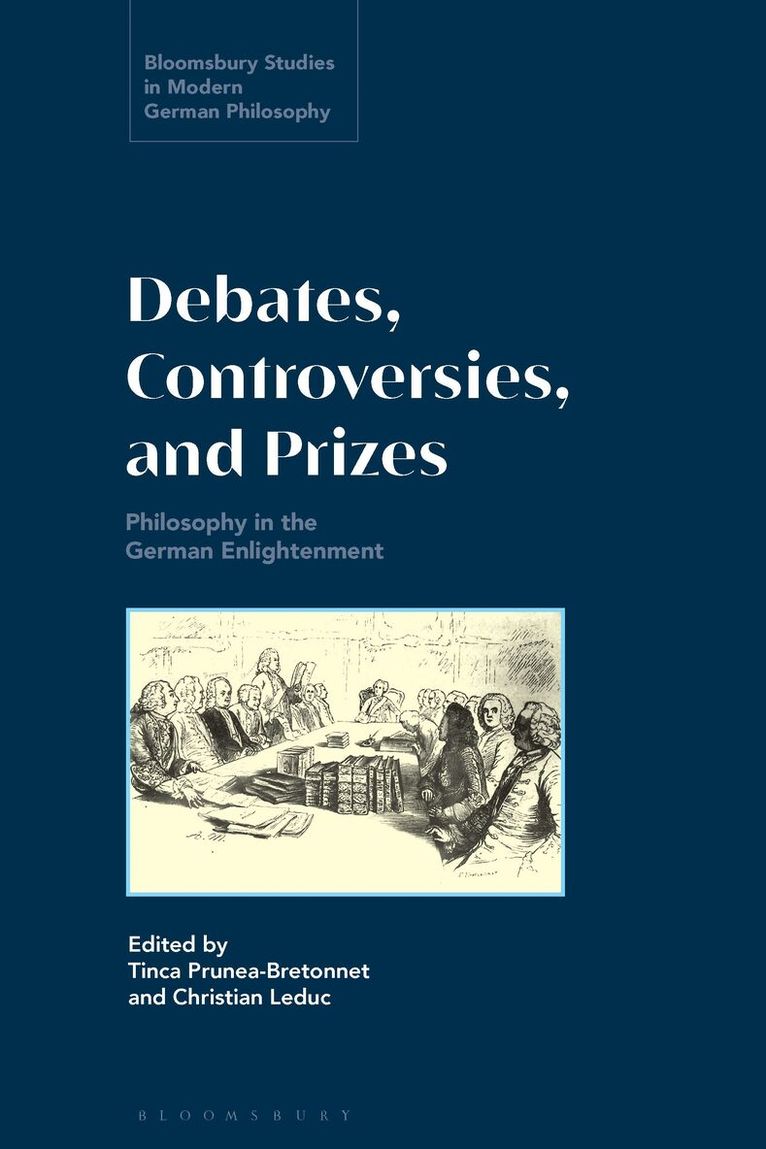
This volume brings together a series of cutting-edge studies on significant controversies and prize essay contests of the German Enlightenment. It sheds new light on the nature and impact of the philosophical debates of the period, while analyzing a range of pressing philosophical questions. In doing so, it focuses on controversies and prize competitions as conditions for the advancement of knowledge and the staking out of new philosophical terrain. Chapters address not only the rich content of the questions but also their wider context, including the theoretical framework of the debates and their institutional support and aims. Together they demonstrate how these debates created a rallying point and generated momentum for sustained philosophical argument and engagement in the Enlightenment era. The collection offers novel perspectives on the major role played by the Berlin Academy both within the German Enlightenment and across Europe more broadly. Through the introduction of several understudied but key figures such as Johann Heinrich Abicht, Leonhard Cochius, Pierre Le Guay de Prémontval, and Guillaume Raynal, it deepens our understanding of the richness and complexity of the period. Arranged in three parts – natural law and history, metaphysics, and anthropology – the essays provide fascinating new material on areas such as the problem of language, the emergence of psychology, colonialism, and the origins of aesthetics for the wider study of the intellectual milieu in eighteenth-century Germany and beyond.
This volume brings together a series of cutting-edge studies on significant controversies and prize essay contests of the German Enlightenment. It sheds new light on the nature and impact of the philosophical debates of the period, while analyzing a range of pressing philosophical questions. In doing so, it focuses on controversies and prize competitions as conditions for the advancement of knowledge and the staking out of new philosophical terrain.Chapters address not only the rich content of the questions but also their wider context, including the theoretical framework of the debates and their institutional support and aims. Together they demonstrate how these debates created a rallying point and generated momentum for sustained philosophical argument and engagement in the Enlightenment era. The collection offers novel perspectives on the major role played by the Berlin Academy both within the German Enlightenment and across Europe more broadly. Through the introduction of several understudied but key figures such as Johann Heinrich Abicht, Leonhard Cochius, Pierre Le Guay de Prémontval, and Guillaume Raynal, it deepens our understanding of the richness and complexity of the period.Arranged in three parts – natural law and history, metaphysics, and anthropology – the essays provide fascinating new material on areas such as the problem of language, the emergence of psychology, colonialism, and the origins of aesthetics for the wider study of the intellectual milieu in eighteenth-century Germany and beyond.
Les textes réunis dans ce volume visent à combler une importante lacune : l''absence d''étude d''ampleur consacrée spécifiquement aux relations entre Pierre Bayle (1647–1706) et Gottfried Wilhelm Leibniz (1646–1716), permettant d''évaluer l''influence qu''ils ont exercée l''un sur l''autre, par leurs écrits et leurs échanges, directs et indirects.Le but est de confronter ces deux philosophes majeurs du XVIIe siècle, en cherchant à dépasser l''opposition réductrice entre scepticisme d''un côté (Bayle) et rationalisme dogmatique de l''autre (Leibniz). L''étude de leurs rapports montre les différentes étapes et la fécondité de leurs échanges : d''abord autour de la critique de la physique de Descartes, ensuite à propos du « système de l''harmonie préétablie » défendu par Leibniz mais critiqué par Bayle dans son Dictionnaire historique et critique, enfin au sujet du rapport entre foi et raison, du problème du mal et de la justification de Dieu (thèmes des Essais de théodicée publiés par le philosophe de Hanovre en 1710).