Christian Ostermann – författare
Visar alla böcker från författaren Christian Ostermann. Handla med fri frakt och snabb leverans.
5 produkter
NATO in the Cold War and After
Contested Histories and Future Directions
Av Christian Ostermann, Timothy Andrews Sayle m. fl.
E-bok, 2021
814 kr
Lägg i varukorg
This book examines episodes in NATO’s history from the founding of the North Atlantic Alliance in 1949 to its transition to the post-Cold War order in the 1990s, with an eye to better understanding its present and its future. NATO’s history, now running over seventy years, can no longer be …
NATO in the Cold War and After
Contested Histories and Future Directions
Av Christian Ostermann, Timothy Andrews Sayle m. fl.
E-bok, 2021
796 kr
Lägg i varukorg
This book examines episodes in NATO’s history from the founding of the North Atlantic Alliance in 1949 to its transition to the post-Cold War order in the 1990s, with an eye to better understanding its present and its future. NATO’s history, now running over seventy years, can no longer be …
NATO in the Cold War and After
Contested Histories and Future Directions
Av Sergey Radchenko, Timothy Andrews Sayle m. fl.
Inbunden, 2021
2586 kr
Lägg i varukorg
This book examines episodes in NATO’s history from the founding of the North Atlantic Alliance in 1949 to its transition to the post-Cold War order in the 1990s, with an eye to better understanding its present and its future. NATO’s history, now running over seventy years, can no longer be framed …
NATO in the Cold War and After
Contested Histories and Future Directions
Av Sergey Radchenko, Timothy Andrews Sayle m. fl.
Häftad, 2024
712 kr
Lägg i varukorg
This book examines episodes in NATO’s history from the founding of the North Atlantic Alliance in 1949 to its transition to the post-Cold War order in the 1990s, with an eye to better understanding its present and its future. NATO’s history, now running over seventy years, can no longer be framed …
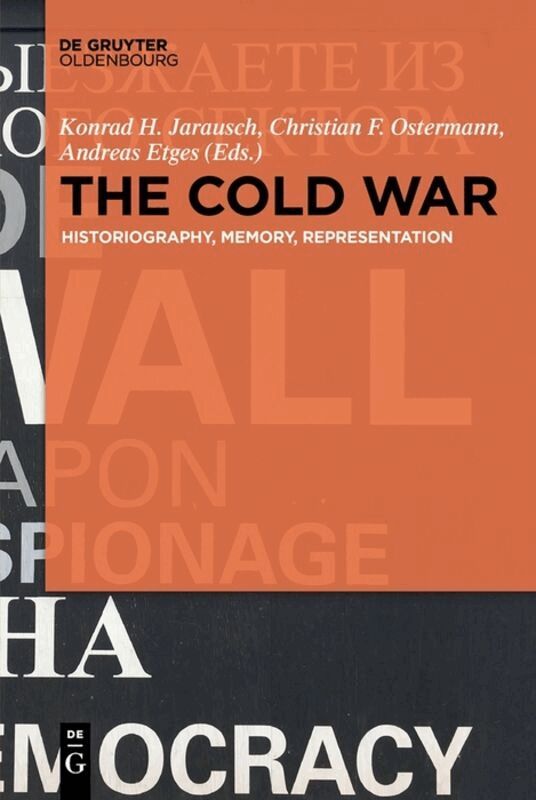
Cold War
Historiography, Memory, Representation
Av Konrad H. Jarausch, Christian Ostermann m. fl.
Häftad, 2018
294 kr
Lägg i varukorg
The traces of the Cold War are still visible in many places all around the world. It is the topic of exhibits and new museums, of memorial days and historic sites, of documentaries and movies, of arts and culture. There are historical and political controversies, both nationally and …