Christian P Kubicek – författare
1 510 kr
Skickas inom 10-15 vardagar
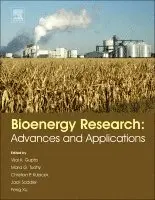
Bioenergy Research: Advances and Applications brings biology and engineering together to address the challenges of future energy needs. The book consolidates the most recent research on current technologies, concepts, and commercial developments in various types of widely used biofuels and integrated biorefineries, across the disciplines of biochemistry, biotechnology, phytology, and microbiology.
All the chapters in the book are derived from international scientific experts in their respective research areas. They provide you with clear and concise information on both standard and more recent bioenergy production methods, including hydrolysis and microbial fermentation. Chapters are also designed to facilitate early stage researchers, and enables you to easily grasp the concepts, methodologies and application of bioenergy technologies. Each chapter in the book describes the merits and drawbacks of each technology as well as its usefulness.
The book provides information on recent approaches to graduates, post-graduates, researchers and practitioners studying and working in field of the bioenergy. It is an invaluable information resource on biomass-based biofuels for fundamental and applied research, catering to researchers in the areas of bio-hydrogen, bioethanol, bio-methane and biorefineries, and the use of microbial processes in the conversion of biomass into biofuels.
Reviews all existing and promising technologies for production of advanced biofuels in addition to bioenergy policies and research funding Cutting-edge research concepts for biofuels production using biological and biochemical routes, including microbial fuel cells Includes production methods and conversion processes for all types of biofuels, including bioethanol and biohydrogen, and outlines the pros and cons of each1 649 kr
Läs direkt efter köp
2 537 kr
Skickas inom 5-8 vardagar
2 895 kr
Läs direkt efter köp
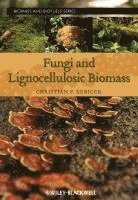
Harnessing fungi’s enzymatic ability to break down lignocellulolytic biomass to produce ethanol more efficiently and cost-effectively has become a significant research and industrial interest. Fungi and Lignocellulosic Biomass provides readers with a broad range of information on the uses and untapped potential of fungi in the production of bio-based fuels.
With information on the molecular biological and genomic aspects of fungal degradation of plant cell walls to the industrial production and application of key fungal enzymes, chapters in the book cover topics such as enzymology of cellulose, hemicelluloses, and lignin degradation. Edited by a leading researcher in the field, Fungi and Lignocellulosic Biomass will be a valuable tool in advancing the development and production of biofuels and a comprehensive resource for fungal biologists, enzymologists, protein chemists, biofuels chemical engineers, and other research and industry professionals in the field of biomass research.
2 870 kr
Läs direkt efter köp
Harnessing fungi’s enzymatic ability to break down lignocellulolytic biomass to produce ethanol more efficiently and cost-effectively has become a significant research and industrial interest. Fungi and Lignocellulosic Biomass provides readers with a broad range of information on the uses and untapped potential of fungi in the production of bio-based fuels.
With information on the molecular biological and genomic aspects of fungal degradation of plant cell walls to the industrial production and application of key fungal enzymes, chapters in the book cover topics such as enzymology of cellulose, hemicelluloses, and lignin degradation. Edited by a leading researcher in the field, Fungi and Lignocellulosic Biomass will be a valuable tool in advancing the development and production of biofuels and a comprehensive resource for fungal biologists, enzymologists, protein chemists, biofuels chemical engineers, and other research and industry professionals in the field of biomass research.
1 941 kr
Skickas inom 10-15 vardagar
2 435 kr
Läs direkt efter köp
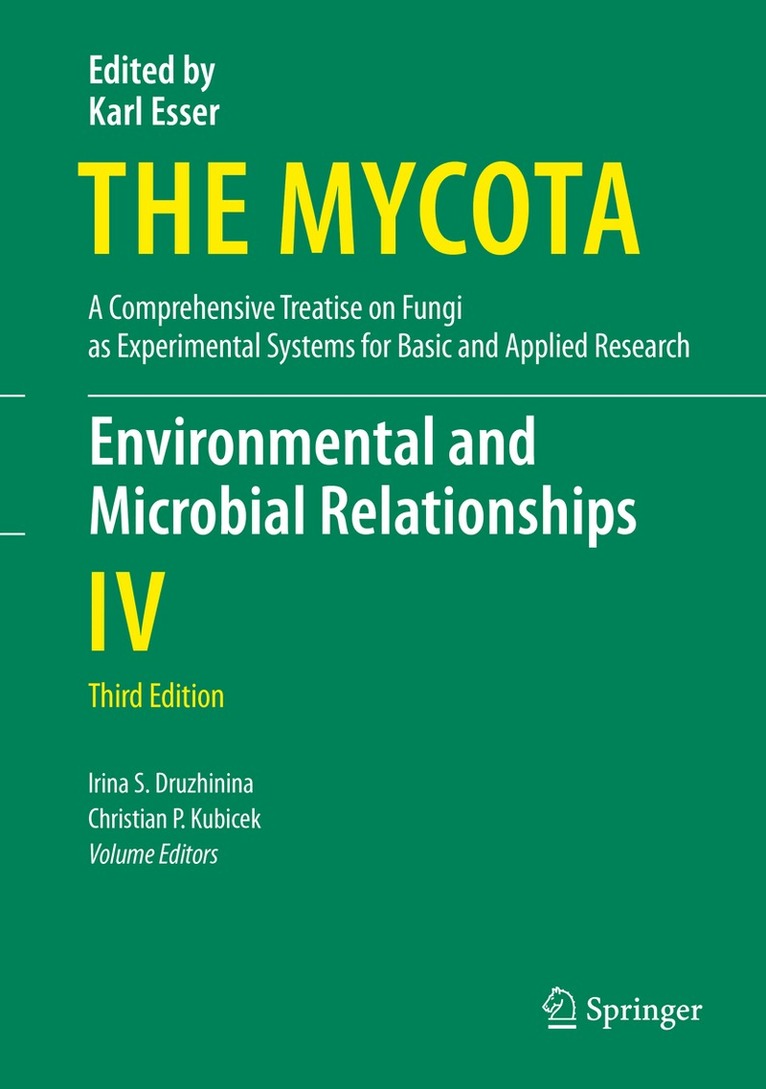
Environmental and Microbial Relationships
2 156 kr
Skickas inom 10-15 vardagar
2 765 kr
Läs direkt efter köp
This volumeprovides insights into current research on fungal populations, communities andtheir interactions with other organisms. It focuses on fungal responses to thephysical environment; interactions with bacteria, other fungi, invertebratesand plants; the role of fungi in ecosystem processes such as decomposition andnutrient cycling; and aspects of biogeography and conservation.Since thepublication of the second edition of Volume IV in 2007, the massive use of“omics” methods has revolutionized our understanding of fungal lifestyles.Highlighting these advances, the third edition has been completely updated andrevised. Several chapters deal with various applications of genomics andtranscriptomics in biological pest control, as well as interactions with otherliving systems. This is an invaluable source of information both for scientistswho wish to update their knowledge of current advances and for graduatestudents interested in obtaining a comprehensive introduction to this field ofresearch.
1 941 kr
Skickas inom 10-15 vardagar
2 763 kr
Skickas inom 5-8 vardagar
4 137 kr
Läs direkt efter köp
After the publication of Volume IV in 1997, the introduction of molecular methods into ecology led to significant new findings. Emphasizing these advances, the chapters for the second edition have been completely updated and revised. This volume provides insight into current research on fungal populations and communities. It focuses on fungal responses to the physical environment, interactions with other fungi, microorganisms and invertebrates, the role of fungi in ecosystem processes such as decomposition and nutrient cycling, and aspects of biogeography and conservation. Several chapters deal with various applications in, e.g. biological pest control, natural products discovery, and the degradation of toxic organic compounds. This is an invaluable source of information both for scientists who wish to update their knowledge of current progress and for graduate students interested in obtaining a first overview of this field of research.
1 619 kr
Skickas inom 10-15 vardagar
1 977 kr
Läs direkt efter köp
This volume addresses the similarities and also the differences in the genomes of soil saprophytes, symbionts, and plant pathogens by using examples of fungal species to illustrate particular principles. It analyzes how the specific interactions with the hosts and the influence of the environment may have shaped genome evolution. The relevance of fungal genetic research and biotechnological applications is shown for areas such as plant pathogenesis, biomass degradation, litter decomposition, nitrogen assimilation, antibiotic production, mycoparasitism, energy, ecology, and also for soil fungi turning to human pathogens.
In addition to the model organisms Neurospora and Aspergillus, the following species are covered providing a view of pathogens and mutualists: Trichoderma, Fusarium oxysporum, Cochliobolus heterostrophus, Penicillium chrysogenum, Rhizopus oryzae, Podospora anserina, and species belonging to Agaricomycetes, Archaeorhizomycetes and Magnaporthaceae. Ecology and potential applications have guided the choice of fungal genes to be studied and it will be fascinating to follow the trends of future sequencing projects.
Genomics of Soil- and Plant-Associated Fungi
1 619 kr
Skickas inom 10-15 vardagar