Prasun K Mukherjee - Böcker
Visar alla böcker från författaren Prasun K Mukherjee. Handla med fri frakt och snabb leverans.
5 produkter
5 produkter
1 744 kr
Skickas inom 7-10 vardagar
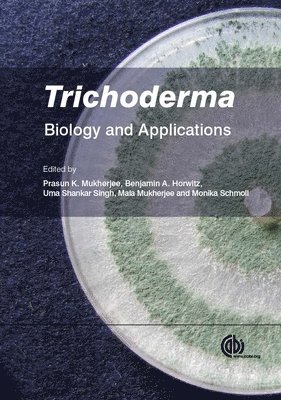
Trichoderma spp. are biotechnologically significant fungi, being widely used both in agriculture and industry. These microbes are also a potential drug source of clinical importance. In recent years, driven by advances in genetics and genomics, research on these fungi have opened new avenues for its varied applications. Divided into three sections, covering taxonomy and physiology, interactions with plants and applications and significance, this book also discusses topics that have seen rapid developments in the recent years. Various aspects of Trichoderma like molecular taxonomy, sexual and asexual developments, secondary metabolism, beneficial interactions with plants, applications as cell factories and harmful interactions with humans are discussed. This book, thus, hopes to be an essential ready reference for researchers, students and people form industry as well.
1 578 kr
Skickas inom 10-15 vardagar
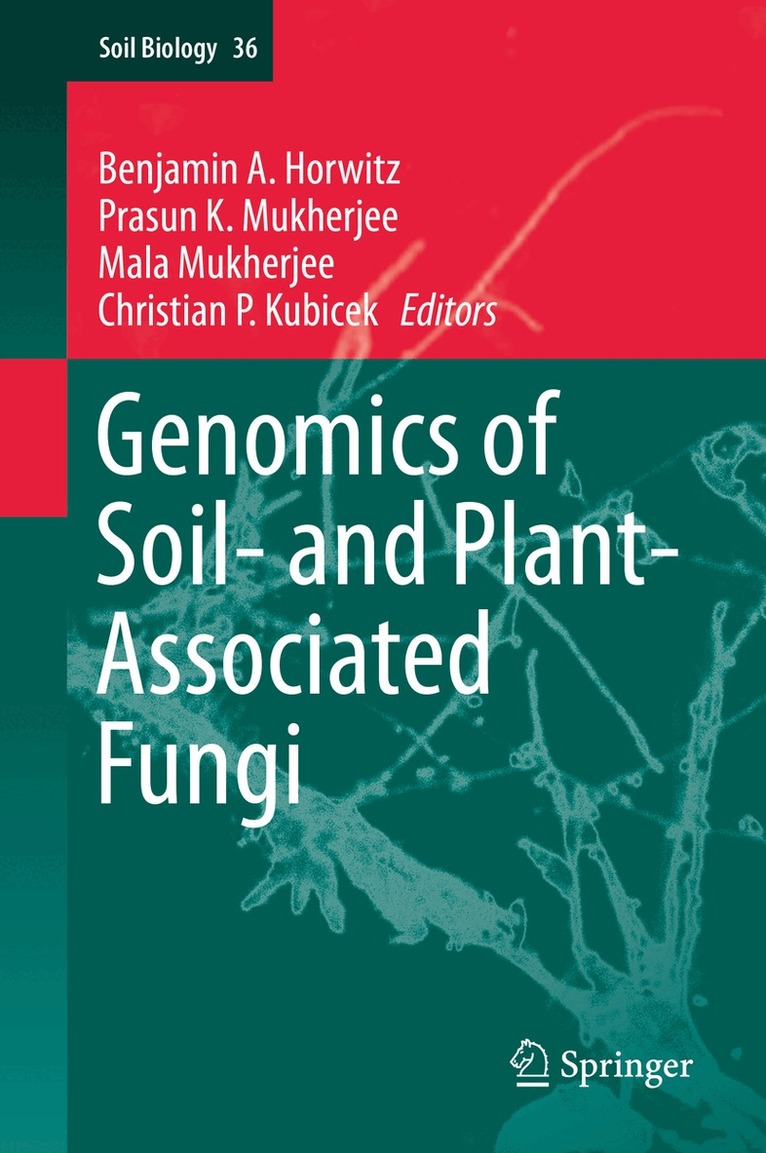
This volume addresses the similarities and also the differences in the genomes of soil saprophytes, symbionts, and plant pathogens by using examples of fungal species to illustrate particular principles. It analyzes how the specific interactions with the hosts and the influence of the environment may have shaped genome evolution. The relevance of fungal genetic research and biotechnological applications is shown for areas such as plant pathogenesis, biomass degradation, litter decomposition, nitrogen assimilation, antibiotic production, mycoparasitism, energy, ecology, and also for soil fungi turning to human pathogens. In addition to the model organisms Neurospora and Aspergillus, the following species are covered providing a view of pathogens and mutualists: Trichoderma, Fusarium oxysporum, Cochliobolus heterostrophus, Penicillium chrysogenum, Rhizopus oryzae, Podospora anserina, and species belonging to Agaricomycetes, Archaeorhizomycetes and Magnaporthaceae. Ecology and potential applications have guided the choice of fungal genes to be studied and it will be fascinating to follow the trends of future sequencing projects.
1 578 kr
Skickas inom 10-15 vardagar
This volume addresses the similarities and also the differences in the genomes of soil saprophytes, symbionts, and plant pathogens by using examples of fungal species to illustrate particular principles. It analyzes how the specific interactions with the hosts and the influence of the environment may have shaped genome evolution. The relevance of fungal genetic research and biotechnological applications is shown for areas such as plant pathogenesis, biomass degradation, litter decomposition, nitrogen assimilation, antibiotic production, mycoparasitism, energy, ecology, and also for soil fungi turning to human pathogens. In addition to the model organisms Neurospora and Aspergillus, the following species are covered providing a view of pathogens and mutualists: Trichoderma, Fusarium oxysporum, Cochliobolus heterostrophus, Penicillium chrysogenum, Rhizopus oryzae, Podospora anserina, and species belonging to Agaricomycetes, Archaeorhizomycetes and Magnaporthaceae. Ecology and potential applications have guided the choice of fungal genes to be studied and it will be fascinating to follow the trends of future sequencing projects.
1 892 kr
Skickas inom 10-15 vardagar
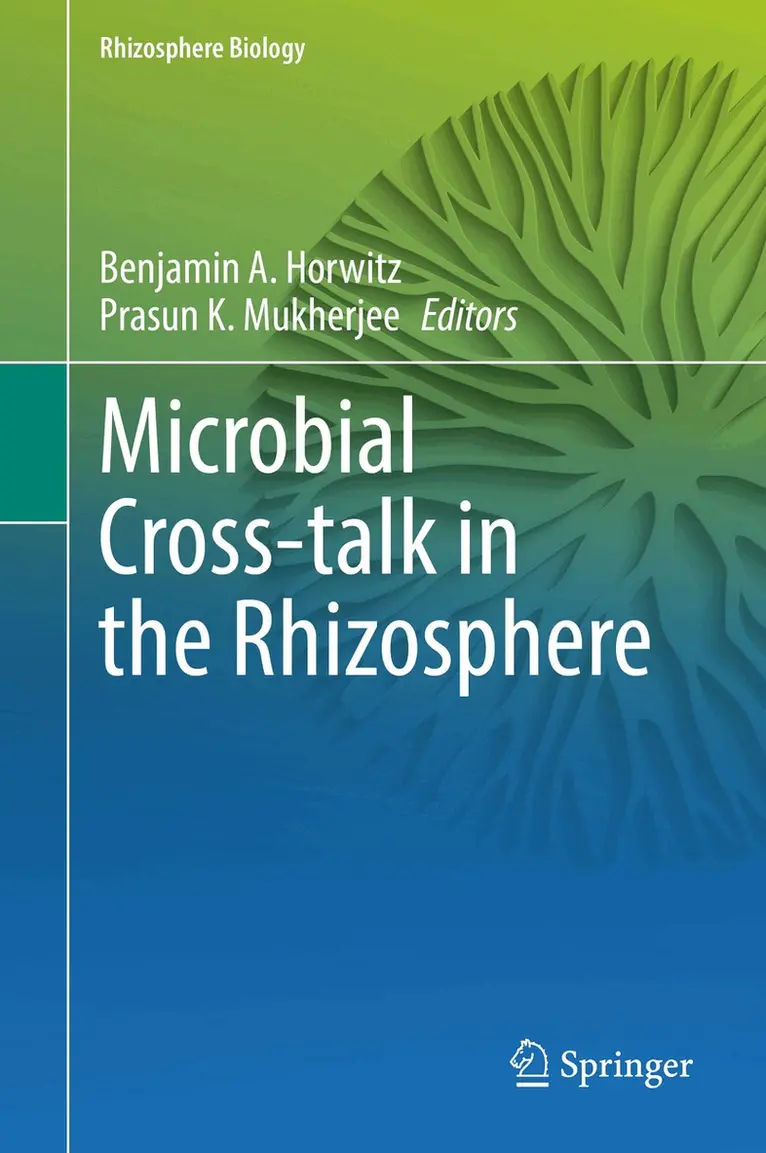
This book discusses the cross-talk between plants and microbes in the rhizosphere. Plants program the local microbiome near their roots, and the microbial community has a profound influence on the functioning of the plant.
1 892 kr
Skickas inom 10-15 vardagar
This book discusses the cross-talk between plants and microbes in the rhizosphere. Plants program the local microbiome near their roots, and the microbial community has a profound influence on the functioning of the plant.