Christiane Brenner - Böcker
Visar alla böcker från författaren Christiane Brenner. Handla med fri frakt och snabb leverans.
3 produkter
3 produkter
Del 15 - Vigilanzkulturen / Cultures of Vigilance
Sexarbeit Im Arbeiterstaat: Sozialistische Ordnung, Geschlecht Und 'Prostitution' in Der Tschechoslowakei (1948-1989)
Häftad, Tyska, 2026
505 kr
Kommande
Del 41 - Bad Wiesseer Tagungen des Collegium Carolinum
After Utopia
Czechoslovak Normalization between Experiment and Experience, 19681989
Inbunden, Engelska, 2024
1 025 kr
Skickas inom 3-6 vardagar
The Husak government that came into power after the suppression of the Prague Spring formulated the goal of restoring "normality" in Czechoslovakia. It revoked prior reforms and initiated widespread "cleansing measures" and repression. Most notably, however, it lacked a clear vision for the future. The contributions in this volume show that the 1970s and 1980s were nevertheless not a time of complete stagnation. Efforts at restoration and modernization frequently existed simultaneously and counteractively. The essays discuss this contradictoriness and the often-invisible dynamics of the normalisation period exemplarily. A further key topic is the normalisations echo in literature, remembrance culture, and historiography.
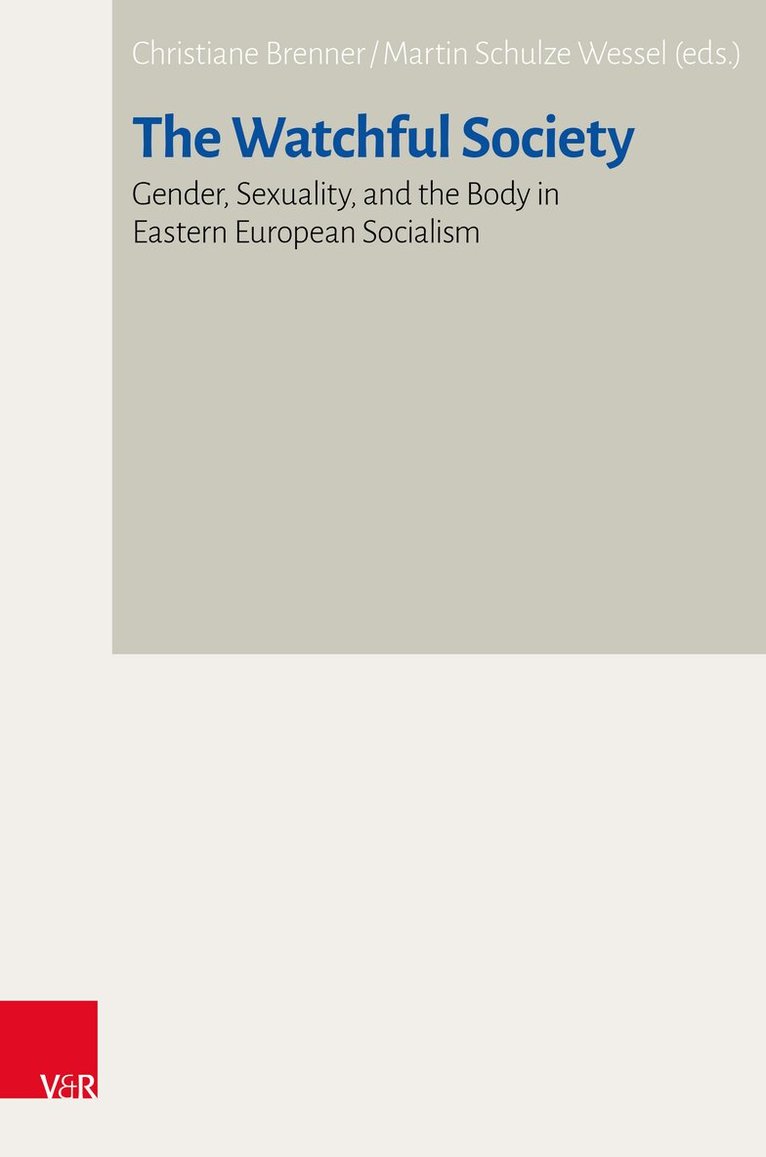
Watchful Society
Gender, Sexuality, and the Body in Eastern European Socialism
Inbunden, Engelska, 2025
745 kr
Skickas inom 3-6 vardagar
This volume aims to depict the regimes of vigilance about love, sex, and the body in Eastern European socialist states. Case studies from Czechoslovakia, Poland, East Germany, Hungary, Yugoslavia, and Albania analyze the enforcement of new gender orders and the so-called socialist morality after the Second World War. On the one hand, the arguments and language used to implement this new morality and encourage the population to embrace it are analyzed. On the other hand, the authors explore how this ideal developed over the long term and ask how the boundaries between public and private shifted over time in relation to romantic relationships and sex. What did the state see, or rather, what did the people who were watchful on behalf of socialism see? What was overlooked? Where did state authorities intervene and where did they hold back? The individual contributions highlight major differences regarding socialist morality in Eastern Europe and the varying ways the collective monitored it. However, similar patterns and lines of development can also be seen in the lead-up to and the period after the fall of socialism.