Christina Leb - Böcker
Visar alla böcker från författaren Christina Leb. Handla med fri frakt och snabb leverans.
5 produkter
5 produkter
Del 102 - Cambridge Studies in International and Comparative Law
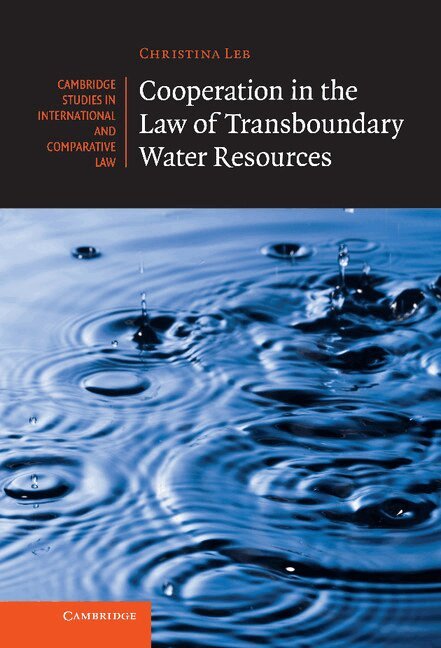
Cooperation in the Law of Transboundary Water Resources
Inbunden, Engelska, 2013
1 387 kr
Skickas inom 7-10 vardagar
Climate change, population growth and the increasing demand for water are all capable of leading to disputes over transboundary water systems. Dealing with these challenges will require the enhancing of adaptive capacity, the improving of the quality of water-resources management and a reduction in the risk of conflict between riparian states. Such changes can only be brought about through significant international cooperation. Christina Leb's analysis of the duty to cooperate and the related rights and obligations highlights the interlinkages between this duty and the principles of equitable and reasonable utilisation and the prevention of transboundary harm. In doing so, she considers the law applicable to both international watercourses and transboundary aquifers, and explores the complementarities and interaction between the rules of international water law and the related obligations of climate change and human rights law.
Del 102 - Cambridge Studies in International and Comparative Law
Cooperation in the Law of Transboundary Water Resources
Häftad, Engelska, 2015
467 kr
Skickas inom 7-10 vardagar
Climate change, population growth and the increasing demand for water are all capable of leading to disputes over transboundary water systems. Dealing with these challenges will require the enhancing of adaptive capacity, the improving of the quality of water-resources management and a reduction in the risk of conflict between riparian states. Such changes can only be brought about through significant international cooperation. Christina Leb's analysis of the duty to cooperate and the related rights and obligations highlights the interlinkages between this duty and the principles of equitable and reasonable utilisation and the prevention of transboundary harm. In doing so, she considers the law applicable to both international watercourses and transboundary aquifers, and explores the complementarities and interaction between the rules of international water law and the related obligations of climate change and human rights law.
2 513 kr
Skickas inom 7-10 vardagar
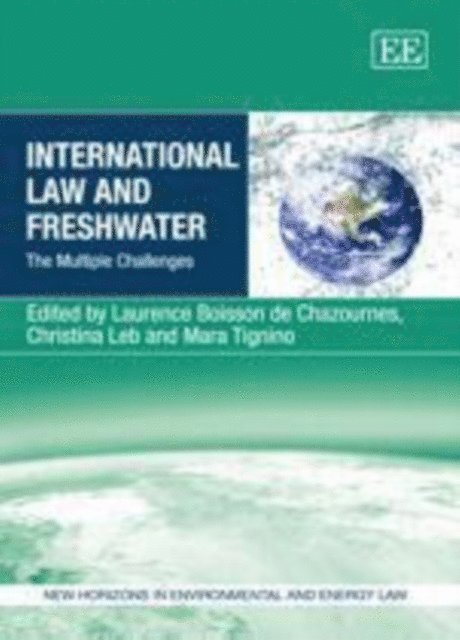
The issues surrounding water embody some of the greatest challenges of the 21st century. The editors of this timely book have brought together the leading authors in the field to explore the key questions involving international law and water governance.International Law and Freshwater connects recent legal developments through the breadth and synergies of a multidisciplinary analysis. It addresses such critical issues as water security, the right to water, international cooperation and dispute resolution, State succession to transboundary watercourse treaties, and facets of international economic law, including trade in 'virtual water' and the impacts of 'land grabs'.Containing detailed analysis and thought-provoking solutions, this book will appeal to researchers and academics working in the legal field, as well as international relations and natural sciences. Water practitioners, public officials, diplomats and students will also find much to interest them in this insightful study.Contributors: A.S. Al-Khasawneh, U. Alam, L. Boisson de Chazournes, L. Caflisch, M. Claassen, C. de Albuquerque, G. de los Cobos, L. del Castillo-Laborde, D. Garrick, J. Granit, D. Grey, E. Hey, V. Hughes, M. Kohen, C. Leb, G. Marceau, M.M. Mbengue, S.C. McCaffrey, O. McIntyre, S.M.A. Salman, D. Shelton, A. Tanzi, M. Tignino, B.A. Yimer
3 628 kr
Skickas inom 7-10 vardagar
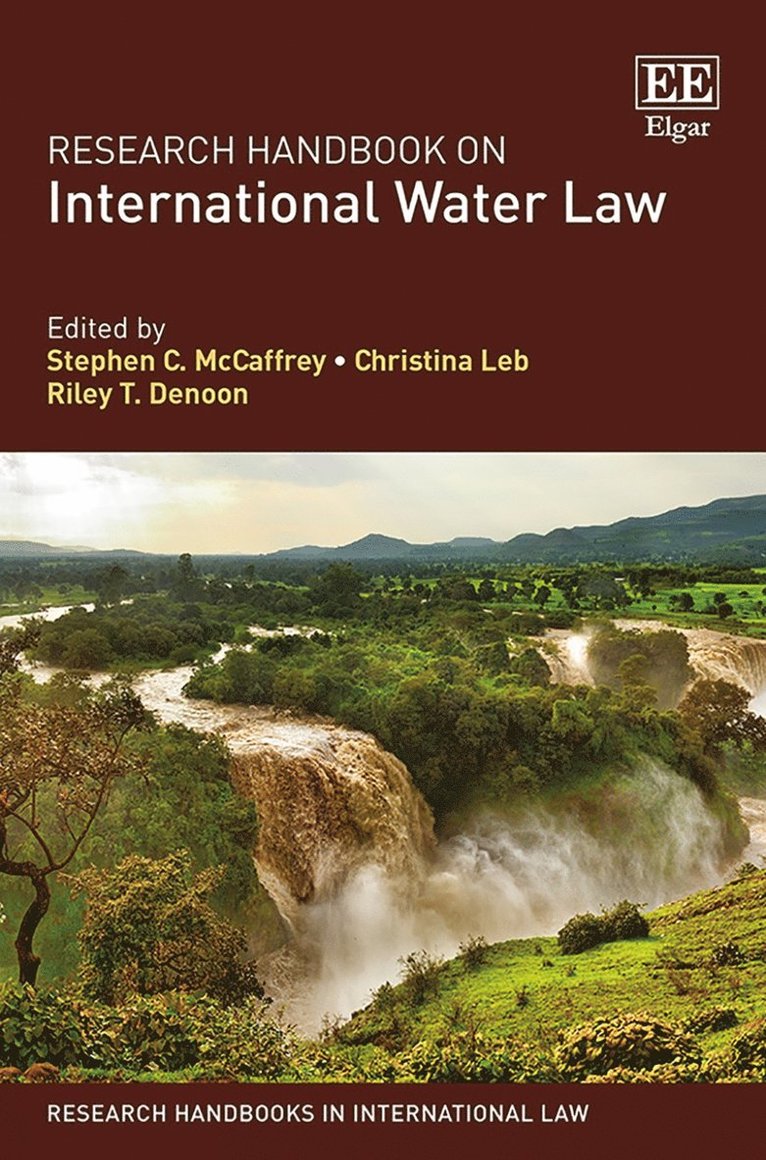
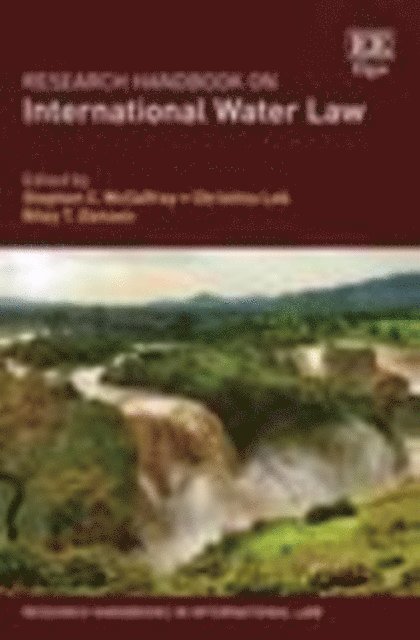
The Research Handbook on International Water Law surveys the field of the law of shared freshwater resources. In some thirty chapters, it covers subjects ranging from the general principles operative in the field and international groundwater law to the human right to water and whether international water law is prepared to cope with climate disruption.Its comprehensive survey of international water law links international water principles to case studies and examples from specific basins, to bring research into real-world relevancy. Different regional traditions and frameworks of international water law are presented in order to provide a global overview. The work is edited by three scholars and practitioners whose work deals with the law of international watercourses and features perspectives from distinguished experts in the field.This Research Handbook will be a crucial resource for academics and researchers, students, relevant government agencies, and practitioners interested in water law and humanitarian law. Contributors include: L. Boisson de Chazournes, L. Caflisch, M. Curlier, L. del Castillo Laborde, J.W. Dellapenna, G.M. Farnelli, B. Guthrie, J.G. Lammers, R. Larson, C. Leb, D. Magraw, M.M. Mbengue, S.C. McCaffrey, O. McIntyre, M.M. Murcia, N. Odili, D. Padmanabhan, R.K. Paisley, C. Parseghian, G. Reichert, A. Rieu-Clarke, A.F.S. Russell, S.M.A. Salman, S.M. Schwebel, Y. Su, A. Tanzi, A.D. Tarlock, M. Tignino, P. Udomritthiruj, K. Uprety, S. Vinogradov, I.T. Winkler, P. Wouters, D. Ziganshina
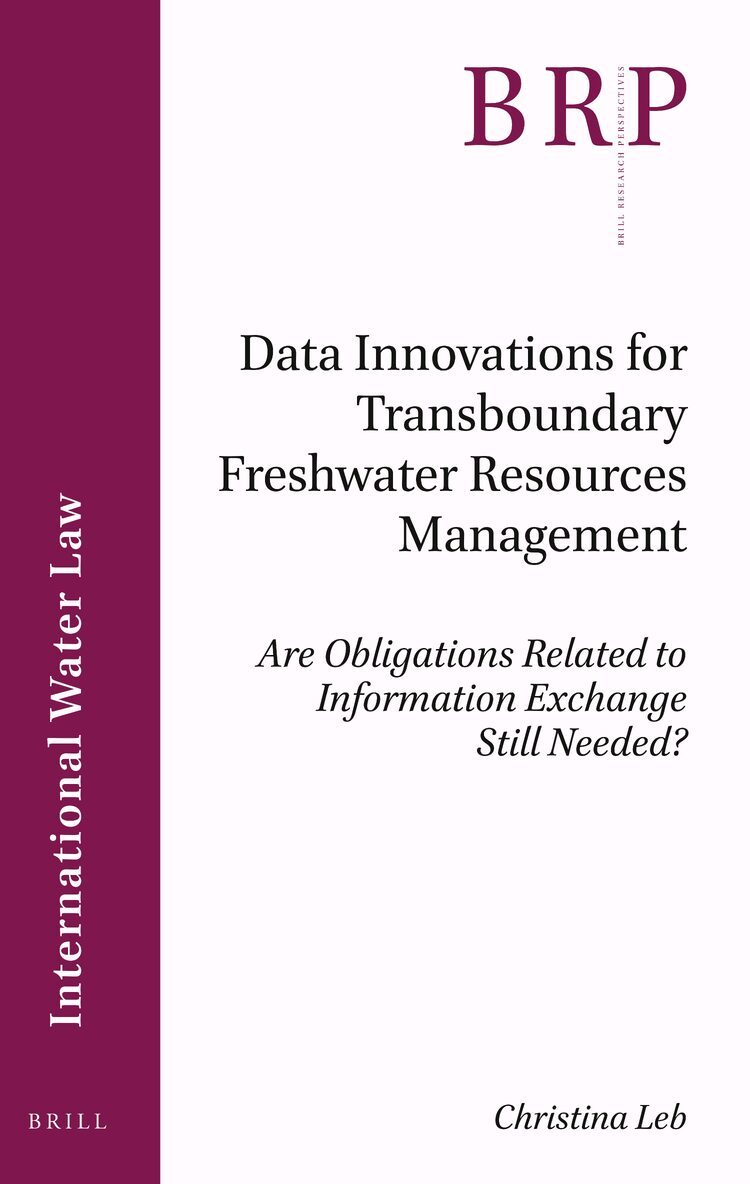
Data Innovations for Transboundary Freshwater Resources Management
Are Obligations Related to Information Exchange Still Needed?
Häftad, Engelska, 2020
1 085 kr
Skickas inom 5-8 vardagar
In Data Innovations for Transboundary Freshwater Resources Management: Are Obligations Related to Information Exchange Still Needed?, Christina Leb discusses how technology innovations disrupt the conventional methods of data and information exchange and the potential impact this may have on international water law.Cross-border data and information exchange is one of the most challenging issues for transboundary water management. Only a small number of treaties include direct obligations related to mutual data and information exchange. Technological innovations related to real-time data availability, space technology and earth observation have led to an increase in quality and availability of hydrological, meteorological and geo-spatial data. These innovations open new avenues for access to water related data and transform data and information exchange globally. This monograph is an exploratory assessment of the potential impacts of these disruptive technologies on data and information exchange obligations in international water law.