• Fri frakt över 249 kr
  • •
  • Snabba leveranser
  • •
  • Billiga böcker
Kundservice

Du är på sajten för privatpersoner.

Företag, bibliotek eller offentlig verksamhet?

Du handlar på classic.bokus.com, där alla dina funktioner finns intakta.
Till classic.bokus.com
Bokus logotyp. Gå till startsidan.
  • Erbjudanden
  • Nyheter
  • Student
  • Topplistor
  • Barn & ungdom
  • Bokus Play
  • E-böcker
  • Pocketböcker
  • Spel & pussel

Må bättre, för mindre! Upp till 50% rabatt på hälsoböcker

Sidfot

Mina sidor

    Hjälp

    • Kundservice
    • Vanliga frågor och svar
    • Frakt och leverans
    • Retur vid ångerrätt
    • Reklamera vara
    • Betalning
    • Köpvillkor
    • Allmänna villkor
    • Information om webbplatsens tillgänglighet

    Om Bokus

    • Om oss
    • Pressrum
    • För studenter
    • För företag
    • För bibliotek och offentlig verksamhet
    • För leverantörer
    • Hållbarhet

    Populärt

    • Aktuella erbjudanden
    • Presentkort
    • Studentlitteratur
    • Nya böcker
    • Topplistor
    • Signerade böcker
    • Engelska böcker

    Inspiration

    • Boktips
    • BookTok
    • Populära bokserier
    • Barnbokskaraktärer
    • Populära författare
    Logotyp för Bokus
    Följ oss på Facebook (extern länk)Följ oss på Instagram (extern länk)Följ oss på YouTube (extern länk)Följ oss på TikTok (extern länk)
    bokus @ CookiesAnpassa cookiesIntegritetspolicyKöpvillkor
    Till Citymail hemsida (extern länk)Till Budbee hemsida (extern länk)Till Postnord hemsida (extern länk)Till Schenker hemsida (extern länk)Till Early Bird hemsida (extern länk)Till Walleys hemsida (extern länk)
    1. Juridik
    2. Internationell rätt
    3. Folkrätt

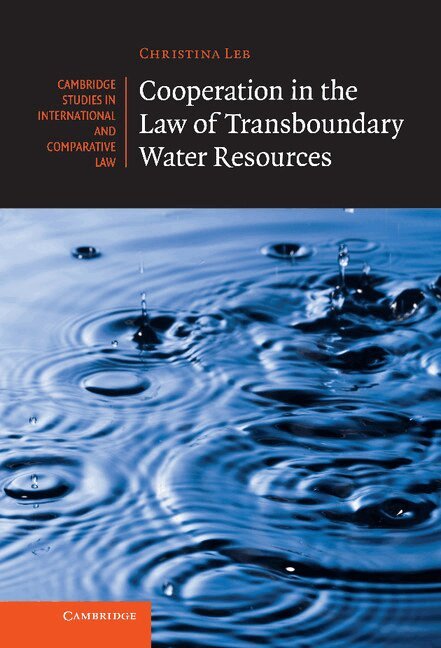
    Cooperation in the Law of Transboundary Water Resources

    AvChristina Leb

    Häftad, Engelska, 2015

    Del 102 i serien Cambridge Studies in International and Comparative Law

    500 kr

    Beställningsvara. Skickas inom 10-15 vardagar. Fri frakt över 249 kr.

    Fler format och utgåvor

    Inbunden

    1 413 kr

    Beskrivning

    Climate change, population growth and the increasing demand for water are all capable of leading to disputes over transboundary water systems. Dealing with these challenges will require the enhancing of adaptive capacity, the improving of the quality of water-resources management and a reduction in the risk of conflict between riparian states. Such changes can only be brought about through significant international cooperation. Christina Leb's analysis of the duty to cooperate and the related rights and obligations highlights the interlinkages between this duty and the principles of equitable and reasonable utilisation and the prevention of transboundary harm. In doing so, she considers the law applicable to both international watercourses and transboundary aquifers, and explores the complementarities and interaction between the rules of international water law and the related obligations of climate change and human rights law.

    Produktinformation

    • Utgivningsdatum:2015-11-26
    • Mått:152 x 229 x 19 mm
    • Vikt:490 g
    • Format:Häftad
    • Språk:Engelska
    • Serie:Cambridge Studies in International and Comparative Law
    • Antal sidor:366
    • Förlag:Cambridge University Press
    • ISBN:9781316500590

    Utforska kategorier

    • Folkrätt inom Juridik

    Mer om författaren

    Christina Leb is an associate member of the Platform for International Water Law at the University of Geneva and a consultant for the World Bank focusing on transboundary water resources management and cooperation.

    Recensioner i media

    'Readers will find the final section of Leb's study, addressed to the emerging challenges for transboundary water management, a valuable reflection on the way transboundary water law is increasingly influenced by the evolution of international human rights law and global hydrological threats associated with climate change.' Steve Mumme, The Journal of Water Law

    Innehållsförteckning

    • Introduction; Part I. Acknowledging Interdependence: 1. Cooperation between sovereign states; 2. Development of international water law; Part II. A General Duty to Cooperate: What Does it Mean?: 3. The duty to cooperate and concurrence of principles; 4. Informing cooperation; 5. Adoption of joint measures; Part III. Dealing with Evolving Challenges: 6. International protection of vital human water needs; 7. Emerging international cooperation on global water challenges; 8. Conclusion; Annex: consideration of cooperation in international treaties.