Christina Snyder – författare
Visar alla böcker från författaren Christina Snyder. Handla med fri frakt och snabb leverans.
9 produkter
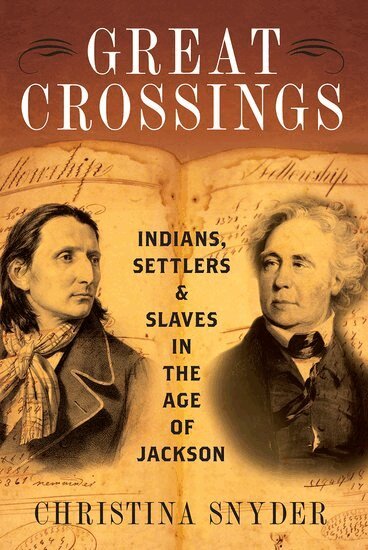
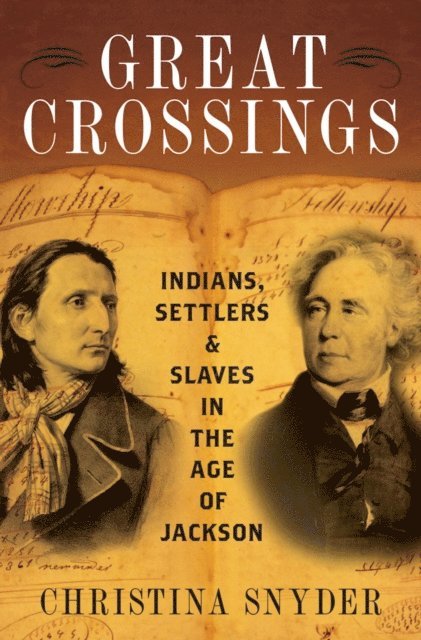
Great Crossings
Indians, Settlers, and Slaves in the Age of Jackson
Häftad, 2019
551 kr
Lägg i varukorg
In Great Crossings: Indians, Settlers, and Slaves in the Age of Jackson, prize-winning historian Christina Snyder reinterprets the history of Jacksonian America. Most often, this drama focuses on whites who turned west to conquer a continent, extending "liberty" as they went. Great Crossings also …
American Horizons
U.S. History in a Global Contex, Volume One to 1877
Av Michael Schaller, Janette Thomas Greenwood m. fl.
Häftad, 2025
953 kr
Kommande
American Horizons presents an opportunity to view the nation's history as more than a mere sequence of events for students to memorize. Although adhering to a familiar chronological organization, its narrative style and structure provide the flexibility of shifting emphasis from time to time to the …
American Horizons
U.S. History in a Global Context, Volume Two Since 1865
Av Michael Schaller, Janette Thomas Greenwood m. fl.
Häftad, 2025
1187 kr
Lägg i varukorg
American Horizons presents an opportunity to view the nation's history as more than a mere sequence of events for students to memorize. Although adhering to a familiar chronological organization, its narrative style and structure provide the flexibility of shifting emphasis from time to time to the …
American Horizons
U.S. History in a Global Context, Volume Two Since 1865
Av Christina Snyder, Aaron Sheehan-Dean m. fl.
E-bok, 2025
1033 kr
Kommande
American Horizons presents an opportunity to view the nation''s history as more than a mere sequence of events for students to memorize. Although adhering to a familiar chronological organization, its narrative style and structure provide the flexibility of shifting emphasis from time to time to …
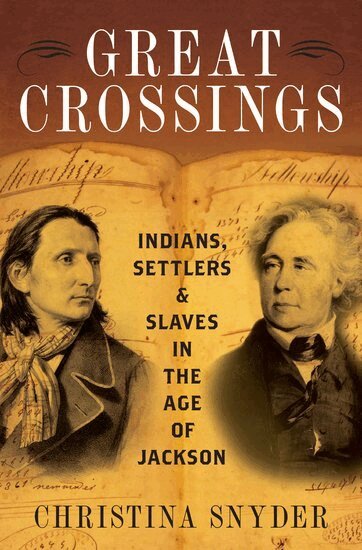
Great Crossings
Indians, Settlers, and Slaves in the Age of Jackson
Inbunden, 2017
422 kr
Lägg i varukorg
In this beautifully written book, prize-winning historian Christina Snyder reinterprets the history of Jacksonian America. Usually, this drama focuses on whites who turned west to conquer a continent, extending liberty as they went. Great Crossings features Indians from across the continent seeking …
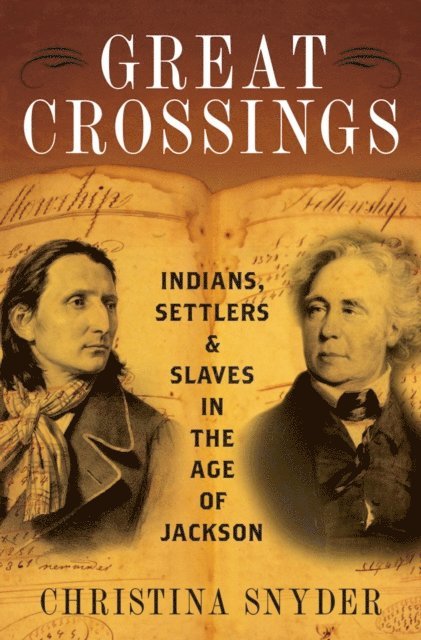
Great Crossings
Indians, Settlers, and Slaves in the Age of Jackson
E-bok, 2017
283 kr
Lägg i varukorg
In Great Crossings: Indians, Settlers, and Slaves in the Age of Jackson, prize-winning historian Christina Snyder reinterprets the history of Jacksonian America. Most often, this drama focuses on whites who turned west to conquer a continent, extending "liberty" as they went. Great Crossings also …
Great Crossings
Indians, Settlers, and Slaves in the Age of Jackson
E-bok, 2017
283 kr
Lägg i varukorg
In Great Crossings: Indians, Settlers, and Slaves in the Age of Jackson, prize-winning historian Christina Snyder reinterprets the history of Jacksonian America. Most often, this drama focuses on whites who turned west to conquer a continent, extending "liberty" as they went. Great Crossings also …
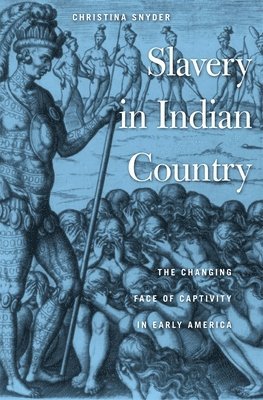
Slavery in Indian Country
The Changing Face of Captivity in Early America
Häftad, 2012
312 kr
Lägg i varukorg
Slavery existed in North America long before the first Africans arrived at Jamestown in 1619. For centuries, from the pre-Columbian era through the 1840s, Native Americans took prisoners of war and killed, adopted, or enslaved them. Christina Snyder's pathbreaking book takes a familiar setting for …
California's First Woman State Party Chairman
Oral History Transcript / and Related Material, 1976-197
Av Malca Chall, Elizabeth Carlson Snyder m. fl.
Inbunden, 2015
600 kr
Lägg i varukorg