Christine Kinealy – författare
526 kr
Läs direkt efter köp
1 689 kr
Skickas inom 10-15 vardagar
498 kr
Skickas inom 10-15 vardagar
2 215 kr
Skickas inom 10-15 vardagar
936 kr
Läs direkt efter köp
Frederick Douglass spent four months in Ireland at the end of 1845 that proved to be, in his own words, ‘transformative’. He reported that for the first time in his life he felt like a man, and not a chattel. Whilst in residence, he became a spokesperson for the abolition movement, but by the time he left the country in early January 1846, he believed that the cause of the slave was the cause of the oppressed everywhere.
This book adds new insight into Frederick Douglass and his time in Ireland. Contemporary newspaper accounts of the lectures that Douglass gave during his tour of Ireland (in Dublin, Wexford, Waterford, Cork, Limerick, and Belfast) have been located and transcribed. The speeches are annotated and accompanied by letters written by Douglass during his stay. In this way, for the first time, we hear Douglass in his own words.
936 kr
Läs direkt efter köp
Frederick Douglass spent four months in Ireland at the end of 1845 that proved to be, in his own words, ‘transformative’. He reported that for the first time in his life he felt like a man, and not a chattel. Whilst in residence, he became a spokesperson for the abolition movement, but by the time he left the country in early January 1846, he believed that the cause of the slave was the cause of the oppressed everywhere.
This book adds new insight into Frederick Douglass and his time in Ireland. Contemporary newspaper accounts of the lectures that Douglass gave during his tour of Ireland (in Dublin, Wexford, Waterford, Cork, Limerick, and Belfast) have been located and transcribed. The speeches are annotated and accompanied by letters written by Douglass during his stay. In this way, for the first time, we hear Douglass in his own words.
936 kr
Läs direkt efter köp
Frederick Douglass spent four months in Ireland at the end of 1845 that proved to be, in his own words, ‘transformative’. He reported that for the first time in his life he felt like a man, and not a chattel. Whilst in residence, he became a spokesperson for the abolition movement, but by the time he left the country in early January 1846, he believed that the cause of the slave was the cause of the oppressed everywhere.
This book adds new insight into Frederick Douglass and his time in Ireland. Contemporary newspaper accounts of the lectures that Douglass gave during his tour of Ireland (in Dublin, Wexford, Waterford, Cork, Limerick, and Belfast) have been located and transcribed. The speeches are annotated and accompanied by letters written by Douglass during his stay. In this way, for the first time, we hear Douglass in his own words.
936 kr
Läs direkt efter köp
Frederick Douglass spent four months in Ireland at the end of 1845 that proved to be, in his own words, ‘transformative’. He reported that for the first time in his life he felt like a man, and not a chattel. Whilst in residence, he became a spokesperson for the abolition movement, but by the time he left the country in early January 1846, he believed that the cause of the slave was the cause of the oppressed everywhere.
This book adds new insight into Frederick Douglass and his time in Ireland. Contemporary newspaper accounts of the lectures that Douglass gave during his tour of Ireland (in Dublin, Wexford, Waterford, Cork, Limerick, and Belfast) have been located and transcribed. The speeches are annotated and accompanied by letters written by Douglass during his stay. In this way, for the first time, we hear Douglass in his own words.
262 kr
Skickas inom 7-10 vardagar
1 185 kr
Skickas inom 5-8 vardagar
359 kr
Skickas inom 5-8 vardagar
354 kr
Skickas inom 5-8 vardagar
354 kr
Skickas inom 5-8 vardagar
848 kr
Skickas inom 10-15 vardagar
1 479 kr
Skickas inom 3-6 vardagar
'Comprehensive, persuasive, and at all times accessible in style and argument, this text both encourages and empowers university historians to review and enhance their teaching practices. All key facets of programme development are explored with reference to an extensive and well-chosen range of international examples. The chapter on the historian's skills and qualities of mind is one of several that I will be referring to frequently' - Jeanine Graham, Senior Lecturer, History, University of Waikato
'... the varied findings make fascinating reading ... this book should be required reading for everyone involved in teaching history: there is plenty here for us all to learn from' - ESCalate
'In providing such a clear, informative and thoughtful exploration of the current state of history in higher education, and in helping to raise the quality of critical debate about its future, this book contributes greatly to the growing scholarship of teaching and learning in the discipline. It should also become a vital resource for all historians who wish to honour the old dictum that, in teaching as in research, the one duty we owe history is to rewrite it' - Professor Paul Hyland, Director of History in the Subject Centre for History, Classics and Archaeology
'[E]xtremely useful... provides a thought-provoking and useful discussion concerning the task of actually teaching history at university level... This timely book needs to be read widely, and the many issues it raises should command our closest attention' - Higher Education Review
Over the last 10 years or so, history as an academic discipline has become steeped in controversy and introspection. Additional areas of interest have opened up, fresh perspectives and approaches have been offered, and new teaching and learning strategies have been advocated. There has been an increasing emphasis on producing well-qualified graduates equipped with the skills, knowledge and attitudes to cope with the changing demands of the world of work.
This book suggests how these issues may be managed. The authors identify and discuss the underlying principles, and consider ways in which they can be applied at module and programme levels.
The Teaching & Learning in the Humanities series, edited by Ellie Chambers and Jan Parker, is for beginning and experienced lecturers. It deals with all aspects of teaching individual arts and humanities subjects in higher education. Experienced teachers offer authoritative suggestions on how to become critically reflective about discipline-specific practices.
5 182 kr
Skickas inom 10-15 vardagar
206 kr
Skickas inom 5-8 vardagar
769 kr
Läs direkt efter köp
The story of the anti-slavery movement in Ireland is little known, yet when Frederick Douglass visited the country in 1845, he described Irish abolitionists as the most ‘ardent’ that he had ever encountered. Moreover, their involvement proved to be an important factor in ending the slave trade, and later slavery, in both the British Empire and in America.
While Frederick Douglass remains the most renowned black abolitionist to visit Ireland, he was not the only one. This publication traces the stories of ten black abolitionists, including Douglass, who travelled to Ireland in the decades before the American Civil War, to win support for their cause. It opens with former slave, Olaudah Equiano, kidnapped as a boy from his home in Africa, and who was hosted by the United Irishmen in the 1790s; it closes with the redoubtable Sarah Parker Remond, who visited Ireland in 1859 and chose never to return to America. The stories of these ten men and women, and their interactions with Ireland, are diverse and remarkable.
769 kr
Läs direkt efter köp
The story of the anti-slavery movement in Ireland is little known, yet when Frederick Douglass visited the country in 1845, he described Irish abolitionists as the most ‘ardent’ that he had ever encountered. Moreover, their involvement proved to be an important factor in ending the slave trade, and later slavery, in both the British Empire and in America.
While Frederick Douglass remains the most renowned black abolitionist to visit Ireland, he was not the only one. This publication traces the stories of ten black abolitionists, including Douglass, who travelled to Ireland in the decades before the American Civil War, to win support for their cause. It opens with former slave, Olaudah Equiano, kidnapped as a boy from his home in Africa, and who was hosted by the United Irishmen in the 1790s; it closes with the redoubtable Sarah Parker Remond, who visited Ireland in 1859 and chose never to return to America. The stories of these ten men and women, and their interactions with Ireland, are diverse and remarkable.
776 kr
Läs direkt efter köp
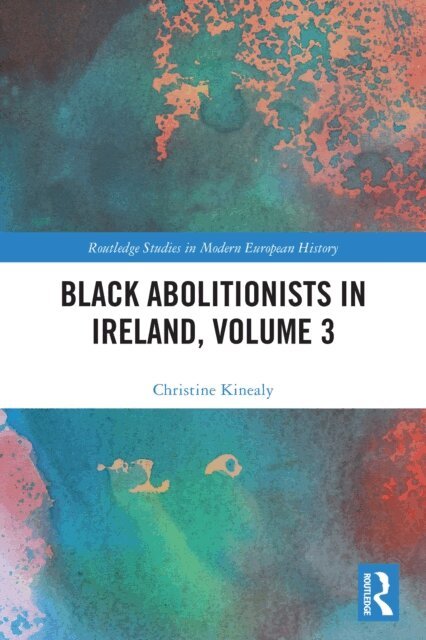
Building on the narratives explored in volume one, this publication recovers the story of a further seven Black visitors to Ireland in the decades prior to the American Civil War.
This volume examines each of these seven activists and artists, and how their unique and diverse talents contributed to the movement to abolish enslavement and to the demand for Black equality. In an era that witnessed the rise of minstrelsy, they provided a powerful counter argument to the lie of Black inferiority. Moreover, their interactions with Irish abolitionists helped to build a strong transatlantic movement that had a global reach and impact. The lives explored are: Ira Aldridge (the African Roscius), William Henry Lane (Master Juba), William P. Powell, Elizabeth Greenfield (the Black Swan), Reuben Nixon, James Watkins and William H. Day. Individually and collectively they demonstrated the agency and power of Black involvement in the search for social justice.
This book will be of value to students and scholars alike interested in modern European history and social and cultural history.
769 kr
Läs direkt efter köp
Building on the narratives explored in volume one, this publication recovers the story of a further seven Black visitors to Ireland in the decades prior to the American Civil War.
This volume examines each of these seven activists and artists, and how their unique and diverse talents contributed to the movement to abolish enslavement and to the demand for Black equality. In an era that witnessed the rise of minstrelsy, they provided a powerful counter argument to the lie of Black inferiority. Moreover, their interactions with Irish abolitionists helped to build a strong transatlantic movement that had a global reach and impact. The lives explored are: Ira Aldridge (the African Roscius), William Henry Lane (Master Juba), William P. Powell, Elizabeth Greenfield (the Black Swan), Reuben Nixon, James Watkins and William H. Day. Individually and collectively they demonstrated the agency and power of Black involvement in the search for social justice.
This book will be of value to students and scholars alike interested in modern European history and social and cultural history.
2 201 kr
Skickas inom 10-15 vardagar
658 kr
Skickas inom 10-15 vardagar
662 kr
Skickas inom 10-15 vardagar
769 kr
Läs direkt efter köp
769 kr
Läs direkt efter köp
2 215 kr
Skickas inom 10-15 vardagar
9 667 kr
Skickas inom 10-15 vardagar
2 002 kr
Skickas inom 10-15 vardagar
2 002 kr
Skickas inom 10-15 vardagar