Christo Moskovsky - Böcker
Visar alla böcker från författaren Christo Moskovsky. Handla med fri frakt och snabb leverans.
5 produkter
5 produkter
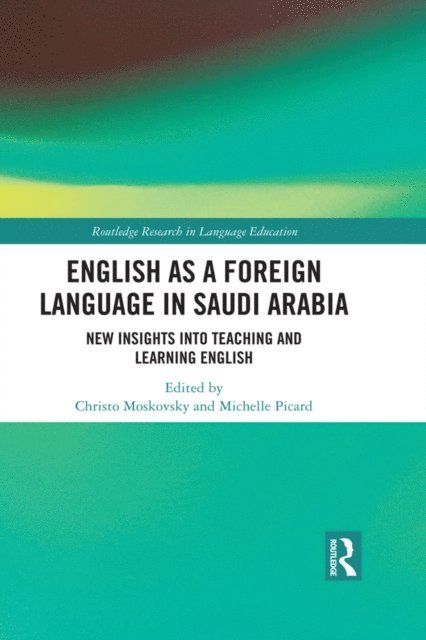
English as a Foreign Language in Saudi Arabia
New Insights into Teaching and Learning English
Häftad, Engelska, 2020
593 kr
Skickas inom 10-15 vardagar
English as a Foreign Language in Saudi Arabia: New Insights into Teaching and Learning English offers a detailed discussion of key aspects of teaching and learning English in the Saudi context and offers a comprehensive overview of related research authored or co-authored by Saudi researchers. It provides readers with an understanding of the unique cultural, linguistic, and historical context of English in Saudi Arabia—with a focus on the principal factors that may influence successful teaching and learning of English in this country. Uniquely, the book looks separately at issues pertaining to in-country English learning and learners, and those pertaining to in-country English teaching and teachers. The volume also explores issues concerning Saudi learners and teachers in overseas contexts. Lastly, the book touches on the future of English as a Foreign Language and TESOL in Saudi Arabia and its implications for the field.
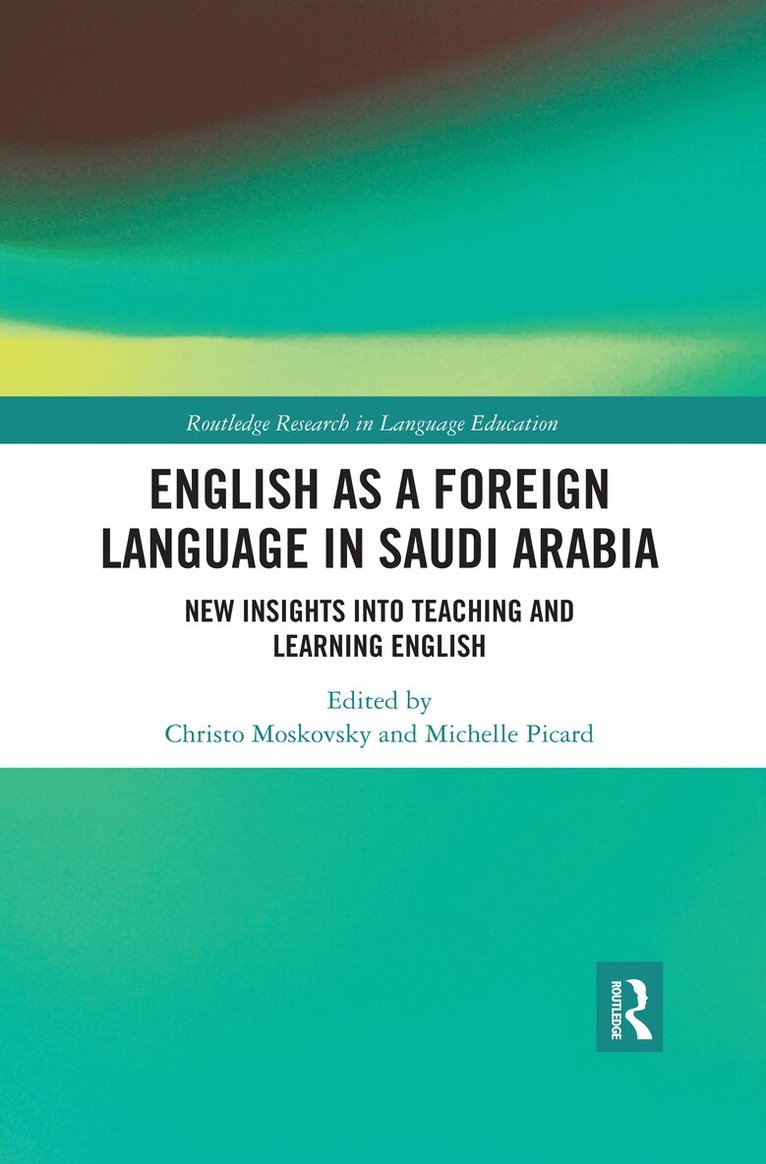
English as a Foreign Language in Saudi Arabia
New Insights into Teaching and Learning English
Inbunden, Engelska, 2018
2 150 kr
Skickas inom 10-15 vardagar
English as a Foreign Language in Saudi Arabia: New Insights into Teaching and Learning English offers a detailed discussion of key aspects of teaching and learning English in the Saudi context and offers a comprehensive overview of related research authored or co-authored by Saudi researchers. It provides readers with an understanding of the unique cultural, linguistic, and historical context of English in Saudi Arabia—with a focus on the principal factors that may influence successful teaching and learning of English in this country. Uniquely, the book looks separately at issues pertaining to in-country English learning and learners, and those pertaining to in-country English teaching and teachers. The volume also explores issues concerning Saudi learners and teachers in overseas contexts. Lastly, the book touches on the future of English as a Foreign Language and TESOL in Saudi Arabia and its implications for the field.
309 kr
Skickas inom 5-8 vardagar
537 kr
Tillfälligt slut
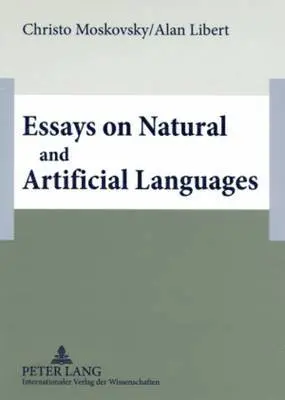
What is the optimal design for an artificial language? This book explores this question at both a ‘macro’ and a ‘micro’ level. An introductory essay presents some fundamental considerations in relation to what the design of an artificial language should be like. The essays that follow examine several basic components of grammar in natural and artificial languages, namely passive, relative, and interrogative constructions, reflexive pronouns, and articles. Drawing data from typologically distinct natural languages, these essays provide a description of the forms and functions that these components can have, and then their counterparts in artificial languages are presented. The artificial languages discussed include Arulo, aUI, the Blue Language, Esperanto, Eurolengo, Hom-idyomo, and Interlingua. The book offers some ideas about how these components of grammar can be integrated in the design of an artificial language.
496 kr
Tillfälligt slut
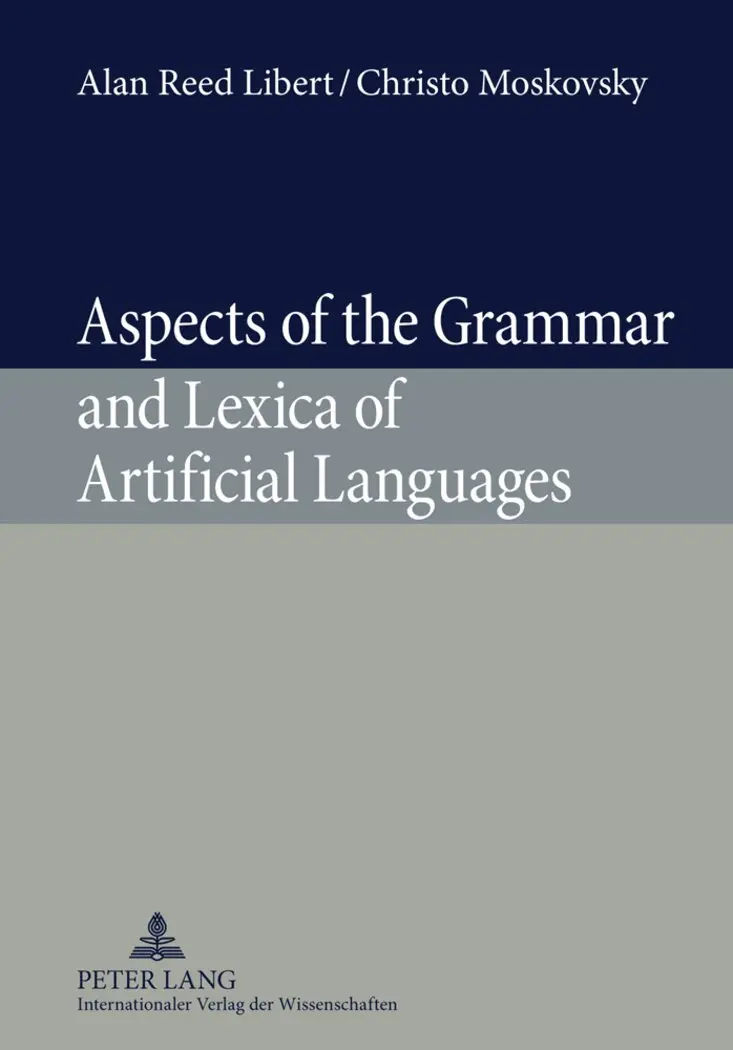
This book treats various areas of the phonetics, orthography, morphology, syntax, and lexica of artificial languages in an effort to determine what features such languages have in common, and how they differ. Among the topics dealt with are affricates, digraphs, stress, plural formation, demonstratives, prepositional case assignment, color terms, terms for beverages, and terms for meteorological phenomena. Data from many artificial languages, gathered from both primary and secondary sources, are presented in an attempt to give a picture of tendencies among them. The comparative examination of the languages considered in this book demonstrates that artificial languages are relatively uniform in some phonological aspects (e.g. nasals and affricates) while they show a considerable degree of variation in relation to some morphological categories (e.g. demonstratives and plurals). With regard to vocabulary from various lexical fields, in addition to the expected differences among a priori languages, different degrees of uniformity were found among a posteriori and mixed languages with respect to lexemes with particular meanings.