Christof Roos - Böcker
Visar alla böcker från författaren Christof Roos. Handla med fri frakt och snabb leverans.
5 produkter
5 produkter
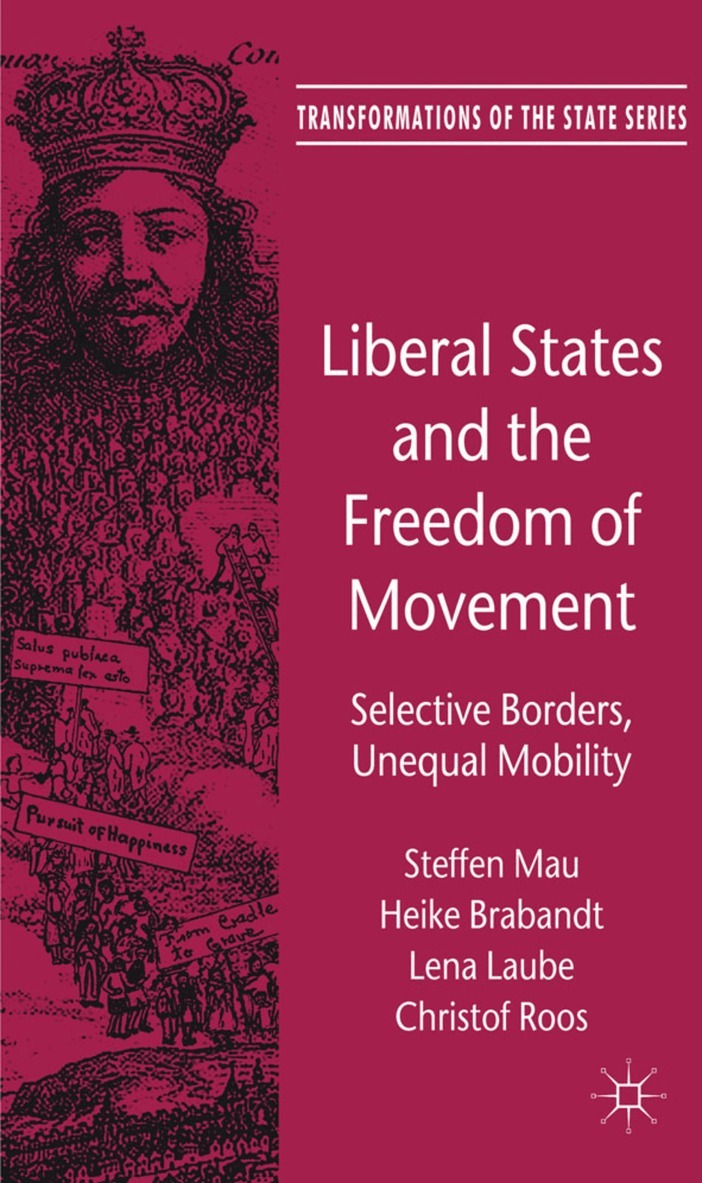
Liberal States and the Freedom of Movement
Selective Borders, Unequal Mobility
Inbunden, Engelska, 2012
536 kr
Skickas inom 10-15 vardagar
State borders regulate cross-border mobility and determine peoples' chances to travel, work, and study across the globe. This book looks at how global mobility is defined by borders in 2011 in comparison to the 1970s. The authors trace the transformation of OECD-state borders in recent decades and show how borders have become ever more selective.
591 kr
Skickas inom 10-15 vardagar
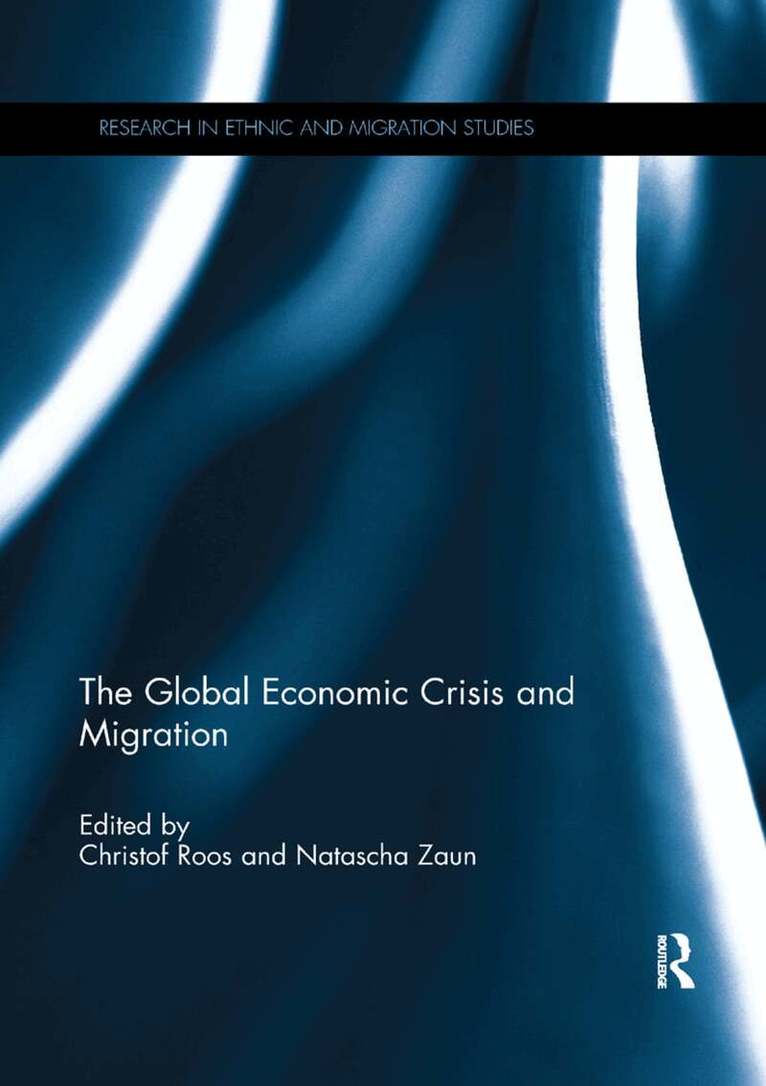
Offering an in-depth analysis of the impact of the economic crisis (2008–2012) on immigration movements and policies in the U.S. and Europe, the analysis in this book is guided by two key questions: What is the scope of change?; and did the crisis motivate this change or did other factors do so? The contributions to the book find that the crisis had immediate effects on migration patterns – migrants left crisis-stricken countries, naturalised in non-crisis countries where they had previously settled, or stopped migrating to formerly attractive countries which had been negatively affected by the crisis. Whereas prior to the crisis the majority of migrants were highly-skilled, during the crisis there was a shift to vulnerable groups such as low-skilled workers and women. The book also finds that migration policies have indeed changed in times of crisis. However, these changes are neither exclusively restrictions nor liberalisations, but encompass changes in both directions. Despite the coincidence of many policy changes with the crisis, these changes are not primarily induced by the crisis. Instead, politicians rhetorically used the crisis to promote both liberal and restrictive policy changes which were already in the making before the crisis. This book was originally published as a special issue of the Journal of Ethnic and Migration Studies.
1 935 kr
Skickas inom 10-15 vardagar
Offering an in-depth analysis of the impact of the economic crisis (2008–2012) on immigration movements and policies in the U.S. and Europe, the analysis in this book is guided by two key questions: What is the scope of change?; and did the crisis motivate this change or did other factors do so? The contributions to the book find that the crisis had immediate effects on migration patterns – migrants left crisis-stricken countries, naturalised in non-crisis countries where they had previously settled, or stopped migrating to formerly attractive countries which had been negatively affected by the crisis. Whereas prior to the crisis the majority of migrants were highly-skilled, during the crisis there was a shift to vulnerable groups such as low-skilled workers and women. The book also finds that migration policies have indeed changed in times of crisis. However, these changes are neither exclusively restrictions nor liberalisations, but encompass changes in both directions. Despite the coincidence of many policy changes with the crisis, these changes are not primarily induced by the crisis. Instead, politicians rhetorically used the crisis to promote both liberal and restrictive policy changes which were already in the making before the crisis. This book was originally published as a special issue of the Journal of Ethnic and Migration Studies.
536 kr
Skickas inom 10-15 vardagar
State borders regulate cross-border mobility and determine peoples' chances to travel, work, and study across the globe. This book looks at how global mobility is defined by borders in 2011 in comparison to the 1970s. The authors trace the transformation of OECD-state borders in recent decades and show how borders have become ever more selective.
1 295 kr
Kommande
Emigration of scale challenges states at the European periphery at their core. The book documents these struggles along their effects for politics and policy within their economic and welfare dimensions. The politics of emigration describe changing voter attitudes and behaviour pointing towards more support for nationalist and right-wing parties. The policies of emigration show state and local level efforts for the return of emigrant citizens. The welfare and economic dimensions explore the context for emigration and its effects for growth models and systems of health and care within the European single market. The book observes two types of state transformations: the re-emergent nation-state that re-discovers its core resource, the citizenry, as well as states that functionally and socially adapt to population loss.