Christoph Hemleben – författare
Visar alla böcker från författaren Christoph Hemleben. Handla med fri frakt och snabb leverans.
8 produkter
8 produkter
Inbunden, Engelska, 1990
5 392 kr
Skickas inom 10-15 vardagar
Agglutinated foraminifera are among the most widely distributed and abundant groups of marine meiofauna in some environments (e. g. marshes, deep-sea). They are tolerant of environmental extremes, tending to live where the evolutionarily more advanced calcareous foraminifera cannot survive. However, largely because of historical reasons, the amount of scientific effort invested in this group has been small in comparison to studies of other marine organisms. The NATO Advanced Studies Institute conference on the paleoecology, biostratigraphy, paleoceanography and taxonomy of agglutinated foraminifera in TUbingen September 17-29, 1989, was a direct outgrowth of two previous workshops on agglutinated foraminifers held in Amsterdam in September 1981 (IW AF I) and in Vienna in June 1986 (IW AF 11). As such, the TUbingen conference constitutes the Third International Workshop on Agglutinated Foraminifera (IW AF III) and was organised to provide a platform for synthesizing the current state ofknowledge on this group of organisms, and to strengthen interactions between basic research and applied micropaleontology. One of the main underlying themes of the conferen:e was to identify topics in the paleoecology, biostratigraphy, paleoceanography and taxonomy of agglutinated foraminifera which are in urgent need of further research. About 80 scientists and students from 5 continents participated in the TUbingen conference, which is one measure of the growth in interest in agglutinated foraminifers over the past decade. During four days of technical sessions, scientific results were communicated in the form of 34 oral presentations and 15 poster displays.
E-bok
PDF, Engelska, 20121 416 kr
Läs direkt efter köp
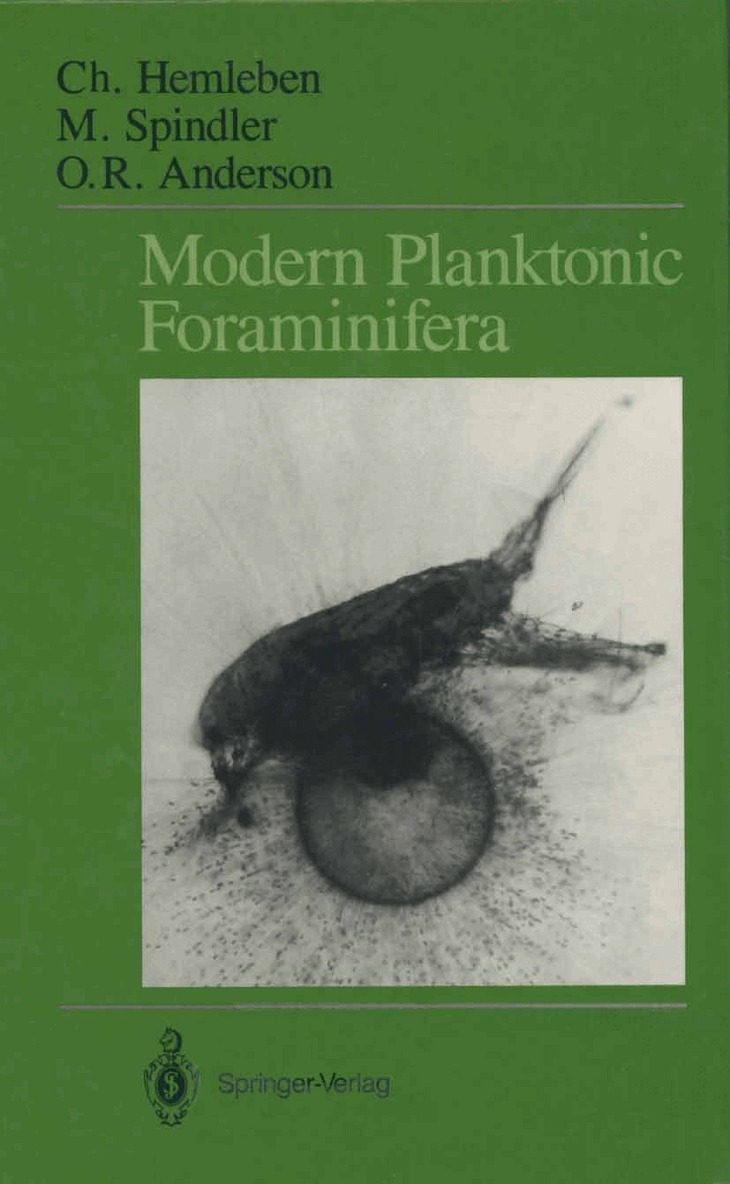
In a single volume, the authors bring together a review of current biological understanding of planktonic foraminifera and apply it to developments in sedimentology. With the growing interest in the shells of this class of protozoa as indicators of the history of the earth, revealed through the sedimentary record, a comprehensive analysis of the biology of contemporary foraminifera has become necessary. Main topics covered include Taxonomy, Collecting and Culture Methods, Cellular Ultrastructure, Host and Symbiont Relationships, Trophic Activity and Nutrition, Reproduction, Shell Ontogeny and Architecture, Ecology and Sedimentation and Settlement of Shells.
Häftad, Engelska, 2011
1 084 kr
Skickas inom 10-15 vardagar
In a single volume, the authors bring together a review of current biological understanding of planktonic foraminifera and apply it to developments in sedimentology. With the growing interest in the shells of this class of protozoa as indicators of the history of the earth, revealed through the sedimentary record, a comprehensive analysis of the biology of contemporary foraminifera has become necessary. Main topics covered include Taxonomy, Collecting and Culture Methods, Cellular Ultrastructure, Host and Symbiont Relationships, Trophic Activity and Nutrition, Reproduction, Shell Ontogeny and Architecture, Ecology and Sedimentation and Settlement of Shells.
Inbunden, Engelska, 2017
1 299 kr
Skickas inom 10-15 vardagar
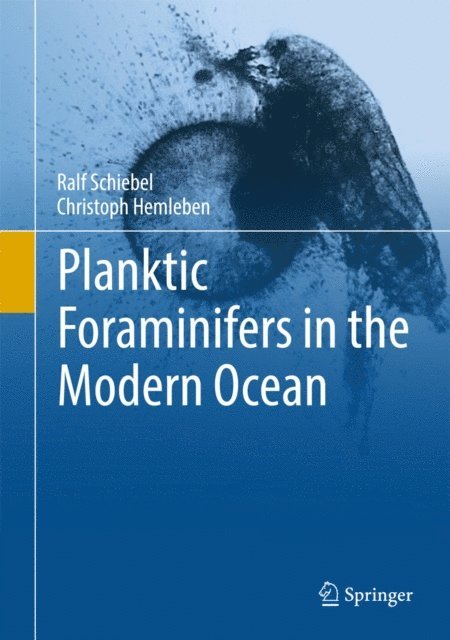
This book provides a comprehensive overview of the taxonomy, biology, sedimentation, and carbonate geochemistry of modern species. Students, early career and advanced scientists alike will profit from a broad synthesis of the current understanding of planktic foraminifers as an ecological indicator, biogeochemical factories, and proxies in paleoceanography. The classification of modern species is amply illustrated with electron and light microscope images of morphotypes, addresses the state-of-the-art of molecular genetics of species, and provides a detailed guide for any laboratory analyses. The biology of planktic foraminifers is extensively discussed in chapters dedicated to the cellular ultrastructure, nutrition, symbionts, reproduction, ontogeny, and test architecture. Building on the biological prerequisites, the distribution of planktic foraminifers is discussed at regional to global scale. The geochemistry and sedimentation of tests are considered in relation to the ecology ofthe living animal. In the final chapter, which examines the most common methods in planktic foraminifer research, hands-on information is provided on sampling, processing and analyzing samples in the laboratory, as well as selected established methods for data interpretation. The various topics discussed in this book are aimed at the application of planktic foraminifers as sensitive indicators of the changing climate and marine environment.
E-bok
Engelska, 20171 179 kr
Läs direkt efter köp
This book provides a comprehensive overview of the taxonomy, biology, sedimentation, and carbonate geochemistry of modern species. Students, early career and advanced scientists alike will profit from a broad synthesis of the current understanding of planktic foraminifers as an ecological indicator, biogeochemical factories, and proxies in paleoceanography. The classification of modern species is amply illustrated with electron and light microscope images of morphotypes, addresses the state-of-the-art of molecular genetics of species, and provides a detailed guide for any laboratory analyses. The biology of planktic foraminifers is extensively discussed in chapters dedicated to the cellular ultrastructure, nutrition, symbionts, reproduction, ontogeny, and test architecture. Building on the biological prerequisites, the distribution of planktic foraminifers is discussed at regional to global scale. The geochemistry and sedimentation of tests are considered in relation to the ecology ofthe living animal. In the final chapter, which examines the most common methods in planktic foraminifer research, hands-on information is provided on sampling, processing and analyzing samples in the laboratory, as well as selected established methods for data interpretation. The various topics discussed in this book are aimed at the application of planktic foraminifers as sensitive indicators of the changing climate and marine environment.
Häftad, Engelska, 2018
922 kr
Skickas inom 10-15 vardagar
This book provides a comprehensive overview of the taxonomy, biology, sedimentation, and carbonate geochemistry of modern species. Students, early career and advanced scientists alike will profit from a broad synthesis of the current understanding of planktic foraminifers as an ecological indicator, biogeochemical factories, and proxies in paleoceanography. The classification of modern species is amply illustrated with electron and light microscope images of morphotypes, addresses the state-of-the-art of molecular genetics of species, and provides a detailed guide for any laboratory analyses. The biology of planktic foraminifers is extensively discussed in chapters dedicated to the cellular ultrastructure, nutrition, symbionts, reproduction, ontogeny, and test architecture. Building on the biological prerequisites, the distribution of planktic foraminifers is discussed at regional to global scale. The geochemistry and sedimentation of tests are considered in relation to the ecology ofthe living animal. In the final chapter, which examines the most common methods in planktic foraminifer research, hands-on information is provided on sampling, processing and analyzing samples in the laboratory, as well as selected established methods for data interpretation. The various topics discussed in this book are aimed at the application of planktic foraminifers as sensitive indicators of the changing climate and marine environment.
Häftad, Engelska, 2012
5 392 kr
Skickas inom 10-15 vardagar
Agglutinated foraminifera are among the most widely distributed and abundant groups of marine meiofauna in some environments (e. g. marshes, deep-sea). They are tolerant of environmental extremes, tending to live where the evolutionarily more advanced calcareous foraminifera cannot survive. However, largely because of historical reasons, the amount of scientific effort invested in this group has been small in comparison to studies of other marine organisms. The NATO Advanced Studies Institute conference on the paleoecology, biostratigraphy, paleoceanography and taxonomy of agglutinated foraminifera in TUbingen September 17-29, 1989, was a direct outgrowth of two previous workshops on agglutinated foraminifers held in Amsterdam in September 1981 (IW AF I) and in Vienna in June 1986 (IW AF 11). As such, the TUbingen conference constitutes the Third International Workshop on Agglutinated Foraminifera (IW AF III) and was organised to provide a platform for synthesizing the current state ofknowledge on this group of organisms, and to strengthen interactions between basic research and applied micropaleontology. One of the main underlying themes of the conferen:e was to identify topics in the paleoecology, biostratigraphy, paleoceanography and taxonomy of agglutinated foraminifera which are in urgent need of further research. About 80 scientists and students from 5 continents participated in the TUbingen conference, which is one measure of the growth in interest in agglutinated foraminifers over the past decade. During four days of technical sessions, scientific results were communicated in the form of 34 oral presentations and 15 poster displays.
E-bok
PDF, Engelska, 20126 923 kr
Läs direkt efter köp
Agglutinated foraminifera are among the most widely distributed and abundant groups of marine meiofauna in some environments (e. g. marshes, deep-sea). They are tolerant of environmental extremes, tending to live where the evolutionarily more advanced calcareous foraminifera cannot survive. However, largely because of historical reasons, the amount of scientific effort invested in this group has been small in comparison to studies of other marine organisms. The NATO Advanced Studies Institute conference on the paleoecology, biostratigraphy, paleoceanography and taxonomy of agglutinated foraminifera in TUbingen September 17-29, 1989, was a direct outgrowth of two previous workshops on agglutinated foraminifers held in Amsterdam in September 1981 (IW AF I) and in Vienna in June 1986 (IW AF 11). As such, the TUbingen conference constitutes the Third International Workshop on Agglutinated Foraminifera (IW AF III) and was organised to provide a platform for synthesizing the current state ofknowledge on this group of organisms, and to strengthen interactions between basic research and applied micropaleontology. One of the main underlying themes of the conferen:e was to identify topics in the paleoecology, biostratigraphy, paleoceanography and taxonomy of agglutinated foraminifera which are in urgent need of further research. About 80 scientists and students from 5 continents participated in the TUbingen conference, which is one measure of the growth in interest in agglutinated foraminifers over the past decade. During four days of technical sessions, scientific results were communicated in the form of 34 oral presentations and 15 poster displays.