Christoph Hermann – författare
1 295 kr
Skickas inom 7-10 vardagar
371 kr
Skickas inom 5-8 vardagar
338 kr
Läs direkt efter köp
338 kr
Läs direkt efter köp
1 082 kr
Skickas inom 10-15 vardagar
1 367 kr
Läs direkt efter köp
2 331 kr
Skickas inom 10-15 vardagar
2 264 kr
Skickas inom 10-15 vardagar
918 kr
Läs direkt efter köp
Public services throughout Europe have undergone dramatic restructuring processes in recent years in connection with liberalization and privatization. While evaluations of the successes of public services have focused on prices and efficiency, much less attention has been paid to the impacts of liberalization and privatization on employment, labor relations, and working conditions. This book addresses this gap by illustrating the ways in which liberalization has contributed to increasing private and foreign ownership of public services, the decentralization of labor relations has amplified pressure on wages, and decreasing employment numbers and increasing workloads have improved productivity partly at the cost of service quality.
Examining diverse public-service sectors including network industries, public transportation, and hospitals, and using international case studies, Privatization of Public Services covers a wide range of aspects of service provision, with particular emphasis on companies and workers. The result is a unique picture of the changes created by the liberalization processes in Europe.
918 kr
Läs direkt efter köp
Public services throughout Europe have undergone dramatic restructuring processes in recent years in connection with liberalization and privatization. While evaluations of the successes of public services have focused on prices and efficiency, much less attention has been paid to the impacts of liberalization and privatization on employment, labor relations, and working conditions. This book addresses this gap by illustrating the ways in which liberalization has contributed to increasing private and foreign ownership of public services, the decentralization of labor relations has amplified pressure on wages, and decreasing employment numbers and increasing workloads have improved productivity partly at the cost of service quality.
Examining diverse public-service sectors including network industries, public transportation, and hospitals, and using international case studies, Privatization of Public Services covers a wide range of aspects of service provision, with particular emphasis on companies and workers. The result is a unique picture of the changes created by the liberalization processes in Europe.
806 kr
Skickas inom 10-15 vardagar
363 kr
Skickas inom 10-15 vardagar
754 kr
Skickas inom 10-15 vardagar
925 kr
Läs direkt efter köp
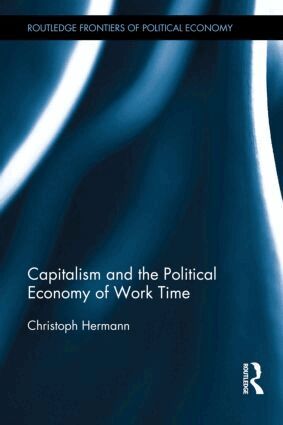
John Maynard Keynes expected that around the year 2030 people would only work 15 hours a week. In the mid-1960s, Jean Fourastié still anticipated the introduction of the 30-hour week in the year 2000, when productivity would continue to grow at an established pace. Productivity growth slowed down somewhat in the 1970s and 1980s, but rebounded in the 1990s with the spread of new information and communication technologies. The knowledge economy, however, did not bring about a jobless future or a world without work, as some scholars had predicted. With few exceptions, work hours of full-time employees have hardly fallen in the advanced capitalist countries in the last three decades, while in a number of countries they have actually increased since the 1980s.
This book takes the persistence of long work hours as starting point to investigate the relationship between capitalism and work time. It does so by discussing major theoretical schools and their explanations for the length and distribution of work hours, as well as tracing major changes in production and reproduction systems, and analyzing their consequences for work hours.
Furthermore, this volume explores the struggle for shorter work hours, starting from the introduction of the ten-hour work day in the nineteenth century to the introduction of the 35-hour week in France and Germany at the end of the twentieth century. However, the book also shows how neoliberalism has eroded collective work time regulations and resulted in an increase and polarization of work hours since the 1980s. Finally, the book argues that shorter work hours not only means more free time for workers, but also reduces inequality and improves human and ecological sustainability.
925 kr
Läs direkt efter köp
John Maynard Keynes expected that around the year 2030 people would only work 15 hours a week. In the mid-1960s, Jean Fourastié still anticipated the introduction of the 30-hour week in the year 2000, when productivity would continue to grow at an established pace. Productivity growth slowed down somewhat in the 1970s and 1980s, but rebounded in the 1990s with the spread of new information and communication technologies. The knowledge economy, however, did not bring about a jobless future or a world without work, as some scholars had predicted. With few exceptions, work hours of full-time employees have hardly fallen in the advanced capitalist countries in the last three decades, while in a number of countries they have actually increased since the 1980s.
This book takes the persistence of long work hours as starting point to investigate the relationship between capitalism and work time. It does so by discussing major theoretical schools and their explanations for the length and distribution of work hours, as well as tracing major changes in production and reproduction systems, and analyzing their consequences for work hours.
Furthermore, this volume explores the struggle for shorter work hours, starting from the introduction of the ten-hour work day in the nineteenth century to the introduction of the 35-hour week in France and Germany at the end of the twentieth century. However, the book also shows how neoliberalism has eroded collective work time regulations and resulted in an increase and polarization of work hours since the 1980s. Finally, the book argues that shorter work hours not only means more free time for workers, but also reduces inequality and improves human and ecological sustainability.
582 kr
Skickas inom 10-15 vardagar
149 kr
Läs direkt efter köp