Christoph Vogel – författare
Visar alla böcker från författaren Christoph Vogel. Handla med fri frakt och snabb leverans.
16 produkter
16 produkter
Inbunden, Tyska, 2026
347 kr
Skickas inom 3-6 vardagar
Häftad, Tyska, 2007
780 kr
Skickas inom 3-6 vardagar
171 kr
Läs direkt efter köp
Seminar paper from the year 2009 in the subject Politics - Region: Africa, grade: 1,0, University of Cologne (Forschungsinstitut fur Politische Wissenschaft und Europaische Fragen), course: Multilateralism and the EU, language: English, abstract: Economic relations between the EU and ACP countries have a long tradition. After Yaoundeconventions in the 1960s, 1975 the first Lome Agreement was established between ACPcountries and EC member states. Between 1975 and 2000 EU and ACP countries ran foursubsequent Lome conventions replaced by Cotonou agreement now. Lome was concerned tobe an agreement providing ACP countries better access to European markets in order to pusheconomic development and build up domestic production. The emergence of WTO in 1995changed the regulatory framework for regional trade agreements in such a way, that Lome IVcould not pass into a fifth version. In order to be compliant with WTO measures, a newagreement was worked out 2000 in Cotonou. It came into power in 2002. The complete establishment of that treaty it is still far from becoming reality, as aconsiderable number of ACP countries have still not negotiated EPAs. A crucial issue in thesenegotiations is the division of ACP countries in six groups for regional EPAs. This divisiondoes not merge with other regional trade and political networks in Sub-Saharan Africa anddoes not include all ACP countries. With good governance having emerged as a vital issue in international politics andespecially in EU s agenda, a relevant number of non-economic issues found their way intoCotonou agreement. By linking trade agreements and development aid with the spread ofEuropean or Western democracy standards those different fields were brought into contact. The major question of the following research shall be, whether EU trade policy towards ACPcountries is supposed to be an instrument serving the diffusion of human rights and democracyor rather a smoke screen for a hidden economic agenda. This research will work with different approaches rooted in political science following thebasic assumption EU-ACP cooperation has always been a political relationship. In thefollowing theoretical chapter (neo-)realist interpretation will be put in contrast to Ian Manners normative power approach using Lisbeth Aggestam s framework of role model theory. Further on, the research chapter will discuss characteristic matters of EU-ACP relations andput into focus chances and perils of conditional economic cooperation and development aid.
E-bok
PDF, Engelska, 2011195 kr
Läs direkt efter köp
Seminar paper from the year 2009 in the subject Politics - Region: Africa, grade: 2,0, University of Cologne (Institut fur Afrikanistik), course: Konfliktherd Nigeria, language: English, abstract: Mineral wealth and concomitant phenomena of violence state weakness and corruptionhave been widely brought into contact by numerous scholars, as a considerable numberof empirical cases seem to give evidence to this. Particularly in Sub-Saharan Africa theexamples of Sierra Leone, Nigeria, Democratic Republic of Congo and Angola just tomention some of the most striking ones led to various hypotheses about the influence ofresource plenty on governance issues. Due to several specific characteristics, the case ofNigeria is different to many others. First of all, the Federal Republic of Nigeria turned outto be Africa s most populous state with about 140 million citizens. In addition the socialsituation is rather unique, as Nigeria consists of more than 250 ethnic groups. The morethan 500 spoken languages spoken in the country further illustrate the socio-culturaldiversity. Nevertheless the three major communities include more than two thirds of thecountry s total population. On the socio-economic dimension a key feature is the overwhelming importance ofoil as almost single export good and major contributor of the country s GDP. The strong dependence on oil has been challenging Nigeria s economyconsiderably and can be seen as a major reason for socio-economic disparities throughoutthe country, not to forget that it has been the origin for its (political) Dutch disease . Contrarily to other so-called crisis-states the main issues threatening statehood andstability in Nigeria can be rather seen as domestic problems. Transnational issues like therelations with Cameroon do not have the same structuring quality as in other states. Although Nigeria improved in TI's CPI of 2008 the country still faces institutionalized clientelism andrent-seeking at almost each political and social level as poor performance in group grievance , delegitimization of the state or factionalized elites may illustrate. Secondlymanifold forms of institutional and informal violence are destabilizing the socio-politicalarchitecture. Various attempts to counter those phenomena have been ineffective orimplemented insufficiently, sometimes not at all. The result is a current situation ofdisorder, human insecurity, economic inequality fed by a prosperous environment forindividual enrichment provided by a state which is rather effective in facilitating illicitpolitical and economic behaviours, be they plundering of public goods, drug or weapontrade or other.
E-bok
PDF, Engelska, 2011195 kr
Läs direkt efter köp
Seminar paper from the year 2009 in the subject Politics - Region: Africa, grade: 1,7, University of Cologne (Forschungsinstitut fur Politische Wissenschaft und Europaische Fragen), course: Comparative Political Economy: Varieties of Capitalism, language: English, abstract: Since the last decade scientific research on capitalism has experienced a noticeably grownattention among scholars as well as politicians. One of the most discussed approaches in thisfield of comparative analysis of political economy is the varieties of capitalism theory1developed by Peter Hall and David Soskice. Their approach basically focuses on howdifferent actors may behave in a certain politico-economic state configuration and on howfar this configuration can determine a national type or variety of capitalism as well as theeconomic success of a political economy. This approach, though, has been designed with a view to the so-called developedeconomies , which are to be found in Western and Central Europe as well as in NorthAmerica. In the era of globalization other economies have come into play, with theirperformances ranging from real success stories, as in several Asian economies, toconsiderable failure, as in most marginalized Sub-Saharan African economies. After presenting Hall and Soskice s approach and some of its criticisms in order togive a conceptual framework, this paper will provide a very brief overview of the politicaleconomy of colonialism, followed by a case-study analysis of the contemporary politicaleconomies of Uganda and the Democratic Republic of Congo (DRC). The main research question is to identify to which extent varieties of capitalismimported from colonial powers have fashioned today s economies in the chosen cases as economic models or how far the empirically established colonial economic systems areresponsible for post-colonial developments. The former colonial power in Uganda, GreatBritain, will be considered as a Liberal Market Economy, whereas DRC s colonial power,Belgium, will be assigned the Coordinated Market Economies2 type. In order to avoidanalytical shortcomings, this paper also tries to take into consideration the discrepancybetween those models and the colonial reality as well as postcolonial developments, whichhave evolved due to domestic characteristics or as a consequence of a globalizing politicaleconomy.
Häftad, Engelska, 2011
382 kr
Skickas inom 3-6 vardagar
Häftad, Engelska, 2011
367 kr
Skickas inom 3-6 vardagar
Ideen und Verbesserungsvorschläge von Mitarbeitenden
Hemmende und fördernde Faktoren bei Vorgesetzten
Häftad, Tyska, 2016
499 kr
Skickas inom 10-15 vardagar
Der Autor untersucht, wie Verbesserungsvorschläge von Mitarbeitenden durch Vorgesetzte bewertet werden und unter welchen Bedingungen Vorgesetzte bereit sind, diese umzusetzen. Als Hauptresultat geht hervor, dass die Beziehung zwischen Verbesserungsvorschlägen der Mitarbeitenden und der Absicht zur Implementierung der Vorschläge durch Vorgesetzte vollständig durch die Bewertung der Vorschläge bestimmt wird. Weiter zeigt sich, dass Führungspersonen besonders dann hohe Implementierungsabsicht zeigen, wenn sie bei ihrer Arbeit viel Gestaltungsspielraum haben und wenn die Ideen von leistungsstarken Mitarbeitenden stammen.
Ideen und Verbesserungsvorschläge von Mitarbeitenden
Hemmende und fördernde Faktoren bei Vorgesetzten
E-bok
PDF, Tyska, 2016475 kr
Läs direkt efter köp
Der Autor untersucht, wie Verbesserungsvorschläge von Mitarbeitenden durch Vorgesetzte bewertet werden und unter welchen Bedingungen Vorgesetzte bereit sind, diese umzusetzen. Als Hauptresultat geht hervor, dass die Beziehung zwischen Verbesserungsvorschlägen der Mitarbeitenden und der Absicht zur Implementierung der Vorschläge durch Vorgesetzte vollständig durch die Bewertung der Vorschläge bestimmt wird. Weiter zeigt sich, dass Führungspersonen besonders dann hohe Implementierungsabsicht zeigen, wenn sie bei ihrer Arbeit viel Gestaltungsspielraum haben und wenn die Ideen von leistungsstarken Mitarbeitenden stammen.
Häftad, Tyska, 2026
894 kr
Skickas inom 10-15 vardagar
In der vorliegenden Arbeit wird aufgezeigt, wie sich Veränderungen während des Wachstums kleiner und mittlerer Unternehmen auf die Bindung (Commitment) der Beschäftigten auswirken. Obwohl KMU-Wachstum meist mit viel Positivem assoziiert wird, sind damit auch Herausforderungen verbunden, die in Forschung und Praxis unterschätzt werden. Eine zentrale Gefahr besteht darin, das Befinden der Mitarbeitenden aus dem Blick zu verlieren, obwohl diese wesentlich zum Wachstumserfolg beitragen. Im Rahmen eines explorativen, qualitativen Studiendesigns wurden in mehreren wachsenden KMU Fallstudien durchgeführt. Die Ergebnisse weisen auf vier zentrale Veränderungsmuster während des Wachstums hin, die auf das Verhalten und die Reaktionen von Entscheidungstragenden zurückzuführen sind. Diese wirken sich je nach Ausprägung positiv oder negativ auf die Mitarbeitendenbindung aus, abhängig davon, ob Grundbedürfnisse erweitert oder eingeschränkt werden.
E-bok
Tyska, 2026881 kr
Läs direkt efter köp
In der vorliegenden Arbeit wird aufgezeigt, wie sich Veränderungen während des Wachstums kleiner und mittlerer Unternehmen auf die Bindung (Commitment) der Beschäftigten auswirken. Obwohl KMU-Wachstum meist mit viel Positivem assoziiert wird, sind damit auch Herausforderungen verbunden, die in Forschung und Praxis unterschätzt werden. Eine zentrale Gefahr besteht darin, das Befinden der Mitarbeitenden aus dem Blick zu verlieren, obwohl diese wesentlich zum Wachstumserfolg beitragen. Im Rahmen eines explorativen, qualitativen Studiendesigns wurden in mehreren wachsenden KMU Fallstudien durchgeführt. Die Ergebnisse weisen auf vier zentrale Veränderungsmuster während des Wachstums hin, die auf das Verhalten und die Reaktionen von Entscheidungstragenden zurückzuführen sind. Diese wirken sich je nach Ausprägung positiv oder negativ auf die Mitarbeitendenbindung aus, abhängig davon, ob Grundbedürfnisse erweitert oder eingeschränkt werden.
Häftad, Tyska, 2018
685 kr
Skickas inom 10-15 vardagar
Die Vielfalt der Herausforderungen an das Personalmanagement und dessen Bedeutung für den Unternehmenserfolg sind in kleinen Unternehmen nicht geringer als in Großunternehmen, die zeitlichen und personellen Ressourcen für das Personalmanagement sind hingegen beschränkt. Eine eigene Personalabteilung gibt es in kleinen Unternehmen meist nicht, häufig sind es Mitglieder der Geschäftsleitung, welche „nebenbei“ für das Personalmanagement zuständig sind.Ziel dieses Ratgebers ist es, einen Beitrag zur Professionalisierung des Personalmanagements in kleinen Unternehmen zu leisten. Vorgeschlagen wird dazu eine „Integrierte Vorgehensweise“. Dies bedeutet, dass Maßnahmen zu Personalentwicklung, Teamarbeit, Wissensmanagement, Gesundheitsförderung und Flexibilisierung so gestaltet werden, dass- die Fähigkeiten der Mitarbeitenden gestärkt,- deren Engagement und Motivation erhöht und- deren Beteiligung an Arbeits- und Entscheidungsprozessen erweitert werden.Dieser Ratgeber gibt konkrete Empfehlungen, wie diese integrierte Vorgehensweise in der Praxis realisiert werden kann. Weitere Themen wie Arbeitgeberattraktivität, Personalauswahl, Mitarbeitendengespräche und -befragung sind für die Praxis in kleinen Unternehmen aufbereitet und schließlich werden Vorschläge zur Strukturierung und organisatorischen Verankerung der Personalarbeit gemacht.
717 kr
Läs direkt efter köp
Die Vielfalt der Herausforderungen an das Personalmanagement und dessen Bedeutung für den Unternehmenserfolg sind in kleinen Unternehmen nicht geringer als in Großunternehmen, die zeitlichen und personellen Ressourcen für das Personalmanagement sind hingegen beschränkt. Eine eigene Personalabteilung gibt es in kleinen Unternehmen meist nicht, häufig sind es Mitglieder der Geschäftsleitung, welche „nebenbei“ für das Personalmanagement zuständig sind.Ziel dieses Ratgebers ist es, einen Beitrag zur Professionalisierung des Personalmanagements in kleinen Unternehmen zu leisten. Vorgeschlagen wird dazu eine „Integrierte Vorgehensweise“. Dies bedeutet, dass Maßnahmen zu Personalentwicklung, Teamarbeit, Wissensmanagement, Gesundheitsförderung und Flexibilisierung so gestaltet werden, dass- die Fähigkeiten der Mitarbeitenden gestärkt,- deren Engagement und Motivation erhöht und- deren Beteiligung an Arbeits- und Entscheidungsprozessen erweitert werden.Dieser Ratgeber gibt konkrete Empfehlungen, wie diese integrierte Vorgehensweise in der Praxis realisiert werden kann. Weitere Themen wie Arbeitgeberattraktivität, Personalauswahl, Mitarbeitendengespräche und -befragung sind für die Praxis in kleinen Unternehmen aufbereitet und schließlich werden Vorschläge zur Strukturierung und organisatorischen Verankerung der Personalarbeit gemacht.
Häftad, Tyska, 2016
385 kr
Skickas inom 5-8 vardagar
E-bok
PDF, Engelska, 2014230 kr
Läs direkt efter köp
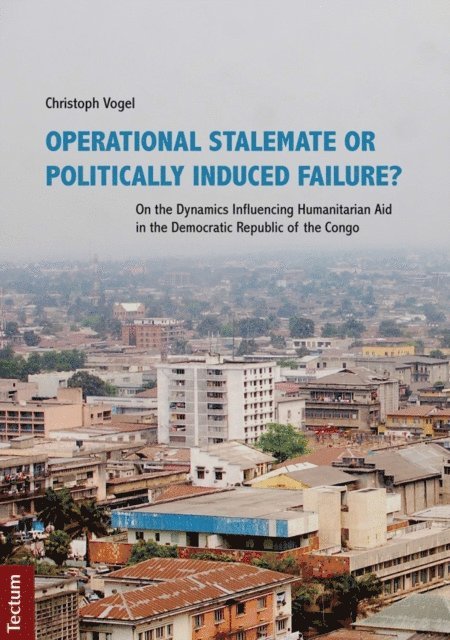
Nowadays, humanitarians find themselves constantly challenged by adverse conditions and questioned about their instrumentalisation through international stakeholders and local powerbrokers. Economic aspects such as the so-called "contract fever" and increasing convergence of humanitarian and political action have become common to almost all contemporary humanitarian emergencies. Aid organisations have multiplied in terms of financial and human resources, political weight and in numbers of single organisations. Thus the question emerges: Why is their action still characterised by a considerable degree of nonfulfillment concerning set targets and failure in providing substantial relief to populations affected by catastrophes? Employing the concepts of institutional economics of aid, state failure, and war economy, Christoph Vogel contributes to the current discourse on the role of humanitarian aid in violent conflict and unveils the above presented phenomena by analysing humanitarian aid in the Democratic Republic of the Congo''s ongoing "complex emergency".