Christopher J. Tuplin – författare
Visar alla böcker från författaren . Handla med fri frakt och snabb leverans.
7 produkter
7 produkter
E-bok
PDF, Engelska, 20201 705 kr
Läs direkt efter köp
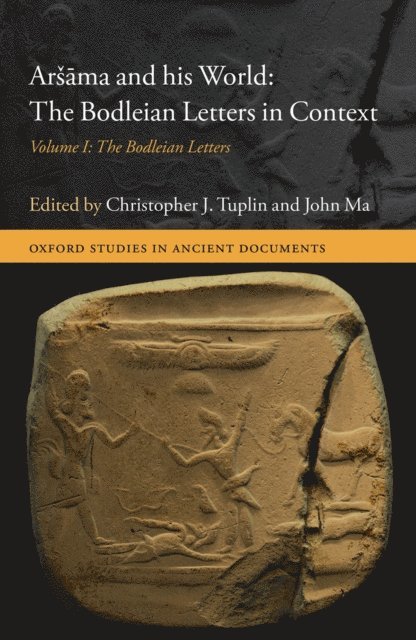
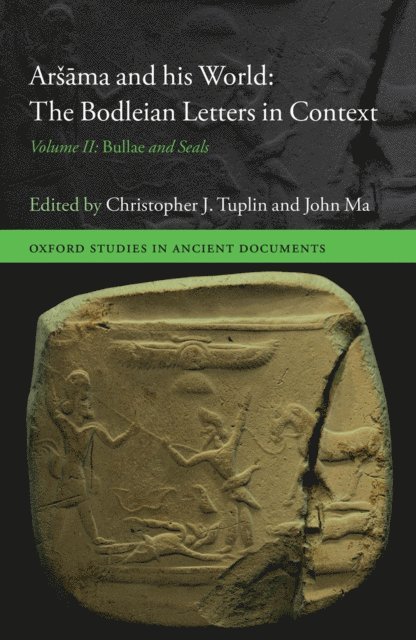
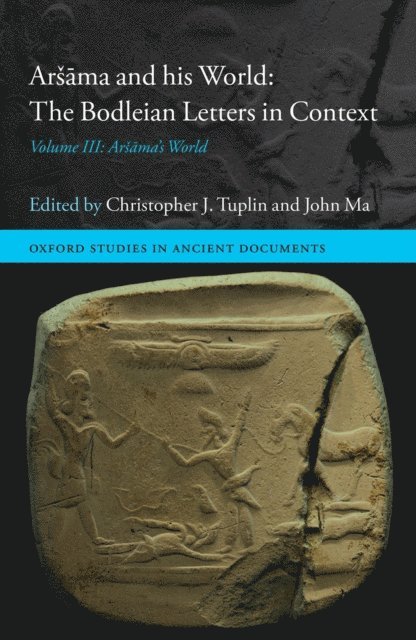
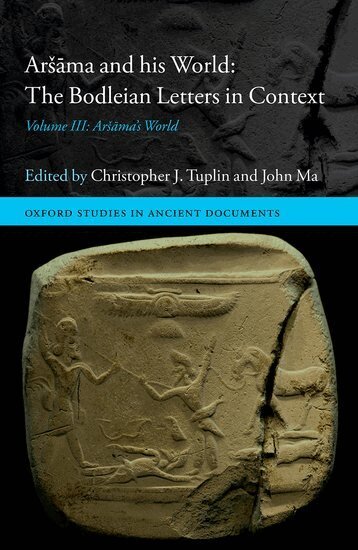
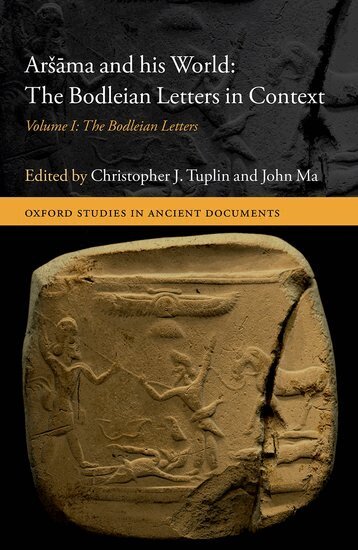
During the Second World War the Bodleian Library in Oxford acquired a set of Aramaic letters, eight sealings, and the two leather bags in which the sealed letters were once stored. The letters concern the affairs of Aršāma, satrap of Egypt in the later fifth century. Taken with other material associated with him (mostly in Aramaic, Demotic Egyptian, and Akkadian), they illuminate the Achaemenid world of which Aršāma was a privileged member and evoke a wide range of social, economic, cultural, organizational, and political perspectives, from multi-lingual communication, storage and disbursement of resources, and satrapal remuneration, to cross-regional ethnic movement, long-distance travel, religious practice, and iconographic projection of ideological messages. Particular highlights include a travel authorization (the only example of something implicit in numerous Persepolis documents), texts about the religious life of the Judaean garrison at Elephantine, Aršāma''s magnificent seal (a masterpiece of Achaemenid glyptic, inherited from a son of Darius I), and echoes of temporary disturbances to Persian management of Egypt. But what is also impressive is the underlying sense of systematic coherence founded on and expressed in the use of formal, even formalized, written communication as a means of control. The Aršāma dossier is not alone in evoking that sense, but its size, variety, and focus upon a single individual give it a unique quality. Though this material has not been hidden from view, it has been insufficiently explored: it is the purpose of the three volumes of Aršāma and his World: The Bodleian Letters in Context to provide the fullest presentation and historical contextualization of this extraordinary cache yet attempted. Volume I presents and translates the letters alongside a detailed line-by-line commentary, while Volume II reconstructs the two seals that made the clay bullae that sealed the letters, with special attention to Aršāma''s magnificent heirloom seal. Volume III comprises a series of thematic essays which further explore the administrative, economic, military, ideological, religious, and artistic environment to which Aršāma and the letters belonged.
E-bok
PDF, Engelska, 20201 700 kr
Läs direkt efter köp
During the Second World War the Bodleian Library in Oxford acquired a set of Aramaic letters, eight sealings, and the two leather bags in which the sealed letters were once stored. The letters concern the affairs of Aršāma, satrap of Egypt in the later fifth century. Taken with other material associated with him (mostly in Aramaic, Demotic Egyptian, and Akkadian), they illuminate the Achaemenid world of which Aršāma was a privileged member and evoke a wide range of social, economic, cultural, organizational, and political perspectives, from multi-lingual communication, storage and disbursement of resources, and satrapal remuneration, to cross-regional ethnic movement, long-distance travel, religious practice, and iconographic projection of ideological messages. Particular highlights include a travel authorization (the only example of something implicit in numerous Persepolis documents), texts about the religious life of the Judaean garrison at Elephantine, Aršāma''s magnificent seal (a masterpiece of Achaemenid glyptic, inherited from a son of Darius I), and echoes of temporary disturbances to Persian management of Egypt. But what is also impressive is the underlying sense of systematic coherence founded on and expressed in the use of formal, even formalized, written communication as a means of control. The Aršāma dossier is not alone in evoking that sense, but its size, variety, and focus upon a single individual give it a unique quality. Though this material has not been hidden from view, it has been insufficiently explored: it is the purpose of the three volumes of Aršāma and his World: The Bodleian Letters in Context to provide the fullest presentation and historical contextualization of this extraordinary cache yet attempted. Volume I presents and translates the letters alongside a detailed line-by-line commentary, while Volume II reconstructs the two seals that made the clay bullae that sealed the letters, with special attention to Aršāma''s magnificent heirloom seal. Volume III comprises a series of thematic essays which further explore the administrative, economic, military, ideological, religious, and artistic environment to which Aršāma and the letters belonged.
E-bok
PDF, Engelska, 20202 090 kr
Läs direkt efter köp
During the Second World War the Bodleian Library in Oxford acquired a set of Aramaic letters, eight sealings, and the two leather bags in which the sealed letters were once stored. The letters concern the affairs of Aršāma, satrap of Egypt in the later fifth century. Taken with other material associated with him (mostly in Aramaic, Demotic Egyptian, and Akkadian), they illuminate the Achaemenid world of which Aršāma was a privileged member and evoke a wide range of social, economic, cultural, organizational, and political perspectives, from multi-lingual communication, storage and disbursement of resources, and satrapal remuneration, to cross-regional ethnic movement, long-distance travel, religious practice, and iconographic projection of ideological messages. Particular highlights include a travel authorization (the only example of something implicit in numerous Persepolis documents), texts about the religious life of the Judaean garrison at Elephantine, Aršāma''s magnificent seal (a masterpiece of Achaemenid glyptic, inherited from a son of Darius I), and echoes of temporary disturbances to Persian management of Egypt. But what is also impressive is the underlying sense of systematic coherence founded on and expressed in the use of formal, even formalized, written communication as a means of control. The Aršāma dossier is not alone in evoking that sense, but its size, variety, and focus upon a single individual give it a unique quality. Though this material has not been hidden from view, it has been insufficiently explored: it is the purpose of the three volumes of Aršāma and his World: The Bodleian Letters in Context to provide the fullest presentation and historical contextualization of this extraordinary cache yet attempted. Volume I presents and translates the letters alongside a detailed line-by-line commentary, while Volume II reconstructs the two seals that made the clay bullae that sealed the letters, with special attention to Aršāma''s magnificent heirloom seal. Volume III comprises a series of thematic essays which further explore the administrative, economic, military, ideological, religious, and artistic environment to which Aršāma and the letters belonged.
Inbunden, Engelska, 2020
2 160 kr
Skickas inom 5-8 vardagar
During the Second World War the Bodleian Library in Oxford acquired a set of Aramaic letters, eight sealings, and the two leather bags in which the sealed letters were once stored. The letters concern the affairs of Aršāma, satrap of Egypt in the later fifth century. Taken with other material associated with him (mostly in Aramaic, Demotic Egyptian, and Akkadian), they illuminate the Achaemenid world of which Aršāma was a privileged member and evoke a wide range of social, economic, cultural, organizational, and political perspectives, from multi-lingual communication, storage and disbursement of resources, and satrapal remuneration, to cross-regional ethnic movement, long-distance travel, religious practice, and iconographic projection of ideological messages. Particular highlights include a travel authorization (the only example of something implicit in numerous Persepolis documents), texts about the religious life of the Judaean garrison at Elephantine, Aršāma's magnificent seal (a masterpiece of Achaemenid glyptic, inherited from a son of Darius I), and echoes of temporary disturbances to Persian management of Egypt. But what is also impressive is the underlying sense of systematic coherence founded on and expressed in the use of formal, even formalized, written communication as a means of control. The Aršāma dossier is not alone in evoking that sense, but its size, variety, and focus upon a single individual give it a unique quality. Though this material has not been hidden from view, it has been insufficiently explored: it is the purpose of the three volumes of Aršāma and his World: The Bodleian Letters in Context to provide the fullest presentation and historical contextualization of this extraordinary cache yet attempted. Volume I presents and translates the letters alongside a detailed line-by-line commentary, while Volume II reconstructs the two seals that made the clay bullae that sealed the letters, with special attention to Aršāma's magnificent heirloom seal. Volume III comprises a series of thematic essays which further explore the administrative, economic, military, ideological, religious, and artistic environment to which Aršāma and the letters belonged.
Inbunden, Engelska, 2020
2 777 kr
Skickas inom 7-10 vardagar
During the Second World War the Bodleian Library in Oxford acquired a set of Aramaic letters, eight sealings, and the two leather bags in which the sealed letters were once stored. The letters concern the affairs of Aršāma, satrap of Egypt in the later fifth century. Taken with other material associated with him (mostly in Aramaic, Demotic Egyptian, and Akkadian), they illuminate the Achaemenid world of which Aršāma was a privileged member and evoke a wide range of social, economic, cultural, organizational, and political perspectives, from multi-lingual communication, storage and disbursement of resources, and satrapal remuneration, to cross-regional ethnic movement, long-distance travel, religious practice, and iconographic projection of ideological messages. Particular highlights include a travel authorization (the only example of something implicit in numerous Persepolis documents), texts about the religious life of the Judaean garrison at Elephantine, Aršāma's magnificent seal (a masterpiece of Achaemenid glyptic, inherited from a son of Darius I), and echoes of temporary disturbances to Persian management of Egypt. But what is also impressive is the underlying sense of systematic coherence founded on and expressed in the use of formal, even formalized, written communication as a means of control. The Aršāma dossier is not alone in evoking that sense, but its size, variety, and focus upon a single individual give it a unique quality. Though this material has not been hidden from view, it has been insufficiently explored: it is the purpose of the three volumes of Aršāma and his World: The Bodleian Letters in Context to provide the fullest presentation and historical contextualization of this extraordinary cache yet attempted. Volume I presents and translates the letters alongside a detailed line-by-line commentary, while Volume II reconstructs the two seals that made the clay bullae that sealed the letters, with special attention to Aršāma's magnificent heirloom seal. Volume III comprises a series of thematic essays which further explore the administrative, economic, military, ideological, religious, and artistic environment to which Aršāma and the letters belonged.
Inbunden, Engelska, 2020
2 627 kr
Skickas inom 5-8 vardagar
During the Second World War the Bodleian Library in Oxford acquired a set of Aramaic letters, eight sealings, and the two leather bags in which the sealed letters were once stored. The letters concern the affairs of Aršāma, satrap of Egypt in the later fifth century. Taken with other material associated with him (mostly in Aramaic, Demotic Egyptian, and Akkadian), they illuminate the Achaemenid world of which Aršāma was a privileged member and evoke a wide range of social, economic, cultural, organizational, and political perspectives, from multi-lingual communication, storage and disbursement of resources, and satrapal remuneration, to cross-regional ethnic movement, long-distance travel, religious practice, and iconographic projection of ideological messages. Particular highlights include a travel authorization (the only example of something implicit in numerous Persepolis documents), texts about the religious life of the Judaean garrison at Elephantine, Aršāma's magnificent seal (a masterpiece of Achaemenid glyptic, inherited from a son of Darius I), and echoes of temporary disturbances to Persian management of Egypt. But what is also impressive is the underlying sense of systematic coherence founded on and expressed in the use of formal, even formalized, written communication as a means of control. The Aršāma dossier is not alone in evoking that sense, but its size, variety, and focus upon a single individual give it a unique quality. Though this material has not been hidden from view, it has been insufficiently explored: it is the purpose of the three volumes of Aršāma and his World: The Bodleian Letters in Context to provide the fullest presentation and historical contextualization of this extraordinary cache yet attempted. Volume I presents and translates the letters alongside a detailed line-by-line commentary, while Volume II reconstructs the two seals that made the clay bullae that sealed the letters, with special attention to Aršāma's magnificent heirloom seal. Volume III comprises a series of thematic essays which further explore the administrative, economic, military, ideological, religious, and artistic environment to which Aršāma and the letters belonged.
Inbunden, Engelska, 2026
1 812 kr
Kommande
Xenophon the historian was formed by the historiographical culture of his time and by his own history as pupil of Socrates, mercenary leader and political exile. These perspectives underpin a collection of essays that explores his sophisticated and occasionally idiosyncratic engagement with the past (both in historical narratives and elsewhere) and the strategies of later readers who harnessed his work to their own agendas. The wider world (Greek and non-Greek) also comes into view, both in the vivid and sometimes brutal experience of war among the Ten Thousand and in the political conflicts and socio-religious institutions and mores that framed his life-story. We discover a writer trying to make sense of that world, to evaluate what happens in it, to discern trends – and ultimately to inform the present with lessons from the past. The eighteen chapters illustrate the calibre and value of a writer at work when history was still a genre in development whose modes and expectations created opportunities more than constraints. The overarching aim of the volume is thus to illuminate what it meant to be a historian in such a period, and how and why Xenophon’s past-oriented thinking and writing mattered beyond his own lifetime.