813 kr
Skickas inom 10-15 vardagar
813 kr
Skickas inom 10-15 vardagar
2 529 kr
Skickas inom 10-15 vardagar
869 kr
Läs direkt efter köp
760 kr
Läs direkt efter köp
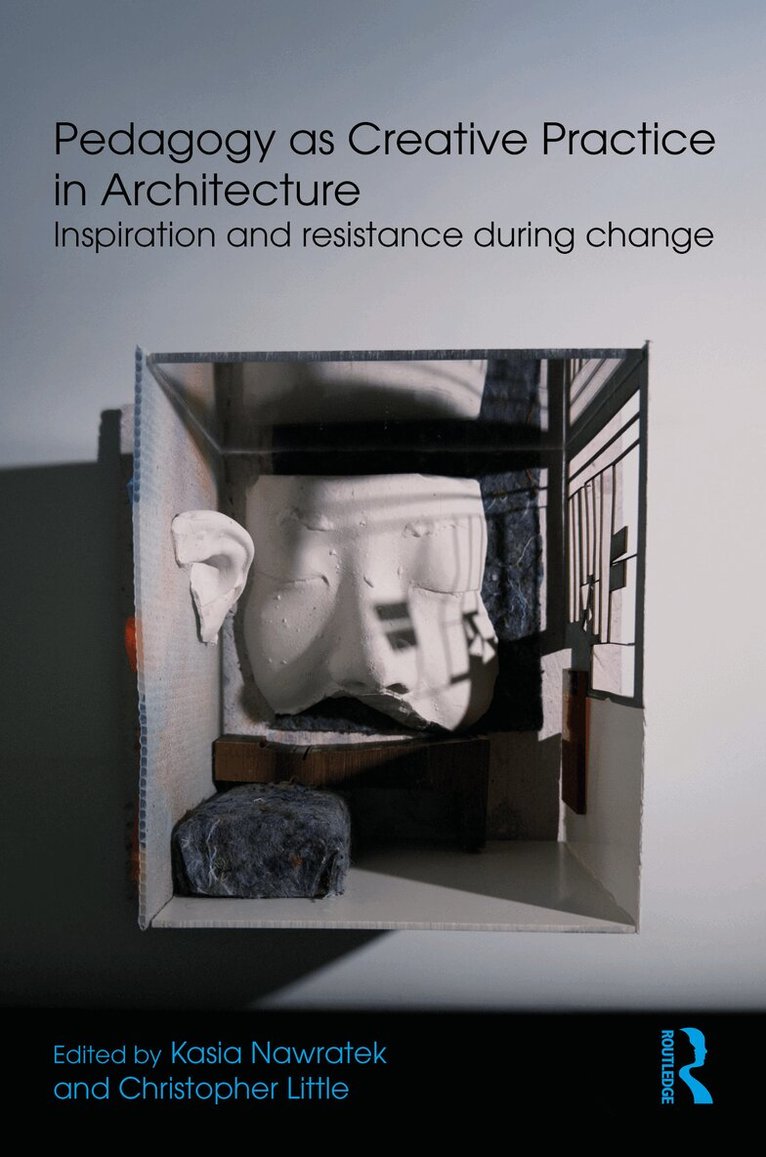
Architectural education in the United Kingdom performs a difficult balancing act: meeting the requirements of professional accreditation bodies and preparing students for practice, while also offering a meaningful education for those who do not intend to become architects. Increasingly, professional pressures frame architectural education as training rather than as an exploratory, experimental process - one that equips students to face unpredictable future challenges in the profession and beyond.
In response, many educators develop a hidden curriculum: an implicit set of values, methods, and priorities that sit alongside formal learning outcomes. This hidden curriculum tends to privilege curiosity, criticality, and open-ended inquiry, often through interdisciplinary and art-based approaches. Working in the gaps between what can be specified and what must be discovered, they complicate the “university-to-practice conveyor belt†narrative and widen what architectural education can be.
This book shines a light on those creative pedagogical practices—working within, and often despite, systemic pressures - and shows why they matter for the vitality of architectural education at a time of deep uncertainty across higher education. It is organised into two parts: Discussions, which offer in-depth explorations of current challenges, and Insights, which present a selection of case studies. Together, they argue for architectural education as a space that cultivates imagination, agency, and adaptive ways of thinking - qualities essential for shaping futures that are not yet known.
The book provides essential reading for educators and advanced students of architecture.
950 kr
Läs direkt efter köp
760 kr
Läs direkt efter köp
Architectural education in the United Kingdom performs a difficult balancing act: meeting the requirements of professional accreditation bodies and preparing students for practice, while also offering a meaningful education for those who do not intend to become architects. Increasingly, professional pressures frame architectural education as training rather than as an exploratory, experimental process - one that equips students to face unpredictable future challenges in the profession and beyond.
In response, many educators develop a hidden curriculum: an implicit set of values, methods, and priorities that sit alongside formal learning outcomes. This hidden curriculum tends to privilege curiosity, criticality, and open-ended inquiry, often through interdisciplinary and art-based approaches. Working in the gaps between what can be specified and what must be discovered, they complicate the “university-to-practice conveyor belt†narrative and widen what architectural education can be.
This book shines a light on those creative pedagogical practices—working within, and often despite, systemic pressures - and shows why they matter for the vitality of architectural education at a time of deep uncertainty across higher education. It is organised into two parts: Discussions, which offer in-depth explorations of current challenges, and Insights, which present a selection of case studies. Together, they argue for architectural education as a space that cultivates imagination, agency, and adaptive ways of thinking - qualities essential for shaping futures that are not yet known.
The book provides essential reading for educators and advanced students of architecture.
652 kr
Skickas inom 10-15 vardagar
2 529 kr
Skickas inom 10-15 vardagar
269 kr
Skickas inom 3-6 vardagar
221 kr
Skickas inom 7-10 vardagar