Kasia Nawratek - Böcker
Visar alla böcker från författaren Kasia Nawratek. Handla med fri frakt och snabb leverans.
4 produkter
4 produkter
862 kr
Skickas inom 10-15 vardagar
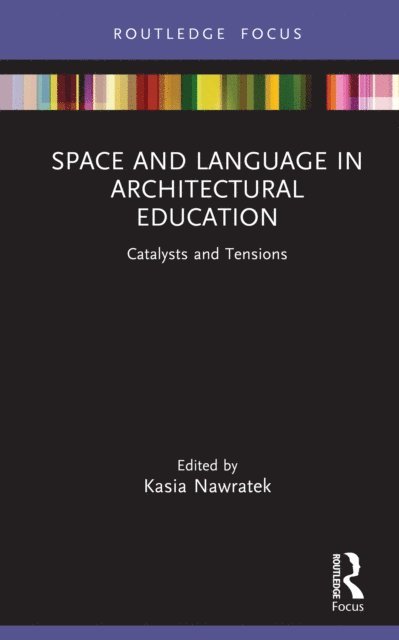
Architects habitually disregard disciplinary boundaries of their profession in search for synergies and inspiration. The realm of language, although not considered to be architects’ natural environment, opens opportunities to further stretch and expand the architectural imagination and the set of tools used in the design process. When used in the context of architectural pedagogy, the exploration of the relationship between space and language opens the discussion further to include the reflection on the design studio structure, the learning process in creative subjects and the ethical dimension of architectural education. This book offers a glimpse into architectural pedagogies exploring the relationship between space and language, using literary methods and linguistic experiments. The examples discuss a wide range of approaches from international perspective, exploring opportunities and challenges of engaging literary methods and linguistic experiments in architectural education. The theme of Catalysts discusses the use of literary methods in architectural pedagogy, where literary texts are used to jumpstart and support the design process, resulting in deeply contextual approaches capable of subverting embedded hierarchies of the design studio. Tensions explore the gap between the world and its description, employing linguistic experiments and literary methods to enrich and expand the architectural vocabulary to include the experience of space in its infinite complexity. This book will be useful for innovators in architectural education and those seeking to expand their teaching practice to incorporate literary methods, and to creatives interested in making teaching a part of their practice. It may also appeal to students from design-based disciplines with an established design studio culture, demonstrating how to use narrative, poetry and literature to expand and feed your imagination.
299 kr
Skickas inom 10-15 vardagar
Architects habitually disregard disciplinary boundaries of their profession in search for synergies and inspiration. The realm of language, although not considered to be architects’ natural environment, opens opportunities to further stretch and expand the architectural imagination and the set of tools used in the design process. When used in the context of architectural pedagogy, the exploration of the relationship between space and language opens the discussion further to include the reflection on the design studio structure, the learning process in creative subjects and the ethical dimension of architectural education. This book offers a glimpse into architectural pedagogies exploring the relationship between space and language, using literary methods and linguistic experiments. The examples discuss a wide range of approaches from international perspective, exploring opportunities and challenges of engaging literary methods and linguistic experiments in architectural education. The theme of Catalysts discusses the use of literary methods in architectural pedagogy, where literary texts are used to jumpstart and support the design process, resulting in deeply contextual approaches capable of subverting embedded hierarchies of the design studio. Tensions explore the gap between the world and its description, employing linguistic experiments and literary methods to enrich and expand the architectural vocabulary to include the experience of space in its infinite complexity. This book will be useful for innovators in architectural education and those seeking to expand their teaching practice to incorporate literary methods, and to creatives interested in making teaching a part of their practice. It may also appeal to students from design-based disciplines with an established design studio culture, demonstrating how to use narrative, poetry and literature to expand and feed your imagination.
Pedagogy as Creative Practice in Architecture
Inspiration and Resistance During Change
Häftad, Engelska, 2026
635 kr
Kommande
Architectural education in the United Kingdom performs a difficult balancing act: meeting the requirements of professional accreditation bodies and preparing students for practice, while also offering a meaningful education for those who do not intend to become architects. Increasingly, professional pressures frame architectural education as training rather than as an exploratory, experimental process - one that equips students to face unpredictable future challenges in the profession and beyond.In response, many educators develop a hidden curriculum: an implicit set of values, methods, and priorities that sit alongside formal learning outcomes. This hidden curriculum tends to privilege curiosity, criticality, and open-ended inquiry, often through interdisciplinary and art-based approaches. Working in the gaps between what can be specified and what must be discovered, they complicate the “university-to-practice conveyor belt” narrative and widen what architectural education can be.This book shines a light on those creative pedagogical practices—working within, and often despite, systemic pressures - and shows why they matter for the vitality of architectural education at a time of deep uncertainty across higher education. It is organised into two parts: Discussions, which offer in-depth explorations of current challenges, and Insights, which present a selection of case studies. Together, they argue for architectural education as a space that cultivates imagination, agency, and adaptive ways of thinking - qualities essential for shaping futures that are not yet known.The book provides essential reading for educators and advanced students of architecture.
Pedagogy as Creative Practice in Architecture
Inspiration and Resistance During Change
Inbunden, Engelska, 2026
2 325 kr
Kommande
Architectural education in the United Kingdom performs a difficult balancing act: meeting the requirements of professional accreditation bodies and preparing students for practice, while also offering a meaningful education for those who do not intend to become architects. Increasingly, professional pressures frame architectural education as training rather than as an exploratory, experimental process - one that equips students to face unpredictable future challenges in the profession and beyond.In response, many educators develop a hidden curriculum: an implicit set of values, methods, and priorities that sit alongside formal learning outcomes. This hidden curriculum tends to privilege curiosity, criticality, and open-ended inquiry, often through interdisciplinary and art-based approaches. Working in the gaps between what can be specified and what must be discovered, they complicate the “university-to-practice conveyor belt” narrative and widen what architectural education can be.This book shines a light on those creative pedagogical practices—working within, and often despite, systemic pressures - and shows why they matter for the vitality of architectural education at a time of deep uncertainty across higher education. It is organised into two parts: Discussions, which offer in-depth explorations of current challenges, and Insights, which present a selection of case studies. Together, they argue for architectural education as a space that cultivates imagination, agency, and adaptive ways of thinking - qualities essential for shaping futures that are not yet known.The book provides essential reading for educators and advanced students of architecture.