Christopher S. Hill - Böcker
Visar alla böcker från författaren Christopher S. Hill. Handla med fri frakt och snabb leverans.
10 produkter
10 produkter
1 240 kr
Skickas inom 5-8 vardagar
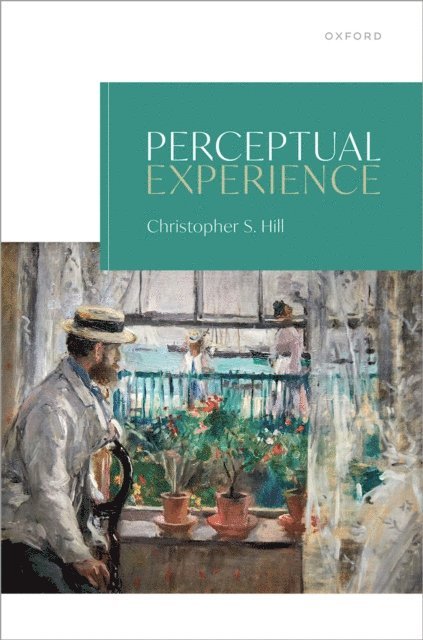
This is an open access title available under the terms of a CC BY-NC-ND 4.0 International licence. It is free to read at Oxford Scholarship Online and offered as a free PDF download from OUP and selected open access locations.Christopher S. Hill argues that perceptual experience constitutively involves representations of worldly items, and that the relevant form of representation can be explained in broadly biological terms. He then maintains that the representational contents of perceptual experiences are perceptual appearances, interpreted as relational, viewpoint-dependent properties of external objects. There is also a complementary explanation of how the objects that possess these properties are represented. Hill maintains that perceptual phenomenology can be explained reductively in terms of the representational contents of experiences, and uses this doctrine to undercut the traditional arguments for dualism. This treatment of perceptual phenomenology is expanded to encompass cognitive phenomenology, the phenomenology of moods and emotions, and the phenomenology of pain. Hill also offers accounts of the various forms of consciousness that perceptual experiences can possess. One aim is to argue that phenomenology is metaphysically independent of these forms of consciousness, and another is to de-mystify the form known as phenomenal consciousness. The book concludes by discussing the relations of various kinds that perceptual experiences bear to higher-level cognitive states, including relations of format, content, and justification or support.
915 kr
Skickas inom 7-10 vardagar
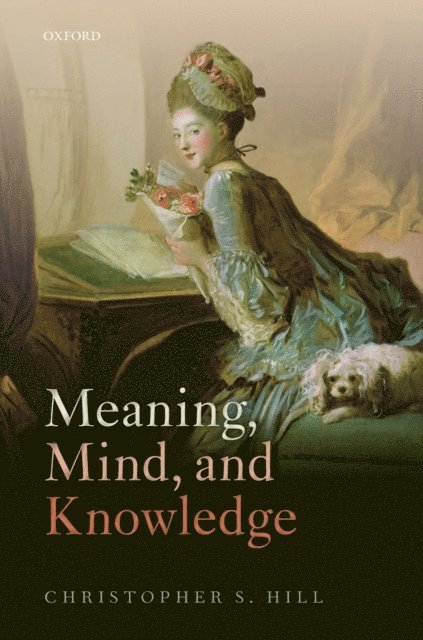
In this collection of essays, most of which are of recent vintage, and seven of which appear here for the first time, Christopher S. Hill addresses a large assortment of philosophical issues. Part I presents a deflationary theory of truth, argues that semantic properties like reference and correspondence with fact can also be characterized in deflationary terms, and offers an account of the value of these 'thin' properties, tracing it to their ability to track more substantial properties that are informational or epistemic in character. Part II defends the view that conscious experiences are type-identical with brain states. It addresses a large array of objections to this identity thesis, including objections based on the alleged multiple realizability of experiences, and objections based on Cartesian intuitions about the modeal separability of mind and matter. In the end, however, it maintains that theories of experience based on type-identity should give way to representationalist accounts. Part III presents a representationalist solution to the mind-body problem. It argues that all awareness, including awareness of qualia, is governed by a Kantian appearance/reality distinction--a distinction between the ways objects and properties are represented as being, and the ways they are in themselves. It also presents theories of pain and visual qualia that kick them out of the mind and assign them to locations in body and the external world. Part IV defends reliabilist theories of epistemic justification, deploys such theories in answering Cartesian skepticism, responds critically to Hawthorne's lottery problem and related proposals about the role of knowledge in conversation and practical reasoning, presents a new account of the sources of modeal knowledge, and proposes an account of logical and mathematical beliefs that represents them as immunune to empirical revision.
902 kr
Skickas inom 7-10 vardagar
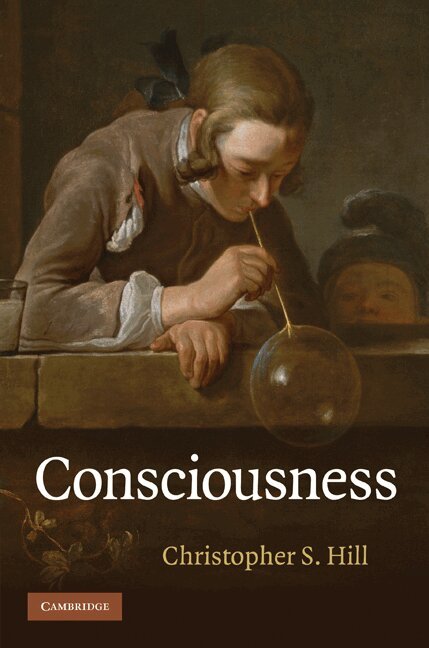
This book presents a comprehensive theory of consciousness. The initial chapter distinguishes six main forms of consciousness and sketches an account of each one. Later chapters focus on phenomenal consciousness, consciousness of, and introspective consciousness. In discussing phenomenal consciousness, Hill develops the representational theory of mind in new directions, arguing that all awareness involves representations, even awareness of qualitative states like pain. He then uses this view to undercut dualistic accounts of qualitative states. Other topics include visual awareness, visual appearances, emotional qualia, and meta-cognitive processing. This important work will interest a wide readership of students and scholars in philosophy of mind and cognitive science.
448 kr
Skickas inom 7-10 vardagar
This book presents a comprehensive theory of consciousness. The initial chapter distinguishes six main forms of consciousness and sketches an account of each one. Later chapters focus on phenomenal consciousness, consciousness of, and introspective consciousness. In discussing phenomenal consciousness, Hill develops the representational theory of mind in new directions, arguing that all awareness involves representations, even awareness of qualitative states like pain. He then uses this view to undercut dualistic accounts of qualitative states. Other topics include visual awareness, visual appearances, emotional qualia, and meta-cognitive processing. This important work will interest a wide readership of students and scholars in philosophy of mind and cognitive science.
1 073 kr
Skickas inom 7-10 vardagar
This is a book about sensory states and their apparent characteristics. It confronts a whole series of metaphysical and epistemological questions and presents an argument for type materialism: the view that sensory states are identical with the neural states with which they are correlated. According to type materialism, sensations are only possessed by human beings and members of related biological species; silicon-based androids cannot have sensations. The author rebuts several other rival theories (dualism, double aspect theory, eliminative materialism, functionalism), and explores a number of important issues: the forms and limits of introspective awareness of sensations, the semantic properties of sensory concepts, knowledge of other minds, and unity of consciousness. The book is a significant contribution to the philosophy of mind, and has much to say to psychologists and cognitive scientists.
473 kr
Skickas inom 7-10 vardagar
This is a book about sensory states and their apparent characteristics. It confronts a whole series of metaphysical and epistemological questions and presents an argument for type materialism: the view that sensory states are identical with the neural states with which they are correlated. According to type materialism, sensations are only possessed by human beings and members of related biological species; silicon-based androids cannot have sensations. The author rebuts several other rival theories (dualism, double aspect theory, eliminative materialism, functionalism), and explores a number of important issues: the forms and limits of introspective awareness of sensations, the semantic properties of sensory concepts, knowledge of other minds, and unity of consciousness. The book is a significant contribution to the philosophy of mind, and has much to say to psychologists and cognitive scientists.
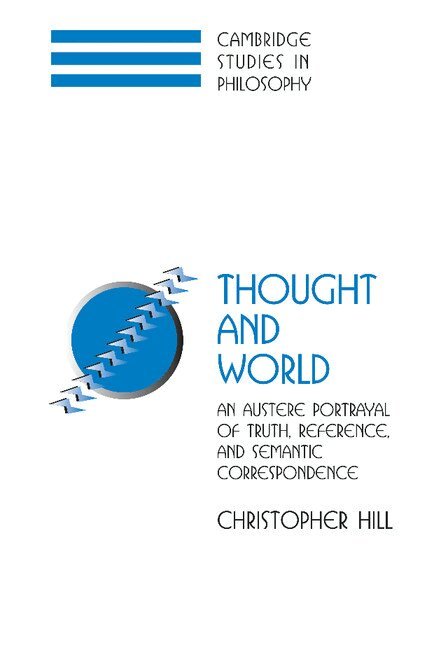
Thought and World
An Austere Portrayal of Truth, Reference, and Semantic Correspondence
Inbunden, Engelska, 2002
1 034 kr
Skickas inom 7-10 vardagar
There is an important family of semantic notions that we apply to thoughts and to the conceptual constituents of thoughts - as when we say that the thought that the Universe is expanding is true. Thought and World presents a theory of the content of such notions. The theory is largely deflationary in spirit, in the sense that it represents a broad range of semantic notions - including the concept of truth - as being entirely free from substantive metaphysical and empirical presuppositions. At the same time, however, it takes seriously and seeks to explain the intuition that there is a metaphysically or empirically 'deep' relation (a relation of mirroring or semantic correspondence) linking thoughts to reality. Thus, the theory represents a kind of compromise between deflationism and versions of the correspondence theory of truth. This book will appeal to students and professionals interested in the philosophy of logic and language.
Thought and World
An Austere Portrayal of Truth, Reference, and Semantic Correspondence
Häftad, Engelska, 2002
397 kr
Skickas inom 7-10 vardagar
There is an important family of semantic notions that we apply to thoughts and to the conceptual constituents of thoughts - as when we say that the thought that the Universe is expanding is true. Thought and World presents a theory of the content of such notions. The theory is largely deflationary in spirit, in the sense that it represents a broad range of semantic notions - including the concept of truth - as being entirely free from substantive metaphysical and empirical presuppositions. At the same time, however, it takes seriously and seeks to explain the intuition that there is a metaphysically or empirically 'deep' relation (a relation of mirroring or semantic correspondence) linking thoughts to reality. Thus, the theory represents a kind of compromise between deflationism and versions of the correspondence theory of truth. This book will appeal to students and professionals interested in the philosophy of logic and language.
758 kr
Skickas inom 7-10 vardagar
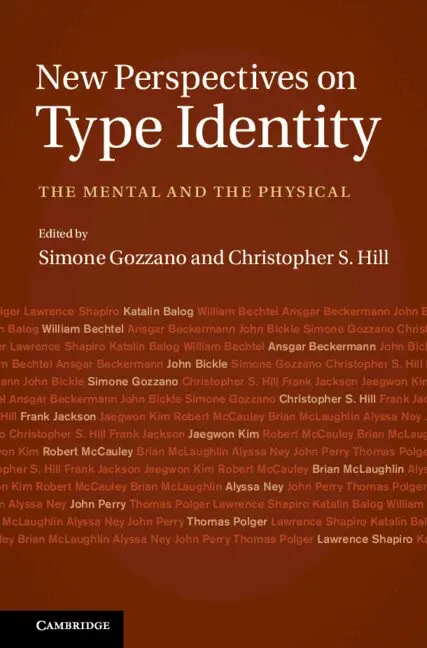
The type identity theory, according to which types of mental state are identical to types of physical state, fell out of favour for some years but is now being considered with renewed interest. Many philosophers are critically re-examining the arguments which were marshalled against it, finding in the type identity theory both resources to strengthen a comprehensive, physicalistic metaphysics and a useful tool in understanding the relationship between developments in psychology and new results in neuroscience. This volume brings together leading philosophers of mind, whose essays challenge in new ways the standard objections to type identity theory, such as the multiple realizability objection and the modal argument. Other essays show how cognitive science and neuroscience are lending new support to type identity theory and still others provide, extend and improve traditional arguments concerning the theory's explanatory power.
428 kr
Skickas inom 7-10 vardagar
The type identity theory, according to which types of mental state are identical to types of physical state, fell out of favour for some years but is now being considered with renewed interest. Many philosophers are critically re-examining the arguments which were marshalled against it, finding in the type identity theory both resources to strengthen a comprehensive, physicalistic metaphysics and a useful tool in understanding the relationship between developments in psychology and new results in neuroscience. This volume brings together leading philosophers of mind, whose essays challenge in new ways the standard objections to type identity theory, such as the multiple realizability objection and the modal argument. Other essays show how cognitive science and neuroscience are lending new support to type identity theory and still others provide, extend and improve traditional arguments concerning the theory's explanatory power.