Christopher T. Russell – författare
Visar alla böcker från författaren Christopher T. Russell. Handla med fri frakt och snabb leverans.
12 produkter
12 produkter
Inbunden, Engelska, 1991
868 kr
Skickas inom 10-15 vardagar
Del 27 - Cambridge Planetary Science
Vesta and Ceres
Insights from the Dawn Mission for the Origin of the Solar System
Inbunden, Engelska, 2022
1 083 kr
Skickas inom 7-10 vardagar
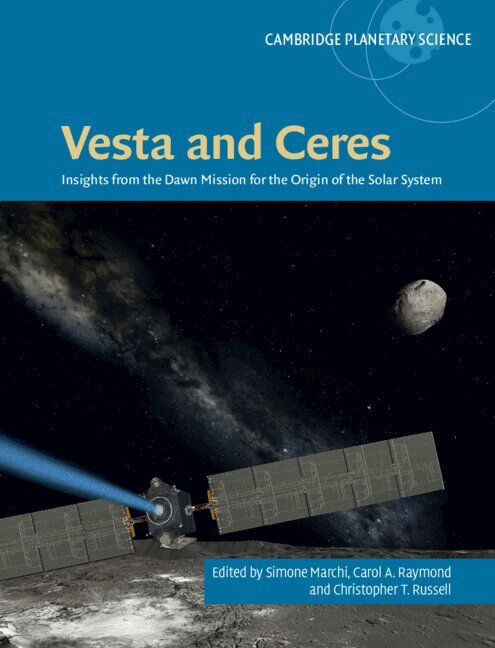
The NASA Dawn mission, launched in 2007, aimed to visit two of the most massive protoplanets of the main asteroid belt: Vesta and Ceres. The aim was to further our understanding of the earliest days of the Solar System, and compare the two bodies to better understand their formation and evolution. This book summarises state-of-the-art results from the mission, and discusses the implications for our understanding not only of the asteroid belt but the entire Solar System. It comprises of three parts: Part 1 provides an overview of the main belt asteroids and provides an introduction to the Dawn mission; Part 2 presents key findings from the mission; and Part 3 discusses how these findings provide insights into the formation and evolution of the Solar System. This is a definitive reference for academic researchers and professionals of planetary science, asteroid science and space exploration.
E-bok
PDF, Engelska, 20221 266 kr
Läs direkt efter köp
The NASA Dawn mission, launched in 2007, aimed to visit two of the most massive protoplanets of the main asteroid belt: Vesta and Ceres. The aim was to further our understanding of the earliest days of the Solar System, and compare the two bodies to better understand their formation and evolution. This book summarises state-of-the-art results from the mission, and discusses the implications for our understanding not only of the asteroid belt but the entire Solar System. It comprises of three parts: Part 1 provides an overview of the main belt asteroids and provides an introduction to the Dawn mission; Part 2 presents key findings from the mission; and Part 3 discusses how these findings provide insights into the formation and evolution of the Solar System. This is a definitive reference for academic researchers and professionals of planetary science, asteroid science and space exploration.
Inbunden, Engelska, 2003
2 161 kr
Skickas inom 10-15 vardagar
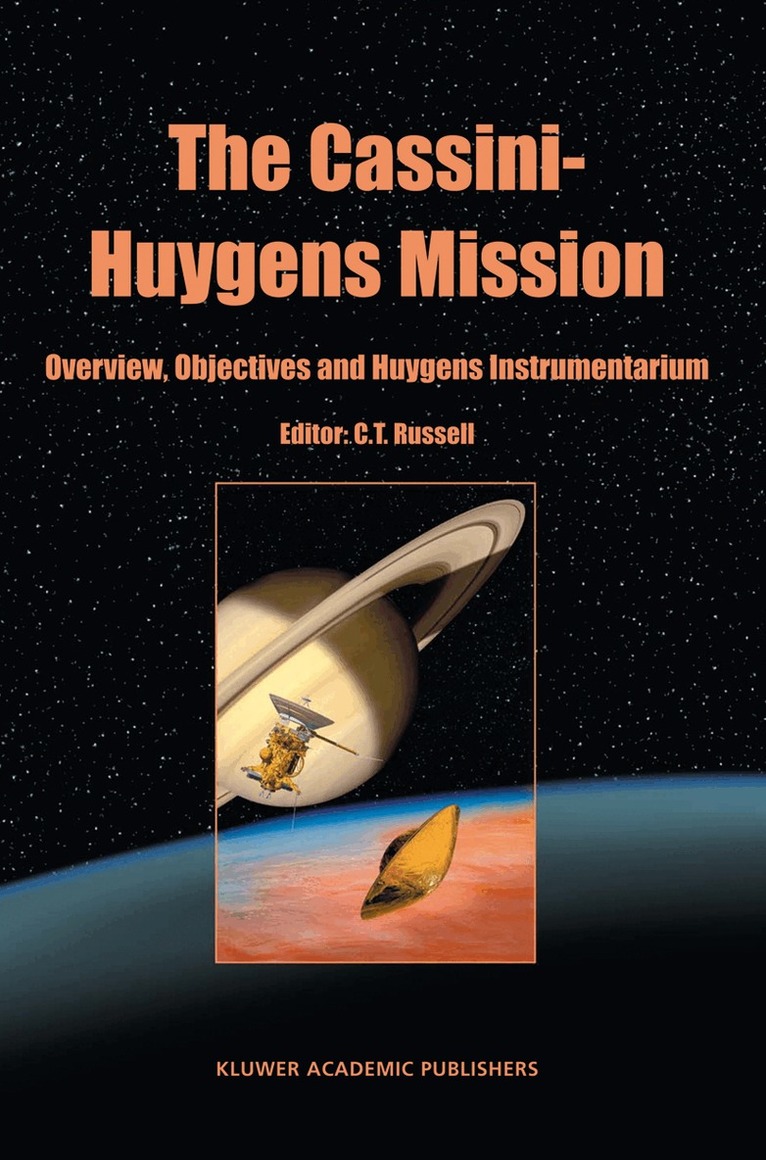
The exploration of the planets is the modem counterpart to the exploration voy ages of old. To reach the new world Columbus had to secure funding from Queen Isabella, outfit his three ships and set sail on a long journey. To explore the Amer ican Pacific Northwest, Lewis and Clark had a similar task of obtaining funding, purchasing equipment and going to points unknown, even though their path was across land and not sea. Today our journey is through space, rather than across land or sea, but we still travel with ships, now spaceworthy craft, rather than seaworthy. Our spacecraft are smaller than the ships of yore, crammed with electronics rather than provisions because man cannot go along on these journeys. We now rely on robots to be our eyes and ears at these distant worlds. Nevertheless, some aspects of exploration have not changed over the centuries. People are still fascinated by these unknown worlds and desire to explore them, and the process of obtaining the large sums of public moneys to finance these journeys still requires much pleading with authorities.
Inbunden, Engelska, 2003
1 084 kr
Skickas inom 10-15 vardagar
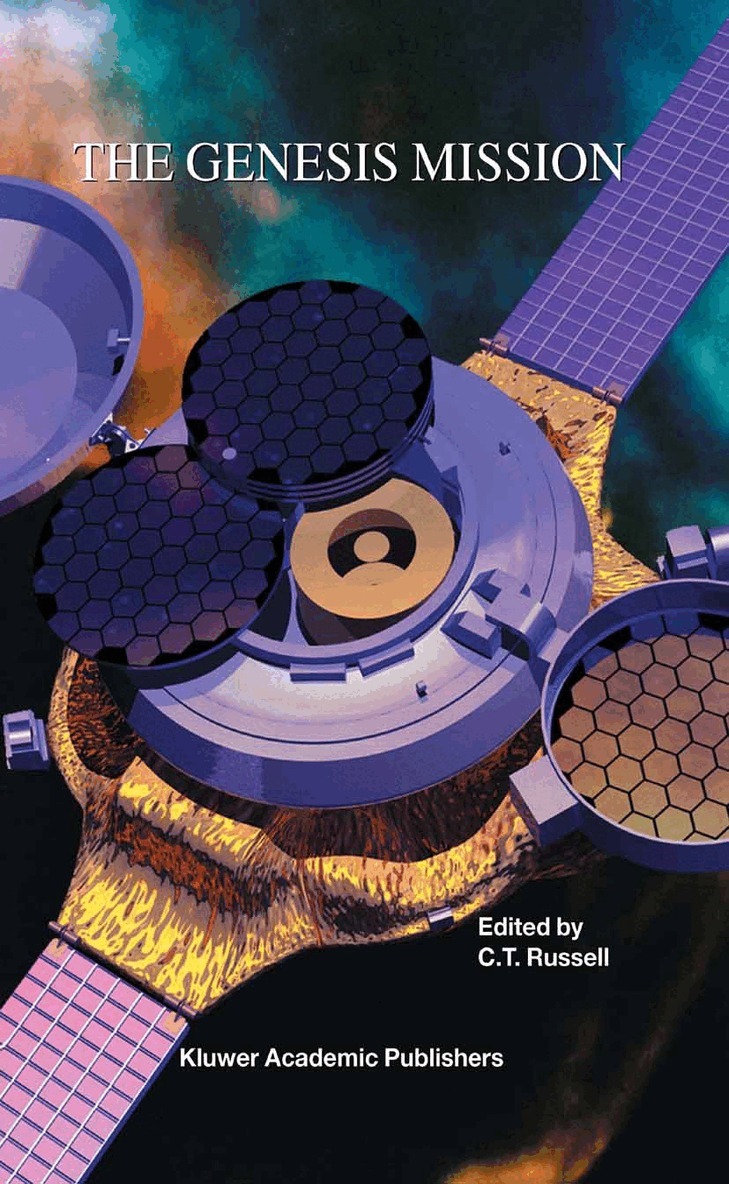
NASA's Genesis mission, launched on August 8, 2001 is the fifth mission in the Discovery series. Genesis addresses questions about the materials and processes involved in the origin of the solar system by providing precise knowledge of solar isotopic and elemental compositions for comparison with the compositions of meteoritic and planetary materials. This book describes the Genesis mission, the solar wind collector materials, the solar wind concentrator and simulations of its performance, the plasma ion and electron instruments, and the way these two instruments are used to determine the solar wind flow regime on board the spacecraft. The book is of interest to all potential users of the data returned by the Genesis mission, to those studying the isotopic and chemical composition of the early solar system whose work will be influenced by the measurements made by Genesis and by all those interested in the design and implementation of space instruments to study space plasmas.
Inbunden, Engelska, 2005
2 161 kr
Skickas inom 10-15 vardagar
Atthiswriting the Cassini spacecraft has ?redits engine and successfully inserted itself andits precious cargoof scienti?c instruments into orbit, the ?rst step of its exploration of the Saturnian system. The suspense is not over, however. While excitingimages of therings have been captured,anexotic composition of Phoebe sensedby themapping spectrometer and unexpectedpanoply of magneticwaves andplasma dynamics encountered on the incoming trajectory andinitial orbit, the Huygensprobeisstillonboardandthe?rstclose?ybyofTitanhasnottakenplace. Not until Christmas Day will the probe bereleased.Navigators are still checking theircalculations,worryingaboutknownunknownslikethemassofSaturn'smoons that could cause ever so small a deviation from the planned trajectory of the probe. Theorbiter investigators are also anxious but theyget their taste of Titan earlier, on October 26.Howwell will theydetect the surface? How thickisthe atmosphere? Does Titan haveamagnetic?eld?Isthere lightninginthe atmosphere of Titan?While terrestrial and HubbleSpace Telescope pictures have improvedgreatly over the years, they cannot match the resolution obtainable from orbitabout theplanet, and much of the data issimply unobtainablewithout direct insitu sensing. Volume 1 of this three volume set described the Cassini/Huygens mission, its scienti?c objectives and the Huygens probethat will soon enter theTitan at- sphere. Volume 2 described the insitu investigations on theorbiter. In this, the third and ?nal volume of the compendium, we describethe remote sensing inv- tigations: radioscience, radar, visibleandinfrared spectroscopy, thermalinfrared studies, ultraviolet spectroscopy and visible imagery.
E-bok
PDF, Engelska, 20052 741 kr
Läs direkt efter köp
Inbunden, Engelska, 2015
1 084 kr
Skickas inom 10-15 vardagar
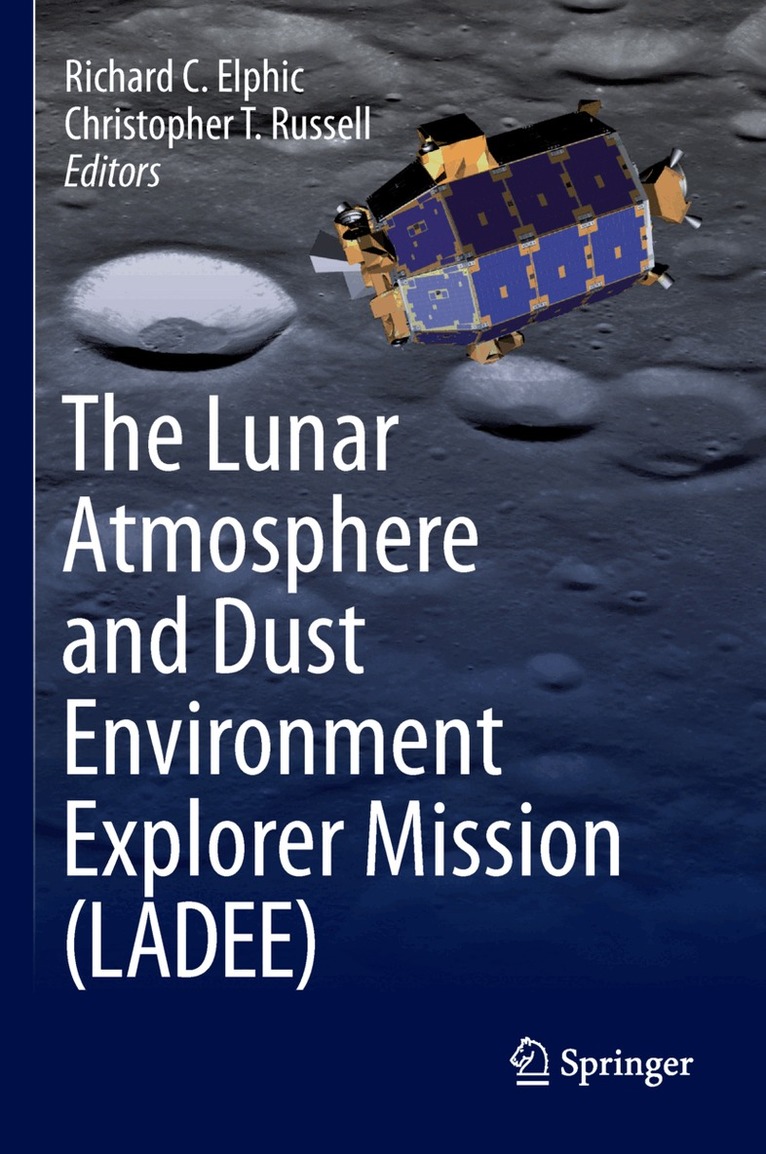
This volume contains five articles describing the mission and its instruments. The first paper, by the project scientist Richard C. Elphic and his colleagues, describes the mission objectives, the launch vehicle, spacecraft and the mission itself. This is followed by a description of LADEE’s Neutral Mass Spectrometer by Paul Mahaffy and company. This paper describes the investigation that directly targets the lunar exosphere, which can also be explored optically in the ultraviolet. In the following article Anthony Colaprete describes LADEE’s Ultraviolet and Visible Spectrometer that operated from 230 nm to 810 nm scanning the atmosphere just above the surface. Not only is there atmosphere but there is also dust that putatively can be levitated above the surface, possibly by electric fields on the Moon’s surface. Mihaly Horanyi leads this investigation, called the Lunar Dust Experiment, aimed at understanding the purported observations of levitated dust. This experiment was also very successful, but in this case their discovery was not the electrostatic levitation of dust, but that the dust was raised by meteoroid impacts. This is not what had been expected but clearly is the explanation that best fits the data. Originally published in Space Science Reviews, Volume 185, Issue 1-4, 2014.
E-bok
PDF, Engelska, 20151 416 kr
Läs direkt efter köp
This volume contains five articles describing the mission and its instruments. The first paper, by the project scientist Richard C. Elphic and his colleagues, describes the mission objectives, the launch vehicle, spacecraft and the mission itself. This is followed by a description of LADEE’s Neutral Mass Spectrometer by Paul Mahaffy and company. This paper describes the investigation that directly targets the lunar exosphere, which can also be explored optically in the ultraviolet. In the following article Anthony Colaprete describes LADEE’s Ultraviolet and Visible Spectrometer that operated from 230 nm to 810 nm scanning the atmosphere just above the surface. Not only is there atmosphere but there is also dust that putatively can be levitated above the surface, possibly by electric fields on the Moon’s surface. Mihaly Horanyi leads this investigation, called the Lunar Dust Experiment, aimed at understanding the purported observations of levitated dust. This experiment was also very successful, but in this case their discovery was not the electrostatic levitation of dust, but that the dust was raised by meteoroid impacts. This is not what had been expected but clearly is the explanation that best fits the data. Originally published in Space Science Reviews, Volume 185, Issue 1-4, 2014.
Häftad, Engelska, 2016
1 084 kr
Skickas inom 10-15 vardagar
This volume contains five articles describing the mission and its instruments. The first paper, by the project scientist Richard C. Elphic and his colleagues, describes the mission objectives, the launch vehicle, spacecraft and the mission itself. This is followed by a description of LADEE’s Neutral Mass Spectrometer by Paul Mahaffy and company. This paper describes the investigation that directly targets the lunar exosphere, which can also be explored optically in the ultraviolet. In the following article Anthony Colaprete describes LADEE’s Ultraviolet and Visible Spectrometer that operated from 230 nm to 810 nm scanning the atmosphere just above the surface. Not only is there atmosphere but there is also dust that putatively can be levitated above the surface, possibly by electric fields on the Moon’s surface. Mihaly Horanyi leads this investigation, called the Lunar Dust Experiment, aimed at understanding the purported observations of levitated dust. This experiment was also very successful, but in this case their discovery was not the electrostatic levitation of dust, but that the dust was raised by meteoroid impacts. This is not what had been expected but clearly is the explanation that best fits the data. Originally published in Space Science Reviews, Volume 185, Issue 1-4, 2014.
Inbunden, Engelska, 2018
1 623 kr
Skickas inom 10-15 vardagar
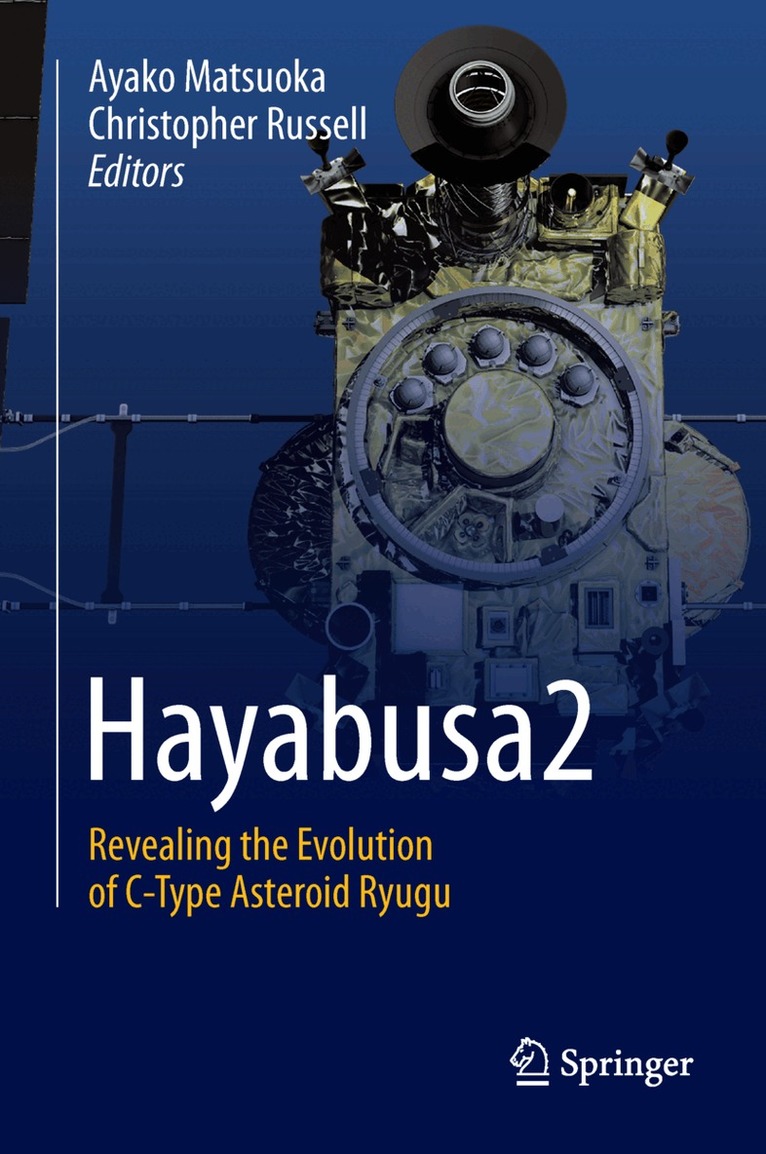
In December 2014, Hayabusa2 started its journey to 162173 Ryugu, a C-type asteroid likely to be primordial, thereby making this a voyage in both space and time. Hayabusa2 will begin its observations upon arrival at Ryugu in 2018. It will survey the asteroid's surface features, touch down on the asteroid, form an artificial crater by shooting an impactor, and collect sample materials both on and under the surface. In 2020, Hayabusa2 will return to Earth and release a re-entry capsule carrying material from Ryugu.This book contains papers describing the scientific objectives and instrumentation on Hayabusa2 and its landing package, MASCOT. The methods and developments presented in these papers have challenged the state-of-the-art of planetary exploration. This book is indispensable to understanding the results that Hayabusa2 will bring through its in situ and sample return exploration. Originally published in Space Science Reviews, Volume 208, Issue 1-4, July 2017
Häftad, Engelska, 2019
1 623 kr
Skickas inom 10-15 vardagar
In December 2014, Hayabusa2 started its journey to 162173 Ryugu, a C-type asteroid likely to be primordial, thereby making this a voyage in both space and time. Hayabusa2 will begin its observations upon arrival at Ryugu in 2018. It will survey the asteroid's surface features, touch down on the asteroid, form an artificial crater by shooting an impactor, and collect sample materials both on and under the surface. In 2020, Hayabusa2 will return to Earth and release a re-entry capsule carrying material from Ryugu.This book contains papers describing the scientific objectives and instrumentation on Hayabusa2 and its landing package, MASCOT. The methods and developments presented in these papers have challenged the state-of-the-art of planetary exploration. This book is indispensable to understanding the results that Hayabusa2 will bring through its in situ and sample return exploration. Originally published in Space Science Reviews, Volume 208, Issue 1-4, July 2017