Christy Giallella – författare
Visar alla böcker från författaren Christy Giallella. Handla med fri frakt och snabb leverans.
6 produkter
6 produkter
Häftad, Engelska, 2021
803 kr
Skickas inom 5-8 vardagar
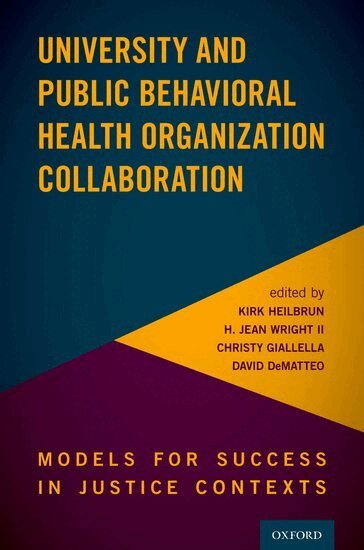
Public behavioral health organizations serving those involved in the criminal justice system, such as problem-solving courts, correctional facilities, and parole or probation, often lack the necessary resources for long-standing effective treatment, and may struggle to keep up with research standards and retaining funding. To overcome these hurdles, many organizations have turned to university-led collaborations. University and Public Behavioral Health Organization Collaboration in Justice Contexts begins by introducing the relevant purpose and definitions of such partnerships. Each of the nine contributed chapters that follow features a particular collaboration between a university and a public behavioral health organization. Chapters are structured around a description of the collaboration's purposes, beginning, leadership, who is served, services, operations, effectiveness measurement, and financial arrangements. The descriptions provided of each project are then aggregated into a larger model for success which is detailed in the final chapter, along with a distillation of lessons learned in building, operating, and sustaining a successful collaboration. These lessons are grouped into specific categories: planning, working together, training, consultation, financial considerations, personnel, and research. By considering these nine exemplary projects and what they can teach us about such collaborations, this book constitutes an essential guide for those looking to establish comparable partnerships between universities and public behavioral health organizations in a criminal justice context.
E-bok
PDF, Engelska, 2020566 kr
Läs direkt efter köp
Public behavioral health organizations serving those involved in the criminal justice system, such as problem-solving courts, correctional facilities, and parole or probation, often lack the necessary resources for long-standing effective treatment, and may struggle to keep up with research standards and retaining funding. To overcome these hurdles, many organizations have turned to university-led collaborations.University and Public Behavioral Health Organization Collaboration in Justice Contexts begins by introducing the relevant purpose and definitions of such partnerships. Each of the nine contributed chapters that follow features a particular collaboration between a university and a public behavioral health organization. Chapters are structured around a description of the collaboration''s purposes, beginning, leadership, who is served, services, operations, effectiveness measurement, and financial arrangements. The descriptions provided of each project are then aggregated into a larger model for success which is detailed in the final chapter, along with a distillation of lessons learned in building, operating, and sustaining a successful collaboration. These lessons are grouped into specific categories: planning, working together, training, consultation, financial considerations, personnel, and research. By considering these nine exemplary projects and what they can teach us about such collaborations, this book constitutes an essential guide for those looking to establish comparable partnerships between universities and public behavioral health organizations in a criminal justice context.
E-bok
Engelska, 2020566 kr
Läs direkt efter köp
Public behavioral health organizations serving those involved in the criminal justice system, such as problem-solving courts, correctional facilities, and parole or probation, often lack the necessary resources for long-standing effective treatment, and may struggle to keep up with research standards and retaining funding. To overcome these hurdles, many organizations have turned to university-led collaborations.University and Public Behavioral Health Organization Collaboration in Justice Contexts begins by introducing the relevant purpose and definitions of such partnerships. Each of the nine contributed chapters that follow features a particular collaboration between a university and a public behavioral health organization. Chapters are structured around a description of the collaboration''s purposes, beginning, leadership, who is served, services, operations, effectiveness measurement, and financial arrangements. The descriptions provided of each project are then aggregated into a larger model for success which is detailed in the final chapter, along with a distillation of lessons learned in building, operating, and sustaining a successful collaboration. These lessons are grouped into specific categories: planning, working together, training, consultation, financial considerations, personnel, and research. By considering these nine exemplary projects and what they can teach us about such collaborations, this book constitutes an essential guide for those looking to establish comparable partnerships between universities and public behavioral health organizations in a criminal justice context.
Häftad, Engelska, 2023
1 290 kr
Skickas inom 5-8 vardagar
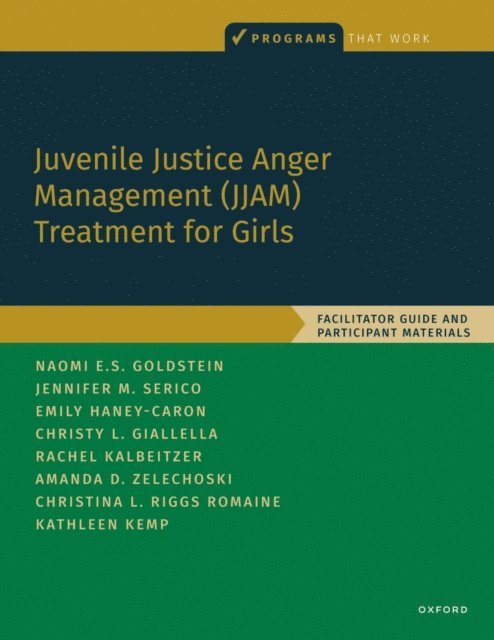
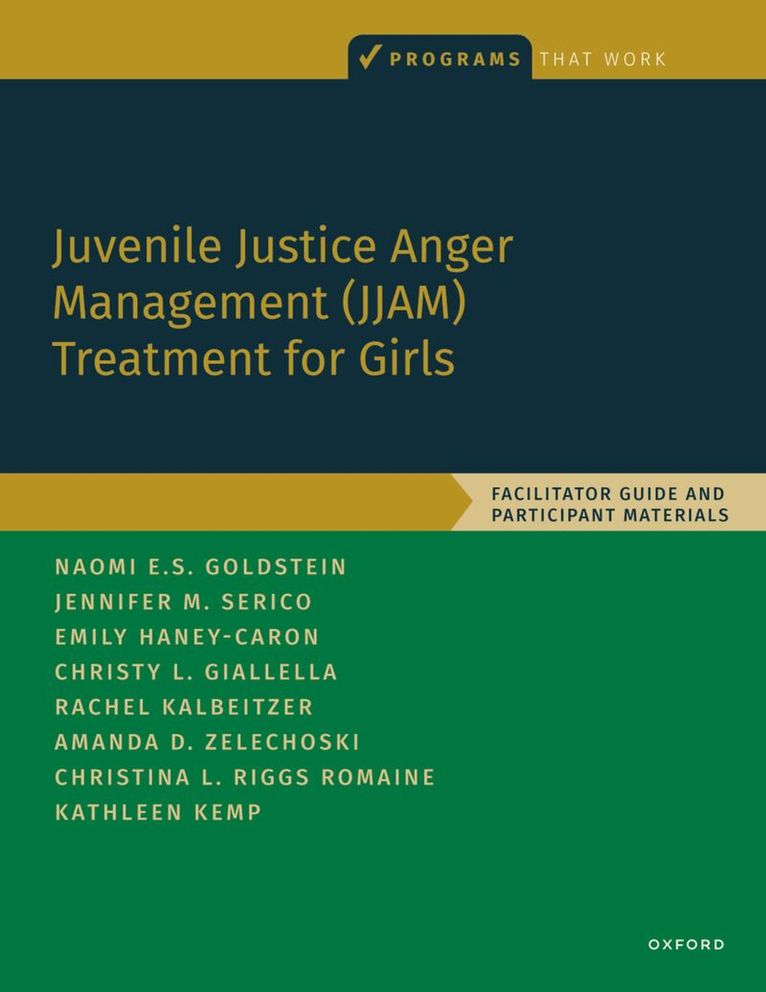
The Juvenile Justice Anger Management (JJAM) Treatment for Girls is a manualized anger management and aggression reduction treatment designed for adolescent girls and young women placed in residential juvenile justice facilities. This gender-specific treatment is an 8-week, cognitive-behavioral group intervention that consists of 16 90-minute sessions. The JJAM Facilitator Manual includes a user-friendly, session-by-session guide, along with the accompanying workbook materials for youth participants.JJAM addresses the unique gender- and developmental-needs of girls and young women in juvenile justice system, such as the link between relational and physical aggression, the importance of strengthening and repairing damaged relationships, and the need to transfer skills learned in a facility to day-to-day life in the community following discharge. Session activities elicit real-life examples from participants so that activities and content can be tailored to the characteristics, needs, and interests of the specific girls and young women in each group.JJAM was developed through a rigorous research process and is identified as an empirically based program and empirically supported treatment. Studies have shown that JJAM significantly reduced anger and aggression among girls in residential juvenile justice facilities, making it an essential resource for any clinician working on anger management treatment.
E-bok
PDF, Engelska, 2023885 kr
Läs direkt efter köp
The Juvenile Justice Anger Management (JJAM) Treatment for Girls is a manualized anger management and aggression reduction treatment designed for adolescent girls and young women placed in residential juvenile justice facilities. This gender-specific treatment is an 8-week, cognitive-behavioral group intervention that consists of 16 90-minute sessions. The JJAM Facilitator Manual includes a user-friendly, session-by-session guide, along with the accompanying workbook materials for youth participants.JJAM addresses the unique gender- and developmental-needs of girls and young women in juvenile justice system, such as the link between relational and physical aggression, the importance of strengthening and repairing damaged relationships, and the need to transfer skills learned in a facility to day-to-day life in the community following discharge. Session activities elicit real-life examples from participants so that activities and content can be tailored to the characteristics, needs, and interests of the specific girls and young women in each group.JJAM was developed through a rigorous research process and is identified as an empirically based program and empirically supported treatment. Studies have shown that JJAM significantly reduced anger and aggression among girls in residential juvenile justice facilities, making it an essential resource for any clinician working on anger management treatment.
E-bok
Engelska, 2023917 kr
Läs direkt efter köp
The Juvenile Justice Anger Management (JJAM) Treatment for Girls is a manualized anger management and aggression reduction treatment designed for adolescent girls and young women placed in residential juvenile justice facilities. This gender-specific treatment is an 8-week, cognitive-behavioral group intervention that consists of 16 90-minute sessions. The JJAM Facilitator Manual includes a user-friendly, session-by-session guide, along with the accompanying workbook materials for youth participants.JJAM addresses the unique gender- and developmental-needs of girls and young women in juvenile justice system, such as the link between relational and physical aggression, the importance of strengthening and repairing damaged relationships, and the need to transfer skills learned in a facility to day-to-day life in the community following discharge. Session activities elicit real-life examples from participants so that activities and content can be tailored to the characteristics, needs, and interests of the specific girls and young women in each group.JJAM was developed through a rigorous research process and is identified as an empirically based program and empirically supported treatment. Studies have shown that JJAM significantly reduced anger and aggression among girls in residential juvenile justice facilities, making it an essential resource for any clinician working on anger management treatment.