C.J. Sindermann – författare
Visar alla böcker från författaren . Handla med fri frakt och snabb leverans.
3 produkter
3 produkter
E-bok
PDF, Engelska, 2012734 kr
Läs direkt efter köp
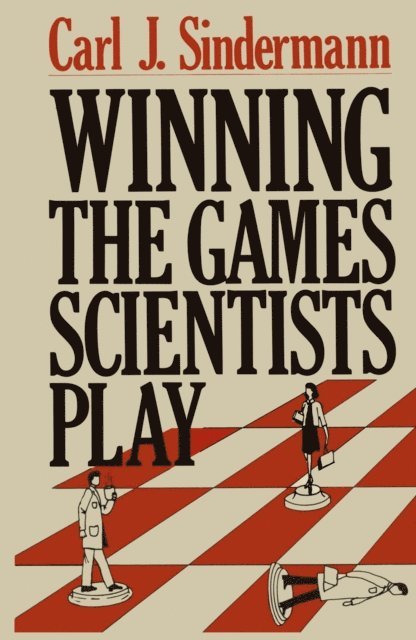
The interpersonal strategies that surround the act of doing good science--hereafter referred to as scientific game play ing-have received some published attention, and many of the game rules are almost axiomatic among successful prac titioners of science. There is a need, however, to review pe riodically what we know and what we think we know about the art, and to add new insights that become available. This book is a response to that need; it has been written for science practitioners and grandstanders of the 1980s, drawing on in Sights and perceptions gained from victories and defeats of the 1970s. It seems especially important that the strategies and rules of scientific game playing be reviewed critically as we move into the decade of the 1980s, since many of those rules have changed during the 1970s--in fact each recent decade has seen significant changes. The 1950s were expansionist, when sci entific jobs were relatively easy to find, when faculties were expanding, when students were plentiful, and when federal grants were readily available. The 1960s began as a period of stabilization, and then became one of unrest and reexami nation of purpose. The climate was still good; students were v vi PREFACE still abundant, but there was less growth in faculty size, and federal grants reached a plateau. In the 1970s the student population started to decline, and federal funding for research began to dry up.
Häftad, Engelska, 2012
561 kr
Skickas inom 10-15 vardagar
The interpersonal strategies that surround the act of doing good science--hereafter referred to as scientific game play ing-have received some published attention, and many of the game rules are almost axiomatic among successful prac titioners of science. There is a need, however, to review pe riodically what we know and what we think we know about the art, and to add new insights that become available. This book is a response to that need; it has been written for science practitioners and grandstanders of the 1980s, drawing on in Sights and perceptions gained from victories and defeats of the 1970s. It seems especially important that the strategies and rules of scientific game playing be reviewed critically as we move into the decade of the 1980s, since many of those rules have changed during the 1970s--in fact each recent decade has seen significant changes. The 1950s were expansionist, when sci entific jobs were relatively easy to find, when faculties were expanding, when students were plentiful, and when federal grants were readily available. The 1960s began as a period of stabilization, and then became one of unrest and reexami nation of purpose. The climate was still good; students were v vi PREFACE still abundant, but there was less growth in faculty size, and federal grants reached a plateau. In the 1970s the student population started to decline, and federal funding for research began to dry up.
Inbunden, Engelska, 1988
2 101 kr
Tillfälligt slut
The first edition of this book on diagnosis and control of diseases in North American marine aquaculture was published in 1977, with the promise that the material would be updated frequently, in view of the rapid expansion of marine aquaculture and the importance of disease control to successful production. Now, ten years later, the promised update has finally been prepared, incorporating new information that has been published in the intervening time.The concept and format of the book remain the same - to present information on disease diagnosis and control in a concise standard format, emphasising those diseases which affect survival of cultured populations. Because of the amount of new material, many new sections have been added, and some of the previous sections have been rewritten entirely or almost so. This is particularly true of the section on penaeid shrimp, which now contains current descriptions of 28 diseases. As with the original edition, many disease specialists have contributed individually authored sections in their areas of expertise. The editors have authored some of the major sections and have added introductory material, but the work represents a genuine group effort. The volume will be essential reading for all those involved in the diagnosis and control of disease in aquacultured species throughout the world, and indeed for aquaculturists in general.