Claude Henry - Böcker
Visar alla böcker från författaren Claude Henry. Handla med fri frakt och snabb leverans.
4 produkter
4 produkter
1 989 kr
Skickas inom 5-8 vardagar
Propelled by deep technical, economic, and cultural changes, network utilities have, in the last twenty years, entered a new era. Since competition has been widely introduced and promoted, we have experienced a radical change in the structure of the industries and the role of the state authorities. Their role in managing monopolies has evolved into regulating new forms of markets, which has resulted in the creation of independent regulatory authorities. These new public bodies work with governments to try and reconcile the needs of competition and public service missions. This suggests the use of recent developments in economic theory to handle complex problems.This volume offers an exploration by scholars and regulators of the new regulatory regimes across Europe. The first part presents the pioneering experiences of the United Kingdom and Sweden. The United Kingdom has quickly chosen to establish powerful and independent individual regulators. Reforms in Sweden have been more gradual and regulators have, in the first instance, acted mainly as mediators.Part two is devoted to second wave developments that took place in various European countries, i.e. France, Germany, Italy, and Spain, countries where the legal tradition is less conducive to the concept of independent regulators. There the regulators are often (but not always) less powerful and meet more obstacles in their efforts to prevent either the formation of oligopolies or the resistance of incumbent monopolies. In Germany another problem has emerged as the federal tradition prevents the creation of independent regulators in certain key sectors.The contributions in the third part of the volume throw some light on the problems of coordinating national regulations. One can observe the continuous emergence of modes of cooperation between national regulators, as well as European authorities. Faced with certain categories of problem, the European authorities are themselves led to act as common regulators. The countries of central and eastern Europe, which are progressively converging towards the general economic model of the West, are more and more concerned with the accompanying regulation problems. Last but not least, the Internet raises worldwide problems of regulation that are beginning to be seriously considered.
303 kr
Skickas inom 7-10 vardagar
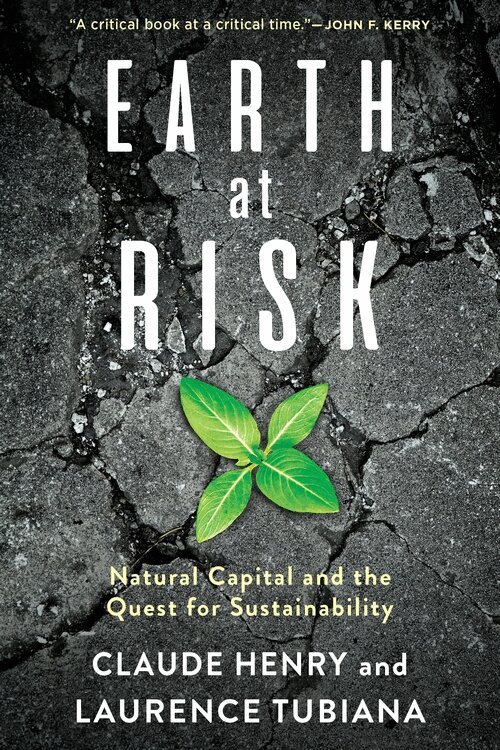
We are squandering our planet's natural capital-its biodiversity, water and soil, and energy sources-at a blistering pace. Major changes must be made to steer our planet and people away from our current, doomed course. Though technology has been one of the drivers of the current trend of unsustainable development, it is also one of the essential tools for remedying it. Earth at Risk maps out the necessary transition to sustainability, detailing the innovations in technology, along with law, science, institutional design, and economics, that can and must be put to use to avert environmental catastrophe. Claude Henry and Laurence Tubiana begin with a measure of the costs of ecological damage-the erosion of biodiversity; air, water, and soil pollution; and the wide-reaching effects of climate change-and then consider the solutions that are either now available or close on the horizon that may lead to a more sustainable global trajectory. What market-based tools can be used to promote clean growth? How can renewable energy help us decrease our use of fossil fuels? Is international agreement on climate goals possible?Henry and Tubiana tackle a range of urgent questions, emphasizing possibilities for-and obstacles to-implementation and action. Building on the experience of the most significant climate negotiation of the decade, they show what a world organized along the principles of sustainability could look like.
2 655 kr
Skickas inom 7-10 vardagar
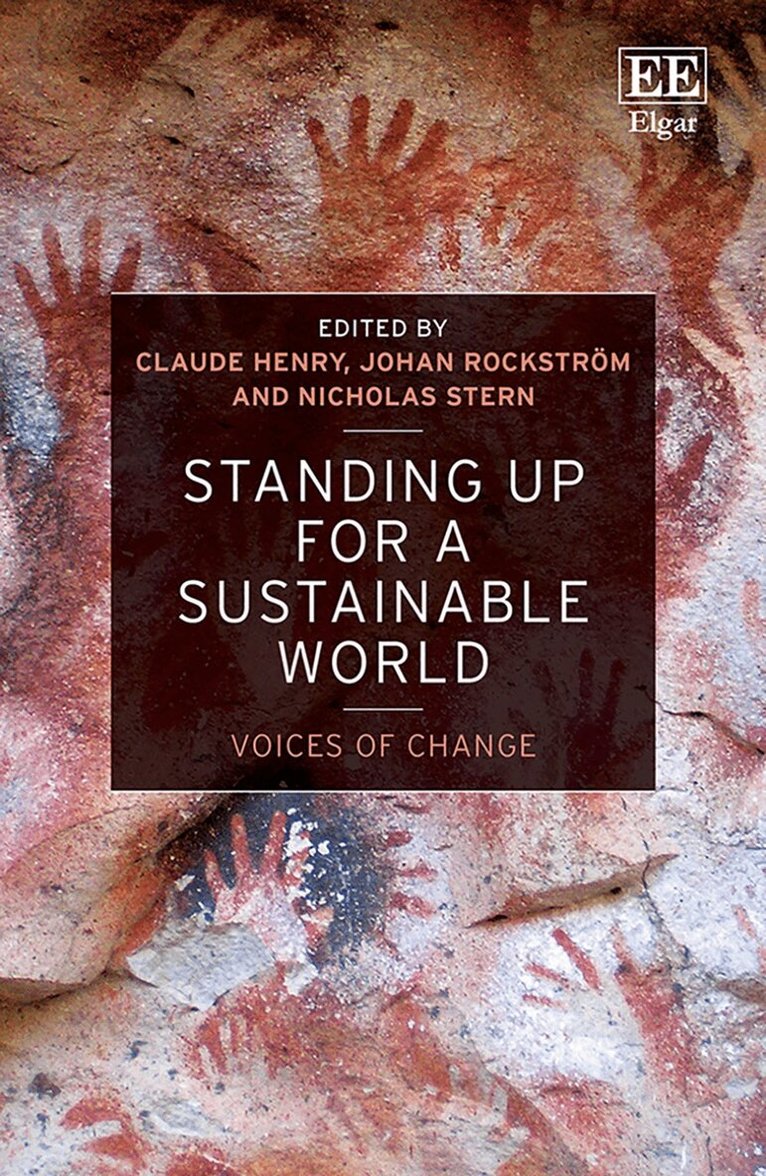
The world has witnessed extraordinary economic growth, poverty reduction and increased life expectancy and population since the end of WWII, but it has occurred at the expense of undermining life support systems on Earth and subjecting future generations to the real risk of destabilising the planet. This timely book exposes and explores this colossal environmental cost and the dangerous position the world is now in. Standing up for a Sustainable World is written by and about key individuals who have not only understood the threats to our planet, but also become witness to them and confronted them. Combining the voices of leading academics as well as climate change and environmental activists, entrepreneurs and investors, the book highlights the urgent action that needs to be taken to foster sustainable, resilient and inclusive development in the face of powerful systemic forces. Chapters look ahead to a better path for human wellbeing, security and dignity, offering insight to ways this can be created. The book as a whole shares the visions and hopes of those fighting in a myriad of ways to make a sustainable world, attempting to tip the balance away from the crushing loss of biodiversity, rising sea levels and increasing global mean temperature, whilst increasing living standards across all dimensions, particularly for the poorest people. An imperative read for those concerned about the future of our planet, this book showcases not only why urgent action is now imperative, but also what changes are necessary for a sustainable, resilient and equitable world. It offers crucial insights for those interested in the dynamics of political action, in how change occurs, and in effective communication. Environmental economics, as well as environmental studies and human geography students and scholars more broadly will find this an invigorating read.
677 kr
Skickas inom 7-10 vardagar
The world has witnessed extraordinary economic growth, poverty reduction and increased life expectancy and population since the end of WWII, but it has occurred at the expense of undermining life support systems on Earth and subjecting future generations to the real risk of destabilising the planet. This timely book exposes and explores this colossal environmental cost and the dangerous position the world is now in. Standing up for a Sustainable World is written by and about key individuals who have not only understood the threats to our planet, but also become witness to them and confronted them. Combining the voices of leading academics as well as climate change and environmental activists, entrepreneurs and investors, the book highlights the urgent action that needs to be taken to foster sustainable, resilient and inclusive development in the face of powerful systemic forces. Chapters look ahead to a better path for human wellbeing, security and dignity, offering insight to ways this can be created. The book as a whole shares the visions and hopes of those fighting in a myriad of ways to make a sustainable world, attempting to tip the balance away from the crushing loss of biodiversity, rising sea levels and increasing global mean temperature, whilst increasing living standards across all dimensions, particularly for the poorest people. An imperative read for those concerned about the future of our planet, this book showcases not only why urgent action is now imperative, but also what changes are necessary for a sustainable, resilient and equitable world. It offers crucial insights for those interested in the dynamics of political action, in how change occurs, and in effective communication. Environmental economics, as well as environmental studies and human geography students and scholars more broadly will find this an invigorating read.