Claudia Bird Schoonhoven - Böcker
Visar alla böcker från författaren Claudia Bird Schoonhoven. Handla med fri frakt och snabb leverans.
4 produkter
4 produkter
440 kr
Skickas inom 7-10 vardagar
The Innovation Marathon offers a guidance from the experience of successful firms on how to achieve continuing innovation, intense employee commitment, simultaneous high creativity and tight control, and flexible responses to rapid change.
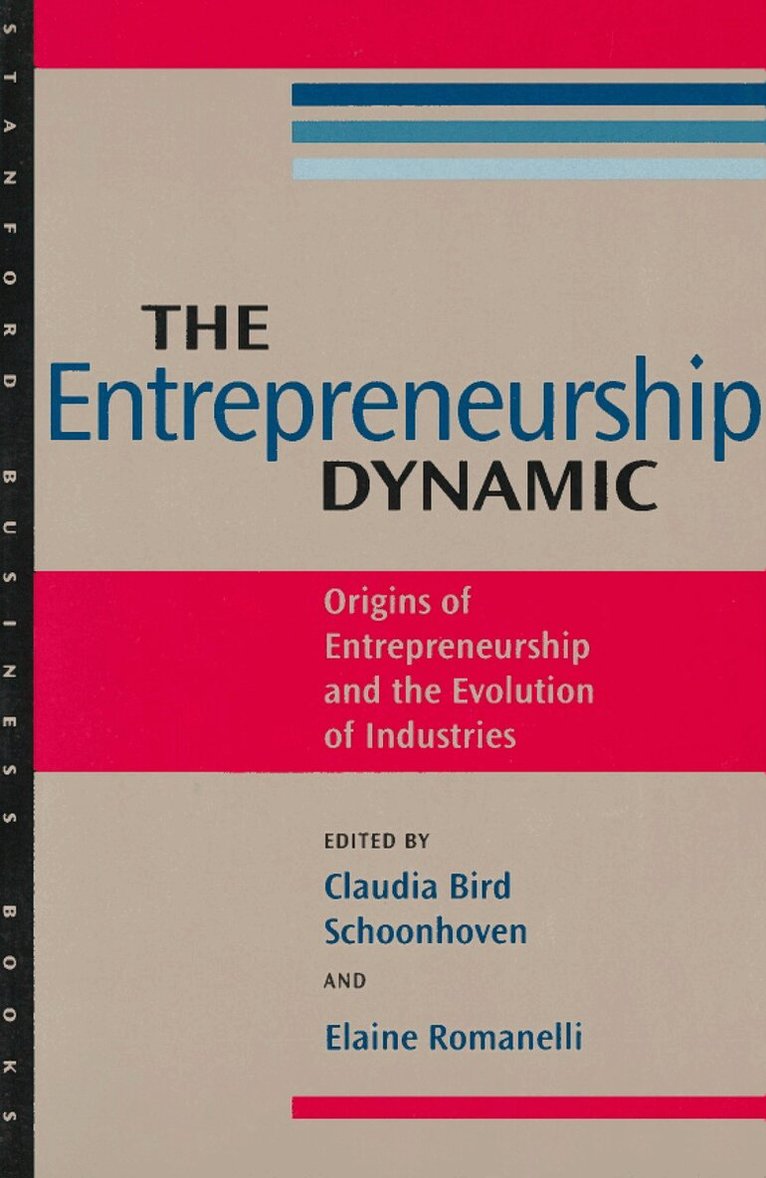
Entrepreneurship Dynamic
Origins of Entrepreneurship and the Evolution of Industries
Inbunden, Engelska, 2002
2 368 kr
Skickas inom 10-15 vardagar
Scholars and popular writers have written a great deal about entrepreneurs and the formation of new companies, but they have not succeeded in predicting when and where large numbers of new organizations will emerge. This volume attempts, from the viewpoint of the interdisciplinary field of organization studies, to answer two major questions about entrepreneurship: First, what are the conditions that prompt the founding of large numbers of new organizations or entirely new industries? Second, what are the real and significant effects of such entrepreneurial activities on existing industries, economies, and societies?The authors emphasize that new organizations do not emerge full blown from the idiosyncratic minds of individual entrepreneurs. Their ideas for new organizations, their ability to acquire capital and other essential resources, and their likelihood of survival as entrepreneurs derive from the contexts in which they live and work. At the same time, new organizations fundamentally and immediately transform their contexts.The first part of the book explores the mental models that founders of new companies bring with them from previous experiences, the ways in which their ideas come not only from the companies in which they work but from the surrounding organizational communities, and the importance of local and regional dynamics in nurturing innovative communities. Other papers in this section shift perspective from geographic communities to other contexts—the university, the knowledge industry, and the technology cycle.The second part of the book explores the role of entrepreneurial activity in the transformation of contexts and the evolution of industries, focusing on the processes and tools that entrepreneurs use to legitimate new organizational populations, and the collateral industries and communities that build up around new organizational populations, aiding in the development of new companies.
Entrepreneurship Dynamic
Origins of Entrepreneurship and the Evolution of Industries
Häftad, Engelska, 2002
576 kr
Skickas inom 7-10 vardagar
Scholars and popular writers have written a great deal about entrepreneurs and the formation of new companies, but they have not succeeded in predicting when and where large numbers of new organizations will emerge. This volume attempts, from the viewpoint of the interdisciplinary field of organization studies, to answer two major questions about entrepreneurship: First, what are the conditions that prompt the founding of large numbers of new organizations or entirely new industries? Second, what are the real and significant effects of such entrepreneurial activities on existing industries, economies, and societies?The authors emphasize that new organizations do not emerge full blown from the idiosyncratic minds of individual entrepreneurs. Their ideas for new organizations, their ability to acquire capital and other essential resources, and their likelihood of survival as entrepreneurs derive from the contexts in which they live and work. At the same time, new organizations fundamentally and immediately transform their contexts.The first part of the book explores the mental models that founders of new companies bring with them from previous experiences, the ways in which their ideas come not only from the companies in which they work but from the surrounding organizational communities, and the importance of local and regional dynamics in nurturing innovative communities. Other papers in this section shift perspective from geographic communities to other contexts—the university, the knowledge industry, and the technology cycle.The second part of the book explores the role of entrepreneurial activity in the transformation of contexts and the evolution of industries, focusing on the processes and tools that entrepreneurs use to legitimate new organizational populations, and the collateral industries and communities that build up around new organizational populations, aiding in the development of new companies.
Del 28 - Research in the Sociology of Organizations
Stanford's Organization Theory Renaissance, 1970-2000
Inbunden, Engelska, 2010
1 601 kr
Skickas inom 7-10 vardagar
Between 1970 and 2000, Stanford University enabled and supported a vigorous interdisciplinary community of organizations training, research, and theory building. Important breakthroughs occurred in theory development, and a couple of generations of doctoral and post-doctoral students received enhanced training and an extraordinary opportunity to build collegial networks. The model spread to other universities and work done at that time and place continues to exercise influence up to the present time. This volume both summarizes the contributions of the main paradigms that emerged at Stanford in those three decades, and describes the sociological conditions under which this remarkable, generative, environment came about. A series of chapters by some of the key contributors to these paradigms, who studied at Stanford between 1970 and 2000, are followed by brief comments on the conditions that fostered the development of these different paradigms, and on the development of the paradigms themselves.