Claudine Elmerich – författare
Visar alla böcker från författaren Claudine Elmerich. Handla med fri frakt och snabb leverans.
12 produkter
12 produkter
Inbunden, Engelska, 1997
3 235 kr
Skickas inom 10-15 vardagar
The refinement of molecular techniques and the development of new probes of the phylogeny of diazotrophs has revealed an extreme biodiversity among the nitrogen fixers, which helps explain the role that nitrogen fixation plays in maintaining life on Earth. The most efficient ecosystems are those in which the bacteria are associated with a plant in differentiated organs to benefit crop productivity. Most short-term benefit from fundamental research on nitrogen fixation is likely to result in the improvement of existing nitrogen-fixing symbiotic or associative systems. Longer-term efforts are aimed at extending the nitrogen-fixing capacity to other organisms, including transfer of the genetic information for efficient nitrogen fixation into the plant genome and using current knowledge of microbe-plant interactions to extend symbiosis to cereals and, in particular, to rice. Related challenges in sustainable agriculture and forestry include the creation of new nitrogen-fixing associations. All of these topics were discussed at the 11th International Congress on Nitrogen Fixation, held in Paris in July 1997, the proceedings of which are presented in this book.
Inbunden, Engelska, 2006
1 621 kr
Skickas inom 10-15 vardagar
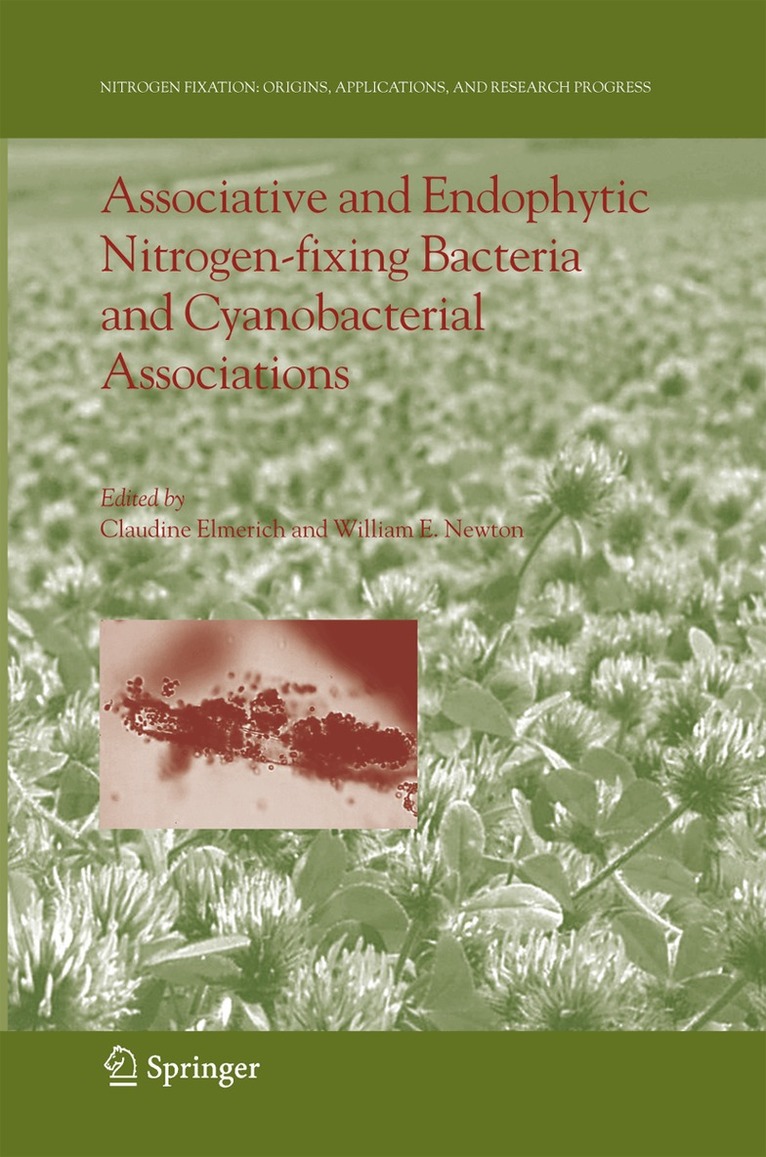
This self-contained volume covers fundamental and applied aspects of nitrogen-fixation research. The book describes milestones in the discovery of the associative and endophytic nitrogen-fixing bacteria found involved with cereal crops, forage grasses, and sugar cane.
E-bok
PDF, Engelska, 20071 977 kr
Läs direkt efter köp
Associative and Endophytic Nitrogen-fixing Bacteria and Cyanobacterial Associations This book is part of the seven-volume series that was launched a few years ago with the ambitious objectives of reviewing the field of nitrogen fixation from its earliest beginnings through the millennium change and of consolidating the relevant information - from fundamental to agricultural and environmental aspects – all in one place. Volume 5 covers the biology of bacteria that associate with n- leguminous plants. The subject matter includes a wide range of associations; it covers the bacterial species that associate either with the surface or within the tissues of grasses (often referred as plant growth-promoting rhizobacteria) and also the symbiotic associations that cyanobacteria form with fungi, algae, and both lower and higher plants. This volume does not deal with the Frankia-actinorhizal plant associations, which is the topic of Volume 6. The book is divided in 13 chapters, each of which is the work of well-known scientists in the field. Just like in the other volumes of this series, the first chapter is th an historical perspective. It describes how, as early as the end of the 19 century, it was shown that plant exudation favoured the proliferation of soil bacteria in the rhizosphere, and how the first nitrogen-fixing bacteria, including cyanobacteria were isolated. The chapter covers the landmarks and scientific concepts that arose from more than one century of research in this area.
Inbunden, Engelska, 2005
2 159 kr
Skickas inom 10-15 vardagar
The 14th International Nitrogen Fixation Congress was held in Beijing, China from October 27th through November 1st, 2004.
E-bok
PDF, Engelska, 20062 741 kr
Läs direkt efter köp
The 14th International Nitrogen Fixation Congress was held in Beijing, China from October 27th through November 1st, 2004. This volume constitutes the proceedings of the Congress and represents a compilation of the presentations by scientists from more than 30 countries around the World who came to Beijing to discuss the progress made since the last Congress and to exchange ideas and information. This year marked the 30th anniversary of the first Congress held in Pullman, Washington, USA, in 1974. Since then, this series of Congresses has met five times in North America (three in the United States and once each in Canada and Mexico), once in South America (Brazil), four times in Western Europe (once each in Spain, The Netherlands, Germany and France), once in Eastern Europe (Russia), and once in Australia; and now for the first time in Asia. China was a most appropriate choice because China is a big country with the largest population in the World, about 1. 3 billion people, which is about 22% of the World’s population. It is traditionally an agricultural country, even though China has only 7% of the available farming land. This situation explains why agriculture and its productivity are major issues for the Chinese people, its government and the scientists in the field.
Del 42 - Current Plant Science and Biotechnology in Agriculture
Biological Nitrogen Fixation: Towards Poverty Alleviation through Sustainable Agriculture
Proceedings of the 15th International Nitrogen Fixation Congress and the 12th International Conference of the African Association for Biological Nitrogen Fixation
Inbunden, Engelska, 2008
2 159 kr
Skickas inom 10-15 vardagar
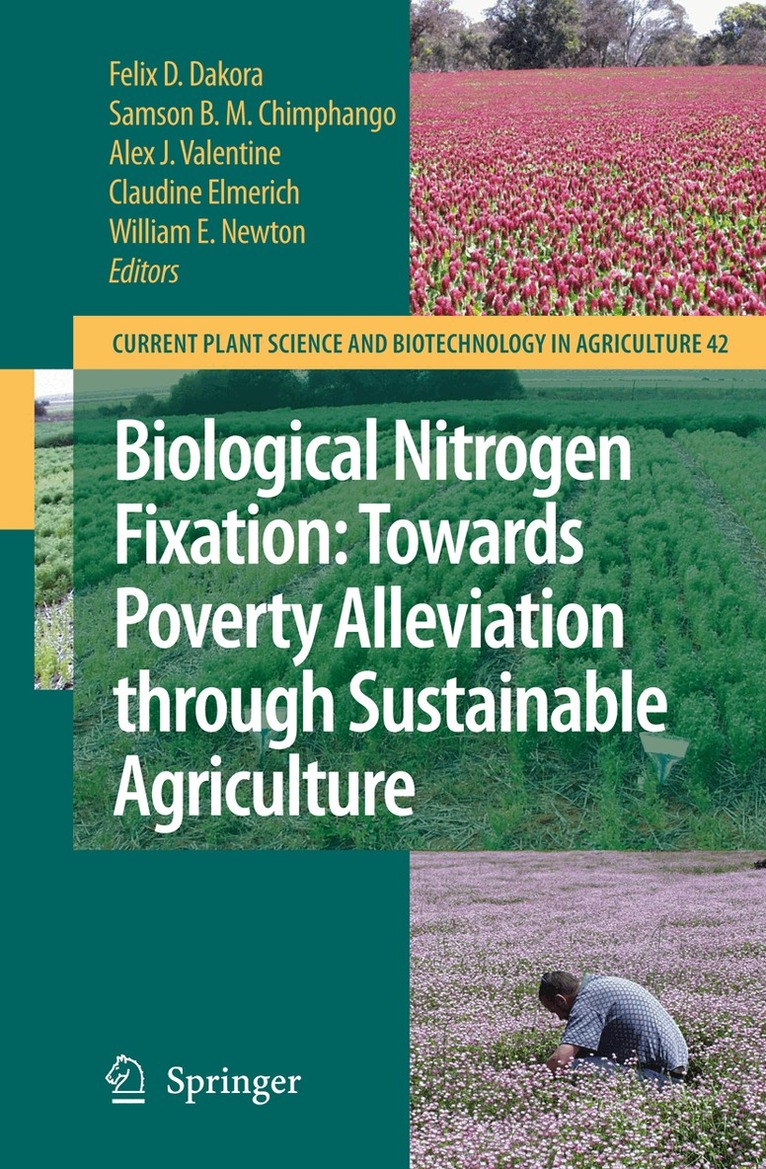
Poverty is a severe problem in Africa, Asia, South America and even in pockets of the developed world. Addressing poverty alleviation via the expanded use of biological nitrogen fixation in agriculture was the theme of the 15th International Congress on Nitrogen Fixation. Because nitrogen-fixation research is multidisciplinary, exploiting its benefits for agriculture and environmental protection has continued to attract research by diverse groups of scientists, including chemists, biochemists, plant physiologists, evolutionary biologists, ecologists, agricultural scientists, extension agents, and inoculant producers. The 15th International Congress on Nitrogen Fixation was held jointly with the 12th International Conference of the African Association for Biological Nitrogen Fixation. This joint Congress was hosted in South Africa at the Cape Town International Conv- tion Centre, 21–26 January 2007, and was attended by about 200 registered participants from 41 countries world-wide. During the Congress, some 100 oral and approximately 80 poster papers were presented. The wide range of topics covered and the theme of the Congress justifies this book’s title, Nitrogen Fixation: Applications to Poverty Alleviation.
2 741 kr
Läs direkt efter köp
Poverty is a severe problem in Africa, Asia, South America and even in pockets of the developed world. Addressing poverty alleviation via the expanded use of biological nitrogen fixation in agriculture was the theme of the 15th International Congress on Nitrogen Fixation. Because nitrogen-fixation research is multidisciplinary, exploiting its benefits for agriculture and environmental protection has continued to attract research by diverse groups of scientists, including chemists, biochemists, plant physiologists, evolutionary biologists, ecologists, agricultural scientists, extension agents, and inoculant producers. The 15th International Congress on Nitrogen Fixation was held jointly with the 12th International Conference of the African Association for Biological Nitrogen Fixation. This joint Congress was hosted in South Africa at the Cape Town International Conv- tion Centre, 21–26 January 2007, and was attended by about 200 registered participants from 41 countries world-wide. During the Congress, some 100 oral and approximately 80 poster papers were presented. The wide range of topics covered and the theme of the Congress justifies this book’s title, Nitrogen Fixation: Applications to Poverty Alleviation.
Häftad, Engelska, 2010
1 605 kr
Skickas inom 10-15 vardagar
Associative and Endophytic Nitrogen-fixing Bacteria and Cyanobacterial Associations This book is part of the seven-volume series that was launched a few years ago with the ambitious objectives of reviewing the field of nitrogen fixation from its earliest beginnings through the millennium change and of consolidating the relevant information - from fundamental to agricultural and environmental aspects – all in one place. Volume 5 covers the biology of bacteria that associate with n- leguminous plants. The subject matter includes a wide range of associations; it covers the bacterial species that associate either with the surface or within the tissues of grasses (often referred as plant growth-promoting rhizobacteria) and also the symbiotic associations that cyanobacteria form with fungi, algae, and both lower and higher plants. This volume does not deal with the Frankia-actinorhizal plant associations, which is the topic of Volume 6. The book is divided in 13 chapters, each of which is the work of well-known scientists in the field. Just like in the other volumes of this series, the first chapter is th an historical perspective. It describes how, as early as the end of the 19 century, it was shown that plant exudation favoured the proliferation of soil bacteria in the rhizosphere, and how the first nitrogen-fixing bacteria, including cyanobacteria were isolated. The chapter covers the landmarks and scientific concepts that arose from more than one century of research in this area.
Häftad, Engelska, 2010
2 138 kr
Skickas inom 10-15 vardagar
This volume covers all aspects of fundamental and applied nitrogen-fixation research, extending from biochemistry and chemistry through genetics, regulation and physiology to agricultural practice and environmental impact. It describes recent progress on studies of potential catalysts for nitrogen fixation; how the N2-fixing process is regulated in living cells; the use and impact of genetics and genomics on our understanding of the biological process; the wide variety of associations of nitrogen-fixing microbes with plants, including the formalized Rhizobium-legume and actinorrhizal associations as well as the less formalized associative and endophytic interactions; and the impact of nitrogen fixation in agriculture and forestry, including its effect on the environment. This volume provides an up-to-date referenced source, which can be readily accessed by all practicing and otherwise interested proponents of nitrogen fixation research, including those with related interests in the areas of plant and microbial science, genomics, plant-microbe interactions, genetics and regulation, plant growth and biocontrol, agriculture, forestry, ecology, taxonomy and evolution.
2 138 kr
Skickas inom 10-15 vardagar
This volume covers recent developments in both fundamental and applied research in biological nitrogen fixation. It emphasizes the application of biological nitrogen fixation for sustainable agriculture, which should lead to poverty alleviation, environmental protection, and good agricultural practices generally. The roles of, and advances in, plant breeding, plant molecular biology, nodule physiology, and symbiotic and associative interactions between plants and microbes in sustaining agricultural productivity and soil fertility are described. The evolution of symbioses and nitrogen fixation are also covered in this volume. To ensure high agricultural productivity, while protecting the environment (both soil and water resources), requires plant cultivars that also respond to beneficial microbes. The volume, therefore, describes the physiology and genomics of nitrogen-fixing bacteria together with the biochemistry and molecular genetics of the nitrogenase enzyme that actually fixes atmospheric nitrogen to a usable form.This volume, which covers the most recent data on the role of nitrogen fixation in agriculture and forestry and on the biology of both plants and nitrogen-fixing microbes, is intended to serve as a useful reference for students and researchers, both in the laboratory (academic and commercial) and in the field.
Häftad, Engelska, 2013
3 204 kr
Skickas inom 10-15 vardagar
Nitrogen availability is one of the most critical factors that limits plant productivity. The largest reservoir of nitrogen is the atmosphere, but this gaseous molecular nitrogen only becomes available to plants through the biological nitrogen fixation process, which only prokaryotic cells have developed. The discovery that microbes were providing fixed nitrogen to legumes and the isolation of the first nitrogen-fixing bacteria occured at the end the 19th Century, in Louis Pasteur's time. We are now building on more than 100 years of research in this field and looking towards the 21st Century. The International Nitrogen Fixation Congress series Started more than 20 years ago. The format of this Congress is designed to gather scientists from very diverse origins, backgrounds, interests and scientific approaches and is a forum where fundamental knowledge is discussed alongside applied research. This confluence of perspectives is, we believe, extremely beneficial in raising new ideas, questions and concepts.
E-bok
PDF, Engelska, 20133 809 kr
Läs direkt efter köp
Nitrogen availability is one of the most critical factors that limits plant productivity. The largest reservoir of nitrogen is the atmosphere, but this gaseous molecular nitrogen only becomes available to plants through the biological nitrogen fixation process, which only prokaryotic cells have developed. The discovery that microbes were providing fixed nitrogen to legumes and the isolation of the first nitrogen-fixing bacteria occured at the end the 19th Century, in Louis Pasteur''s time. We are now building on more than 100 years of research in this field and looking towards the 21st Century. The International Nitrogen Fixation Congress series Started more than 20 years ago. The format of this Congress is designed to gather scientists from very diverse origins, backgrounds, interests and scientific approaches and is a forum where fundamental knowledge is discussed alongside applied research. This confluence of perspectives is, we believe, extremely beneficial in raising new ideas, questions and concepts.