Adam Kondorosi - Böcker
Visar alla böcker från författaren Adam Kondorosi. Handla med fri frakt och snabb leverans.
3 produkter
3 produkter
Biological Nitrogen Fixation for the 21st Century
Proceedings of the 11th International Congress on Nitrogen Fixation, Institut Pasteur, Paris, France, July 20–25 1997
Inbunden, Engelska, 1997
3 168 kr
Skickas inom 10-15 vardagar
The refinement of molecular techniques and the development of new probes of the phylogeny of diazotrophs has revealed an extreme biodiversity among the nitrogen fixers, which helps explain the role that nitrogen fixation plays in maintaining life on Earth. The most efficient ecosystems are those in which the bacteria are associated with a plant in differentiated organs to benefit crop productivity. Most short-term benefit from fundamental research on nitrogen fixation is likely to result in the improvement of existing nitrogen-fixing symbiotic or associative systems. Longer-term efforts are aimed at extending the nitrogen-fixing capacity to other organisms, including transfer of the genetic information for efficient nitrogen fixation into the plant genome and using current knowledge of microbe-plant interactions to extend symbiosis to cereals and, in particular, to rice. Related challenges in sustainable agriculture and forestry include the creation of new nitrogen-fixing associations. All of these topics were discussed at the 11th International Congress on Nitrogen Fixation, held in Paris in July 1997, the proceedings of which are presented in this book.
534 kr
Skickas inom 10-15 vardagar
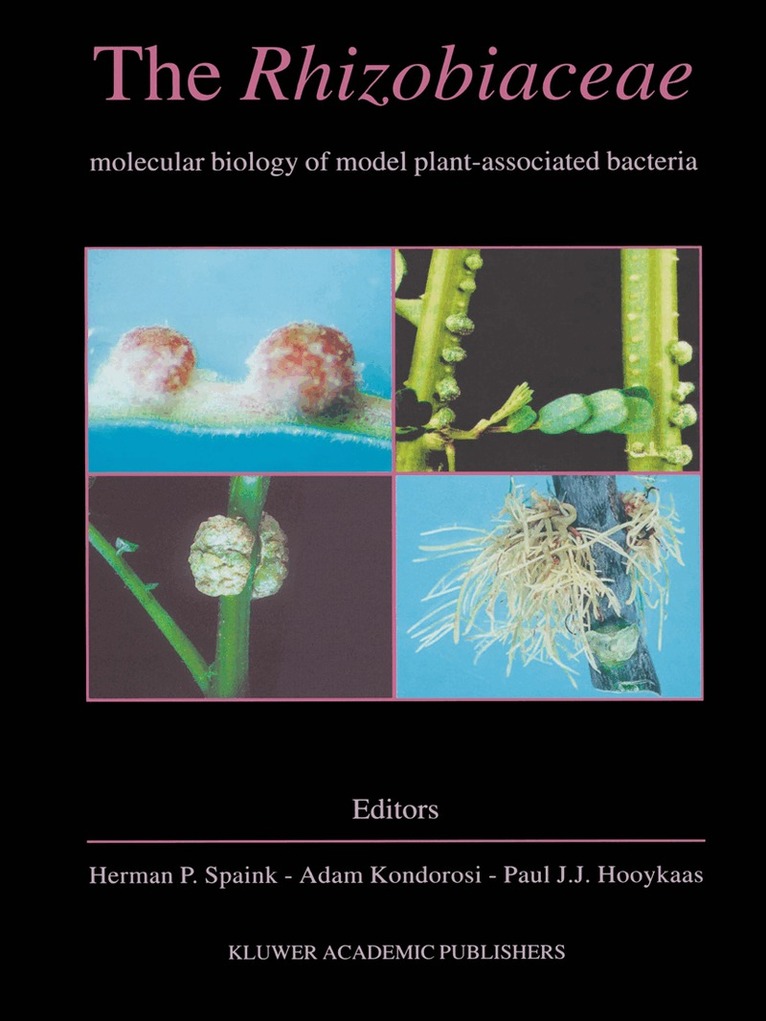
This work gives a comprehensive overview of our present molecular biological knowledge about the Rhizobiaceae, which can be called the best studied family of soil bacteria in the late 20th century. For many centuries they have attracted the attention of scientists because of their capacity to associate with plants and as a consequence also to specifically modify plant development. Some of these associations are beneficial for the plant, as is the case for the Rhizobiaceae subgroups collectively called rhizobia, which are able to fix nitrogen in a symbiosis with the plant hosts. This symbiosis results in the formation of root or stem nodules, as illustrated on the front cover. In contrast, several Rhizobiaceae subgroups can negatively affect plant development and evoke plant diseases. Examples are Agrobacterium tumefaciens and A. rhizogenes which induce the formation of crown galls or hairy roots on the stems of their host plants, respectively.
Biological Nitrogen Fixation for the 21st Century
Proceedings of the 11th International Congress on Nitrogen Fixation, Institut Pasteur, Paris, France, July 20–25 1997
Häftad, Engelska, 2013
3 168 kr
Skickas inom 10-15 vardagar
Nitrogen availability is one of the most critical factors that limits plant productivity. The largest reservoir of nitrogen is the atmosphere, but this gaseous molecular nitrogen only becomes available to plants through the biological nitrogen fixation process, which only prokaryotic cells have developed. The discovery that microbes were providing fixed nitrogen to legumes and the isolation of the first nitrogen-fixing bacteria occured at the end the 19th Century, in Louis Pasteur's time. We are now building on more than 100 years of research in this field and looking towards the 21st Century. The International Nitrogen Fixation Congress series Started more than 20 years ago. The format of this Congress is designed to gather scientists from very diverse origins, backgrounds, interests and scientific approaches and is a forum where fundamental knowledge is discussed alongside applied research. This confluence of perspectives is, we believe, extremely beneficial in raising new ideas, questions and concepts.