• Fri frakt över 249 kr
  • •
  • Snabba leveranser
  • •
  • Billiga böcker
Kundservice

Du är på sajten för privatpersoner.

Företag, bibliotek eller offentlig verksamhet?

Du handlar på classic.bokus.com, där alla dina funktioner finns intakta.
Till classic.bokus.com
Bokus logotyp. Gå till startsidan.
  • Erbjudanden
  • Nyheter
  • Student
  • Topplistor
  • Barn & ungdom
  • Bokus Play
  • E-böcker
  • Pocketböcker
  • Spel & pussel

10% rabatt på allt med kod NYSTART10 →

Sidfot

Mina sidor

    Hjälp

    • Kundservice
    • Vanliga frågor och svar
    • Frakt och leverans
    • Retur vid ångerrätt
    • Reklamera vara
    • Betalning
    • Köpvillkor
    • Allmänna villkor
    • Information om webbplatsens tillgänglighet

    Om Bokus

    • Om oss
    • Pressrum
    • För studenter
    • För företag
    • För bibliotek och offentlig verksamhet
    • För leverantörer
    • Hållbarhet

    Populärt

    • Aktuella erbjudanden
    • Presentkort
    • Studentlitteratur
    • Nya böcker
    • Topplistor
    • Signerade böcker
    • Engelska böcker

    Inspiration

    • Boktips
    • BookTok
    • Populära bokserier
    • Barnbokskaraktärer
    • Populära författare
    Logotyp för Bokus
    Följ oss på Facebook (extern länk)Följ oss på Instagram (extern länk)Följ oss på YouTube (extern länk)Följ oss på TikTok (extern länk)
    bokus @ CookiesAnpassa cookiesIntegritetspolicyKöpvillkor
    Till Citymail hemsida (extern länk)Till Budbee hemsida (extern länk)Till Postnord hemsida (extern länk)Till Schenker hemsida (extern länk)Till Early Bird hemsida (extern länk)Till Walleys hemsida (extern länk)
    1. Djur och Natur
    2. Naturböcker
    3. Växtböcker

    Rhizobiaceae

    Molecular Biology of Model Plant-Associated Bacteria

    AvHerman P. Spaink,Adam Kondorosi

    Häftad, Engelska, 1998

    546 kr

    Beställningsvara. Skickas inom 10-15 vardagar. Fri frakt över 249 kr.

    Beskrivning

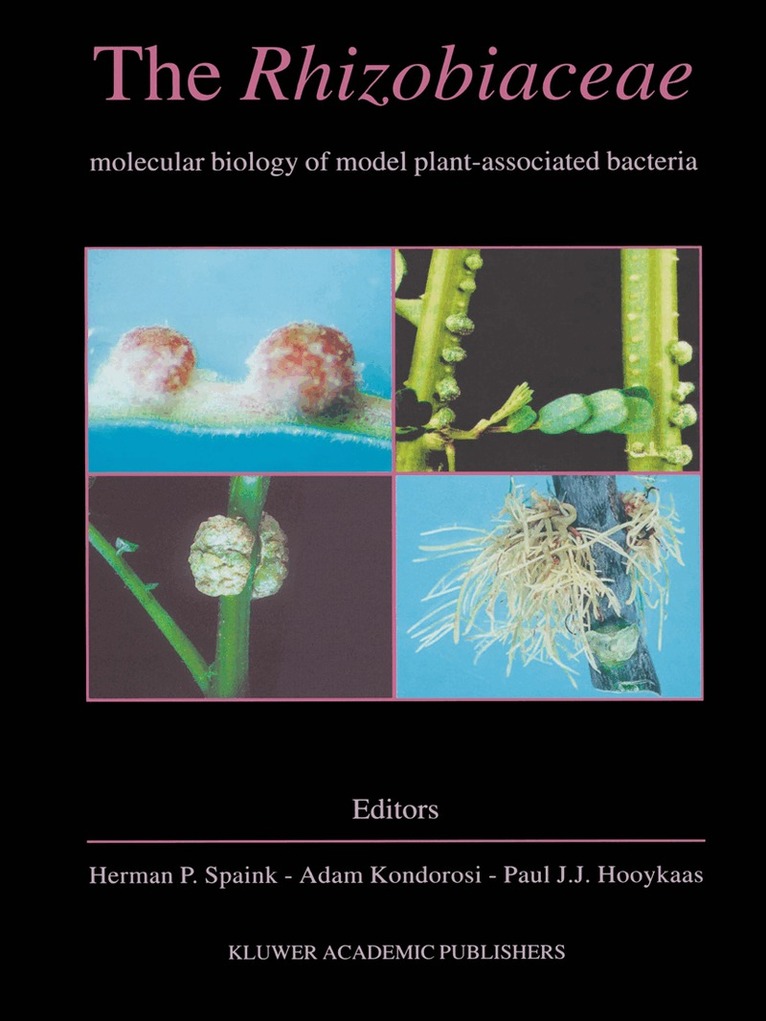
    The Rhizobiaceae, Molecular Biology of Model Plant-Associated Bacteria. This book gives a comprehensive overview on our present molecular biological knowledge about the Rhizobiaceae, which currently can be called the best-studied family of soil bacteria. For many centuries they have attracted the attention of scientists because of their capacity to associate with plants and as a consequence also to specifically modify plant development. Some of these associations are beneficial for the plant, as is the case for the Rhizobiaceae subgroups collectively called rhizobia, which are able to fix nitrogen in a symbiosis with the plant hosts. This symbiosis results in the fonnation of root or stem nodules, as illustrated on the front cover. In contrast, several Rhizobiaceae subgroups can negatively affect plant development and evoke plant diseases. Examples are Agrobacterium tumefaciens andA. rhizogenes which induce the formation of crown galls or hairy roots on the stems of their host plants, respectively (bottom panels on front cover). In addition to the obvious importance of studies on the Rhizobiaceae for agronomy, this research field has resulted in the discovery of many fundamental scientific principles of general interest, which are highlighted in this book. To mention three examples: (i) the discovery of DNA transfer of A.

    Produktinformation

    • Utgivningsdatum:1998-07-31
    • Mått:195 x 260 x 37 mm
    • Vikt:1 381 g
    • Format:Häftad
    • Språk:Engelska
    • Antal sidor:566
    • Förlag:Kluwer Academic Publishers
    • ISBN:9780792351801

    Utforska kategorier

    • Växtböcker inom Djur och Natur
    • Botanik inom Naturvetenskap och teknik
    • Biologi inom Naturvetenskap och teknik

    Innehållsförteckning

    • 1. Molecular Evolutionary Systematics of the Rhizobiaceae.- 2. General Genetic Knowledge.- 3. Outer Membrane Proteins.- 4. Phospholipids and Alternative Membrane Lipids.- 5. Cell-surface ?-glucans.- 6. Production of Exopolysaccharides.- 7. Lipopolysaccharides and K-Antigens: Their Structures, Biosynthesis and Functions.- 8. Soil Biology of the Rhizobiaceae.- 9. Opines and Opine-Like Molecules Involved in Plant-Rhizobiaceae Interactions.- 10. Conjugal Plasmids and Their Transfer.- 11. Attachment of Rhizobiaceae to Plant Cells.- 12. The Agrobacterium Oncogenes.- 13. Organization and Regulation of Expression of the Agrobacterium Virulence Genes.- 14. Function of the Ti-Plasmid Vir Proteins: T-Complex Formation and Transfer to the Plant Cell.- 15. Role of Virulence Proteins of Agrobacterium in the Plant.- 16. Determinants of Host Specificity of Agrobacterium and their function.- 17. The Use of Agrobacterium for Plant Genetic Engineering.- 18. Diversity of Root Nodulation and Rhizobial Infection Processes.- 19. Genetic Organization and Transcriptional Regulation of Rhizobial Nodulation Genes.- 20. Functions of Rhizobial Nodulation Genes.- 21. Responses of the Plant to Nod Factors.- 22. Tissue and Cell Invasion by Rhizobium: The Structure and Development of Infection Threads and Symbiosomes.- 23. A Survey of Symbiotic Nitrogen Fixation by Rhizobia.- 24. Carbon and Nitrogen Metabolism in Rhizobia.- 25. Evolutionary Aspects of Symbiotic Adaptations, Rhizobium’s Contribution to Evolution by Association.- 26. Legume Symbiotic Nitrogen Fixation: Agronomic Aspects.- Contributors.- Abbreviations.