Claus Mattheck – författare
Visar alla böcker från författaren Claus Mattheck. Handla med fri frakt och snabb leverans.
8 produkter
8 produkter
Del 63 - Lecture Notes in Engineering
Engineering Optimization in Design Processes
Proceedings of the International Conference, Karlsruhe Nuclear Research Center, Germany, September 3–4, 1990
Häftad, Engelska, 1991
1 082 kr
Skickas inom 10-15 vardagar
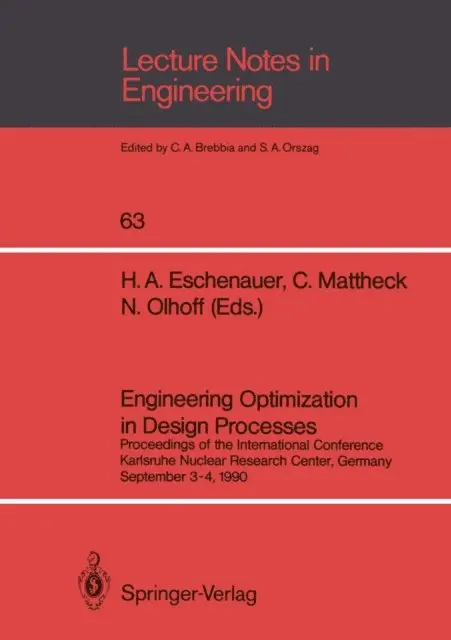
These proceedings contain the texts of 37 contributions presented at the International Conference on Engineering Optimization in an Industrial Environment, which took place on 3 - 4 September 1990 at the Karlsruhe Nuclear Hesearch Center, I~H Germany. The presentations consisted of oral and poster contributions arranged in five sessions: • Shape and layout optimization • Structural optimization with advanced materials • Optimal designs with special structural and material beha viour • Sensitivity analysis - Programme systems • Optimization with stability constraints - Special problems The editors wish to express their appreciation to all authors and invited speakers for their in teresting contributions. The proceedings cover a wide range of topics in structural optimization representing the present state of the art in the fields of research and in the industrial environment as well. The editors hope that this book will also contribute towards new ideas and concepts in a world of ever decreasing natural resources and ever increasing demands for lighter and yet stronger and safer technical components. I"inally, the editors wish to thank all colleagues who helped in the organisation of the conference, especially Mrs. E. Schroder anq Dr. K.llethge, as well as Mr. A. von lIagen and Mrs. E. Haufelder, Springer Publishing Company, Heidelberg for the good cooperation and help in the publication of these proceedings.
Häftad, Engelska, 1997
1 619 kr
Skickas inom 10-15 vardagar
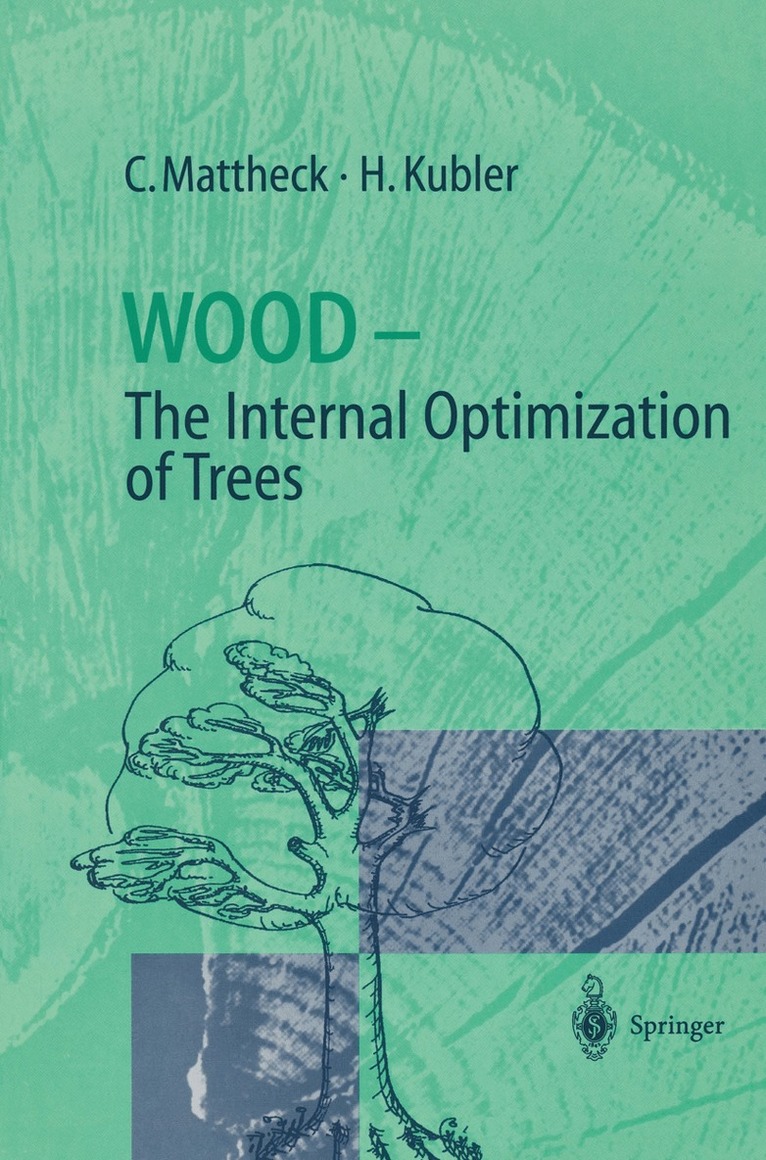
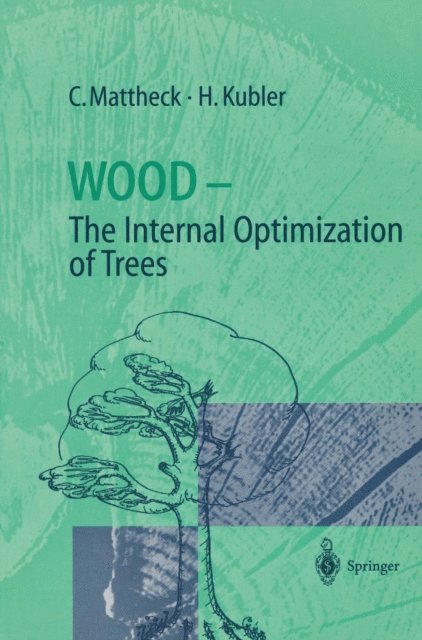
Here are two physicists looking over the fence of physics, getting thrilled by the life and growth of trees, taking an altogether different, exciting view of wood: trees produce wood for their own benefit. They do not live for the benefit of man who builds his world using wood as a raw material. Timber is revealed in a different light, and the reader is taught to stop thinking of it in terms of defective beams and boards. Wood only fails as a part of the living tree. To us, the tree and wood biologists, this new definition is a real, inspiring challenge, which is just what Kubler and Mattheck intended it to be. Their answers may seem too simple or little logical to some of us; but the authors are not at a loss for sound and solid arguments. Their field studies prove the incredible, their hypotheses makes us want to get to the bottom of the un proven unbelievable. The authors' answers and arguments are bold and cour ageous. They arouse our curiosity and force us to fathom the facts. It seems as if Kubler and Mattheck wanted to trick us into believing that trees only live and react following mechanical rules and strategies. To tell the truth, that was what I first suspected the authors of: but I was wrong.
Häftad, Engelska, 1998
1 511 kr
Skickas inom 10-15 vardagar
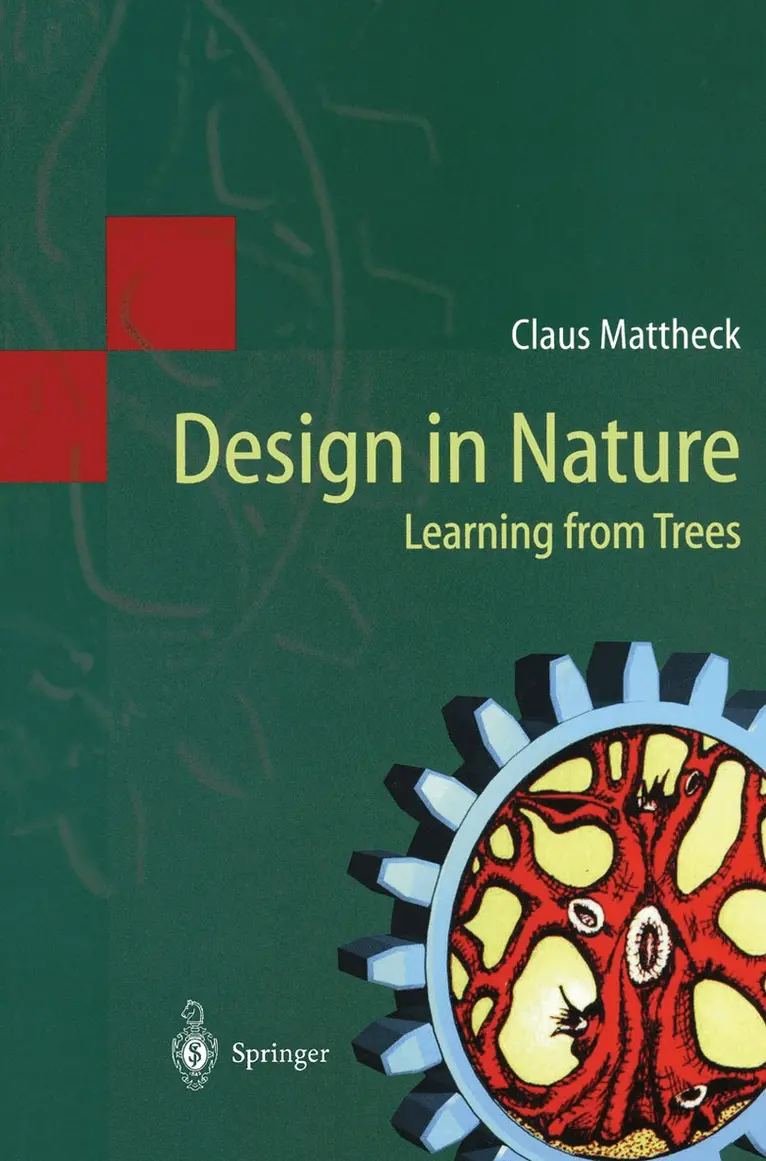
The chicken bone you nibbled yesterday and threw away was a high-tech product! Not only that: it was a superlative light-weight design, functionally adapted to its mechanical requirements. No engineer in the world has, as yet, been able to copy this structural member, which is excellently optimized in its external shape and its internal architecture as regards minimum weight and maximum strength. The tree stem on which you recently carved your initials has also, by life-long care for its body, steadily improved its internal and external structure and adapted optimally to new loads. In the course of its biomechanical self-optimization it will heal up the notch you cut as speedily as possible, in order to repair even the smallest weak point, which might otherwise cost it its life in the next storm. This book is dedicated to the understanding of this biomechanical optimization of shape. It is the synthesis of many years of extensive research using the latest computer methods at the Karlsruhe Research Centre to help understand the mechanism of biological self-optimization (adaptive growth) and to simulate it by computer. The method newly developed for this purpose was called CAO (Computer-Aided Optimization). With this method, it is possible to predict the growth of trees, bones and other biological structures from the tiger's claw to the sea urchin's skeleton.
E-bok
PDF, Engelska, 20131 804 kr
Läs direkt efter köp
E-bok
PDF, Engelska, 20121 947 kr
Läs direkt efter köp
The chicken bone you nibbled yesterday and threw away was a high-tech product! Not only that: it was a superlative light-weight design, functionally adapted to its mechanical requirements. No engineer in the world has, as yet, been able to copy this structural member, which is excellently optimized in its external shape and its internal architecture as regards minimum weight and maximum strength. The tree stem on which you recently carved your initials has also, by life-long care for its body, steadily improved its internal and external structure and adapted optimally to new loads. In the course of its biomechanical self-optimization it will heal up the notch you cut as speedily as possible, in order to repair even the smallest weak point, which might otherwise cost it its life in the next storm. This book is dedicated to the understanding of this biomechanical optimization of shape. It is the synthesis of many years of extensive research using the latest computer methods at the Karlsruhe Research Centre to help understand the mechanism of biological self-optimization (adaptive growth) and to simulate it by computer. The method newly developed for this purpose was called CAO (Computer-Aided Optimization). With this method, it is possible to predict the growth of trees, bones and other biological structures from the tiger''s claw to the sea urchin''s skeleton.
E-bok
PDF, Engelska, 20122 081 kr
Läs direkt efter köp
Here are two physicists looking over the fence of physics, getting thrilled by the life and growth of trees, taking an altogether different, exciting view of wood: trees produce wood for their own benefit. They do not live for the benefit of man who builds his world using wood as a raw material. Timber is revealed in a different light, and the reader is taught to stop thinking of it in terms of defective beams and boards. Wood only fails as a part of the living tree. To us, the tree and wood biologists, this new definition is a real, inspiring challenge, which is just what Kubler and Mattheck intended it to be. Their answers may seem too simple or little logical to some of us; but the authors are not at a loss for sound and solid arguments. Their field studies prove the incredible, their hypotheses makes us want to get to the bottom of the un proven unbelievable. The authors'' answers and arguments are bold and cour ageous. They arouse our curiosity and force us to fathom the facts. It seems as if Kubler and Mattheck wanted to trick us into believing that trees only live and react following mechanical rules and strategies. To tell the truth, that was what I first suspected the authors of: but I was wrong.
Häftad, Engelska, 2012
1 404 kr
Skickas inom 10-15 vardagar
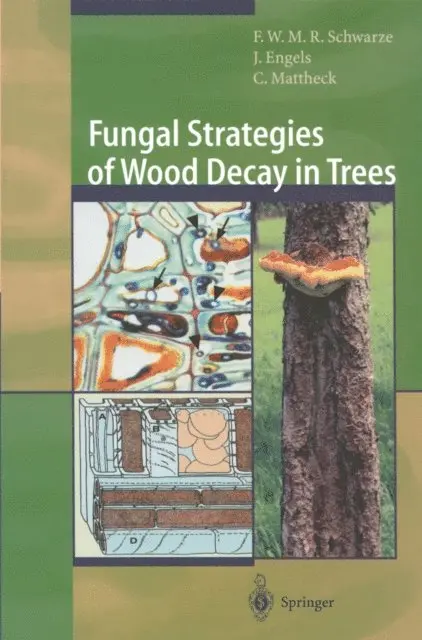
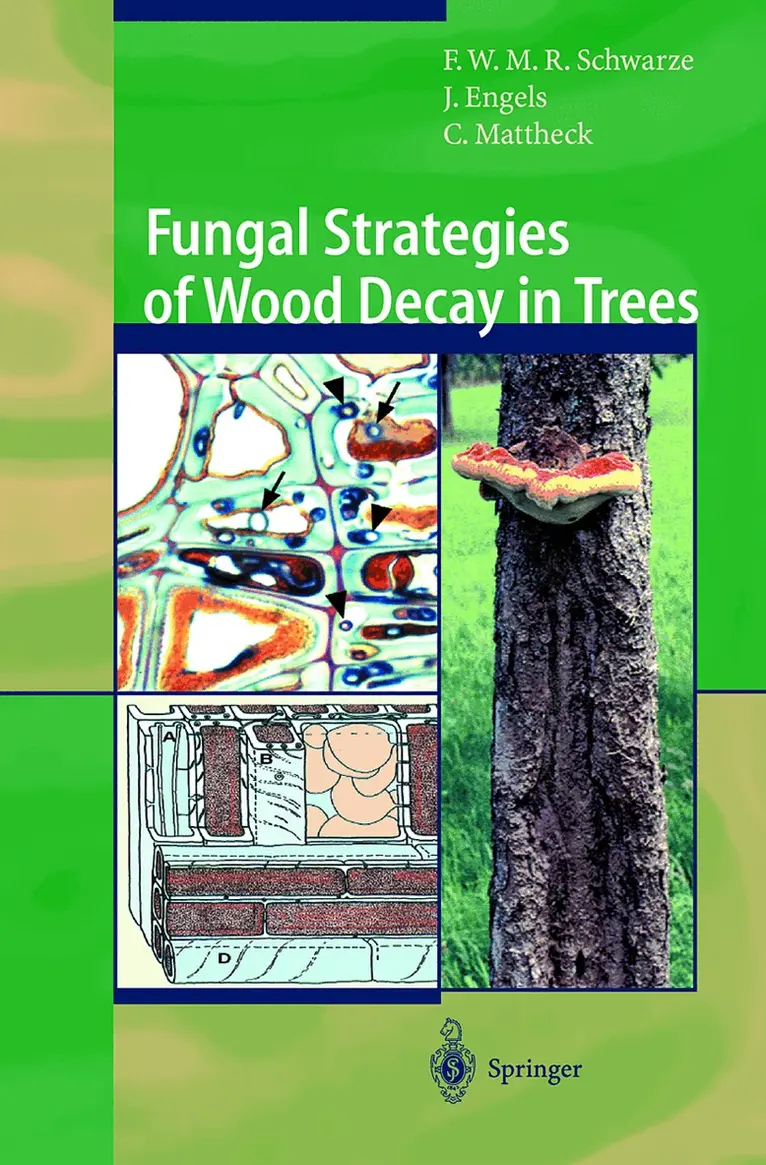
Interest in trees, whether in our streets, parks or forests, has in- creasedconsiderablyin thelast 20 years or so.One reason for this has been the decline and dying of forests, which caused great concern about our environment during the 1980s. Because ofthe prominenceofthis event,which is nowblamedon abiotic factors, it is all too easyto forget that the life oftrees is also affected by a multitude of biotic factors: viruses, bacteria, fungi and animals. These may have very different relationships with trees, but are usually deleterious. The fungi playa particularlyimportant part, and during the course of their evolution they have developed various abilities and strategies in order to obtain nutrients and energy by decomposing wood. On the other hand, the tree has 'learned' to react to external and internal infections. The various interactions between fungi and trees form the main themeofthis book.In reviewing this new book I was involuntarily reminded of a work by Robert Hartig over a century ago, entitled Die Zerset- zungserscheinungen des Holzes der Nadelbiiume und der Eiche in forstlicher, botanischer und chemischer Richtung, which laid the foundation of mycological and pathological research on wood.
E-bok
PDF, Engelska, 20121 416 kr
Läs direkt efter köp
These proceedings contain the texts of 37 contributions presented at the International Conference on Engineering Optimization in an Industrial Environment, which took place on 3 - 4 September 1990 at the Karlsruhe Nuclear Hesearch Center, I~H Germany. The presentations consisted of oral and poster contributions arranged in five sessions: • Shape and layout optimization • Structural optimization with advanced materials • Optimal designs with special structural and material beha viour • Sensitivity analysis - Programme systems • Optimization with stability constraints - Special problems The editors wish to express their appreciation to all authors and invited speakers for their in teresting contributions. The proceedings cover a wide range of topics in structural optimization representing the present state of the art in the fields of research and in the industrial environment as well. The editors hope that this book will also contribute towards new ideas and concepts in a world of ever decreasing natural resources and ever increasing demands for lighter and yet stronger and safer technical components. I"inally, the editors wish to thank all colleagues who helped in the organisation of the conference, especially Mrs. E. Schroder anq Dr. K.llethge, as well as Mr. A. von lIagen and Mrs. E. Haufelder, Springer Publishing Company, Heidelberg for the good cooperation and help in the publication of these proceedings.