Colin Feltham – författare
471 kr
Skickas inom 5-8 vardagar
431 kr
Skickas inom 3-6 vardagar
“…an excellent resource for all trainee and beginning counsellors irrespective of theoretical orientation. I regard it as a core text for Professional and Clinical Practice components of counsellor education and training courses.”Ian Horton, formerly Principal Lecturer, University of East London
Praise for the current edition:
"This book is a must. It informs the beginner and experienced counsellor howto undertake brief counselling, step by step, from orienting the client tocounselling, to termination of counselling."Professor Stephen Palmer, City University, London and Director for the Centre for Stress Management.
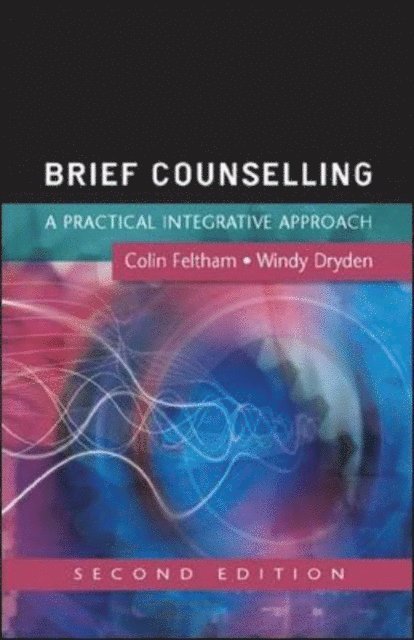
Almost two thirds of counsellors and psychotherapists work with clients in up to twenty sessions each: this book reflects that reality and the challenges involved.
The bestselling first edition of this book, by two of the UK's leading counsellor trainers and academics, was praised by trainers and tutors for its accessibility, comprehensiveness and practicality. It was also a leading contribution to the movement towards time-conscious counselling and to an understanding of the therapeutic alliance across time.
The second edition has been thoroughly updated to include significant recent professional developments and new thinking in the counselling field. Additions include more detailed discussion of:
Assessment ContractingVery brief counsellingClinical reasoningClients' modalitiesTechnical repertoireDepression and realismSupervision of brief counsellingIn the rapidly maturing profession of counselling, this book's sensitivity to time as a precious resource, clients' perceptions, evidence-based guidelines and integration of some of the best thinking from several counselling models make it an ideal core text for beginners and reflective practitioners. Thoughtful and busy practitioners in primary care, employee counselling, educational, voluntary and private practice settings will find many immediately helpful ideas and examples in this classic text.430 kr
Läs direkt efter köp
“…an excellent resource for all trainee and beginning counsellors irrespective of theoretical orientation. I regard it as a core text for Professional and Clinical Practice components of counsellor education and training courses.”Ian Horton, formerly Principal Lecturer, University of East London
Praise for the current edition:
"This book is a must. It informs the beginner and experienced counsellor howto undertake brief counselling, step by step, from orienting the client tocounselling, to termination of counselling."Professor Stephen Palmer, City University, London and Director for the Centre for Stress Management.
Almost two thirds of counsellors and psychotherapists work with clients in up to twenty sessions each: this book reflects that reality and the challenges involved.
The bestselling first edition of this book, by two of the UK''s leading counsellor trainers and academics, was praised by trainers and tutors for its accessibility, comprehensiveness and practicality. It was also a leading contribution to the movement towards time-conscious counselling and to an understanding of the therapeutic alliance across time.
The second edition has been thoroughly updated to include significant recent professional developments and new thinking in the counselling field. Additions include more detailed discussion of:
Assessment ContractingVery brief counsellingClinical reasoningClients'' modalitiesTechnical repertoireDepression and realismSupervision of brief counsellingIn the rapidly maturing profession of counselling, this book''s sensitivity to time as a precious resource, clients'' perceptions, evidence-based guidelines and integration of some of the best thinking from several counselling models make it an ideal core text for beginners and reflective practitioners. Thoughtful and busy practitioners in primary care, employee counselling, educational, voluntary and private practice settings will find many immediately helpful ideas and examples in this classic text.1 933 kr
Läs direkt efter köp
1 663 kr
Skickas inom 3-6 vardagar
Contributors write about their observations on working with people whose suffering is associated with social marginalization, family breakdown, the gay community, the AIDS epidemic, the Holocaust, and with people in groups, those who have experienced disaster and personal trauma, or depression, and those who have murdered. The book takes us to some of the depths of human suffering in order to illustrate the value and impact of therapy, and some of the failings and disillusionment of therapy. The material provides insights and hypotheses bearing on the human condition itself, and the contributors do not avoid disclosing some of their own struggles, doubts and suffering.
1 691 kr
Skickas inom 3-6 vardagar
`Editor Colin Feltham's choice of topics shows an astute, on-the-ground awareness of the issues that dog the industry, while still making lively reading' - New Therapist
In this book, leading practitioners, critics and commentators take sides on many topical and core debates including:
· Theoretical issues: Does the unconscious really exist? Is birth trauma a fiction? Should one believe in `false memories'?
·Clinical issues: Is therapy effective? Is `the relationship' central to success? Do therapists pathologize their clients? Are boundaries necessary?
·Professional issues: Do trainees need therapy? Is professionalization of the field desirable? Are counselling and psychotherapy really distinguishable?
·Social issues: Can therapy be proven necessary? Does therapy benefit individuals or contribute to social control? Does stress really exist?
1 580 kr
Skickas inom 3-6 vardagar
It is now widely accepted that the therapeutic relationship - referred to here as the counselling relationship - may be the most significant element in effective practice. Understanding the Counselling Relationship presents contrasting views of the relationship between the counsellor or therapist and the client, as held by practitioners from diverse theoretical orientations.
Each chapter clarifies and considers the elements of the counselling relationship which have most bearing on therapeutic practice. The strengths of each position are highlighted in terms of understanding, theory and skills. The relevance of certain psychological, sociological and research-based issues for practitioners from a variety of theoretical backgrounds are also considered.
3 881 kr
Skickas inom 3-6 vardagar
`This is a thought-provoking collection of contributions, some critically examining aspects of supervision that have previously been well established and some identifying controversies in working practice' - Counselling
`This book lives up to its claim to be a timely and thought-provoking evaluation of contemporary supervisory practices and structures in counselling and psychotherapy' - John Hopton, Therapeutic Communities
This book evaluates supervisory structures and practices in the light of recent research and experiences. It provides counsellors and psychotherapists with a considered examination of the supervision process and draws attention to those aspects of supervision that may benefit from critical analysis and reform.
The first part of the book explores some inherent difficulties that may impinge upon the effectiveness of supervision, while the second part identifies debates relating to working practice, and the impact of the cultural environments in which counselling is now taking place. In the final chapter, key figures in counselling and psychotherapy contribute short pieces outlining what they feel will be significant issues for supervisory practice in its next phase of development.
1 491 kr
Skickas inom 3-6 vardagar
`This is a thought-provoking collection of contributions, some critically examining aspects of supervision that have previously been well established and some identifying controversies in working practice' - Counselling
`This book lives up to its claim to be a timely and thought-provoking evaluation of contemporary supervisory practices and structures in counselling and psychotherapy' - John Hopton, Therapeutic Communities
This book evaluates supervisory structures and practices in the light of recent research and experiences. It provides counsellors and psychotherapists with a considered examination of the supervision process and draws attention to those aspects of supervision that may benefit from critical analysis and reform.
The first part of the book explores some inherent difficulties that may impinge upon the effectiveness of supervision, while the second part identifies debates relating to working practice, and the impact of the cultural environments in which counselling is now taking place. In the final chapter, key figures in counselling and psychotherapy contribute short pieces outlining what they feel will be significant issues for supervisory practice in its next phase of development.
1 552 kr
Skickas inom 3-6 vardagar
3 784 kr
Skickas inom 3-6 vardagar
`The book awakened me to understanding more about how a core belief or orientation can result in polarised attitudes towards the person. At the same time, in some cases, there is fundamental common ground which could potentially lead to genuine integration' - [ac]Eisteach, The Journal of the Irish Association for Counselling and Therapy
`Eight distinguished practitioners address twelve different questions, aimed at identifying the distinctive qualities of their own approach and demonstrating how it has been arrived at. The result is a book that will allow both experienced practitioners and trainees to become familiar with and compare the current thinking of these well-known people... the very passion of these opposing and sometimes exclusive convictions may be the well-spring for the efficacy and achievements of these eminent practitioners and trainers' - Self & Society
Each therapist highlights the distinctive properties of his or her orientation, and discusses questions such as: why and how they came to found, adapt or choose the approach they currently practise; what criticisms of the approach they consider to be valid; which approaches they consider to be ineffective, misleading or dangerous, and, conversely, more promising or effective; why their approach is more effective or comprehensive, and why it may be more suited to certain clients or client problems; and how they account for research which suggests that no one approach seems more effective than any other.
1 663 kr
Skickas inom 3-6 vardagar
`The book awakened me to understanding more about how a core belief or orientation can result in polarised attitudes towards the person. At the same time, in some cases, there is fundamental common ground which could potentially lead to genuine integration' - [ac]Eisteach, The Journal of the Irish Association for Counselling and Therapy
`Eight distinguished practitioners address twelve different questions, aimed at identifying the distinctive qualities of their own approach and demonstrating how it has been arrived at. The result is a book that will allow both experienced practitioners and trainees to become familiar with and compare the current thinking of these well-known people... the very passion of these opposing and sometimes exclusive convictions may be the well-spring for the efficacy and achievements of these eminent practitioners and trainers' - Self & Society
Each therapist highlights the distinctive properties of his or her orientation, and discusses questions such as: why and how they came to found, adapt or choose the approach they currently practise; what criticisms of the approach they consider to be valid; which approaches they consider to be ineffective, misleading or dangerous, and, conversely, more promising or effective; why their approach is more effective or comprehensive, and why it may be more suited to certain clients or client problems; and how they account for research which suggests that no one approach seems more effective than any other.
3 646 kr
Skickas inom 3-6 vardagar
Time-limited counselling - that is, the provision of effective counselling with limited resources and under strict time pressures - is becoming increasingly important as the demand for counselling increases, and the management of waiting lists and costs becomes a crucial concern.
In this clearly written book, which incorporates useful, illustrative examples, Colin Feltham outlines the specific practical and technical skills, strategies and knowledge counsellors must have in order to undertake time-limited counselling. Following an examination of the client's induction into counselling, he describes the most appropriate models for different clients and problems. Further chapters assess the management of time-limited counselling in different settings - including private practice - and look at research, training and supervision issues.
Squarely addressing the objections to the use of, and real problems in, the practice of this short-term therapeutic paradigm, the author argues that time-limited counselling can be justified not only on economic grounds but also ethically, philosophically, clinically and with reference to consumer preferences. He also identifies the common factors in successful short-term work that span different theoretical orientations.
1 691 kr
Skickas inom 3-6 vardagar
Time-limited counselling - that is, the provision of effective counselling with limited resources and under strict time pressures - is becoming increasingly important as the demand for counselling increases, and the management of waiting lists and costs becomes a crucial concern.
In this clearly written book, which incorporates useful, illustrative examples, Colin Feltham outlines the specific practical and technical skills, strategies and knowledge counsellors must have in order to undertake time-limited counselling. Following an examination of the client's induction into counselling, he describes the most appropriate models for different clients and problems. Further chapters assess the management of time-limited counselling in different settings - including private practice - and look at research, training and supervision issues.
Squarely addressing the objections to the use of, and real problems in, the practice of this short-term therapeutic paradigm, the author argues that time-limited counselling can be justified not only on economic grounds but also ethically, philosophically, clinically and with reference to consumer preferences. He also identifies the common factors in successful short-term work that span different theoretical orientations.
3 618 kr
Skickas inom 3-6 vardagar
For those seeking an honest appraisal of the activity and profession of counselling, the author of this rigorous examination of the talking therapies asks such key questions as: How has counselling evolved and why is it flourishing now in Western society? What are the limits on its applications? What social functions does it serve? Who benefits from it and who does not? What is its intellectual standing?
Colin Feltham brings contemporary counselling into focus by comparisons with other modern and historical helping services, religious and philosophical analyses of the human condition, and the present socio-economic context. He also discusses the topical issue of professionalization, and examines the arguments concerning the alleged differences between counselling and psychotherapy. He demonstrates that it is extremely difficult to define counselling in a way which fairly, unambiguously and accurately places it beyond misunderstanding and which reasonably distinguishes it from other similar activities.
878 kr
Skickas
For those seeking an honest appraisal of the activity and profession of counselling, the author of this rigorous examination of the talking therapies asks such key questions as: How has counselling evolved and why is it flourishing now in Western society? What are the limits on its applications? What social functions does it serve? Who benefits from it and who does not? What is its intellectual standing?
Colin Feltham brings contemporary counselling into focus by comparisons with other modern and historical helping services, religious and philosophical analyses of the human condition, and the present socio-economic context. He also discusses the topical issue of professionalization, and examines the arguments concerning the alleged differences between counselling and psychotherapy. He demonstrates that it is extremely difficult to define counselling in a way which fairly, unambiguously and accurately places it beyond misunderstanding and which reasonably distinguishes it from other similar activities.
3 414 kr
Skickas inom 3-6 vardagar
________________________________________
`It is a fairly well established clich[ac]e that while supervision is recognised as a crucial component of good practice in psychotherapy and counselling, there is correspondingly little written about it... [this book is] a good step in redressing the balance... It is a practical, didactic and generic view of how to do supervision... giving a fairly comprehensive account of 30 of the formal skills that all supervisors probably use whether consciously or not... The book discusses each of the skills, giving examples as well as practical suggestions as to how to approach difficult issues... directed principally at counsellors, it is a book to dip into when faced with a panic about a specific issue' - Therapeutic Communities
Supervision is a professional and ethical necessity for all counsellors, providing them with consultative and supportive aid while protecting clients from potential abuse - yet relatively little has been written on the subject. This volume aims to redress that balance.
Encouraging, yet sensitive to the difficult issues that frequently arise in supervision, the book contains practical suggestions, plus useful appendices, to help practising and trainee supervisors develop and enhance the skills they need to be successful in their work. The authors cover such key areas as creating a supervisory alliance, fostering the supervisory relationship, the use of tape-recording, highlighting supervisees' strengths and weaknesses, and protecting the client and counsellor.
771 kr
Skickas
________________________________________
`It is a fairly well established clich[ac]e that while supervision is recognised as a crucial component of good practice in psychotherapy and counselling, there is correspondingly little written about it... [this book is] a good step in redressing the balance... It is a practical, didactic and generic view of how to do supervision... giving a fairly comprehensive account of 30 of the formal skills that all supervisors probably use whether consciously or not... The book discusses each of the skills, giving examples as well as practical suggestions as to how to approach difficult issues... directed principally at counsellors, it is a book to dip into when faced with a panic about a specific issue' - Therapeutic Communities
Supervision is a professional and ethical necessity for all counsellors, providing them with consultative and supportive aid while protecting clients from potential abuse - yet relatively little has been written on the subject. This volume aims to redress that balance.
Encouraging, yet sensitive to the difficult issues that frequently arise in supervision, the book contains practical suggestions, plus useful appendices, to help practising and trainee supervisors develop and enhance the skills they need to be successful in their work. The authors cover such key areas as creating a supervisory alliance, fostering the supervisory relationship, the use of tape-recording, highlighting supervisees' strengths and weaknesses, and protecting the client and counsellor.
2 600 kr
Skickas inom 11-20 vardagar
________________________________________
`The format is easy to access and stimulates reflection on practice' - International Review of Psychiatry
This volume contains 30 useful hints and reminders to help both trainee and practising counsellors examine and improve key areas of their work. The book encourages counsellors to focus on areas that they may feel need special attention, covering topics such as the formation of an ethical and productive alliance, working with effective tasks and goals, identifying and addressing clients' obstacles to change, and developing professional knowledge and self-reflection.
2 133 kr
Skickas inom 10-15 vardagar
741 kr
Skickas inom 10-15 vardagar
2 435 kr
Skickas inom 10-15 vardagar
706 kr
Läs direkt efter köp
706 kr
Läs direkt efter köp
841 kr
Läs direkt efter köp
Depressive Realism argues that people with mild-to-moderate depression have a more accurate perception of reality than non-depressives. Depressive realism is a worldview of human existence that is essentially negative, and which challenges assumptions about the value of life and the institutions claiming to answer life’s problems. Drawing from central observations from various disciplines, this book argues that a radical honesty about human suffering might initiate wholly new ways of thinking, in everyday life and in clinical practice for mental health, as well as in academia.
Divided into sections that reflect depressive realism as a worldview spanning all academic disciplines, chapters provide examples from psychology, psychotherapy, philosophy and more to suggest ways in which depressive realism can critique each discipline and academia overall. This book challenges the tacit hegemony of contemporary positive thinking, as well as the standard assumption in cognitive behavioural therapy that depressed individuals must have cognitive distortions. It also appeals to the utility of depressive realism for its insights, its pursuit of truth, as well its emphasis on the importance of learning from negativity and failure. Arguments against depressive realism are also explored.
This book makes an important contribution to our understanding of depressive realism within an interdisciplinary context. It will be of key interest to academics, researchers and postgraduates in the fields of psychology, mental health, psychotherapy, history and philosophy. It will also be of great interest to psychologists, psychotherapists and counsellors.
841 kr
Läs direkt efter köp
Depressive Realism argues that people with mild-to-moderate depression have a more accurate perception of reality than non-depressives. Depressive realism is a worldview of human existence that is essentially negative, and which challenges assumptions about the value of life and the institutions claiming to answer life’s problems. Drawing from central observations from various disciplines, this book argues that a radical honesty about human suffering might initiate wholly new ways of thinking, in everyday life and in clinical practice for mental health, as well as in academia.
Divided into sections that reflect depressive realism as a worldview spanning all academic disciplines, chapters provide examples from psychology, psychotherapy, philosophy and more to suggest ways in which depressive realism can critique each discipline and academia overall. This book challenges the tacit hegemony of contemporary positive thinking, as well as the standard assumption in cognitive behavioural therapy that depressed individuals must have cognitive distortions. It also appeals to the utility of depressive realism for its insights, its pursuit of truth, as well its emphasis on the importance of learning from negativity and failure. Arguments against depressive realism are also explored.
This book makes an important contribution to our understanding of depressive realism within an interdisciplinary context. It will be of key interest to academics, researchers and postgraduates in the fields of psychology, mental health, psychotherapy, history and philosophy. It will also be of great interest to psychologists, psychotherapists and counsellors.
615 kr
Läs direkt efter köp
________________________________________
`It is a fairly well established clich[ac]e that while supervision is recognised as a crucial component of good practice in psychotherapy and counselling, there is correspondingly little written about it... [this book is] a good step in redressing the balance... It is a practical, didactic and generic view of how to do supervision... giving a fairly comprehensive account of 30 of the formal skills that all supervisors probably use whether consciously or not... The book discusses each of the skills, giving examples as well as practical suggestions as to how to approach difficult issues... directed principally at counsellors, it is a book to dip into when faced with a panic about a specific issue′ - Therapeutic Communities
Supervision is a professional and ethical necessity for all counsellors, providing them with consultative and supportive aid while protecting clients from potential abuse - yet relatively little has been written on the subject. This volume aims to redress that balance.
Encouraging, yet sensitive to the difficult issues that frequently arise in supervision, the book contains practical suggestions, plus useful appendices, to help practising and trainee supervisors develop and enhance the skills they need to be successful in their work. The authors cover such key areas as creating a supervisory alliance, fostering the supervisory relationship, the use of tape-recording, highlighting supervisees′ strengths and weaknesses, and protecting the client and counsellor.
708 kr
Läs direkt efter köp
Time-limited counselling - that is, the provision of effective counselling with limited resources and under strict time pressures - is becoming increasingly important as the demand for counselling increases, and the management of waiting lists and costs becomes a crucial concern.
In this clearly written book, which incorporates useful, illustrative examples, Colin Feltham outlines the specific practical and technical skills, strategies and knowledge counsellors must have in order to undertake time-limited counselling. Following an examination of the client′s induction into counselling, he describes the most appropriate models for different clients and problems. Further chapters assess the management of time-limited counselling in different settings - including private practice - and look at research, training and supervision issues.
Squarely addressing the objections to the use of, and real problems in, the practice of this short-term therapeutic paradigm, the author argues that time-limited counselling can be justified not only on economic grounds but also ethically, philosophically, clinically and with reference to consumer preferences. He also identifies the common factors in successful short-term work that span different theoretical orientations.
668 kr
Läs direkt efter köp
It is now widely accepted that the therapeutic relationship - referred to here as the counselling relationship - may be the most significant element in effective practice. Understanding the Counselling Relationship presents contrasting views of the relationship between the counsellor or therapist and the client, as held by practitioners from diverse theoretical orientations.
Each chapter clarifies and considers the elements of the counselling relationship which have most bearing on therapeutic practice. The strengths of each position are highlighted in terms of understanding, theory and skills. The relevance of certain psychological, sociological and research-based issues for practitioners from a variety of theoretical backgrounds are also considered.
587 kr
Läs direkt efter köp
Ranging from more mainstream subjects like unconditional positive regard, ethics and supervision to broader social or philosophical issues such as employment concerns and the debate on assisted suicide, entries include:
-Why have we focused on core theoretical models?
-What are the pros and cons of short-term, time-limited counselling?
-What′s wrong with CBT?
-Where is research taking us?
-Is statutory regulation a good and inevitable development?
-Are there limits to personal change in counselling?
Each section includes questions for reflection, case studies and student exercises. This comprehensive, student-friendly text is a useful resource for lecturers to stimulate seminar discussion, and for all trainees wishing to write essays or generally develop their critical thinking in counselling and psychotherapy.