Colin Haselgrove – författare
Visar alla böcker från författaren Colin Haselgrove. Handla med fri frakt och snabb leverans.
13 produkter
13 produkter
E-bok
PDF, Engelska, 20232 476 kr
Läs direkt efter köp
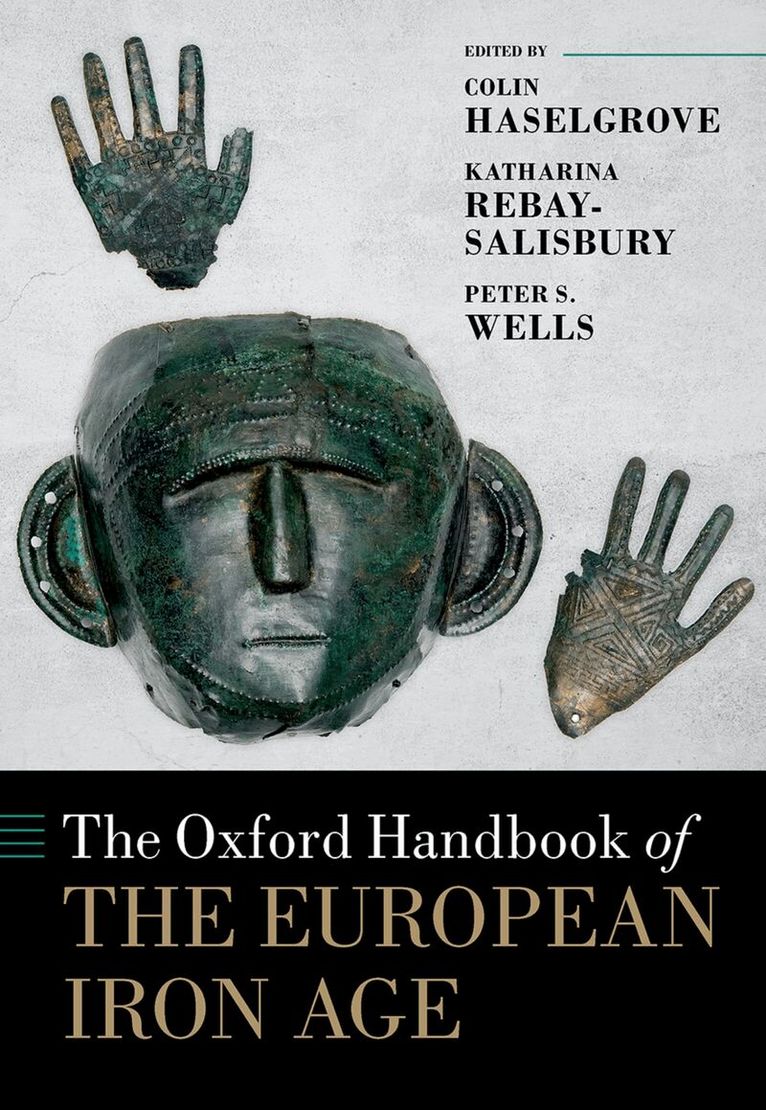
The Oxford Handbook of the European Iron Age presents a broad overview of current understanding of the archaeology of Europe from 1000 BC through to the early historic periods, exploiting the large quantities of new evidence yielded by the upsurge in archaeological research and excavation on this period over the last thirty years. Three introductory chapters situate the reader in the times and the environments of Iron Age Europe. Fourteen regional chapters provide accessible syntheses of developments in different parts of the continent, from Ireland and Spain in the west to the borders with Asia in the east, from Scandinavia in the north to the Mediterranean shores in the south. Twenty-six thematic chapters examine different aspects of Iron Age archaeology in greater depth, from lifeways, economy, and complexity to identity, ritual, and expression. Among the many topics explored are agricultural systems, settlements, landscape monuments, iron smelting and forging, production of textiles, politics, demography, gender, migration, funerary practices, social and religious rituals, coinage and literacy, and art and design.
E-bok
Engelska, 20232 566 kr
Läs direkt efter köp
The Oxford Handbook of the European Iron Age presents a broad overview of current understanding of the archaeology of Europe from 1000 BC through to the early historic periods, exploiting the large quantities of new evidence yielded by the upsurge in archaeological research and excavation on this period over the last thirty years. Three introductory chapters situate the reader in the times and the environments of Iron Age Europe. Fourteen regional chapters provide accessible syntheses of developments in different parts of the continent, from Ireland and Spain in the west to the borders with Asia in the east, from Scandinavia in the north to the Mediterranean shores in the south. Twenty-six thematic chapters examine different aspects of Iron Age archaeology in greater depth, from lifeways, economy, and complexity to identity, ritual, and expression. Among the many topics explored are agricultural systems, settlements, landscape monuments, iron smelting and forging, production of textiles, politics, demography, gender, migration, funerary practices, social and religious rituals, coinage and literacy, and art and design.
E-bok
PDF, Engelska, 20151 221 kr
Läs direkt efter köp
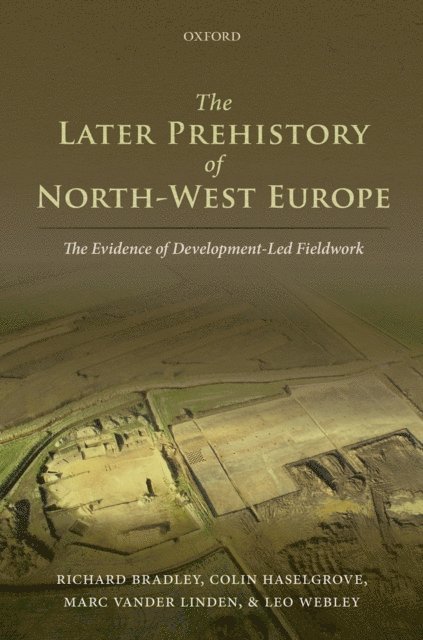
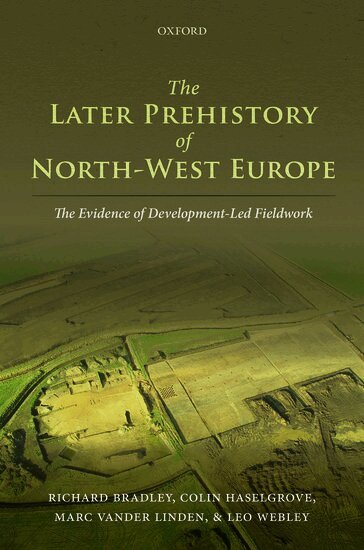
The Later Prehistory of North-West Europe provides a unique, up-to-date, and easily accessible synthesis of the later prehistoric archaeology of north-west Europe, transcending political and language barriers that can hinder understanding. By surveying changes in social forms, landscape organization, monument types, and ritual practices over six millennia, the volume reassesses the prehistory of north-west Europe from the late Mesolithic to the end of the pre-Roman Iron Age. It explores how far common patterns of social development are apparent across north-west Europe, and whether there were periods when local differences were emphasized instead. In relation to this, it also examines changes through time in the main axes of contact between the various regions of continental Europe, Britain, and Ireland.Key to the volume''s broad scope is its focus on the vast mass of new evidence provided by recent development-led excavations. The authors collate data that has been gathered on thousands of sites across Britain, Ireland, northern France, the Low Countries, western Germany, and Denmark, using sources including unpublished ''grey literature'' reports. The results challenge many aspects of previous narratives of later prehistory, allowing the volume to present a distinctively fresh perspective.
Inbunden, Engelska, 2015
2 132 kr
Skickas inom 3-6 vardagar
The Later Prehistory of North-West Europe provides a unique, up-to-date, and easily accessible synthesis of the later prehistoric archaeology of north-west Europe, transcending political and language barriers that can hinder understanding. By surveying changes in social forms, landscape organization, monument types, and ritual practices over six millennia, the volume reassesses the prehistory of north-west Europe from the late Mesolithic to the end of the pre-Roman Iron Age. It explores how far common patterns of social development are apparent across north-west Europe, and whether there were periods when local differences were emphasized instead. In relation to this, it also examines changes through time in the main axes of contact between the various regions of continental Europe, Britain, and Ireland.Key to the volume's broad scope is its focus on the vast mass of new evidence provided by recent development-led excavations. The authors collate data that has been gathered on thousands of sites across Britain, Ireland, northern France, the Low Countries, western Germany, and Denmark, using sources including unpublished 'grey literature' reports. The results challenge many aspects of previous narratives of later prehistory, allowing the volume to present a distinctively fresh perspective.
Inbunden, Engelska, 2023
3 266 kr
Skickas inom 5-8 vardagar
The Oxford Handbook of the European Iron Age presents a broad overview of current understanding of the archaeology of Europe from 1000 BC through to the early historic periods, exploiting the large quantities of new evidence yielded by the upsurge in archaeological research and excavation on this period over the last thirty years. Three introductory chapters situate the reader in the times and the environments of Iron Age Europe. Fourteen regional chapters provide accessible syntheses of developments in different parts of the continent, from Ireland and Spain in the west to the borders with Asia in the east, from Scandinavia in the north to the Mediterranean shores in the south. Twenty-six thematic chapters examine different aspects of Iron Age archaeology in greater depth, from lifeways, economy, and complexity to identity, ritual, and expression. Among the many topics explored are agricultural systems, settlements, landscape monuments, iron smelting and forging, production of textiles, politics, demography, gender, migration, funerary practices, social and religious rituals, coinage and literacy, and art and design.
Del 47 - BAR International Series
Social Organisation and Settlement, Part I
Contributions from Anthropology, Archaeology and Geography
Häftad, Engelska, 1978
376 kr
Skickas inom 3-6 vardagar
Del 47 - BAR International
Social Organisation and Settlement, Part II
Contributions from Anthropology, Archaeology and Geography
Häftad, Engelska, 1978
391 kr
Skickas inom 3-6 vardagar
Del 174 - BAR British Series
Iron Age Coinage in South-East England, Part i
The Archaeological Context
Häftad, Engelska, 1987
376 kr
Skickas inom 3-6 vardagar
Del 174 - BAR British
Iron Age Coinage in South-East England, Part ii
The Archaeological Context
Häftad, Engelska, 1987
376 kr
Skickas inom 3-6 vardagar
E-bok
Engelska, 2021122 kr
Läs direkt efter köp
The nature and causes of the transformation in settlement, social structure, and material culture that occurred in Britain during the Later Iron Age (c. 400-300 BC to the Roman conquest) have long been a focus of research. In the past, however, there was a tendency for attention to be directed mostly to southern England and the increased manifestations of Gaulish and Roman influence apparent there towards the end of this period. For the most part, developments in other regions were assumed to be secondary in character and of relatively little significance. Thanks to new work, this viewpoint can no longer be sustained. Throughout Britain, the extent and vitality of the social changes taking place during the later first millennium BC is becoming more apparent, as is the long-term character of many of the processes involved. The time is ripe therefore for new narratives of the Later Iron Age to be created, drawing on the burgeoning material from developer-funded archaeology and the Portable Antiquities Scheme, as well as on new methodological and theoretical approaches. The thirty-one papers collected here seek to re-conceptualise our visions of Later Iron Age societies in Britain by examining regions and topics that have received less attention in the past and by breaking down the artificial barriers often erected between artefact analysis and landscape studies. Themes considered include the expansion and enclosure of settlement, production and exchange, agricultural and social complexity, treatment of the dead, material culture and identity, at scales ranging from the household to the supra-regional. At the same time, the inclusion of papers on Ireland, northern France, the Low Countries, Denmark, and Germany allows insular Later Iron Age developments to be placed in a wider geographical context, ensuring that Britain is no longer studied in isolation.EPUB3: Reflowable
E-bok
Engelska, 2021122 kr
Läs direkt efter köp
The Earlier Iron Age (c. 800-400 BC) has often eluded attention in British Iron Age studies. Traditionally, we have been enticed by the wealth of material from the later part of the millennium and by developments in southern England in particular, culminating in the arrival of the Romans. The result has been a chronological and geographical imbalance, with the Earlier Iron Age often characterised more by what it lacks than what it comprises: for Bronze Age studies it lacks large quantities of bronze, whilst from the perspective of the Later Iron Age it lacks elaborate enclosure. In contrast, the same period on mainland Europe yields a wealth of burial evidence with links to Mediterranean communities and so has not suffered in quite the same way. Gradual acceptance of this problem over the past decade, along with the corpus of new discoveries produced by developer-funded archaeology, now provides us with an opportunity to create a more balanced picture of the Iron Age in Britain as a whole. The twenty-six papers in the book seek to establish what we now know (and do not know) about Earlier Iron Age communities in Britain and their neighbours on the Continent. The authors engage with a variety of current research themes, seeking to characterise the Earlier Iron Age via the topics of landscape, environment, and agriculture; material culture and everyday life; architecture, settlement, and social organisation; and with the issue of transition - looking at how communities of the Late Bronze Age transform into those of the Earlier Iron Age, and how we understand the social changes of the later first millennium BC. Geographically, the book brings together recent research from regional studies covering the full length of Britain, as well as taking us over to Ireland, across the Channel to France, and then over the North Sea to Denmark, the Low Countries, and beyond.EPUB3: Reflowable
E-bok
Engelska, 2021122 kr
Läs direkt efter köp
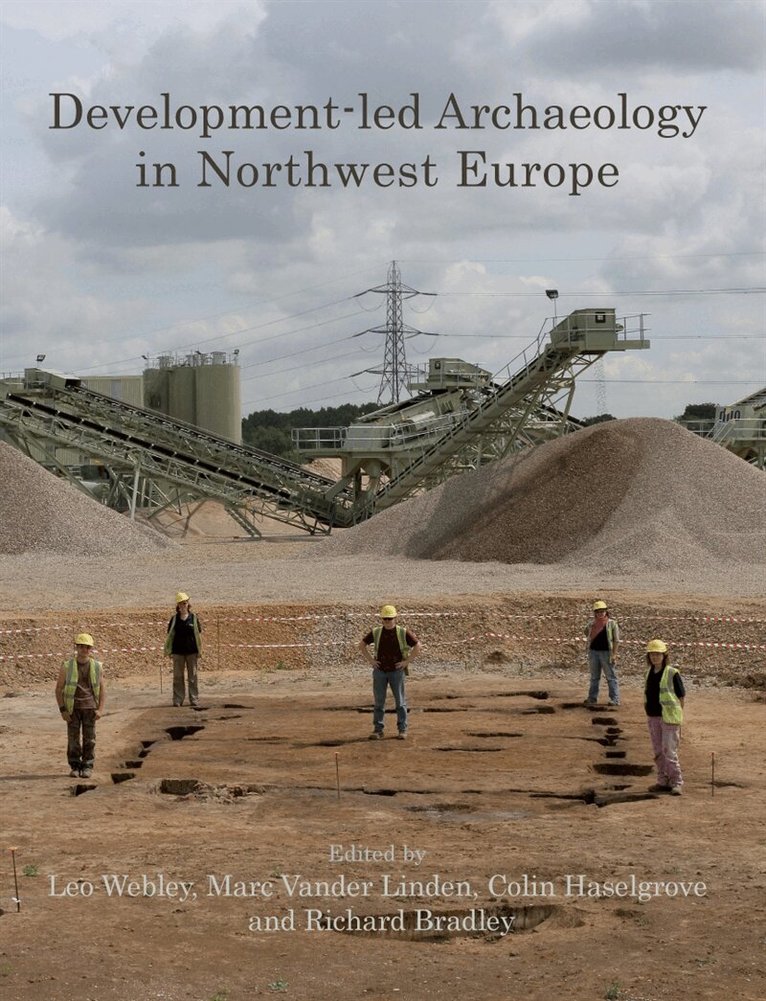
Many countries in northern Europe have seen a huge expansion in development-led archaeology over the past few decades. Legislation, frameworks for heritage management and codes of practice have developed along similar but different lines. The Valetta Convention has had considerable impact on spatial planning and new legislation on archaeological heritage management within EC countries as well as on the funding, nature and distribution of archaeological fieldwork. For the first time these 12 papers bring together data on developer-led archaeology in Britain, Ireland, France, the Low Countries, Germany and Denmark in order to review and evaluate key common issues relating to organisation, practice, legal frameworks and quality management.
Häftad, Engelska, 2008
489 kr
Tillfälligt slut