Colin I. Bradford - Böcker
Visar alla böcker från författaren Colin I. Bradford. Handla med fri frakt och snabb leverans.
3 produkter
3 produkter
1 196 kr
Tillfälligt slut
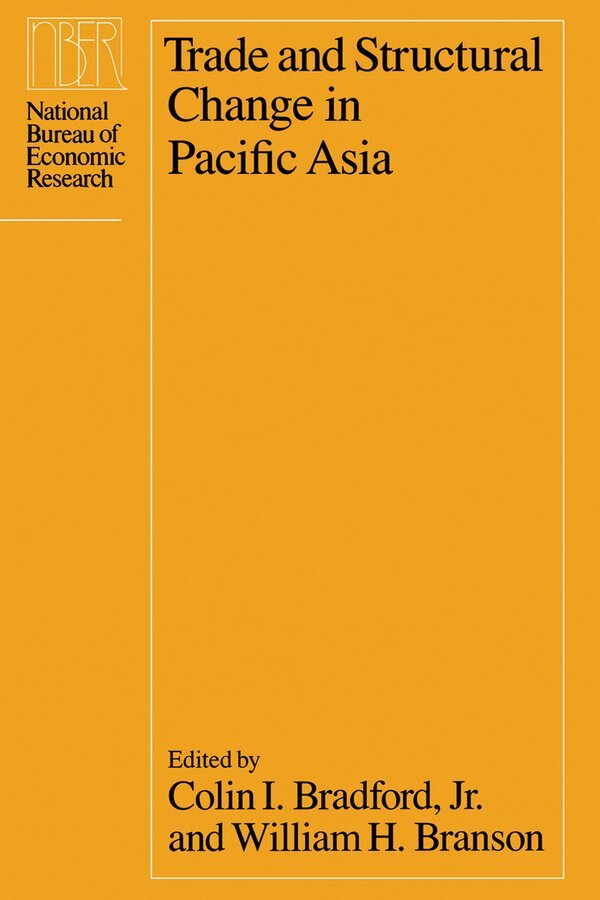
The rapid development of Pacific Asia over the past twenty years offers an excellent opportunity to analyze the dynamics of economic growth. Trade and Structural Change in Pacific Asia explores the nature and causes of changes that have occurred in the economic structure of Pacific Asia, the relationship between these changes and economic growth, and the implications of these changes for trading relationships. Themes in the research reported here includes the sectoral composition of output and trade; rates of structural change in production and exports and their relation to economic growth; the effect of abundant resource endowments on industrialization and manufactured exports; the nature of the mix between active government policies and market forces; and the balance between demand-determined and supply-determined industrialization and exports. Many of the issues explored have important implications for United States foreign economic policy, and the volume includes a look at the basic economic and political forces influencing shifts in United States trade policy in the postwar period. A timely and informative analysis, the volume probes the causes and consequences of economic growth in Pacific Asia, focusing on the interaction of exports of manufactured goods and the developmental process. The results reported contribute to ongoing research in structural change and economic policy and will be important to economists working on empirical patters in international trade and the process of economic development.
301 kr
Skickas inom 10-15 vardagar
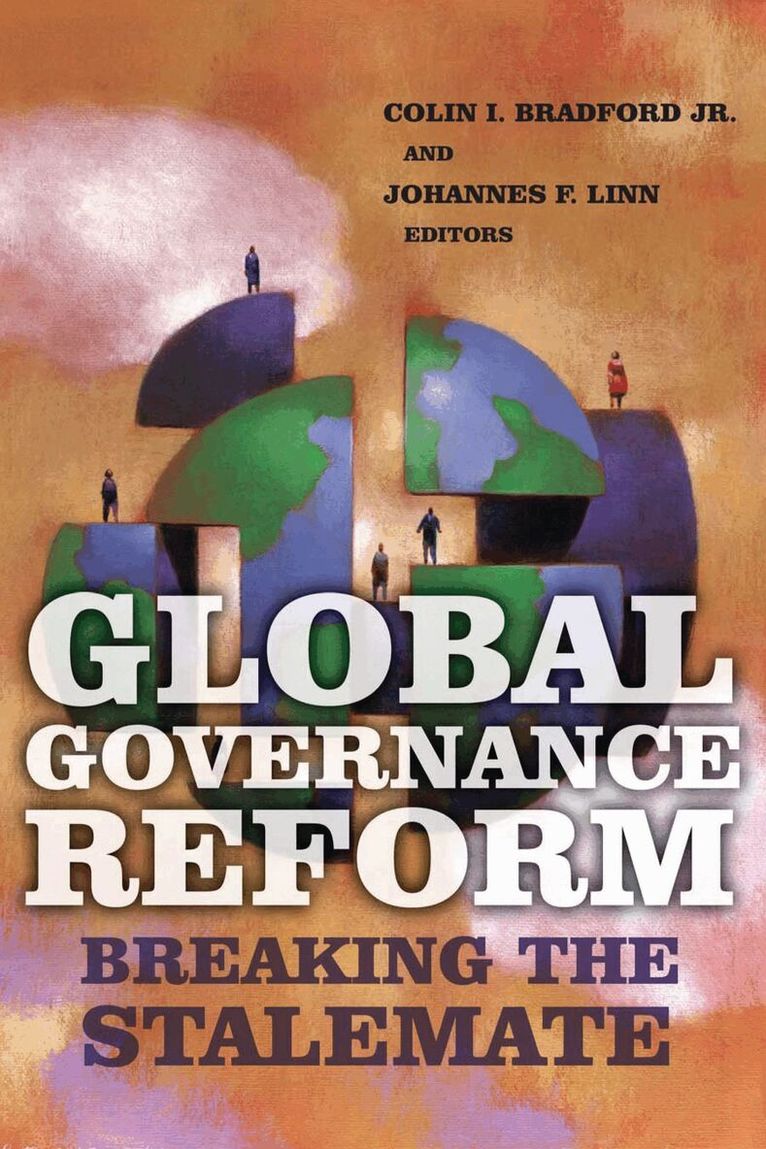
The current international system of institutions and governance groups is proving inadequate to meet many of today's most important challenges, such as terrorism, poverty, nuclear proliferation, financial integration, and climate change. The International Monetary Fund, World Bank, and UN were founded after World War II, and their structures of voting power and representation have become obsolete, no longer reflecting today's balance of economic and political power. This insightful book examines how to make such institutions more responsive and effective. Institutional reform is critically needed but currently in stalemate. A new push is needed from powerful nations acting together through a reformed and enlarged G-8 that includes emerging economies, such as China and India. Global challenges demand integrated approaches, with greater coordination among international institutions. Global Governance Reform argues that without reconstituting the Group of 8 summit into a larger, more representative group of leaders, with a new mandate to provide strategic guidance to the system of international institutions, the world will fall further behind in addressing global challenges. The path to global reform is defined by the need to act in coordinated ways on summit and institutional reform, and this book lights the way.
434 kr
Skickas inom 10-15 vardagar
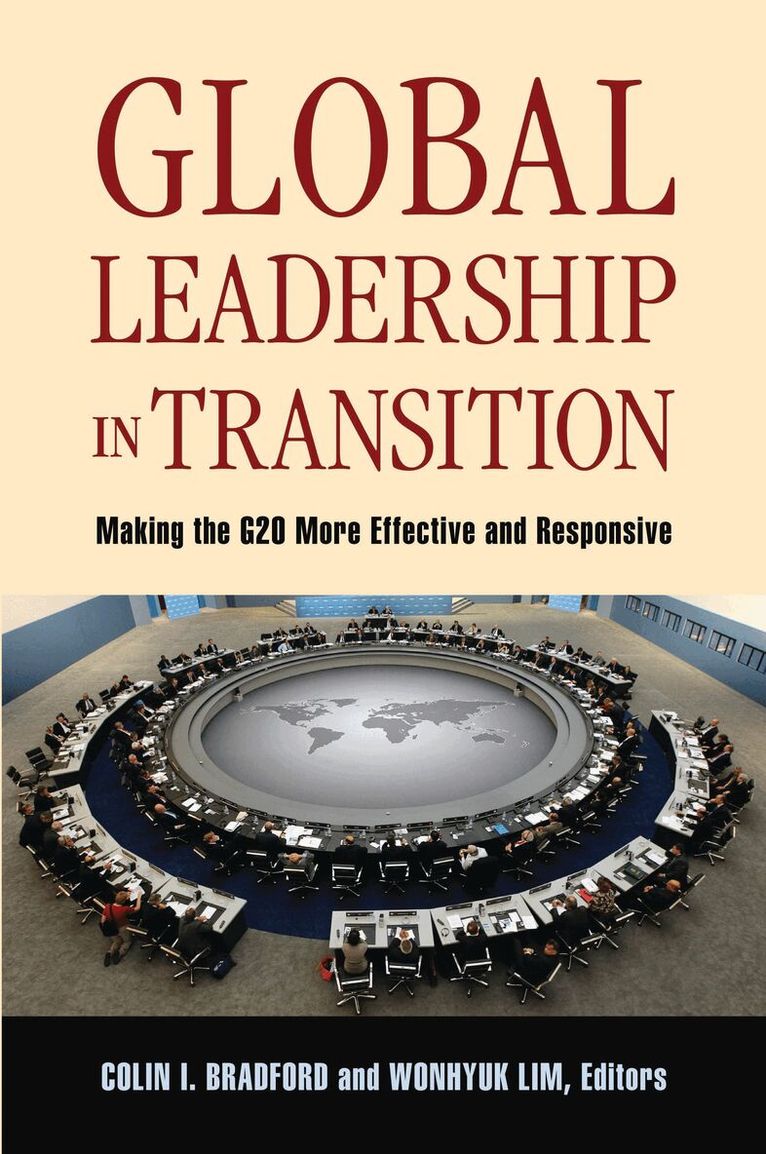
Global Leadership in Transition calls for innovations that would ""institutionalize"" or consolidate the G20, helping to make it the global economy's steering committee. The emergence of the G20 as the world's premier forum for international economic cooperation presents an opportunity to improve economic summitry and make global leadership more responsive and effective, a major improvement over the G8 era.""Key contributors to this volume were well ahead of their time in advocating summit meetings of G20 leaders. In this book, they now offer a rich smorgasbord of creative ideas for transforming the G20 from a crisis-management committee to a steering group for the international system that deserves the attention of those who wish to shape the future of global governance.""C. Randall Henning, American University and the Peterson InstituteContributors: Alan Beattie, Financial Times; Thomas Bernes, Centre for International Governance Innovation (CIGI); Sergio Bitar, former Chilean minister of public works; Paul Blustein, Brookings Institution and CIGI; Barry Carin, CIGI and University of Victoria; Andrew F. Cooper, CIGI and University of Waterloo; Kemal Dervis, Brookings; Paul Heinbecker, CIGI and Laurier University Centre for Global Relations; Oh-Seok Hyun, Korea Development Institute (KDI); Jomo Kwame Sundaram, United Nations; Homi Kharas, Brookings; Hyeon Wook Kim, KDI; Sungmin Kim, Bank of Korea; John Kirton, University of Toronto; Johannes Linn, Brookings and Emerging Markets Forum; Pedro Malan, Itau Unibanco; Thomas Mann, Brookings; Paul Martin, former prime minister of Canada; Simon Maxwell, Overseas Development Institute and Climate and Development Knowledge Network; Jacques Mistral, Institut Français des Relations Internationales; Victor Murinde, University of Birmingham (UK); Pier Carlo Padoan, OECD Paris; Yung Chul Park, Korea University; Stewart Patrick, Council on Foreign Relations; Il SaKong, Presidential Committee for the G20 Summit; Wendy R. Sherman, Albright Stonebridge Group; Gordon Smith, Centre for Global Studies and CIGI; Bruce Stokes, German Marshall Fund; Ngaire Woods, Oxford Blavatnik School of Government; Lan Xue, Tsinghua University (Beijing); Yanbing Zhang, Tsinghua University.